

Traditional Upholstered Armchair Frame
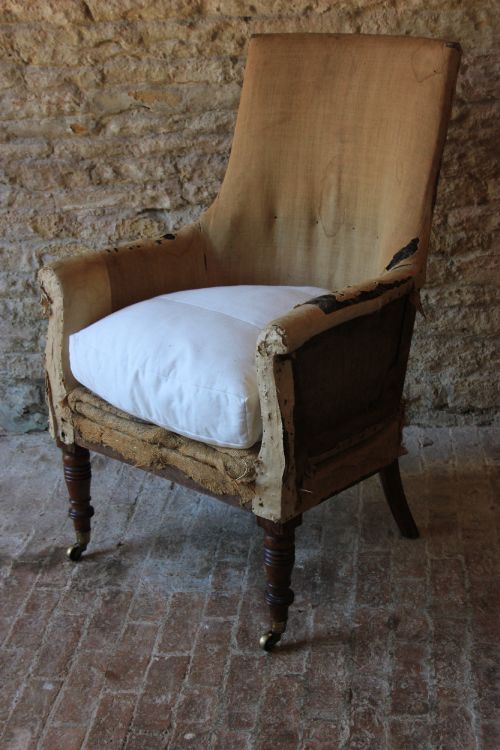
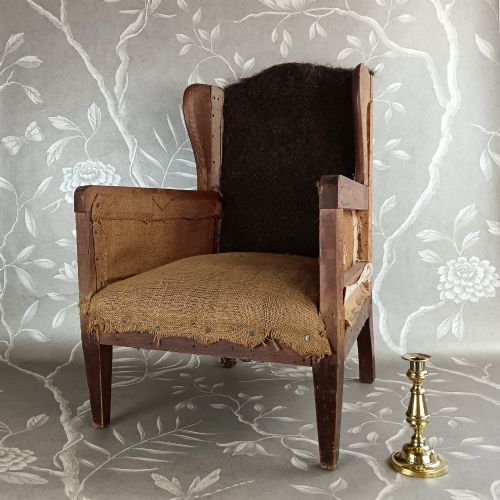
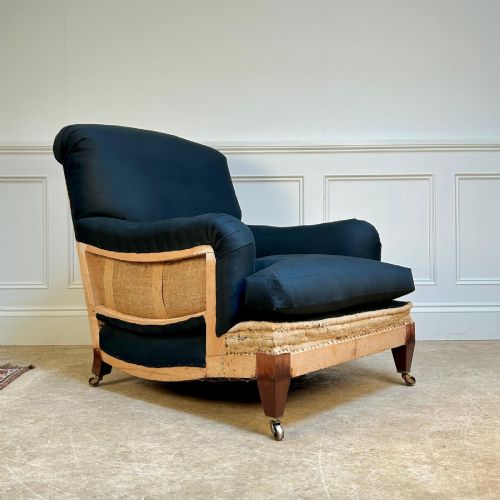
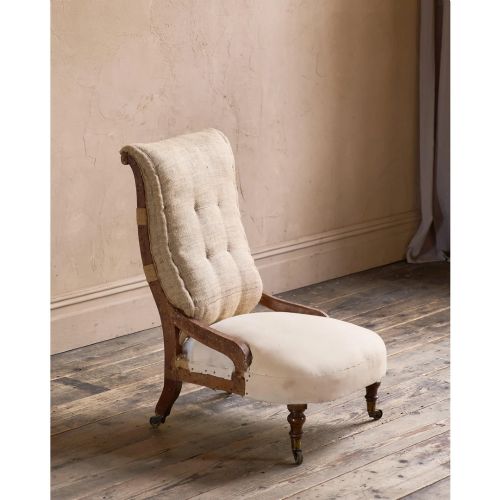
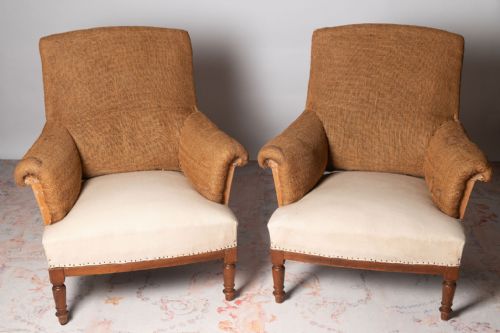
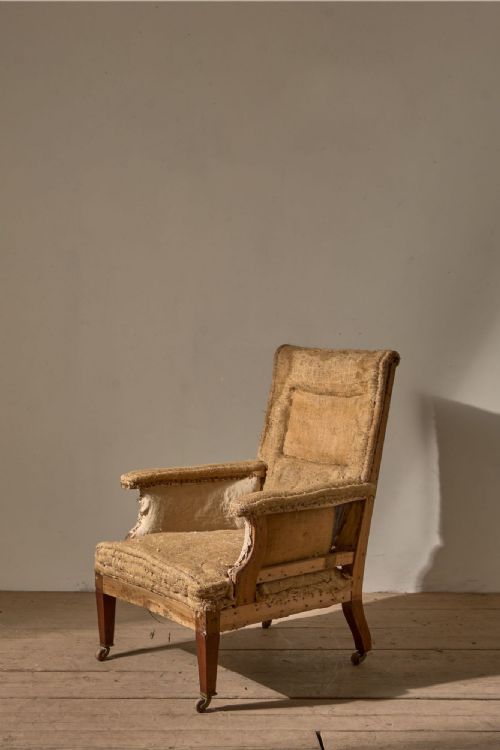
A traditional upholstered armchair frame holds the promise of custom comfort, stripped back to its solid wooden skeleton before final layering.
Traditional Upholstered Armchair Frame
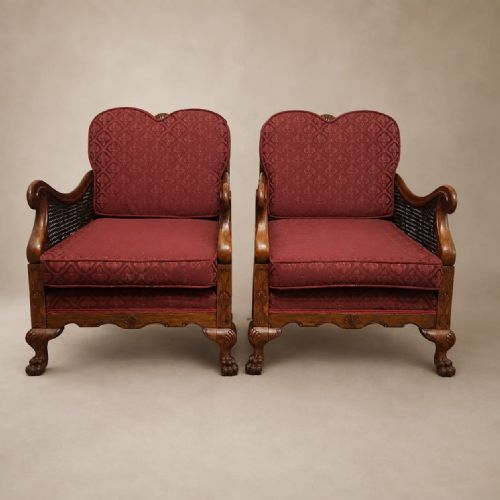
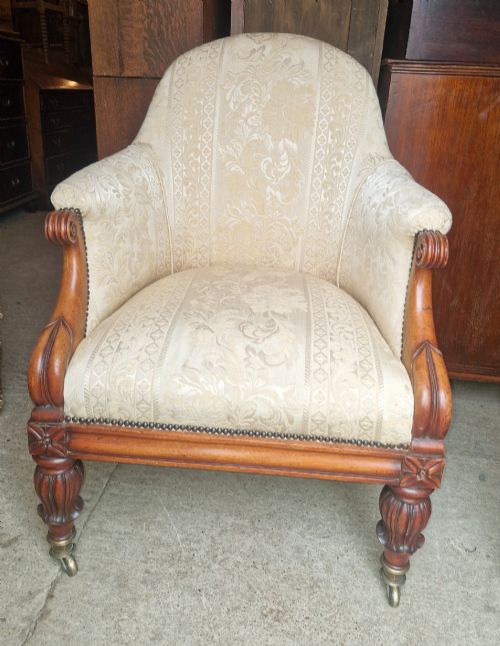
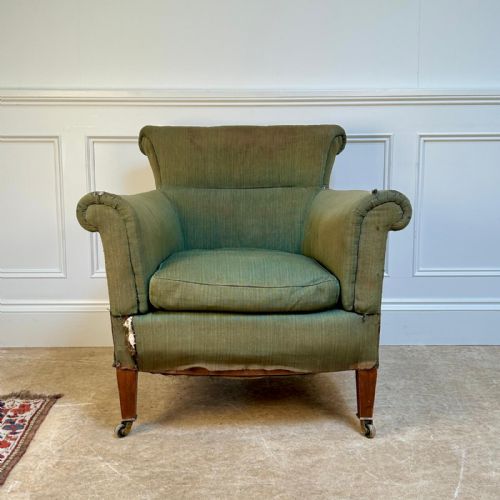
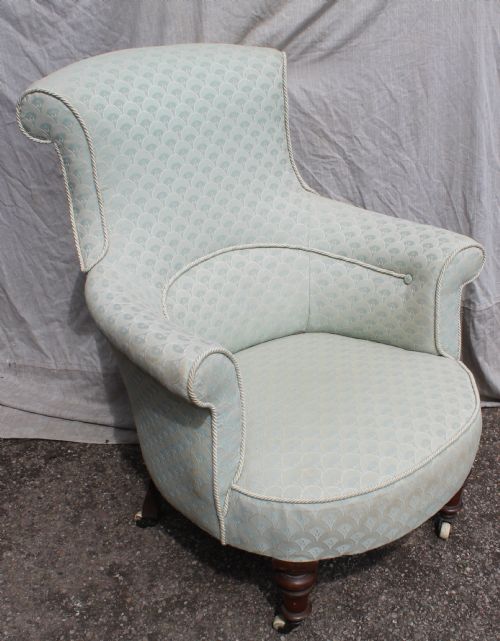
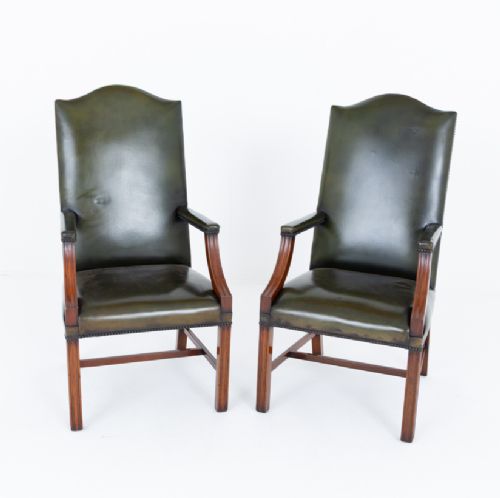
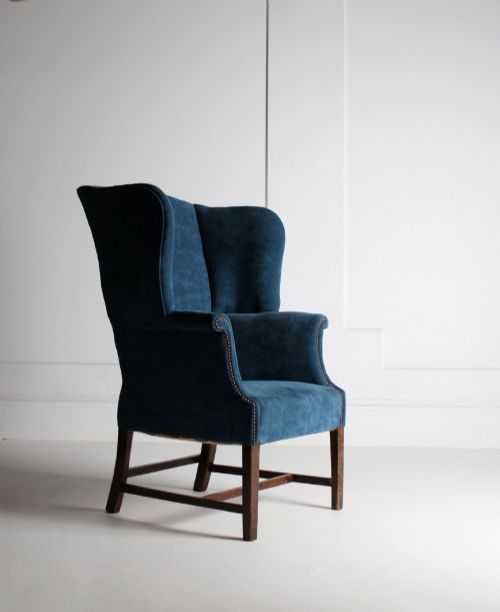
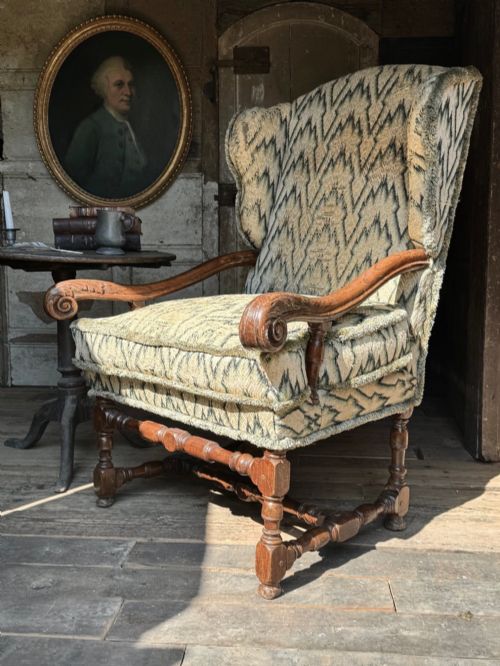
A traditional upholstered armchair frame represents the foundational skeleton of seating, stripped back or preserved to show its bare construction. Buyers examining this page encounter structural forms spanning the nineteenth century, the Victorian era, and early twentieth-century revivals like the Edwardian and Georgian periods.
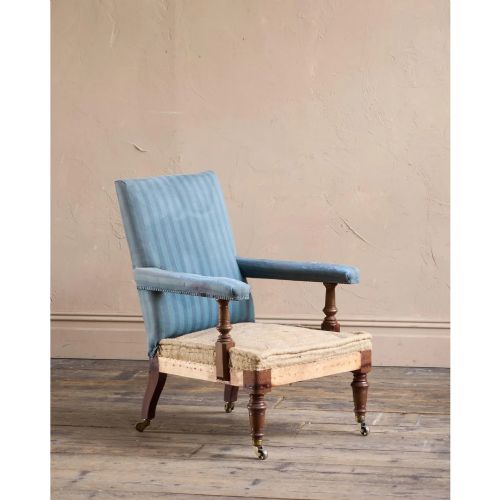
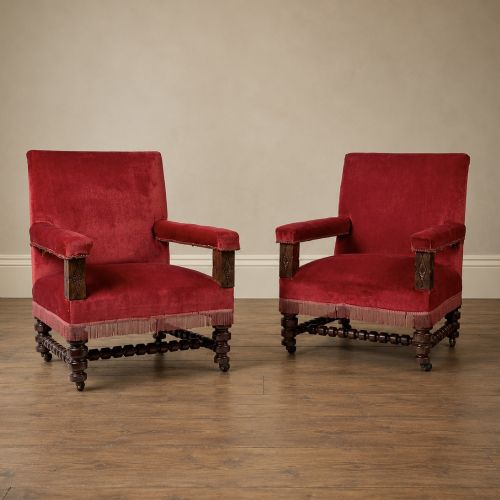
The selections on offer present diverse seating configurations ranging from library chairs and nursing chairs to wingbacks, club elbows, and bergere easy chairs. Walnut, mahogany, and oak appear frequently as the primary woods shaping these structural silhouettes.
Makers and workshops of the nineteenth and twentieth centuries constructed these frames with specific sitting postures in mind, from deep-seated lounging to upright library work. Surviving pieces demonstrate the enduring utility of robust wooden frameworks ready for modern or traditional re-webbing.
Materials and Construction
Cabinet makers built these foundational structures using dense hardwoods such as mahogany, walnut, and oak to withstand daily structural stress. Brass elements sometimes reinforced joints or castors, while split cane panels formed backrests on specific bergere designs.
Internal support relied heavily on hessian webbing, calico lining, and hand-tied springs before top covers of velvet, leather, or printed fabric were applied. Show frames left polished mahogany or walnut exposed around arms and legs, contrasting with fully concealed beech or pine internal carcasses.
Even stripped to bare timber, many vintage armchair frames retain old builder chalk marks hidden inside their seat rails.
Assessing Quality
Quality rests in the integrity of the timber joinery and the precision of the carved show wood. Frames displaying crisp mouldings and robust structural timbers sit higher in the range than plain, utilitarian alternatives.
Proportion and stance define the visual success of an armchair frame, particularly in revival pieces where the silhouette mimics earlier Georgian or Regency lines. The weight and seasoning of the underlying mahogany or walnut dictate the long-term stability of the piece.
Howard and Sons·Morison and Co
The Traditional Upholstered Armchair Frame Glossary
- Show frame
- A wooden structural framework designed to remain partially visible outside the upholstery. This exposes polished walnut, mahogany, or oak to view.
- Bergere
- An upholstered armchair with enclosed sides, typically featuring cane work panels. The wooden frame surrounds a low, broad seat.
- Wingback
- An armchair with side panels attached to the back headrest designed to shield the sitter from draughts. Early examples utilise robust oak or walnut frames.
- Gainsborough
- A wide, open-arm desk chair originating in the eighteenth century. These seats feature upholstered backs and padded armrests.
- Hessian
- A coarse woven fabric utilised as a foundational base for traditional upholstery work. It supports the internal stuffing before top covers are applied.
Traditional Upholstered Armchair Frame: Frequently Asked Questions
What is a traditional upholstered armchair frame?
It is the bare wooden skeleton of a historic seat, often stripped of worn top covers to reveal the structural timber. These frames display the underlying craftsmanship of nineteenth and early twentieth-century cabinet makers.
Buyers acquire them to commission bespoke upholstery matching specific interior schemes. They provide a sturdy foundation built from durable hardwoods like mahogany or walnut.
How do I identify a Victorian frame?
Victorian frames typically employ heavy timbers such as oak, walnut, or rosewood, often featuring dark finishes and robust joinery. Forms include deep-seated club chairs, nursing chairs, and button-back designs.
Proportions tend to be heavier and more substantial than earlier Regency or Georgian examples. Turned wooden legs and visible show frames are common characteristics of this period.
Can I use modern fabric on these frames?
Modern textiles integrate successfully with antique frames, provided the webbing and internal padding are reconstructed properly. Many buyers pair historic walnut or oak frames with contemporary prints, velvets, or leathers.
Traditional stuffing methods using hessian and calico can accommodate modern fire-retardant interliners. This approach preserves historic wooden integrity while meeting contemporary domestic requirements.
What wood was used for these chairs?
Makers relied principally on dense hardwoods such as mahogany, walnut, and oak to ensure structural longevity. Exposed show frames utilised these fine timbers for their attractive grain and capacity to hold crisp carvings.
Internal bracing frequently incorporated secondary softwoods or beech, hidden beneath layers of hessian and upholstery. The choice of primary wood often helps indicate the period and origin of the piece.