
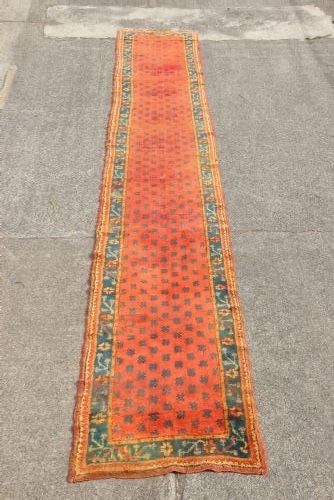

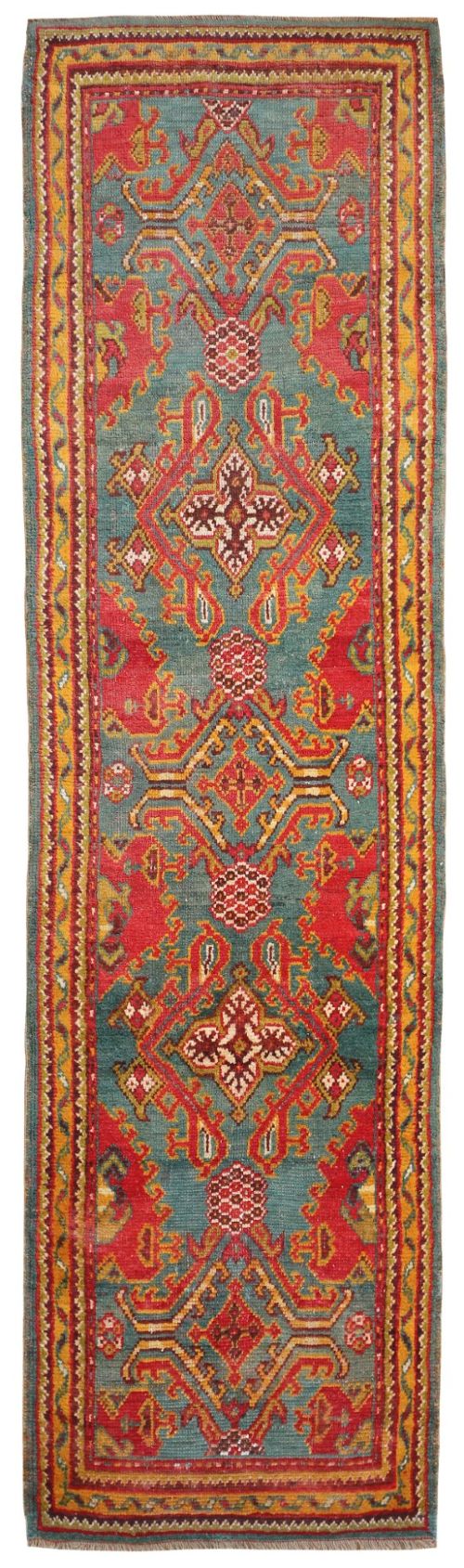

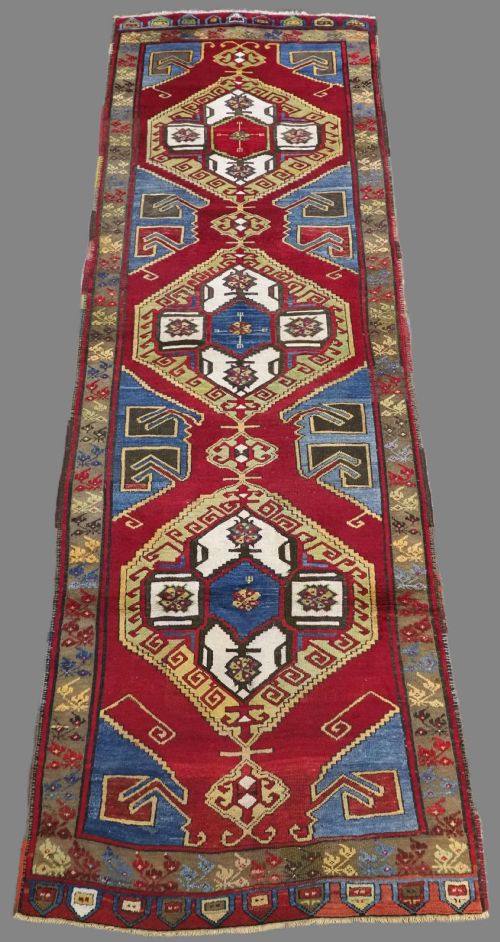


Traditional Turkish Hallway Runner
A traditional turkish hallway runner brings immediate warmth to a narrow space through weathered wool and time-softened dyes.
Traditional Turkish Hallway Runner
A traditional turkish hallway runner is an elongated floor covering designed specifically for corridors, galleries, and narrow passages. When searching for a traditional turkish hallway runner, you encounter hand-knotted and flat-woven examples originating from Anatolian regions. The pieces listed span from the late nineteenth century up to the 1930s, offering narrow formats suited to period hallways.
Most entries showcase regional Anatolian weaving styles, including Ushak, Konya, Taspinar, and Yagcibedir traditions. These long rugs utilise wool pile or flat-woven kilim structures designed to withstand heavy foot traffic while providing distinct tribal and Ottoman aesthetics.
What varies in quality
Quality in these runners rests on the fineness of the knot density and the precision of the tribal or traditional design execution. Tighter knots allow for sharper geometric or floral motifs and greater longevity underfoot.
The integrity of the foundation warps and wefts determines how well a runner maintains its shape over time. Original surviving edges and intact ends separate structurally sound pieces from those requiring extensive conservation.
Materials recorded across the inventory consist entirely of traditional wool and cotton constructions.
The Traditional Turkish Hallway Runner Glossary
- Kilim
- A flat-woven carpet or runner produced without a pile by tightly interweaving warp and weft strands. This technique creates a lightweight, reversible textile with distinct geometric patterns.
- Oushak
- A renowned weaving tradition originating from the town of Ushak in western Anatolia, known for softer pastel or rich terracotta palettes and expansive floral designs. These rugs often feature larger scale motifs than typical village pieces.
- Warp
- The vertical threads stretched tightly on the loom that form the structural skeleton of the runner. The visible fringe at either end of a rug consists of these extended warp threads.
- Weft
- The horizontal threads passed back and forth across the warp to hold the knots or flat-weave securely in place. Together with the warp, they create the durable foundation of the textile.
- Selvage
- The reinforced outer edge of a runner formed by wrapping several warp threads with lateral yarn. A sound selvage prevents the sides from fraying under regular domestic use.
Traditional Turkish Hallway Runner: Frequently Asked Questions
Where should I place a long runner?
These narrow textiles fit ideally in entrance hallways, long corridors, and transitional landings where floor space is restricted. Their elongated proportions guide movement through a home while protecting timber or tiled floors.
Ensure you measure the corridor width and length carefully, leaving a uniform margin of exposed flooring around the perimeter of the rug for a balanced look.
How do I clean an antique runner?
Gentle, regular vacuuming without a rotating power brush helps remove embedded dust and grit from the wool pile. Avoid shaking the textiles vigorously, as this strains the old foundation threads.
For deeper cleaning, consult a specialist experienced in antique vegetable-dyed carpets rather than attempting wet cleaning at home. Professional care preserves the integrity of the natural wool and historical dyes.
Are these runners durable for heavy traffic?
Traditional village and tribal runners were constructed for demanding daily household use, utilising resilient sheep's wool and sturdy foundations. The tight hand-knotting provides natural elasticity and resistance to wear.
Using a quality underlay beneath the runner prevents slipping and cushions the fibres against hard subfloors, extending the functional lifespan of the piece.
How can I tell the age of a runner?
Dating relies on examining the characteristics of the wool, the composition of the natural dyes, and the specific regional weaving structure. Subtle irregularities in symmetry often point to authentic hand-weaving from nineteenth or early twentieth-century village workshops.
Comparing the specific design motifs and structural traits against documented regional types helps narrow down the probable period of manufacture.