

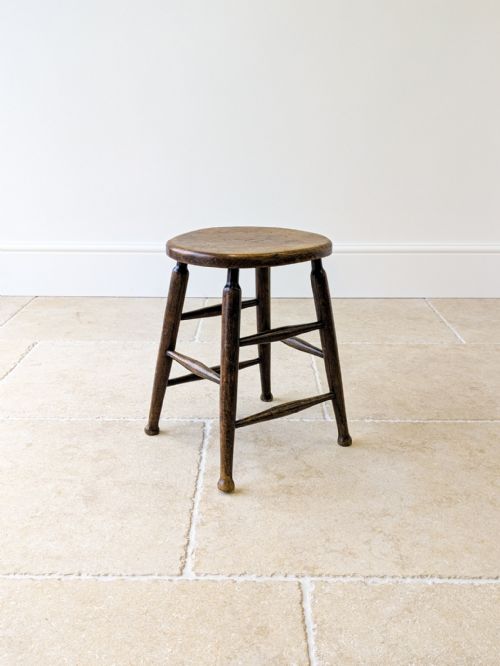

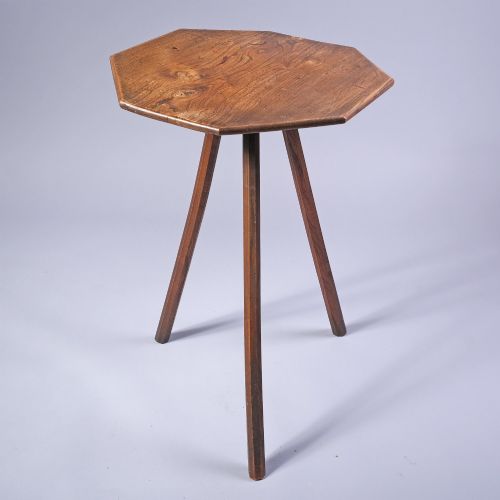

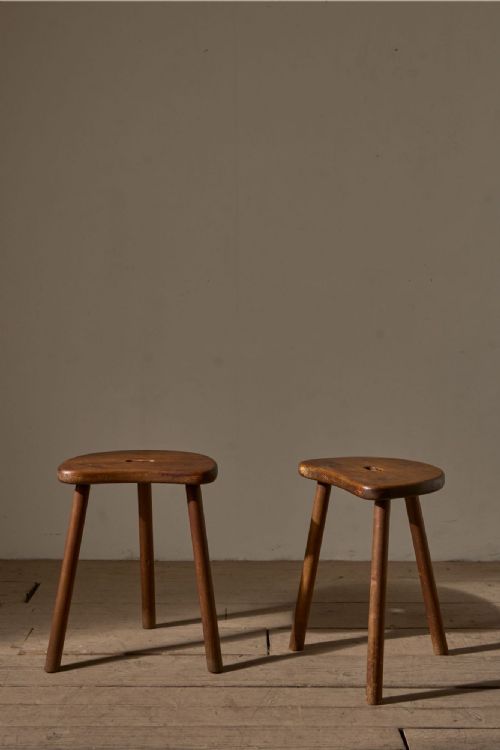
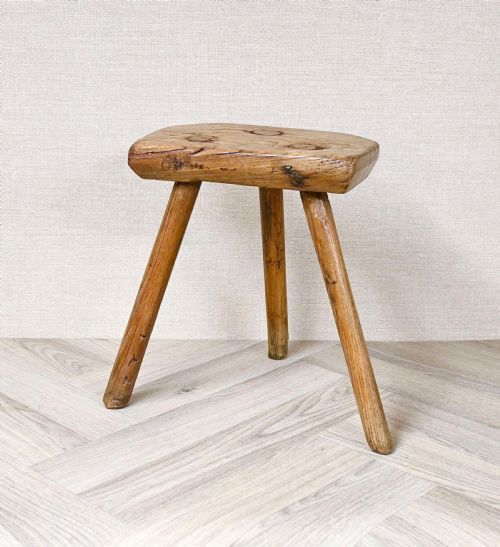


Traditional Tripod Stool
A traditional tripod stool offers honest utility and rustic charm, built from native timbers with three steadfast legs that never wobble on uneven flagstones.
Traditional Tripod Stool
When you search for a traditional tripod stool, you encounter humble seating and small tables rooted in English vernacular and farmhouse traditions. These pieces date principally from the eighteenth and nineteenth centuries, spanning Georgian vernacular through to Victorian rustic forms.
How they were made
Makers relied on native British hardwoods such as oak, elm, ash, beech, and pine, selecting sturdy timbers suited to heavy farm labour. Tops were frequently fashioned from thick single slabs of elm or oak, while legs were turned or shaped from ash or beech.
Construction typically involved through-wedged tenons or simple bored joints where the legs penetrated the seat top at an angle for stability. Surfaces often bear original paint, plain scrubbed timber, or simple carved details rather than elaborate polish.
Traditional Tripod Stool Retail Price Guide 2026
Typical asking prices for traditional tripod stool among the pieces listed under this phrase on Sellingantiques today, from the lower quarter to the upper quarter. They describe what is for sale here now, not the wider market.
A milking stool had to balance stability on uneven mud floors with the awkward reality of dodging a cow's tail.
What varies in quality
Quality in a traditional tripod stool rests upon the character of the timber and the integrity of its joinery. A superior piece displays honest patination, well-balanced proportions, and tight leg joints that have survived decades of daily use without modern intervention.
Lesser examples suffer from clumsy replacement legs, excessive dry rot in the underside, or unconvincing surface treatments applied long after manufacture. The best survivals retain their original seats, authentic tool marks, and untouched surfaces that tell a clear story of their working life.
The Traditional Tripod Stool Glossary
- Vernacular
- Everyday objects made by local craftspeople using regional traditions rather than high-style urban designs. These items served immediate domestic or agricultural needs.
- Milking stool
- A low three-legged stool used by dairy workers for sitting close to cows. Their simple construction made them easily portable around the farm.
- Patina
- The deep surface sheen and colour developed by timber through decades of handling, polishing, and natural ageing. Good patina cannot be easily replicated by modern finishers.
- Hardwood
- Timber derived from broad-leaved deciduous trees such as oak, ash, elm, and beech. These dense woods provided the structural strength required for country seating.
Traditional Tripod Stool: Frequently Asked Questions
Are these stools comfortable to sit on?
Traditional tripod stools were designed for brief tasks rather than long periods of relaxation, featuring simple wooden tops shaped to the sitter.
Their firm seats encourage upright posture, making them popular today as decorative accent pieces or occasional perches.
How can I date an old stool?
Dating relies on examining tool marks, timber shrinkage, construction methods, and the presence of original paint or surface wear.
Eighteenth-century examples often display hand-adzed undersides and simple pegged joints, whereas Victorian pieces may show early machine-turned legs.
Can I use these stools outdoors?
While these pieces originated in farmyards and dairies, modern indoor environments preserve their historic timber surfaces best.
Exposing antique hardwood and pine to changing weather conditions can cause splitting and ruin the original patina.
What is pollard oak?
Pollard oak comes from trees that were cut back close to the trunk to promote dense branching, creating highly figured timber.
This distinctive wood yields rich patterns and swirls that catch the eye on small table tops.