
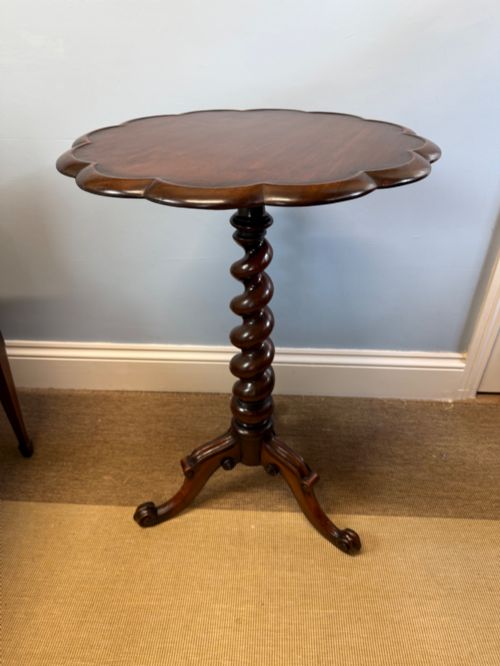
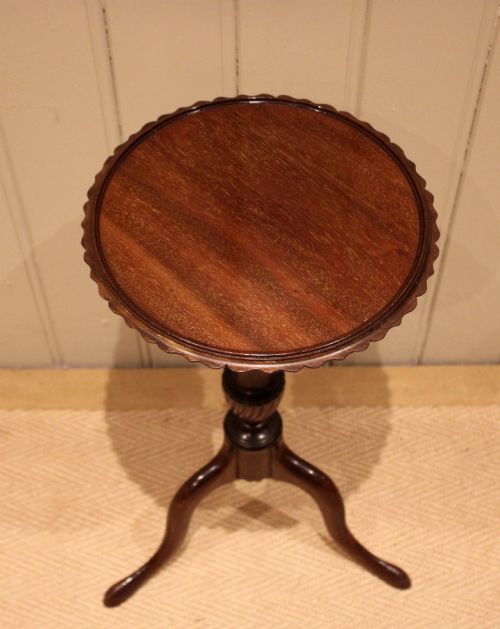
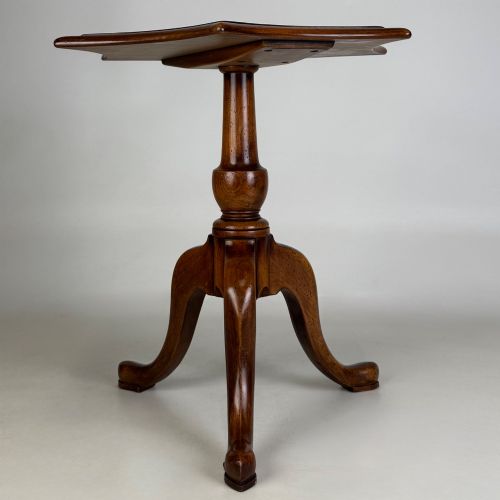
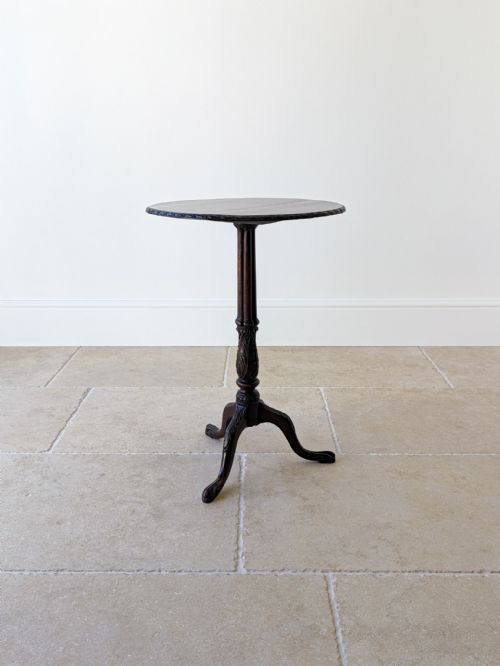


Traditional Tripod Lamp Table
A traditional tripod lamp table provides a steady, slender platform for lighting and small objects, combining centuries of cabinet-making skill with practical daily use.
Traditional Tripod Lamp Table
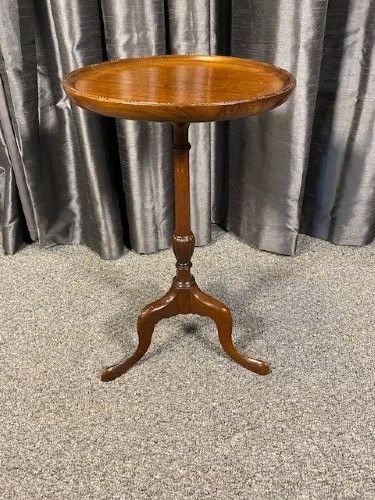
When you search for a traditional tripod lamp table, you find pieces designed to stand beside chairs or beds to hold illumination and small items. The selection here spans multiple periods, featuring examples from the Georgian era through to the 1930s.
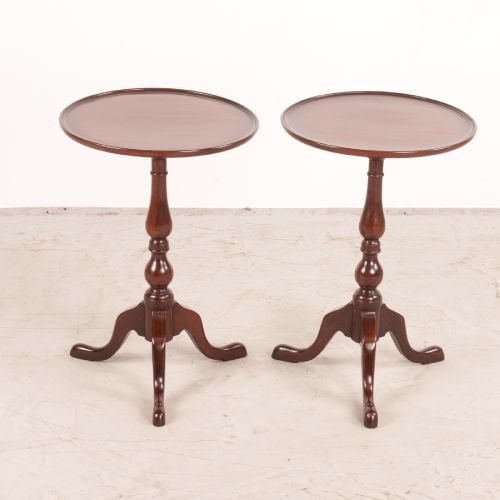
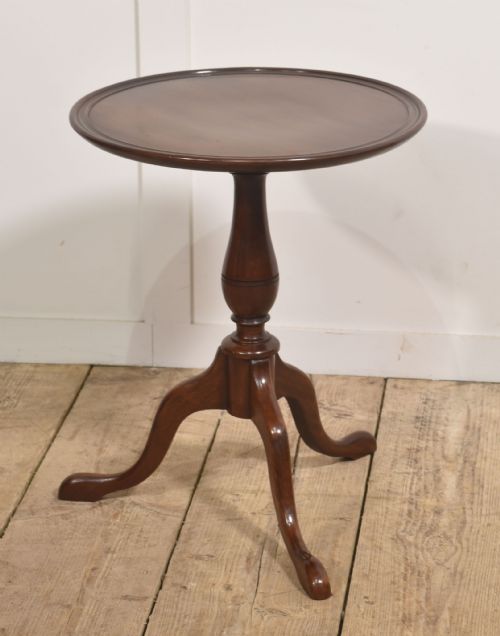
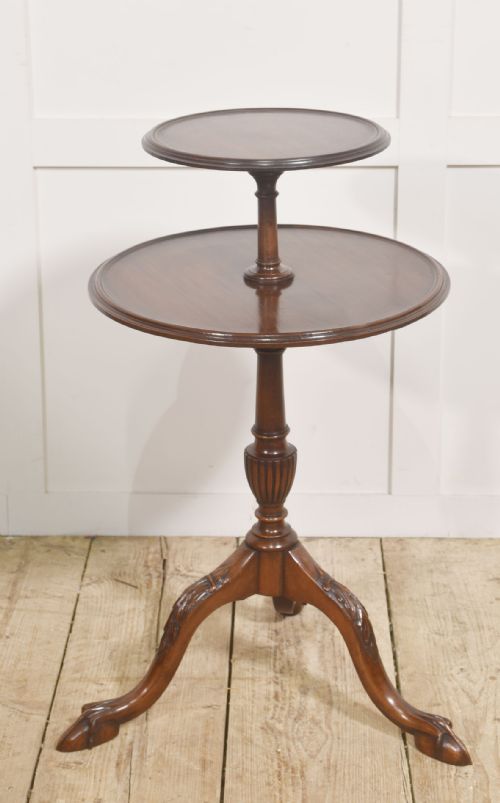
The most common form on this page is the wine table or occasional table raised on a three-legged pedestal base. These compact items serve as side tables or lamp stands within living spaces and studies.
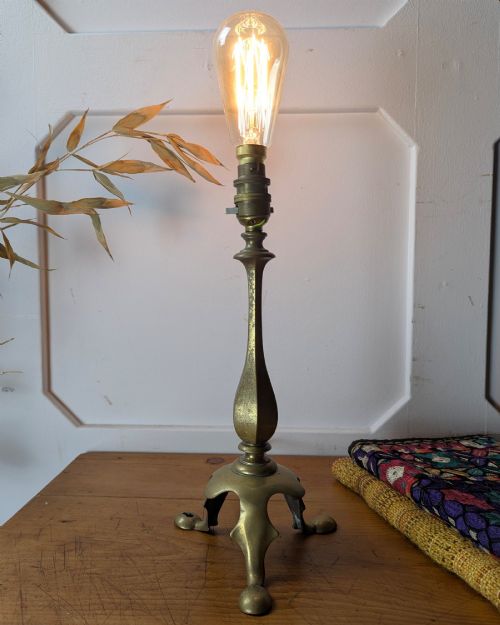
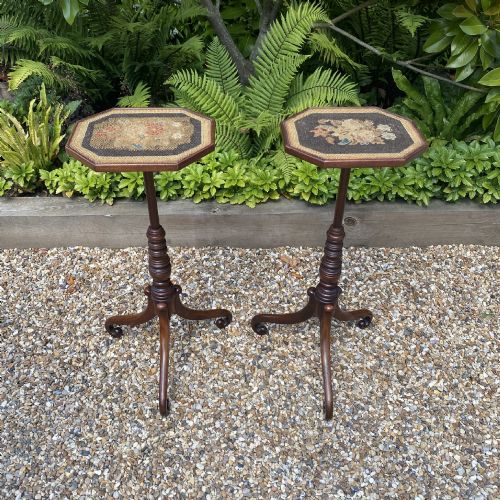
The materials and styles range widely, incorporating Georgian and Regency designs alongside Edwardian craftsmanship and rustic farmhouse cricket tables. Mahogany and walnut appear frequently, complemented by oak, pine, elm, and brass elements.
How they were made
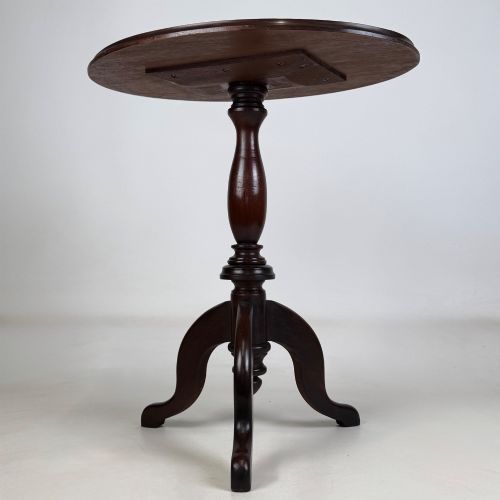
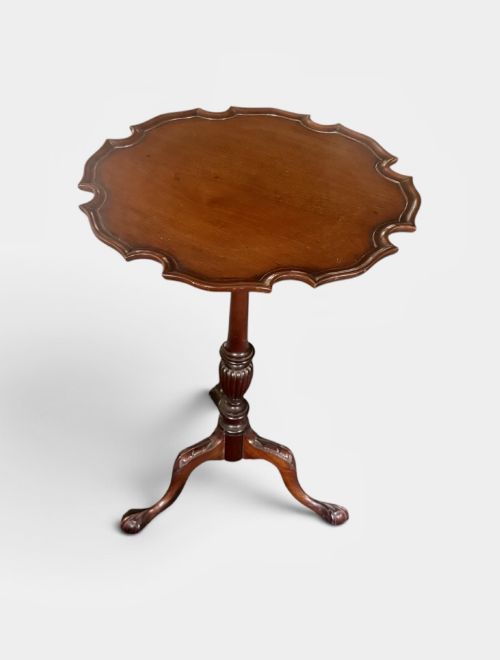
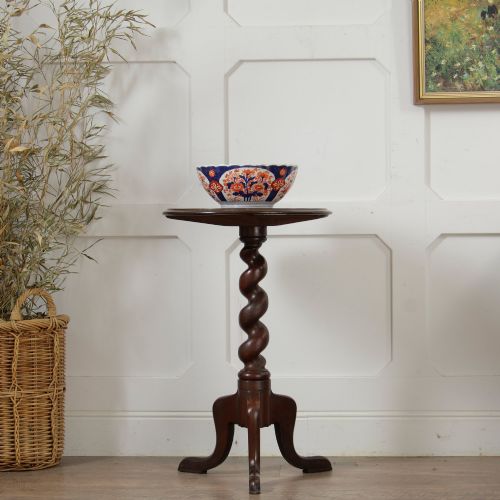
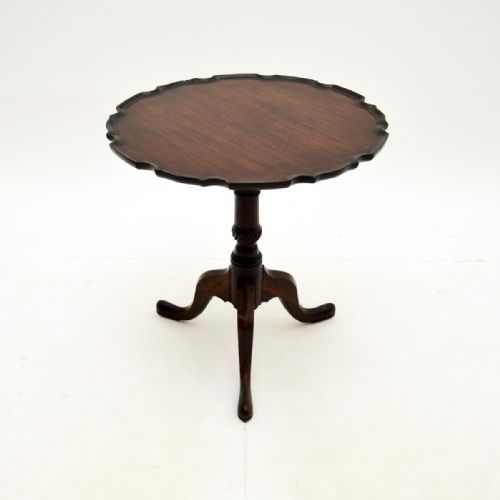
Cabinet-makers constructed these tables using solid and veneered timbers such as mahogany, walnut, and oak, often shaping tops with decorative borders like pie crust rims. Turned pedestals and bobbin-turned legs required precise lathe work to support the three-legged tripod bases.
Some variations incorporate tilting mechanisms or detachable tops for convenience, while others utilise brass fittings and painted finishes. Construction methods rely on traditional joinery to secure the central pillar firmly into the splayed legs.
Listings feature mahogany, walnut, oak, pine, elm, and brass across periods spanning the 18th century to the 1930s.
What varies in quality
The distinction between ordinary and superior pieces rests on the choice of timber and the crispness of the turning on the pedestal. Figured mahogany or burr walnut displays natural grain patterns that elevate the visual weight of a small table.
Proportion and stability determine the success of a tripod design. Tables featuring well-balanced legs and hand-carved details or shaped rims demonstrate a higher standard of workshop production.
Faraday & Sons
The Traditional Tripod Lamp Table Glossary
- Tripod table
- A small freestanding table supported by a central pillar and three legs. This configuration prevents rocking on uneven floors.
- Wine table
- A compact occasional table originally intended for holding glasses and bottles. They frequently feature circular tops and slender pedestals.
- Cricket table
- A small rustic table with three legs and a round wooden top, often constructed from pine, oak, or elm. Their origins lie in vernacular English farmhouse interiors.
- Tilt top
- A tabletop hinged to the pedestal so it can be folded vertically when not in use. This mechanism saved space in period rooms.
- Pie crust rim
- A raised, carved tabletop edge shaped in undulating curves. It prevents small objects from rolling off the surface.
Traditional Tripod Lamp Table: Frequently Asked Questions
What is a traditional tripod lamp table used for?
These tables provide a compact surface next to seating areas for lamps, drinks, and small decorative objects.
Their small footprint allows them to fit into corners and beside armchairs where larger furniture will not go.
How do I identify a Georgian tripod table?
Look for timber selection like solid mahogany and proportions typical of eighteenth-century cabinet-making. Details such as crisp column turnings often indicate the period.
Later revival pieces from the Edwardian era emulate these forms but use different internal construction methods.
Are tilt top tables stable?
Tilt top mechanisms use a small catch or wooden block to secure the top in a horizontal position. When properly adjusted, the surface remains steady for normal daily use.
Over time, the pivot mechanism may loosen slightly, which is a common characteristic of older folding tables.
Where should I place a cricket table?
Cricket tables suit rustic or traditional interiors as bedside stands or low side tables. Their three-legged design stands firmly on wooden floors and stone flags.
Pair them with simple seating to maintain the vernacular character of the piece.