


Traditional Timber Hall Chairs
Traditional timber hall chairs are sturdy seats designed for grand entrances, offering sculptural backs and rich mahogany or oak surfaces.
Traditional Timber Hall Chairs
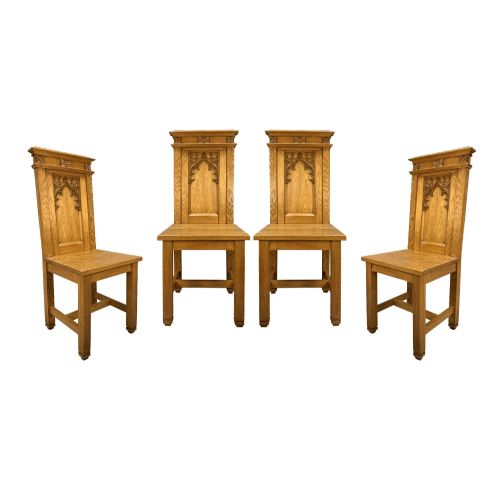
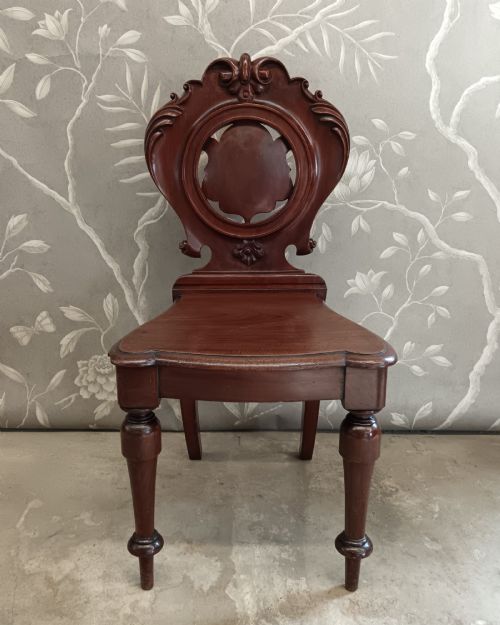
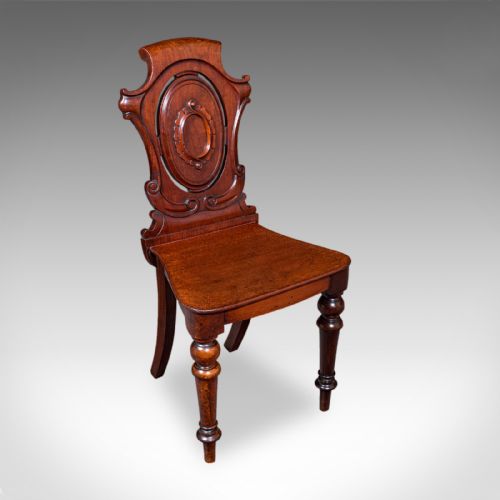
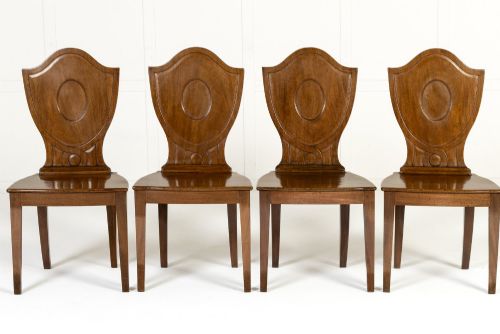
Traditional timber hall chairs are rigid, upright seats originally placed in entranceways, hallways, and reception rooms to impress visitors. When searching for traditional timber hall chairs, buyers encounter diverse forms ranging from strict Victorian mahogany models to oak Jacobean Revival examples and Georgian side chairs.
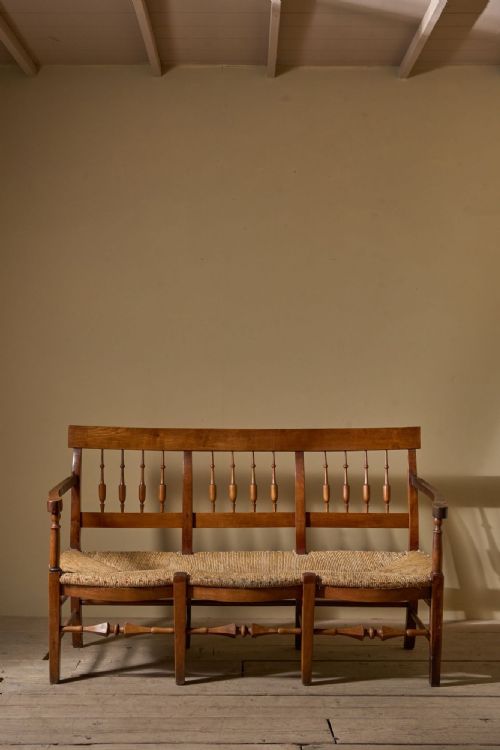
The selection includes matched pairs, sets of three or four, and single pieces shaped from timber, walnut, and fruitwood. Alongside conventional hall chairs, the range extends to occasional side chairs, benches, settles, and regional folk art spinning chairs.
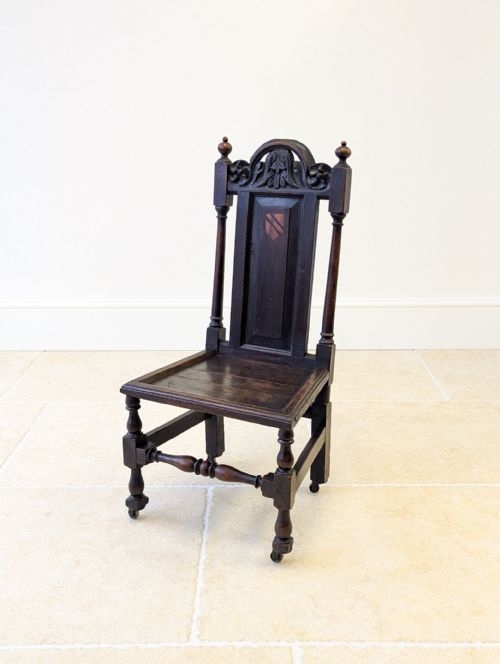
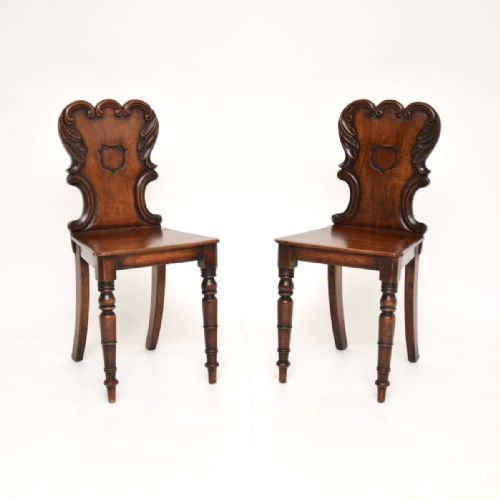
Origins span across English, Scottish, Welsh, French, and Chinese workshops, dating from the seventeenth, eighteenth, and nineteenth centuries. These sturdy seats combine practical function with decorative woodwork, often featuring carved shields, panelled backs, and solid wood construction.
What varies in quality
The quality of traditional timber hall chairs is determined by the selection of the timber and the depth of the carving. Dense, well-figured mahogany or quarter-sawn oak with crisp, deeply articulated relief carving represents the upper tier of craftsmanship.
Construction methods also separate standard production from superior pieces. Chairs featuring integrated frames, tight joints, and well-balanced proportions demonstrate greater maker skill than simpler, utilitarian alternatives.
Among the formal oak and mahogany seats sits a Welsh folk art spinning chair, proving even hallways had a mischievous side.
Holland & Sons
The Traditional Timber Hall Chairs Glossary
- Shield Back
- A chair back shaped in the outline of a heraldic shield, popular in Georgian and Victorian seating designs.
- Jacobean Revival
- A nineteenth-century historicist style copying seventeenth-century English furniture, characterised by dark oak and geometric carving.
- Settle
- A wooden bench with high backs, solid arms, and a closed base originally designed to block drafts in hallways.
- Rush Seating
- Woven dried marsh grass forming the supportive seat pad of vernacular chairs and benches.
- Gothic Revival
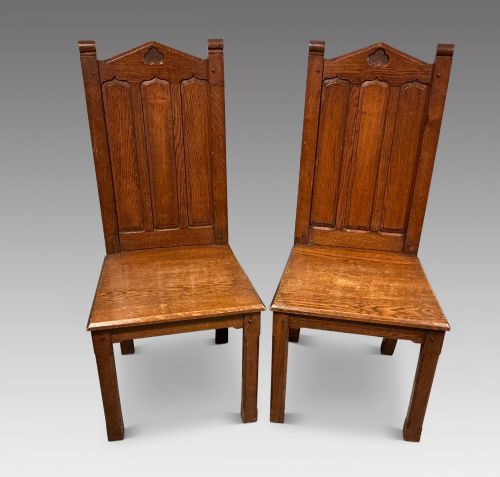
- An architectural and decorative style incorporating pointed arches, tracery, and medieval motifs into timber furniture.
Traditional Timber Hall Chairs: Frequently Asked Questions
Where were traditional timber hall chairs placed?
These chairs were positioned in the main entrance halls, vestibules, and grand corridors of large houses. They served as formal seating for visitors waiting to be announced.
Because hallways were drafty and utilitarian, these seats were deliberately unpadded and built with upright wooden backs. Their primary purpose was visual impact rather than long-term comfort.
How do I identify a Victorian hall chair?
Victorian examples often feature heavy mahogany or oak construction with dark finishes and deeply carved shield or panel backs. They frequently appear as matched pairs or larger sets.
Many incorporate revival styles, such as Jacobean or Gothic motifs, reflecting nineteenth-century interest in historical design. The timber is typically dense, and the construction is rigidly upright.
Are hall chairs comfortable to sit on?
Traditional timber hall chairs are generally firm and upright, designed for short periods of sitting rather than relaxing. Most feature solid wood seats without upholstery.
When living with them today, they function well as decorative accent pieces in modern hallways, bedrooms, or dining spaces where space is limited.
What woods were used for hall chairs?
Cabinetmakers primarily used durable hardwoods like mahogany and oak to withstand heavy daily use in entranceways. Walnut and fruitwood also appear in select regional examples.
Secondary materials sometimes include rush for woven seats, brass for subtle hardware, and elm for sturdy country-made chair bases.