


Traditional Timber Credenza
These traditional timber credenza pieces span centuries of cabinetmaking, offering rich grain and practical storage for the home.
Traditional Timber Credenza
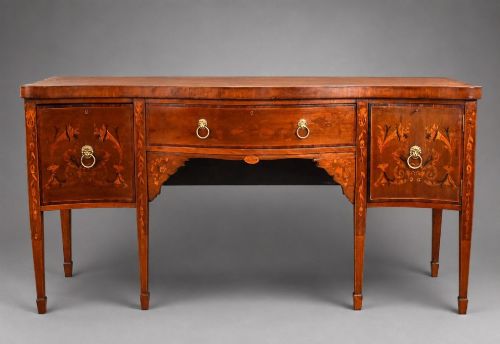
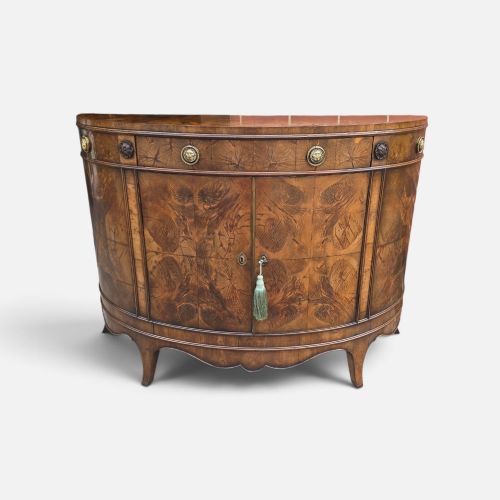
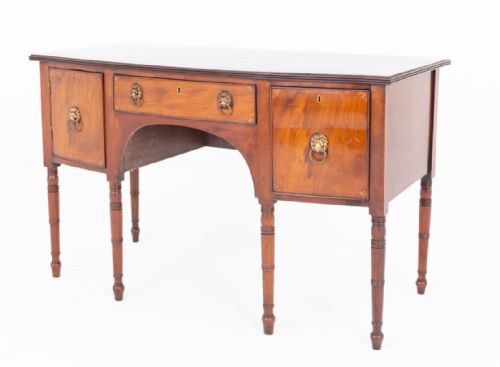
When you search for a traditional timber credenza, you are looking at substantial storage furniture encompassing sideboards, side cabinets, dresser bases, and buffet servers. The examples available on this page range across the Georgian, Victorian, and Edwardian periods.
You are most likely to meet mahogany sideboards and side cabinets from the nineteenth century alongside oak, yew, and cherrywood variants. These forms originated to serve dining rooms and halls, providing surfaces for display and cupboards for service items.
The pieces reflect varied regional expressions including English country styles, French provincial work, and revival designs such as Victorian Rococo and William IV. Each period brings distinct proportions and decorative treatments to the timber form.
How they were made
Cabinetmakers constructed these pieces primarily from solid timbers like mahogany, oak, yew, and cherrywood, frequently applying flame mahogany veneer or burr yew to primary display surfaces. These woods were chosen for their durability and striking grain patterns.
Decoration relied heavily on intricate marquetry inlay and brass hardware, while some forms incorporated glass panels or mirror backs. Structural joinery and turning supported the weight of heavy timber carcasses and large top surfaces.
Listings feature mahogany, oak, yew, and cherrywood across eighteenth, nineteenth, and early twentieth-century periods.
What varies in quality
The selection of timber grain and the precision of veneer matching separate standard execution from superior work. Cabinets featuring well-chosen flame mahogany or burr yew demonstrate greater ambition in the workshop.
Refinement in decorative details such as marquetry inlay and brass fittings indicates the tier of the piece. The handling of serpentine and bow fronts also distinguishes more complex commissions from simpler vernacular furniture.
The Traditional Timber Credenza Glossary
- Credenza
- A side cabinet or sideboard used historically for serving and display. The form evolved through various periods to accommodate dining room storage.
- Serpentine
- A furniture front curved with a convex centre flanked by concave ends. This undulating shape requires advanced woodworking skill.
- Demi Lune
- A half-moon shape characteristic of certain side cabinets and tables. It allows pieces to sit flush against a wall while offering curved visual lines.
- Marquetry
- The art of applying pieces of veneer to a structure to form decorative patterns. Craftsmen utilised contrasting woods to create intricate pictorial designs.
- Dresser Base
- A low wooden storage unit with drawers and cupboards, originating from country houses. It formed the lower half of traditional kitchen or dining dressers.
Traditional Timber Credenza: Frequently Asked Questions
What is a traditional timber credenza used for?
These pieces serve primarily as storage and display furniture in dining rooms, living spaces, and hallways. They provide surface areas for serving food or displaying decorative objects, alongside interior cupboards and drawers for tableware and linens.
The sturdy timber construction allows them to support heavy items while anchoring the proportions of a room. Their historic function as service furniture translates well into modern interiors needing substantial storage.
How do I identify a Georgian sideboard?
Georgian examples typically exhibit classical proportions, refined mahogany timbers, and restrained ornamentation. Look for straight or bow fronts supported by tapered legs or spade feet.
The joinery and hardware on these pieces reflect eighteenth-century cabinetmaking standards. They lack the heavy revival carving seen on later Victorian iterations.
What defines a Victorian mirror-backed sideboard?
Victorian mirror-backed pieces feature an upright wooden superstructure holding an integrated glass mirror. Pollard oak and mahogany were favoured for these substantial display units.
The mirror frame often incorporates elaborate carving or shelf tiers designed to showcase ceramics and silver. This form dominated late nineteenth-century dining room interiors.
How do I care for antique timber furniture?
Maintain antique timber by keeping it away from direct heat sources and fluctuating humidity. Apply traditional wax polishes sparingly to nourish the wood without building up heavy residues.
Lift objects rather than sliding them across the top surface to protect the polish and veneer. Regular dusting with a soft, dry cloth preserves the historic finish.