



Traditional Tansu Chest
These traditional tansu chest pieces offer ingenious storage and striking timber grain, bringing centuries of Japanese craftsmanship directly into a modern home.
Traditional Tansu Chest
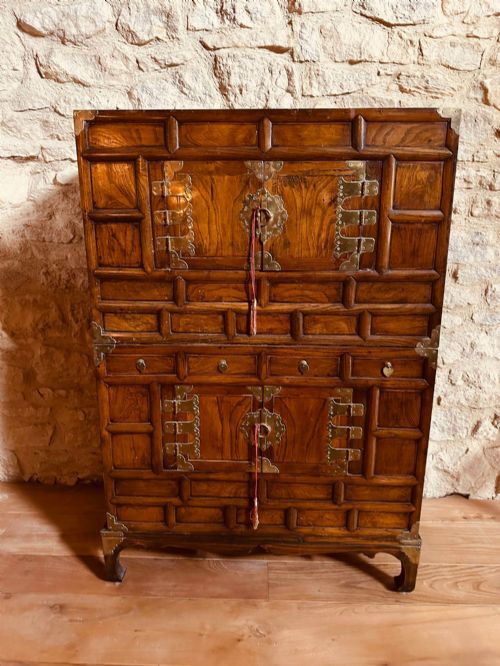
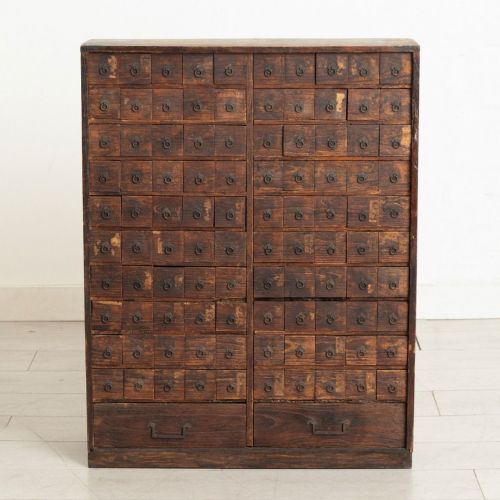
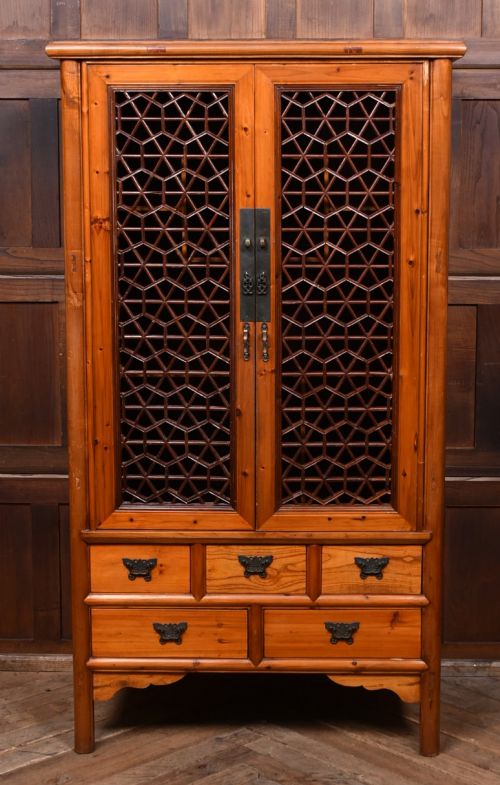
A traditional tansu chest is a versatile piece of Japanese storage furniture designed for domestic or merchant use, appearing here primarily in nineteenth-century forms and early twentieth-century examples from the Meiji and Taisho periods. Buyers hunting for these pieces encounter diverse configurations ranging from simple storage cabinets to specialised apothecary banks of drawers and kitchen mizuya.
The selection frequently includes wheeled kuruma-dansu, step-shaped kaidan tansu, and larder cupboards that reflect specific historic domestic interiors. Most items originate from Japan and utilise regional timbers shaped for practical utility rather than purely decorative display.
Nineteenth-century examples dominate the offerings, often presenting as straightforward tansu cabinets alongside striking red lacquered variations or keyaki merchant chests. Each object embodies the utilitarian design philosophy of historical Japanese joinery, adapted for domestic organisation and portability.
How traditional tansu chest pieces were made
Maker construction relies on native timbers including cedar, pine, elm, cypress, and zelkova wood, frequently paired with robust iron hardware to reinforce corners and drawers. Woodworkers selected these materials for durability and distinct grain patterns, which receive varied finishes such as red lacquer or natural treatments.
Joinery methods prioritise structural strength without relying on modern fasteners, allowing timber to expand and contract naturally within changing climates. Iron straps, lock plates, and corner brackets serve a dual purpose of physical reinforcement and visual accentuation across the exterior.
Traditional Tansu Chest Retail Price Guide 2026
Typical asking prices for traditional tansu chest among the pieces listed under this phrase on Sellingantiques today, from the lower quarter to the upper quarter. They describe what is for sale here now, not the wider market.
Some chests rolled on wheels so merchants could casually wheel their entire life savings out of the house during an earthquake.
What varies in quality
Quality differentiates itself through the choice of primary timber, where dense hardwoods like zelkova or selected elm command greater attention than softer woods like pine. The complexity of the internal configuration, such as multi-drawer apothecary banks or integrated sliding doors, also dictates the sophistication of the piece.
The integrity and original retention of the iron hardware significantly influence the character of an individual chest. Expert hand-forged mounts and functional locking mechanisms elevate the standing of a cabinet far above examples with later replacements or simplified fittings.
The Traditional Tansu Chest Glossary
- Meiji Period
- A historical era in Japan spanning from 1868 to 1912, known for significant cultural shifts and traditional craftsmanship. Many surviving pieces date from the latter half of this era.
- Taisho Period
- The period in Japanese history running from 1912 to 1926, which produced refined domestic furniture. Pieces from this era often bridge traditional forms with early twentieth-century interiors.
- Kaidan Tansu
- A traditional Japanese step chest designed primarily for placement beneath stairwells or as a staircase itself. These dual-purpose units incorporate concealed compartments within the steps.
- Kuruma-Dansu
- A mobile storage chest fitted with heavy wooden or iron wheels beneath the base. This wheeled design allowed merchants to quickly move valuable goods during fires.
- Mizuya
- A traditional Japanese kitchen tansu utilised for storing culinary utensils and food provisions. These cabinets typically feature slatted sliding doors and multiple small drawers.
Traditional Tansu Chest: Frequently Asked Questions
How were tansu chests used historically?
Historically, these chests functioned as portable storage systems for merchants, travellers, and families before built-in closets became common. Different configurations met specific domestic needs, from storing kitchen provisions to holding apothecary medicines.
Specialised forms like step chests doubled as functional staircases, maximising utility in compact Japanese living spaces.
Where should I place a tansu in my home?
A tansu chest suits living rooms, hallways, or bedrooms where its unique configuration can serve as a focal point or practical storage credenza. Their substantial timber presence anchors a room while providing functional drawer and cabinet space.
Keep them away from direct heat sources and dramatic humidity fluctuations to protect the historical wood and lacquer finishes.
How do I identify Meiji period pieces?
Meiji period pieces are identified through traditional construction markers, regional Japanese timbers, and nineteenth-century joinery techniques. The specific historical context aligns with production methods prior to twentieth-century industrialisation.
Examining the original iron hardware, wood species like cedar or zelkova, and overall patina helps distinguish these nineteenth-century origins.