


Traditional Tall Drawers
Traditional tall drawers offer vertical storage built from mahogany, walnut, oak, and pine across Georgian, Victorian, and Edwardian periods.
Traditional Tall Drawers
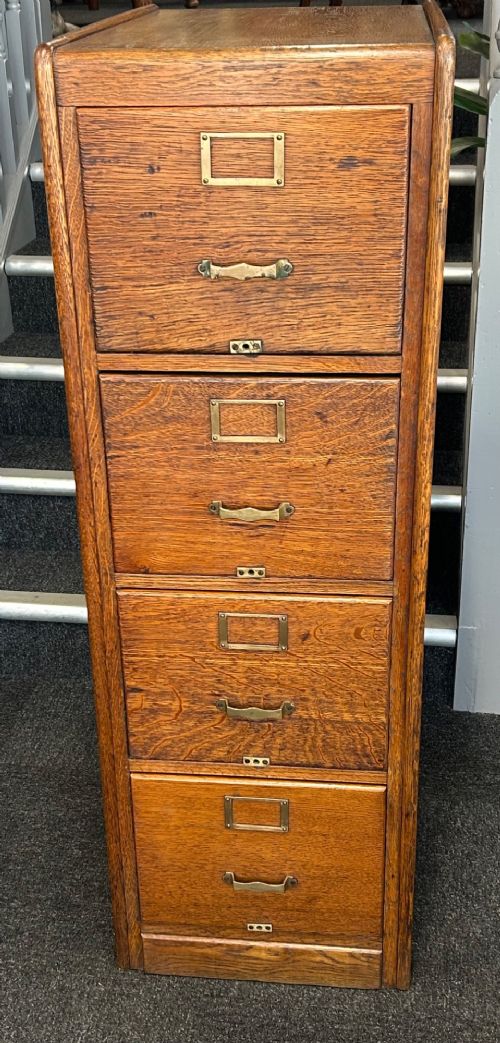
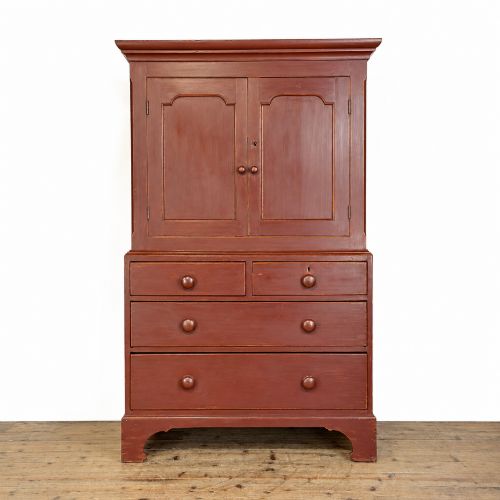
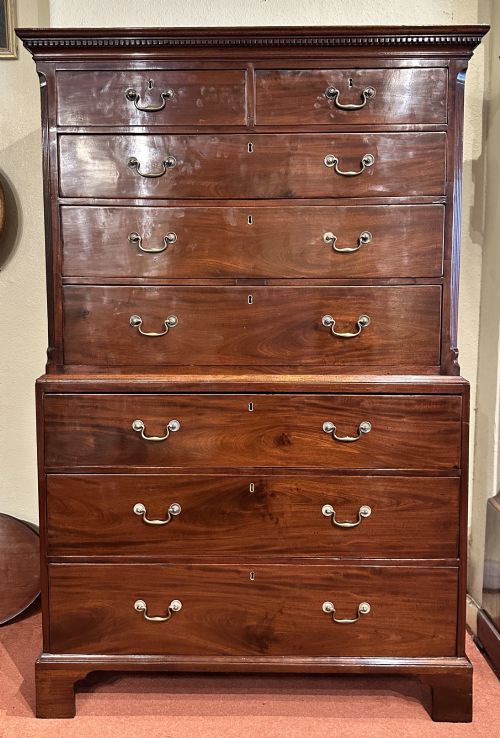
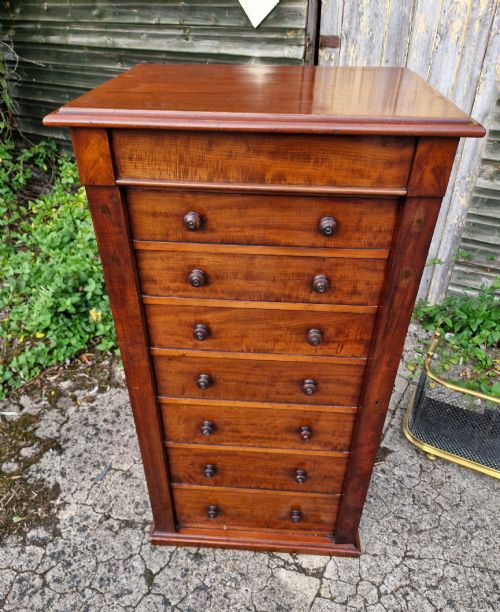
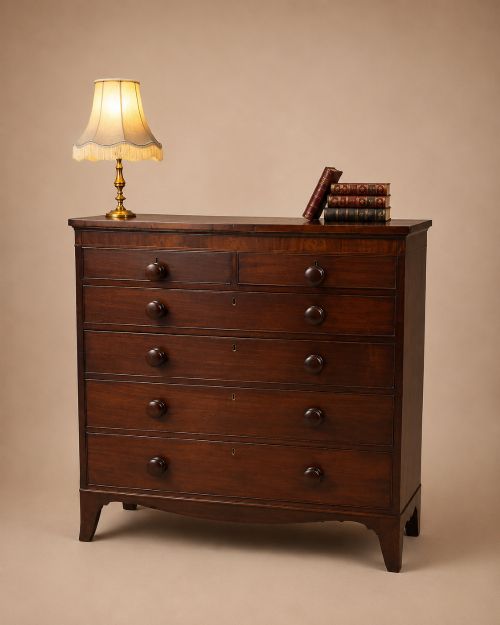
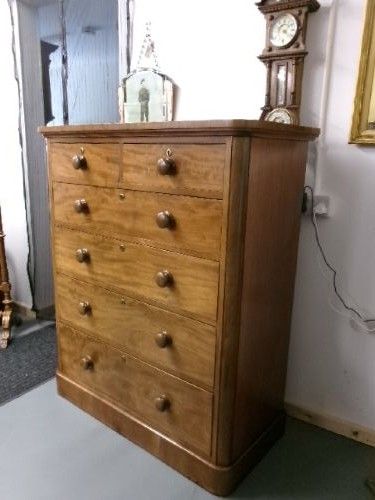
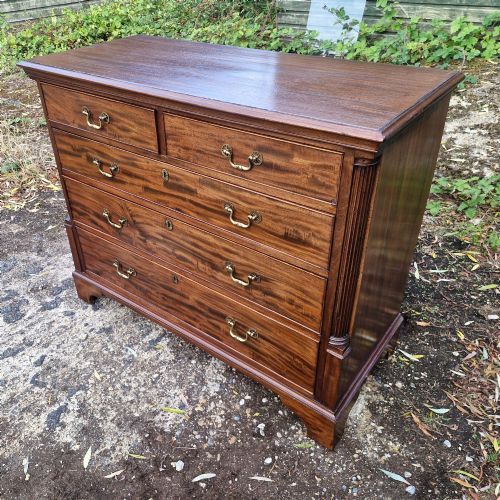
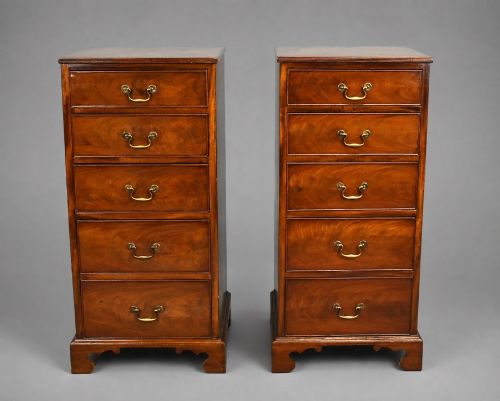
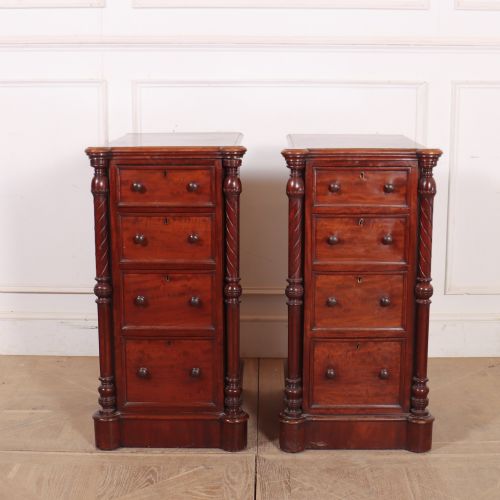
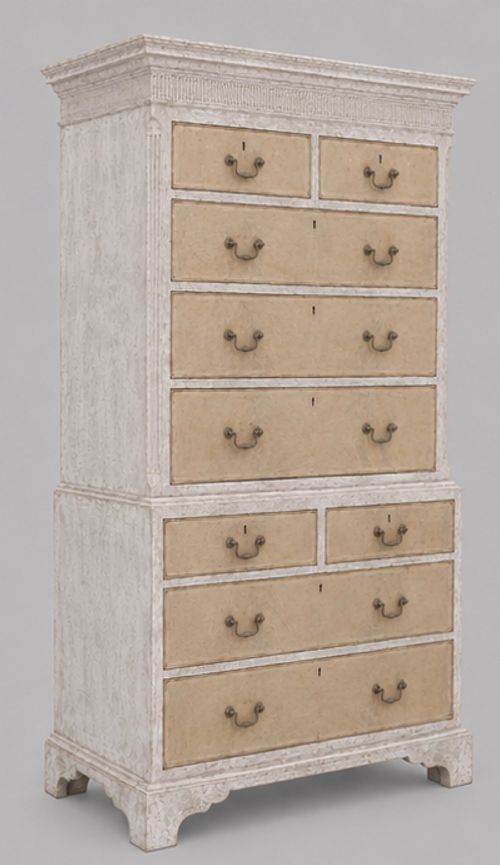
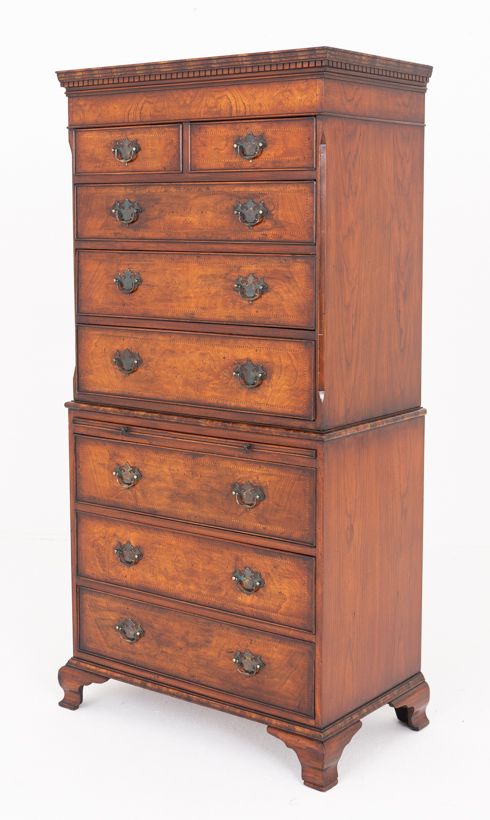
Traditional tall drawers encompass tallboys, chest-on-chests, Wellington chests, and multi-tiered chests of drawers designed to maximise storage room while occupying a compact floor footprint. When searching for traditional tall drawers, buyers encounter pieces spanning the Georgian, Victorian, and Edwardian eras, alongside early twentieth-century examples.
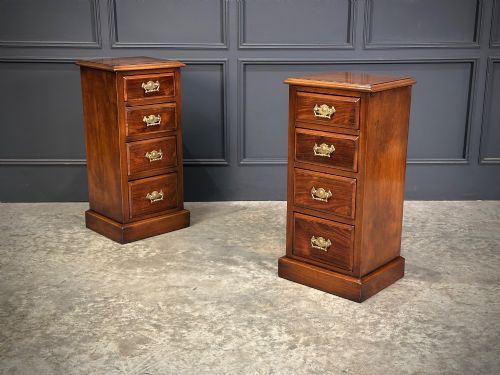
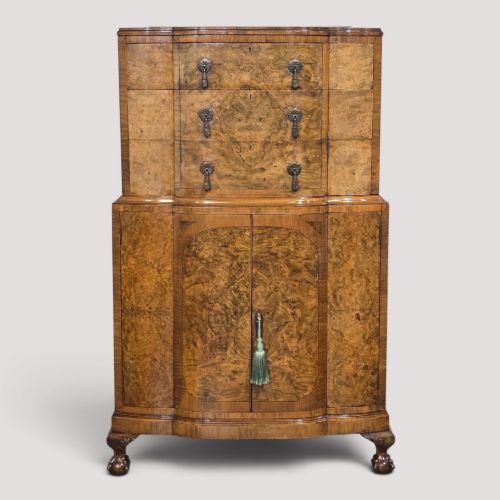
Mahogany forms the dominant timber across these vertical storage pieces, frequently accompanied by walnut, burr walnut, oak, pine, elm, and painted finishes. Forms range from monumental eighteenth-century chest-on-chests to narrow Victorian Wellington chests and bedside chests.
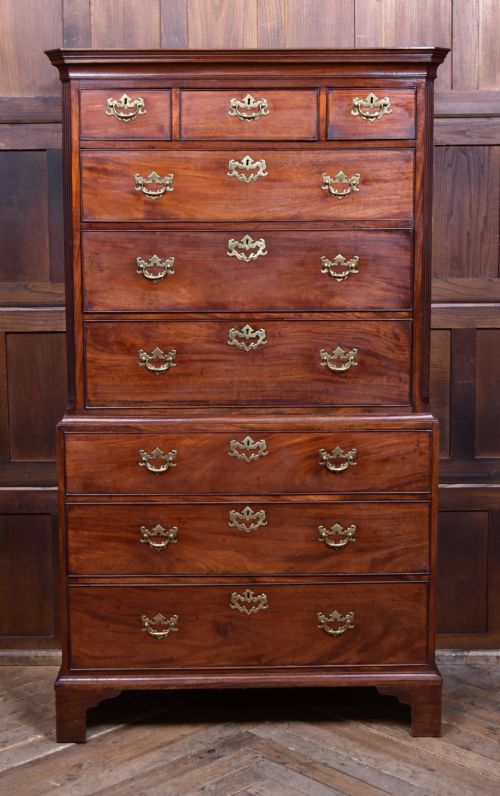
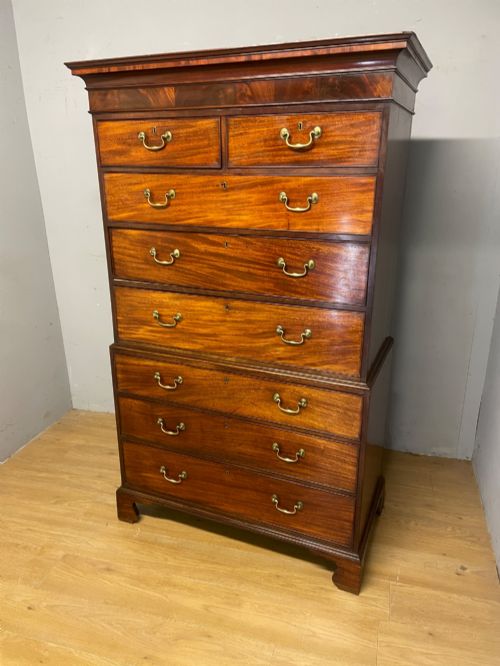
The most common formats on this page are mahogany chest-on-chests from the Georgian period and multi-height chests of drawers from the nineteenth century. These vertical case pieces provide deep storage capacity through graduated drawers stacked securely within tall frames.
Materials and construction methods
Cabinet makers utilised solid timbers and selected veneers, applying mahogany, walnut, and burr walnut over secondary woods to achieve figured surfaces on tall drawer carcases. Drawer linings typically employed pine or oak, joined with hand-cut dovetails to withstand daily weight and movement.
Surface treatments included French polishing, wax finishes, and occasional painted or scumble decoration over pine and elm. Brass hardware, including drop handles and plate backplates, secured the drawer fronts while providing operational grip.
Several tall chests retain their original country house scumble paint, proving that even formal storage occasionally wore a disguise.
Distinctions in quality
Quality rests upon the selection of timber figures, such as flame mahogany or burr walnut veneers, matched symmetrically across the drawer fronts. The crispness of hand-cut dovetails and the retention of original brass handles or brass locking mechanisms elevate a piece.
Proportion and scale dictate the visual success of tall furniture, where cornices and bracket feet maintain architectural balance. Original surfaces, whether waxed mahogany or period paint finishes, retain greater integrity than modern refinishing.
The Traditional Tall Drawers Glossary
- Chest-on-chest
- A two-part storage unit where a slightly narrower chest sits directly on top of a larger lower chest, creating a tall vertical profile.
- Wellington chest
- A tall, narrow Victorian locking chest featuring a hinged vertical side flap that secures all the drawers simultaneously.
- Tallboy
- An alternative term for a tall chest of drawers or chest-on-chest, providing high-capacity vertical storage.
- Graduated drawers
- A sequence of drawers that decrease in depth from bottom to top, creating balanced proportions on tall case furniture.
- Dovetail
- A traditional interlocking corner joint formed by interlocking wedge-shaped fingers, used to construct durable drawer boxes.
Traditional Tall Drawers: Frequently Asked Questions
What is a chest-on-chest?
A chest-on-chest comprises two separate storage sections stacked vertically, with an upper chest resting on a deeper lower base. This form maximises drawer storage while maintaining a manageable footprint in bedrooms or dressing rooms.
Cabinet makers built these in two pieces to ease transport up staircases before assembling them into a single tall unit with decorative cornices.
How do I date a tall chest of drawers?
Dating relies on observing timber choices, construction methods, hardware styles, and overall proportions. Georgian pieces often feature oak linings and bracket feet, whereas Victorian examples utilise heavy mahogany carcases and plinth bases.
Examining the drawer construction reveals hand-cut dovetails on older pieces, while machine-made joints indicate twentieth-century production.
Where should I place tall drawers at home?
Traditional tall drawers suit bedrooms, hallways, and living spaces where floor area is restricted but vertical volume is available. Their height allows them to hold substantial clothing or linen without crowding surrounding furniture.
Securing tall case furniture to a wall using appropriate brackets prevents tipping, particularly when upper drawers are fully extended.
What timber was used for traditional tall drawers?
Mahogany served as the primary timber for high-end formal tall drawers throughout the Georgian and Victorian eras. Walnut, burr walnut, oak, elm, and pine also appeared frequently across different regional workshops and periods.
Secondary woods like pine or oak lined the interior drawer boxes to provide structural strength behind decorative exterior veneers.