





Traditional Swivel Desk Chair
A traditional swivel desk chair brings reliable mechanical movement and solid timber construction to a workspace.
Traditional Swivel Desk Chair
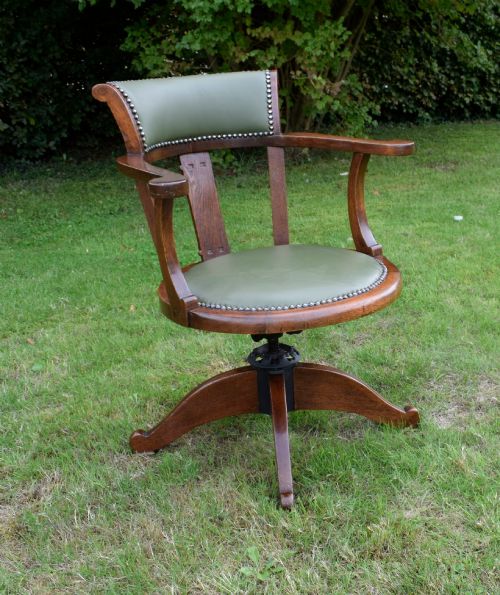
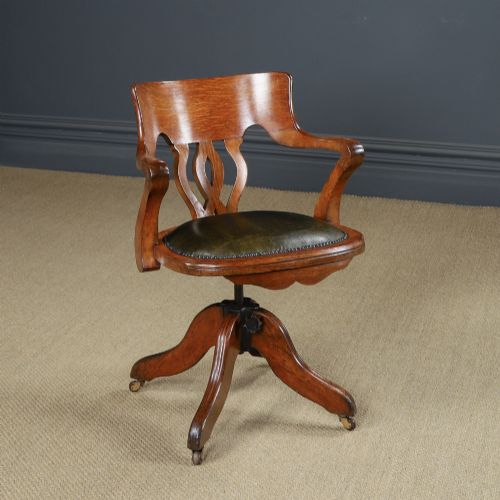
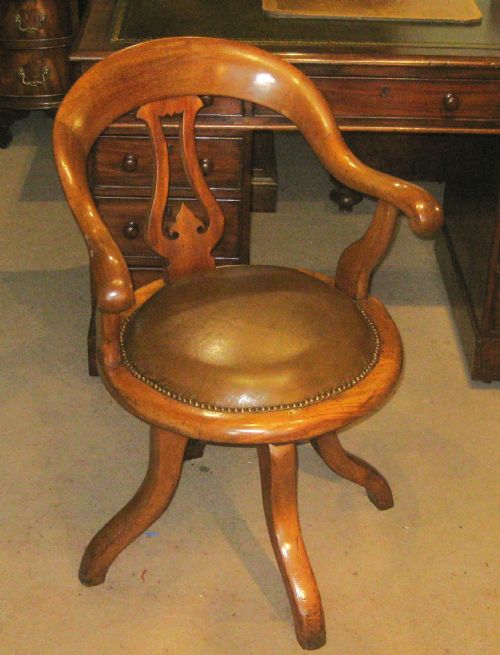
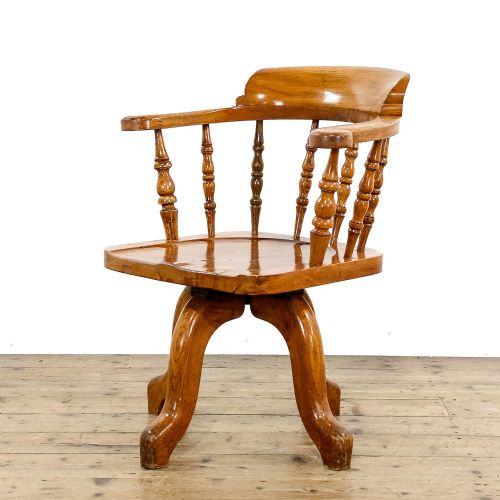
A traditional swivel desk chair provides a functional seating option for a study or office, combining a rotating seat mechanism with a sturdy wooden frame. These chairs appear in forms ranging from simple revolving seats to armed captain's chairs designed for long hours at a desk.
The selections span the Victorian and Edwardian eras, alongside pieces from the early twentieth century. Oak and mahogany dominate the structural timber, frequently paired with leather upholstery or wooden seats.
How they were made
Cabinet makers constructed the frames using hardwoods such as oak, mahogany, walnut, beech and elm, jointed to withstand the twisting motion of a revolving action. Brass and cast iron mechanisms underneath provide the swivel and tilt functions.
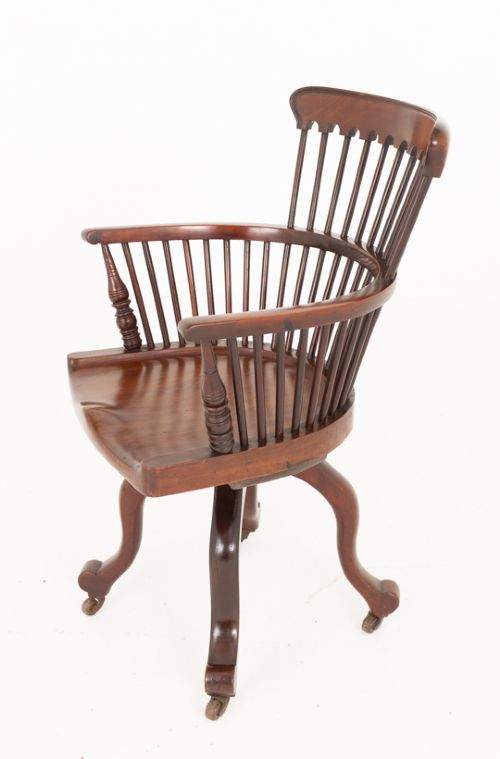
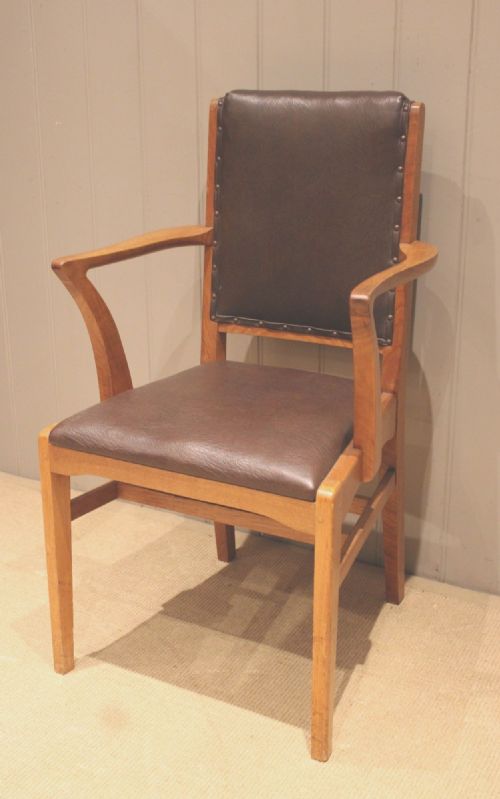
Upholstered versions incorporate leather, hide or vinyl secured with brass tacks over padded seats and backrests. Wooden seated variants rely on shaped and polished solid timber contoured for the user.
What varies in quality
The sophistication of the revolving and tilting mechanism dictates the operational quality of the chair. Heavier cast iron and brass assemblies offer smoother movement and greater durability than simpler iron pivots.
Timber selection and carving detail separate standard workshop output from finer examples. Grain depth in mahogany or oak, combined with the integrity of the frame joints, determines the overall longevity.
George Bartholomew & Co.
The Traditional Swivel Desk Chair Glossary
- Swivel
- A mechanism allowing the seat to rotate fully on its base. This pivot relies on a central spindle supported by a cast iron or wooden spider undercarriage.
- Tilt
- A mechanical function permitting the backrest and seat to lean backward against tension springs. This adjustment provides ergonomic flexibility during prolonged seating.
- Captain's Chair
- A low-backed armchair with a rounded wooden top rail supported by vertical spindles. These forms frequently incorporate revolving desk bases in later iterations.
- Hide
- Animal skin used for upholstery, offering a durable and supple surface. In office chairs, this material is often stretched over padding and secured with metal studs.
Traditional Swivel Desk Chair: Frequently Asked Questions
How do I adjust a traditional swivel desk chair?
Most period chairs rely on a threaded central screw mechanism beneath the seat. Turning the seat itself raises or lowers the height.
Tilt tension is often managed by tightening or loosening a central under-seat nut or spring assembly.
Can I use these chairs on modern wooden floors?
Original castors on these chairs are typically made of iron, brass or wood without protective rubber treads. They can mark delicate flooring if rolled frequently.
Placing a protective desk mat underneath preserves both the floor surface and the vintage castors.
How do I care for the leather seat?
Leather upholstery benefits from periodic cleaning with a damp cloth and mild soap. Applying a suitable leather balsam prevents cracking over time.
Avoid placing the chair in direct sunlight or next to heat sources which dry out the hide.
Are these chairs comfortable for daily work?
Many designs feature contoured wooden seats or padded leather backs intended for prolonged sitting. Their ergonomic value depends heavily on the specific shape and lumbar support of the model.
Height adjustment is standard, though fixed armrest heights should be measured against your desk clearance.