


Traditional Steel Companion Set
A traditional steel companion set brings the honest weight and clean metallic gleam of an older hearth into a modern room.
Traditional Steel Companion Set
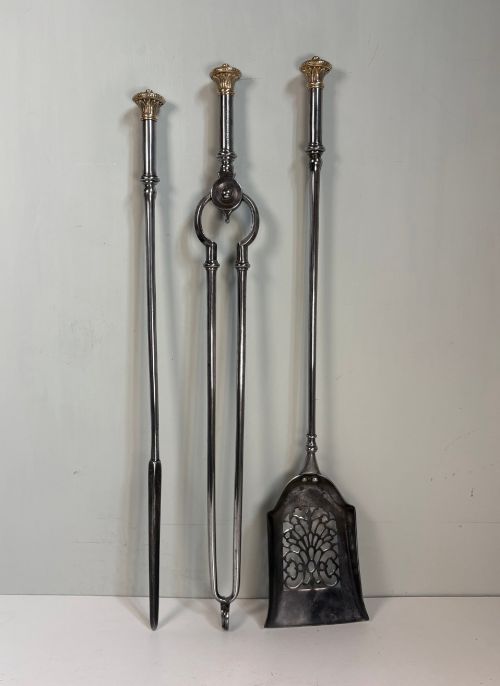
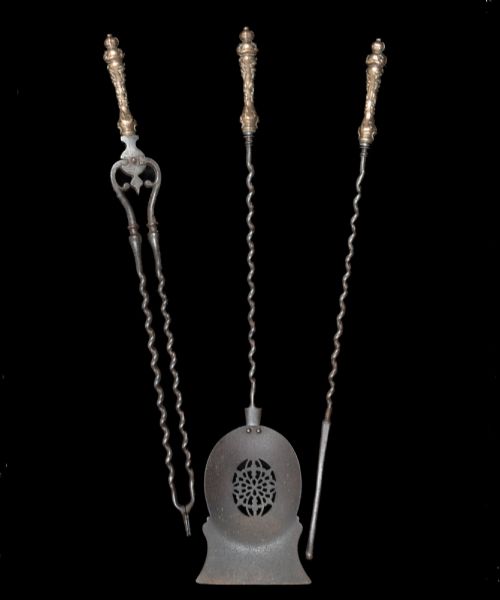
A traditional steel companion set groups the essential implements needed to manage a coal or wood fire, usually comprising a poker, tongs, and a shovel, often paired with a stand or fender. These groupings span several historical eras, appearing in Georgian, Regency, and Victorian iterations that reflect the shifting domestic fashions of their times.
The most common examples encountered on this page date from the nineteenth century, running from the Regency period through the Victorian era. These pieces range from simple utility sets in plain iron and steel to grander assemblies featuring polished steel shafts and contrasting brass details.
Materials and construction methods
Blacksmiths and metalworkers utilised wrought iron and solid steel for the main shafts and business ends of these tools to withstand intense heat and heavy use. Finishes varied from a bright, reflective burnished or polished steel to a dark, industrial gunmetal grey.
Brass was frequently incorporated for handles, finials, and mounts, providing a sharp golden contrast against the cool grey of the steel. Artisans turned these brass elements on lathes and riveted or screwed them securely to the metal implements.
Some nineteenth-century pokers doubled as hidden blowpipes to rouse stubborn coals.
Assessing quality and craftsmanship
The balance of the tool in the hand dictates much of its quality, separating purpose-made parlour pieces from heavier utility items. Superior examples display smooth turning on the brass grips and uniform finishing along the steel shafts without clumsy weld marks.
The material combination also influences the character of the set, with burnished steel requiring meticulous hand-finishing to achieve a mirror-like shine that survives centuries. Sets retaining their original matching stands or fenders command greater interest from collectors.
The Traditional Steel Companion Set Glossary
- Steel
- An alloy of iron and carbon valued for its strength and resilience in fireplace tools. It takes a bright polish when burnished.
- Gunmetal
- A type of bronze containing copper, tin, and zinc that yields a dark, muted metallic finish found on certain nineteenth-century sets.
- Fender
- A low metal guard placed around the hearth to contain embers. These frequently incorporated integrated rests for companion tools.
- Polished steel
- Metal finished through abrasive grinding and buffing to create a highly reflective surface. This treatment was popular during the Regency and Victorian periods.
Traditional Steel Companion Set: Frequently Asked Questions
What tools come in a set?
Standard sets typically include three primary implements: a poker for shifting fuel, tongs for handling logs or coal, and a shovel for clearing ash.
Depending on the specific arrangement, these tools may hang from a dedicated stand or rest across a matching fender.
How do I clean polished steel?
Polished steel requires dry maintenance to prevent rust and preserve the reflective surface. A soft cloth and specialised metal care products suitable for vintage steel will maintain the finish.
Avoid abrasive pads that can scratch the metal or remove historical patination.
Are brass and steel mixed?
Many nineteenth-century sets combine steel shafts with brass handles, finials, and mounts. This pairing offered both durability at the business end and decorative warmth at the grip.
Such mixed-metal designs were standard across Georgian and Victorian parlours.
How old are these sets?
The pieces available here generally date from the eighteenth and nineteenth centuries, spanning Georgian, Regency, and Victorian periods. Stylistic details such as handle turning and metal finishing help indicate the era of manufacture.
Dates range from the 1700s through to Edwardian times.