
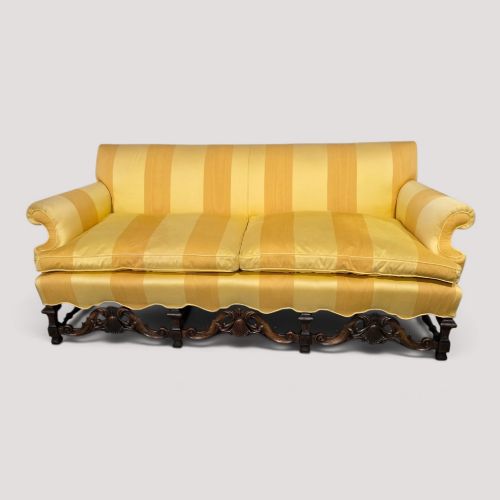
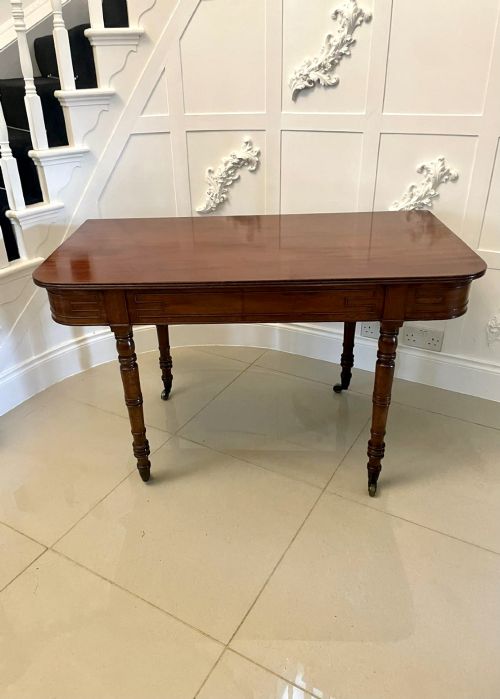
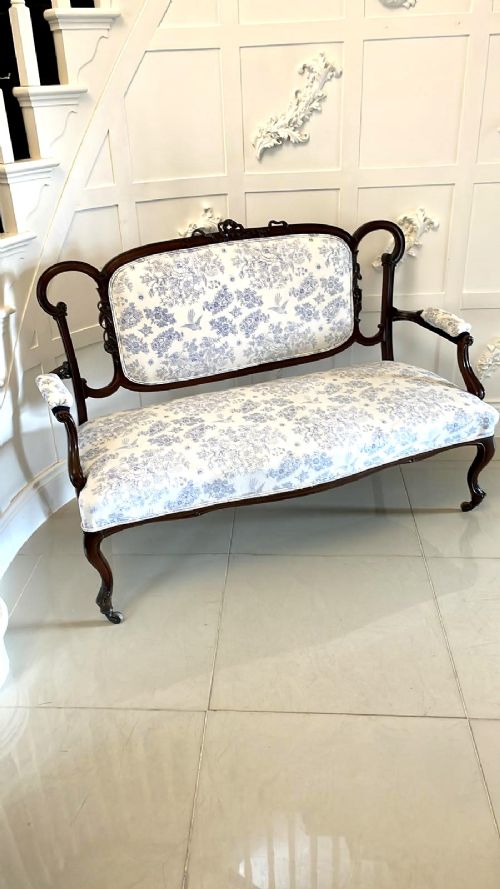
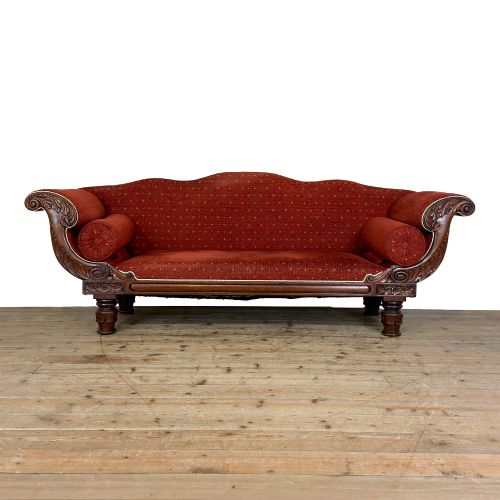
Traditional Sofa
A traditional sofa brings solid timber frames and deep upholstery together, anchoring a room with enduring comfort and nineteenth or early twentieth century character.
Traditional Sofa
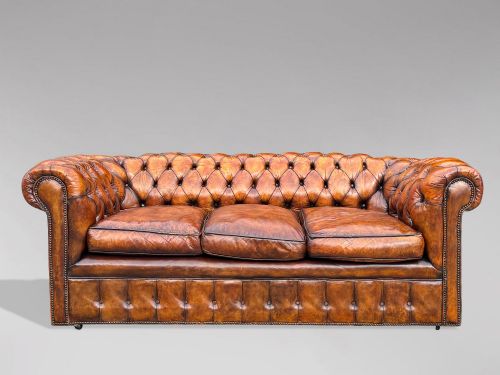
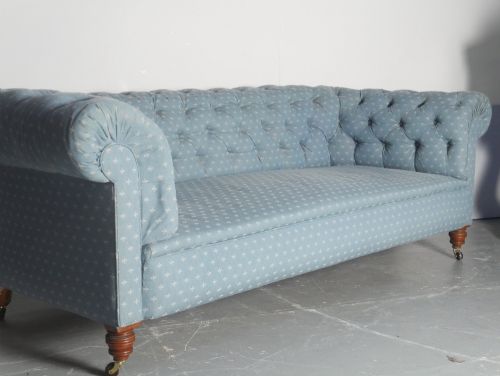
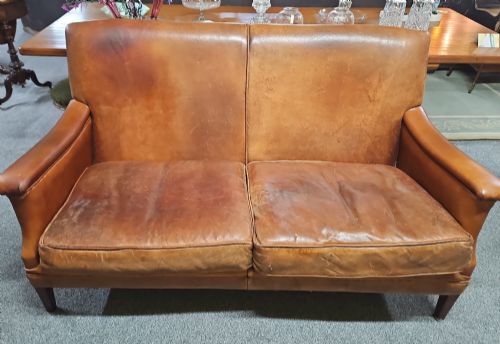
A traditional sofa encompasses heavily upholstered settees, deep-seated country house couches, and buttoned leather Chesterfields originating from the nineteenth and early twentieth centuries. These pieces reflect periods from the Victorian and Edwardian eras up to the 1930s, often drawing on earlier revival styles.
The version most commonly met on this page is the Victorian or Edwardian upholstered sofa, frequently featuring sprung seats and turned or carved wooden supports. Alongside these, leather Chesterdates and camel back shapes appear regularly, shaped by classic English and French country house aesthetics.
Beyond standard two and three-seater sofas, the category occasionally stretches to include related daybeds, chaise longues, and settee variants. Each form prioritises structural presence and substantial padding over minimalist modern lines.
Materials and construction
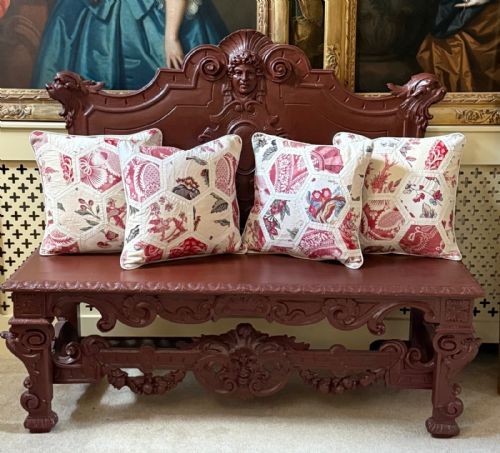
Frames rely on sturdy timbers such as oak, mahogany, walnut, and fruitwood, providing a rigid internal skeleton designed to withstand decades of heavy use. Exposed woodwork often shows careful carving, bulbous legs, or ball and claw feet.
Upholstery techniques utilise traditional stuffings, calico foundations, and hand-tied springs, paired with top covers ranging from supple brown leather to heavy brocades and printed fabrics. Brass details, studs, and castors frequently complete the structural assembly.
Upholstery materials across the selection include full leather hides, heavy brocade, calico, and printed designer fabrics.
Evaluating craftsmanship and condition
The distinction between ordinary output and superior pieces rests on the integrity of the internal frame and the depth of the upholstery work. Heavier timber frameworks and tightly tensioned sprung bases separate high-end workshops from standard commercial production.
Carving detail on exposed wooden elements and the crispness of buttoning or pleating indicate the maker's skill level. Pieces retaining original leather or period fabric demonstrate a higher degree of preservation than those requiring complete modern re-covering.
Howard and Sons·Hampton and Sons
The Traditional Sofa Glossary
- Chesterfield
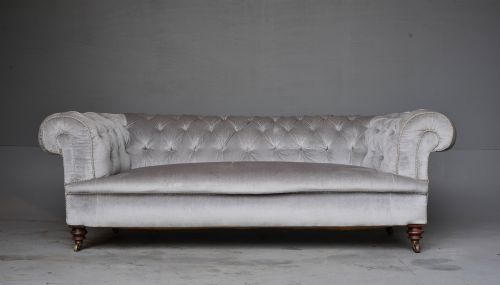
- A large upholstered sofa characterised by uniform low back and arm heights, traditionally featuring deep button tufting and leather upholstery. This form became a staple of nineteenth-century club and drawing room furniture.
- Camel back
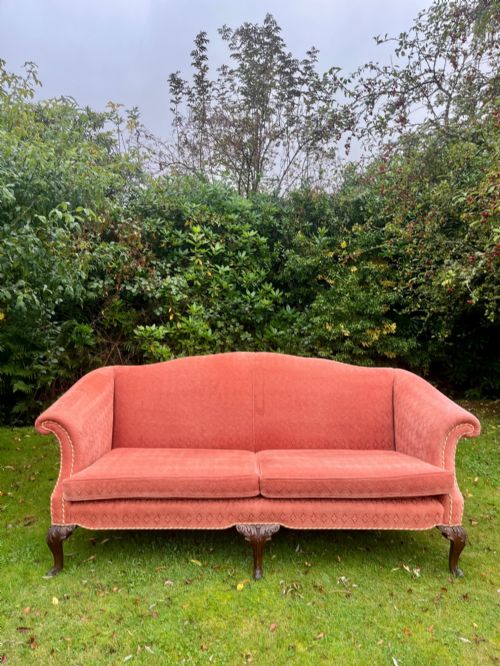
- A sofa style featuring a graceful, convex curving top rail that rises towards the centre before sloping down to the arms. This classic silhouette gained popularity during the Georgian and Edwardian periods.
- Calico
- A plain-woven unbleached textile typically used beneath the final decorative fabric as a sturdy inner lining. It conceals internal stuffing and holds the foundational padding in place.
- Settee
- A long wooden or upholstered bench with a back and arms, designed to seat multiple people. The term is often used interchangeably with sofa in nineteenth-century contexts.
- Bergere
- An enclosed upholstered armchair or suite featuring exposed wooden frames and woven cane panels on the sides or back. It originated in France and influenced later revival seating.
Traditional Sofa: Frequently Asked Questions
What defines a traditional sofa?
A traditional sofa is characterised by a robust wooden frame made from timber like mahogany, oak, or walnut, combined with traditional upholstery methods. These pieces draw on Victorian, Edwardian, and nineteenth-century design idioms.
They rely on sprung bases, hand-stitched internal foundations, and durable coverings such as leather, brocade, or heavy cotton. Their proportions reflect the heavier, more substantial domestic architecture of past eras.
How do I date an older sofa?
Dating relies on examining the visible timber styles, turning on the legs, and the construction methods used in the frame. Victorian and Edwardian pieces often display specific revival motifs or characteristic upholstery profiles.
Secondary clues include the type of castors, the presence of maker stamps, and the materials used for internal webbing and stuffing. Comparing these details against known nineteenth and early twentieth century examples narrows the timeline.
Are these sofas comfortable for daily use?
Most traditional sofas were built with deep seats and hand-tied coil springs designed for sustained daily comfort. Their generous proportions and sturdy internal construction make them suitable for modern living rooms.
Maintenance depends on the condition of the internal springs and webbing rather than the age of the piece alone. Well-maintained upholstery provides robust support comparable to contemporary seating.
What is a Chesterfield sofa?
A Chesterfield is a distinctive sofa style featuring arms and a back of the exact same height, traditionally upholstered in deep-brown leather. Deep button tufting across the interior surfaces is a defining characteristic.
Originating in the nineteenth century, these pieces were fixtures in gentleman's clubs and country houses. They remain prized for their imposing silhouette and durable leather finishes.