


Traditional Sofa Frame
A traditional sofa frame provides the structural bones for classic seating, spanning centuries of craftsmanship from Regency scroll-ends to Victorian mahogany.
Traditional Sofa Frame
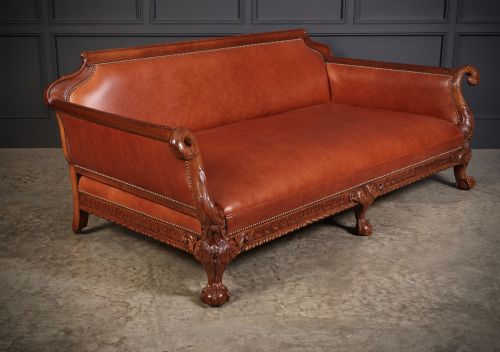
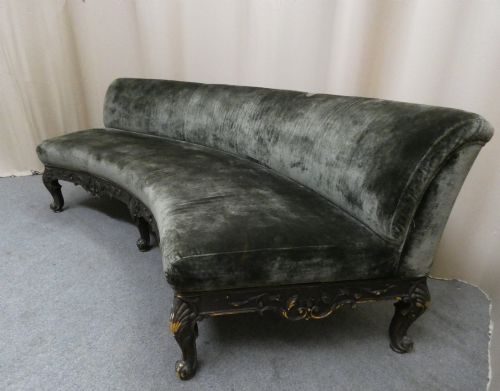
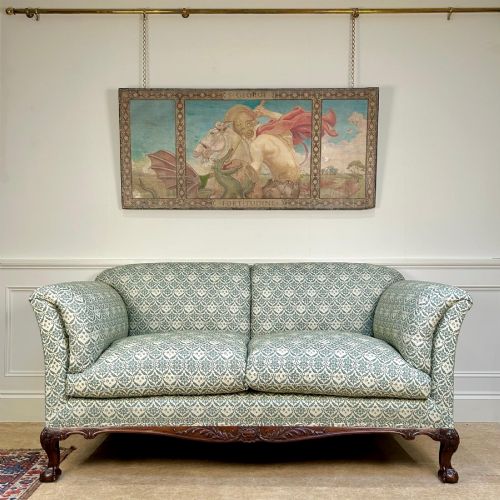
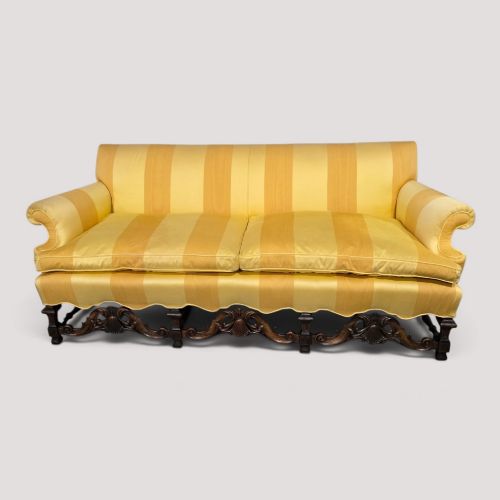
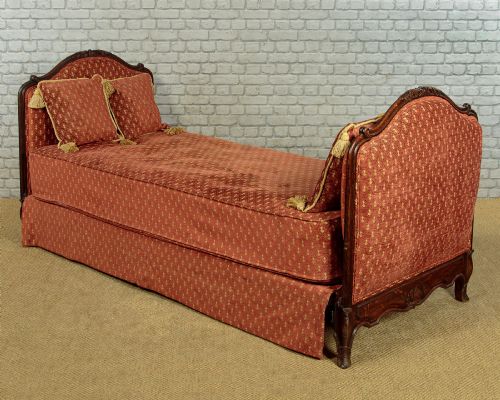
A traditional sofa frame forms the exposed wooden skeleton or solid base for historical seating, encompassing forms such as settees, daybeds, and chaise longues. Buyers seeking a traditional sofa frame encounter structural foundations shaped by Victorian, Regency, and Georgian design principles.
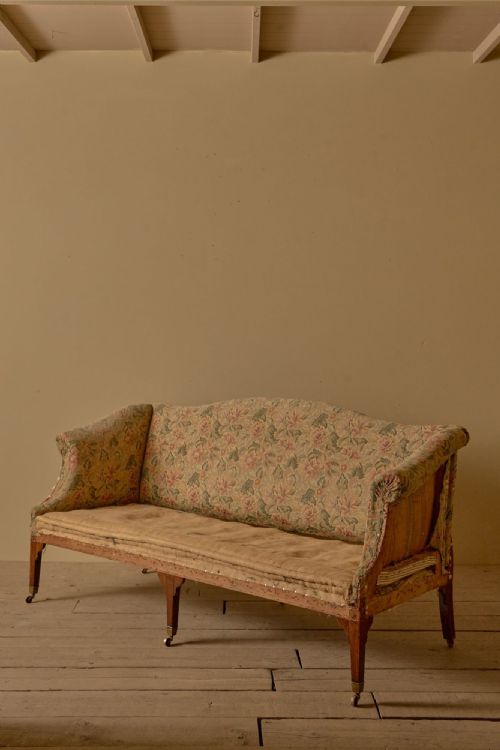
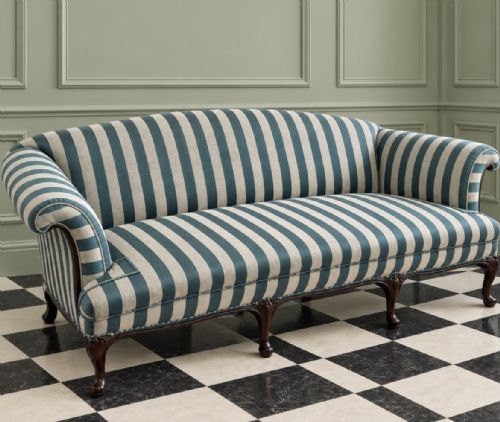
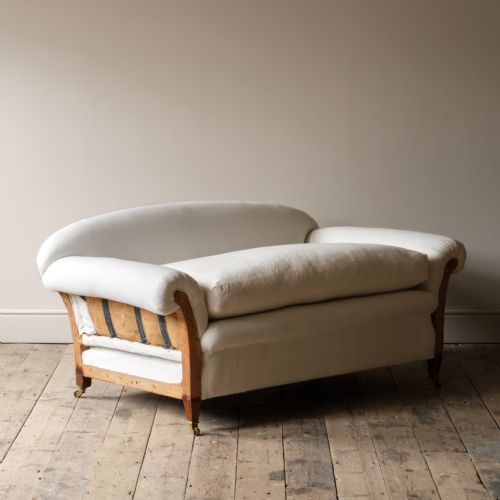
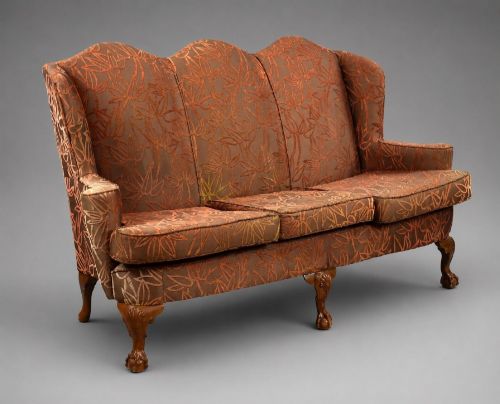
The selections span country house aesthetics, French provincial influences, and Aesthetic Movement forms executed in walnut, mahogany, and oak. These pieces range from open-arm Howard styles to serpentine camelback silhouettes awaiting upholstery or retaining original fabric.
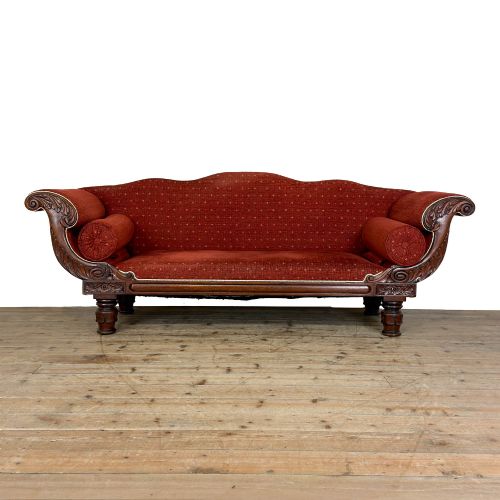
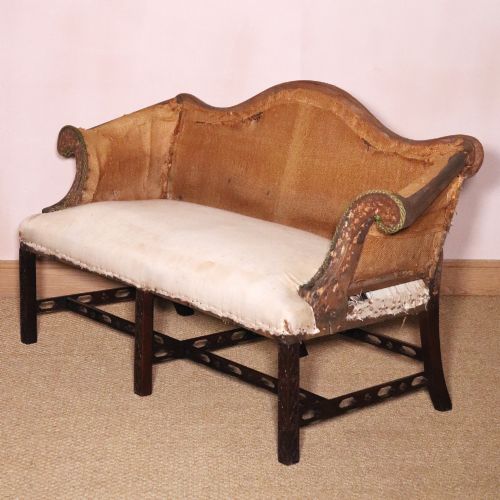
Many items reflect specific historical revivals, including Queen Anne style walnut settees and Chinese Chippendale mahogany frames. Each piece demonstrates the enduring utility of robust wooden joinery designed to support deep seating and formal reception rooms.
Materials and construction methods
Frames rely on dense hardwoods such as mahogany, walnut, oak, and rosewood, often shaped with carved details, scroll ends, or giltwood finishes. Joinery utilises traditional techniques to support the heavy loads demanded by large settees and daybeds.
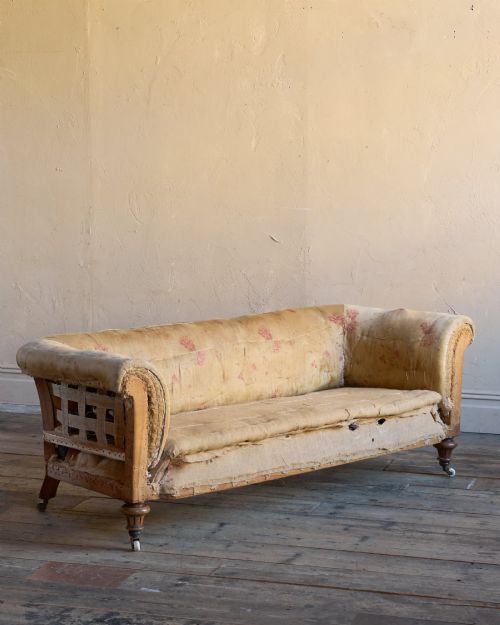
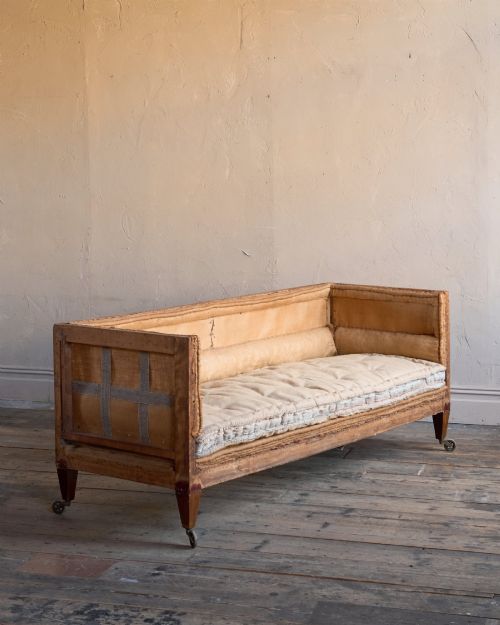
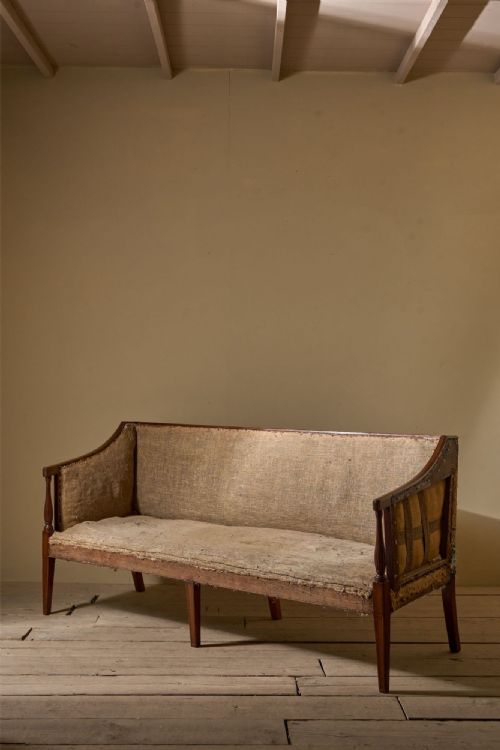
Internal support structures frequently incorporate hessian and upholstery fabric layers alongside brass castors on legs. Ebonised and simulated rosewood treatments demonstrate surface manipulation techniques applied to underlying timber.
Traditional Sofa Frame Retail Price Guide 2026
Typical asking prices for traditional sofa frame among the pieces listed under this phrase on Sellingantiques today, from the lower quarter to the upper quarter. They describe what is for sale here now, not the wider market.
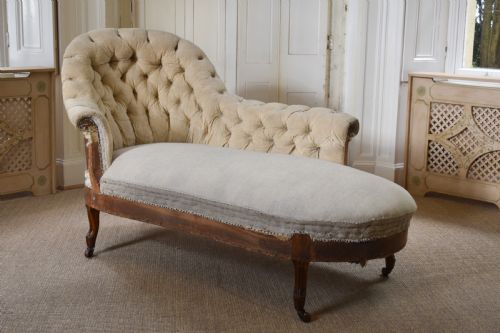
Several frames wait patiently in their birthday suits of bare hessian, dreaming of velvet.
Distinctions in construction and design
Quality rests in the crispness of carved wooden details, the selection of figured timber veneers, and the structural integrity of the frame's joinery. Superior examples exhibit balanced proportions, such as those emulating Georgian or Regency lines, executed with refined hand-carving.
The distinction between standard commercial production and distinguished workshops appears in the weight of the timber, the subtlety of scroll-end shaping, and the integrity of show-wood surfaces whether polished mahogany or giltwood.
Miles and Edwards·Howard and Sons·Hampton and Sons
The Traditional Sofa Frame Glossary
- Scroll-end
- A sofa arm or terminal curved outward in a tight or sweeping scroll, typical of Regency and William IV periods. This shape defines the distinct profile of many nineteenth-century daybeds and settees.
- Camelback
- A sofa back featuring a graceful, undulating convex curve resembling a camel's hump. This profile is frequently seen on Georgian and Chippendale style frames.
- Show frame
- A wooden sofa structure left intentionally exposed around the upholstered elements rather than being fully covered in fabric. This design highlights the carved mahogany or walnut woodwork.
- Chaise longue
- An elongated chair form designed for reclining, combining seating with an extended footrest. These pieces appear frequently in Victorian and nineteenth-century salon settings.
Traditional Sofa Frame: Frequently Asked Questions
How do I choose the right period style?
Consider the architectural proportions and decorative motifs of your space, matching Regency scroll-ends or Victorian carved mahogany to formal interiors, and country house pieces to relaxed rooms.
Examining the specific wood types, such as walnut for Queen Anne styles or mahogany for Chippendale influences, helps align the frame with historical design eras.
Can these frames be reupholstered?
Many frames are sold specifically for upholstery or feature existing fabric, hessian, and webbing that can be renewed by a professional upholsterer.
Retaining the original underlying structure ensures that traditional silhouettes, from camelbacks to Chesterfield forms, maintain their authentic lines.
Where were these frames used?
These pieces originated in formal drawing rooms, reception salons, and grand English country houses where seating denoted social status and provided comfortable lounging.
Daybeds and chaise longues were typically placed in bedrooms or boudoirs, while large settees anchored main living spaces.