
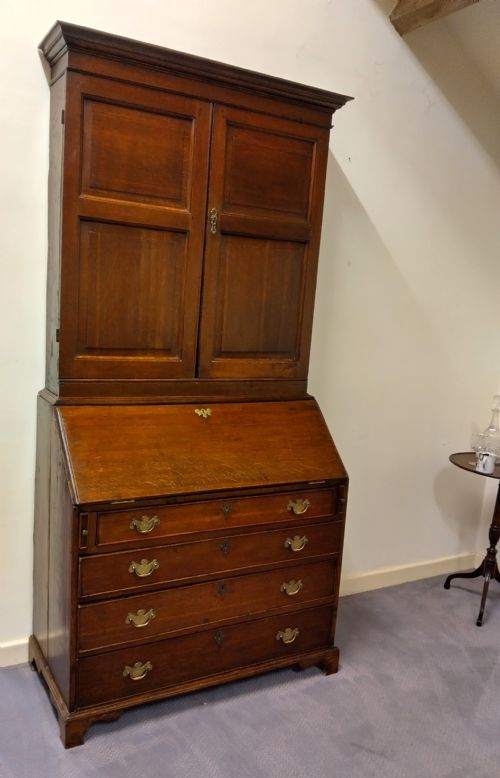
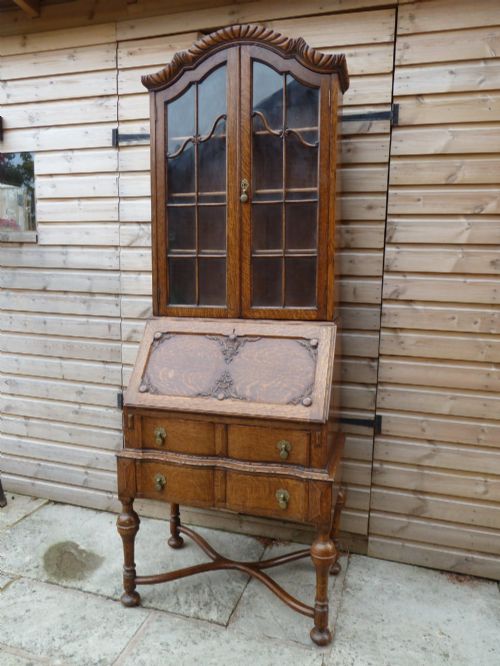
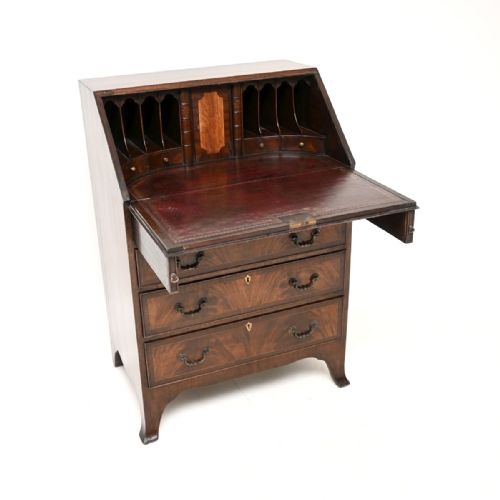


Traditional Slant Top Bureau
A traditional slant top bureau provides a fitted writing surface that folds down to conceal your papers.
Traditional Slant Top Bureau
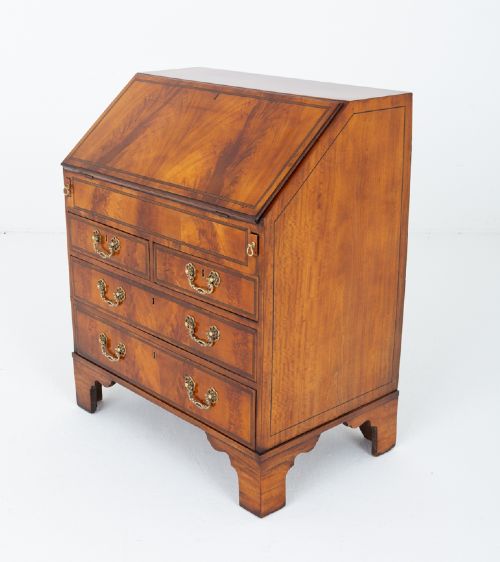
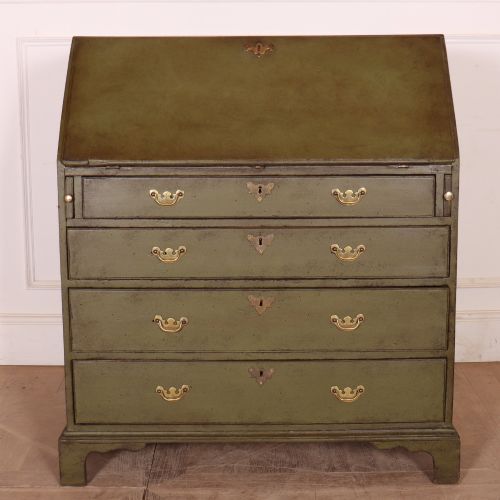
A traditional slant top bureau offers a sloping fall-front desk that conceals pigeonholes, small drawers, and secret compartments when closed. These items serve primarily as domestic writing furniture designed to keep correspondence private and organised.
You will most frequently encounter walnut and mahogany examples originating from the eighteenth century and the Georgian period, alongside later Edwardian and revival iterations. The form combines a chest of drawers base with a hinged writing flap that rests upon pull-out supports when opened.
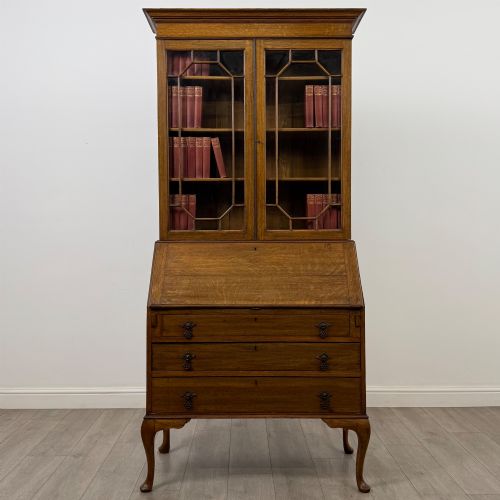
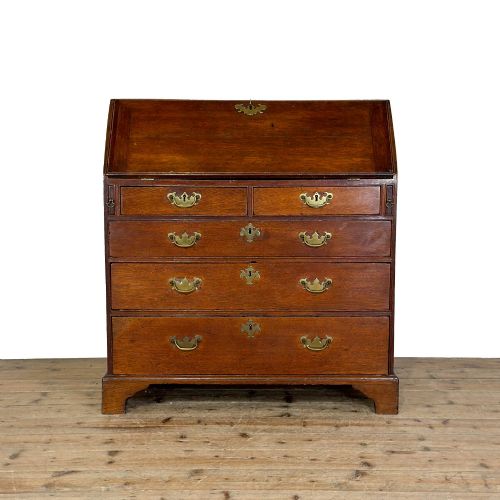
Pieces range from vernacular seventeenth-century oak formats to refined bureau bookcases featuring glazed upper cabinets. The interior layout remains the defining characteristic, providing numerous small compartments for stationery and ledgers.
What varies in quality
The choice of primary timber and the selection of grain pattern dictate visual distinction, with finely figured Cuban mahogany and burr walnut representing the upper tiers. The complexity of the interior fitments, including secret drawers and shaped pigeonholes, marks the level of craftsmanship.
Structural integrity relies upon the retention of original brasses, uncompromised hinges on the fall-front, and stability within the drawer frames. The crispness of carved details, such as bracket feet or dental mouldings, distinguishes superior cabinet work from standard production.
One early oak bureau was adapted specifically to house a television.
Gillows
The Traditional Slant Top Bureau Glossary
- Slant top
- The angled writing flap that folds down to create a horizontal desk surface. This sloping board forms the primary visual identity of the bureau.
- Bureau bookcase
- A combination furniture piece featuring a writing bureau base beneath an enclosed upper shelving cabinet with doors. These units often display glazed panels for book storage.
- Fall-front
- The hinged writing panel that drops forward to reveal the internal compartments. It relies on internal or pull-out supports when open.
- Pigeonhole
- A small, open compartment within the interior desk fitment designed for sorting letters and documents. These often surround a central locking cupboard or drawer.
- Davenport
- A compact form of writing desk featuring a sloped top above a pedestal of drawers. This variant is smaller than a standard bureau.
Traditional Slant Top Bureau: Frequently Asked Questions
What is a traditional slant top bureau?
A traditional slant top bureau is a desk featuring a hinged, sloping lid that opens to reveal an interior arrangement of small drawers and pigeonholes.
Below this writing surface, the piece typically incorporates a chest of several graduating drawers for general storage.
How do I identify a Georgian bureau?
Georgian bureaus are usually constructed from mahogany or oak, displaying hand-cut dovetails and traditional bracket feet. The internal fittings often feature shaped pigeonholes and small central doors concealing secret compartments.
Wood patination, timber density, and period-appropriate brass hardware help confirm the eighteenth-century origin.
Where were bureaus used in the home?
Bureaus served primarily as private writing desks in parlours, studies, and bedrooms where household accounts and personal correspondence were managed.
The lockable fall-front allowed owners to secure sensitive documents away from family and staff.
How do I care for a walnut bureau?
Keep wooden furniture away from direct sunlight and strong heat sources to prevent timber shrinkage and veneer lifting. Regular dusting with a soft, dry cloth preserves the polished finish.
A light application of traditional beeswax feeds the timber without building up heavy residues.