




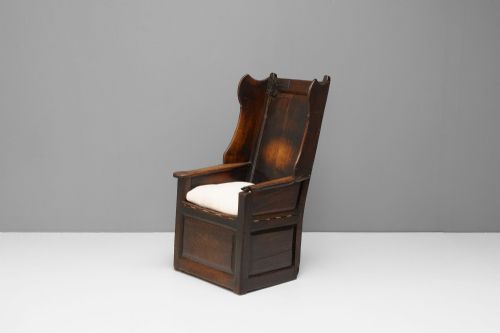
Traditional Settling Chair
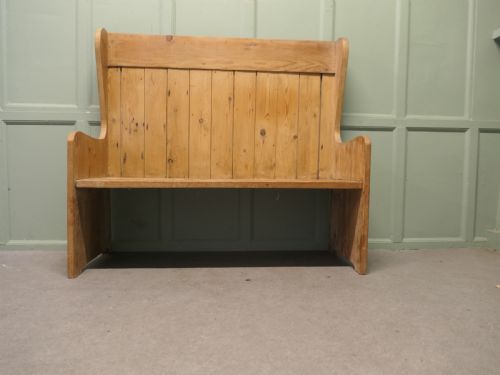
A traditional settling chair offers solid timber seating with high backs and enclosed bases, built to block draughts and anchor a room.
Traditional Settling Chair
A traditional settling chair comprises heavy wooden benches and settles designed with high backs and often enclosed under-seat storage, originating from utilitarian domestic and tavern use. You will frequently encounter oak monks benches and pine settles alongside cherrywood and mahogany variations across the periods.
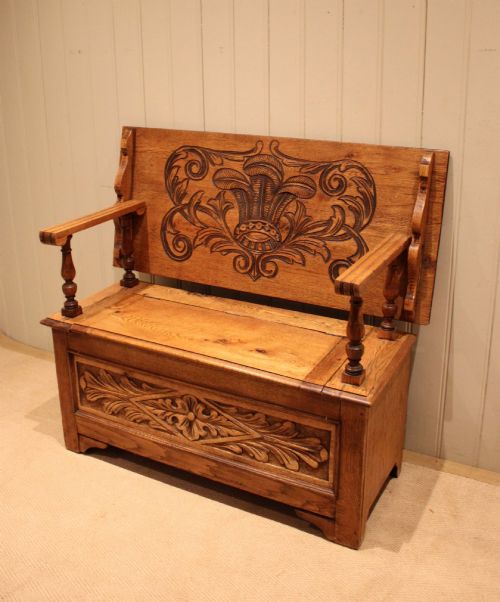
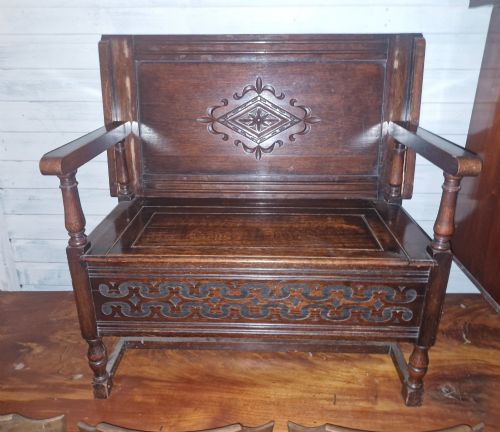
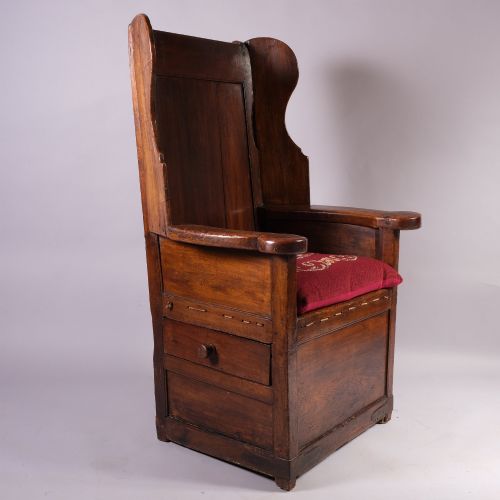
The selections span from 18th century vernacular pieces, such as Lakeland lambing chairs, to 19th century hall benches and early 20th century oak monks seats. These items function as hallway seating or fireside benches, often featuring lift-up seats or fold-over tops that transform the furniture into a table.
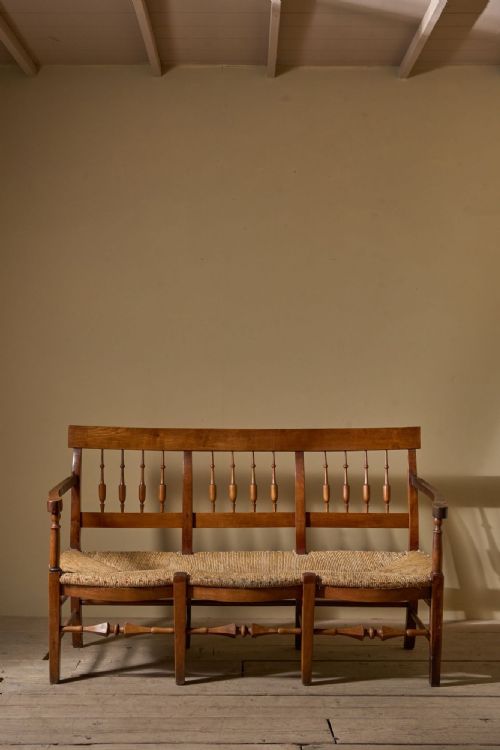
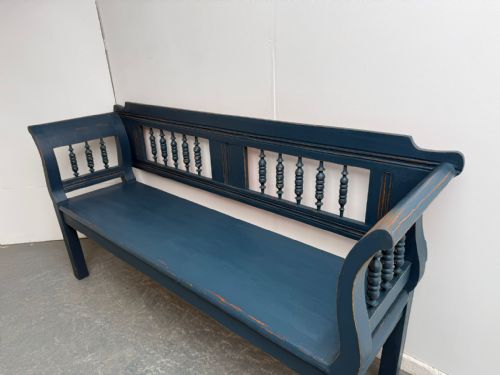
Regional and stylistic influences range from English and French country designs to Victorian, Jacobean Revival, and traditional Chinese forms. Some examples incorporate fabric upholstery, rush seating, or painted finishes in grey and blue.
How they were made
Makers constructed these seats primarily from solid timbers like oak, pine, cherrywood, elm, and mahogany, relying on sturdy panelled, stickback, or ladderback construction to withstand heavy daily use. Joints were pegged or dowelled to ensure stability across high-stress points like armrests and back panels.
Seating surfaces often combined solid wood planks with woven rush or applied fabric upholstery, while storage sections utilised hinged lids for compartment access. Surface treatments varied from plain waxed timber finishes to original painted coats in shades such as grey and blue.
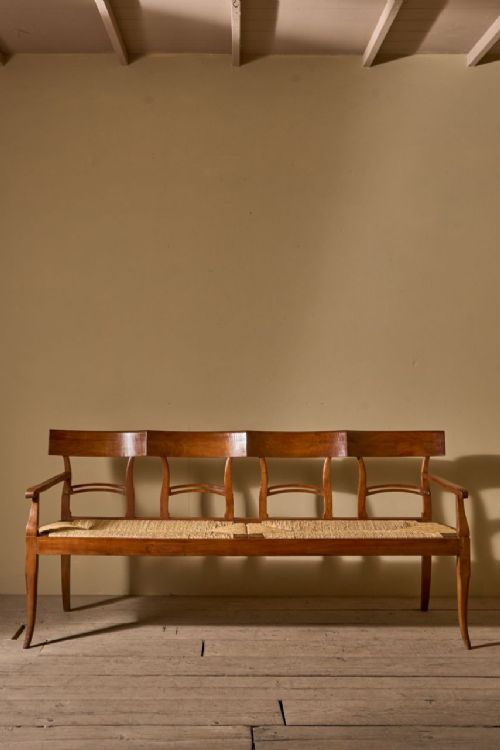
A horse shoe hall bench brings an unexpected curve to a straight-backed tradition.
What varies in quality
The integrity of the timber and the retention of original structural elements define the better examples, particularly where joints remain tight without excessive modern intervention. Original surfaces, whether polished oak, elm, or early painted finishes, hold greater distinction than stripped or heavily restored timber.
Howard and Sons
The Traditional Settling Chair Glossary
- Settle
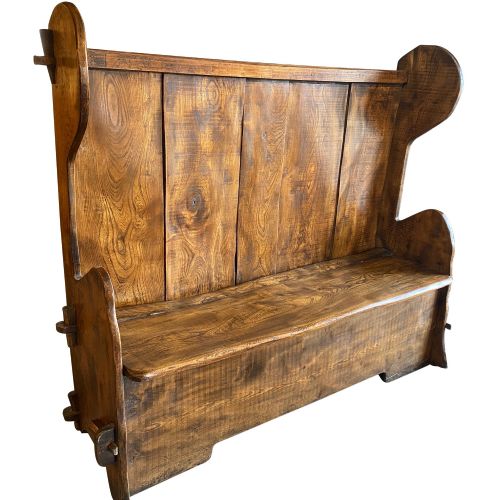
- A wooden bench with a high back, solid arms, and often a closed base to keep out floor draughts. These seats served communal rooms and farmhouses alike.
- Monks bench
- A convertible piece of furniture featuring a hinged top that folds down over the arms to form a table. It typically includes a box storage compartment beneath the seat.
- Lambing chair
- An enclosed fireside armchair, traditionally featuring a high panelled back and wings to deflect drafts. Examples frequently incorporate a drawer or compartment beneath the seat.
- Rush seating
- Seats woven from dried marsh rushes, providing a resilient and textured surface. This technique appears on vernacular hall benches and chairs.
- Vernacular furniture
- Items built by local tradesmen using regional traditions and readily available materials rather than following formal metropolitan design styles.
Traditional Settling Chair: Frequently Asked Questions
What is a traditional settling chair?
A traditional settling chair is a sturdy wooden seat with a high back designed to shield the user from cold draughts in older homes.
They often include built-in storage boxes beneath the seat or convertible table tops for multi-purpose use.
Where were settles used?
Settles were placed in hallways, kitchens, and country pubs to provide communal seating near hearths.
The high wooden back acted as a windbreak in large, unheated rooms.
How do I date a wooden settle?
Dating relies on timber selection, tool marks, construction methods, and stylistic details like panel carving or turnings.
Earlier pieces often use solid oak or elm with pegged joinery, while later 19th and 20th century examples show industrial saw marks and revival styles.
Are monks benches and settles the same?
Monks benches are a specific type of settle featuring a hinged back that folds over to create a table surface.
Standard settles maintain a fixed high back and focus on seating and enclosed storage rather than conversion.