

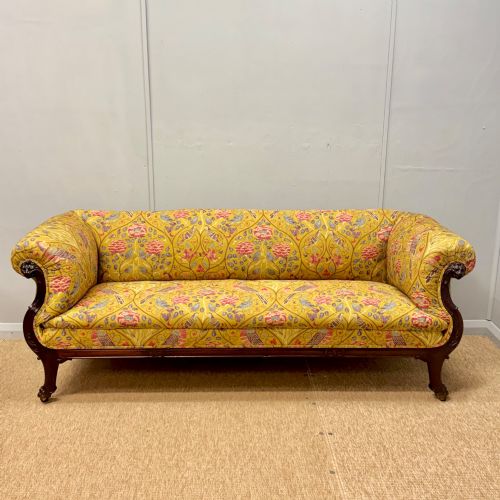
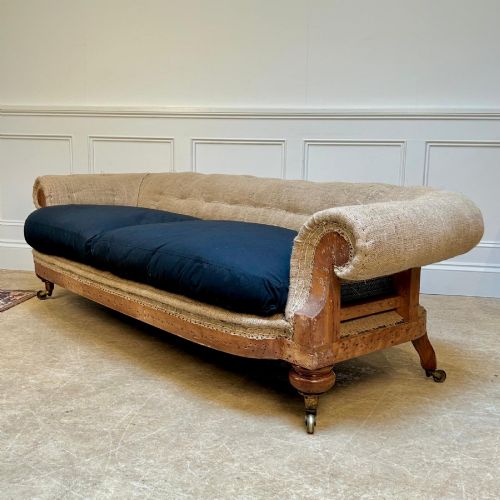
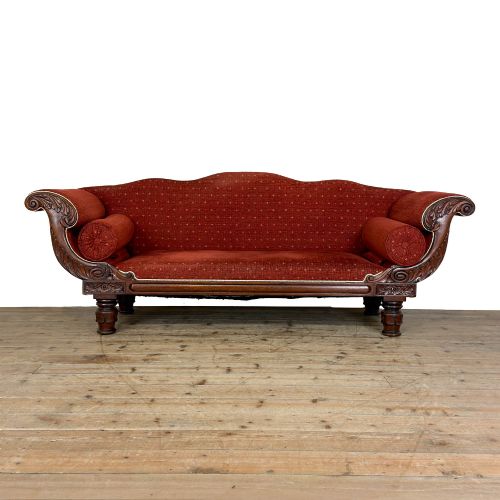
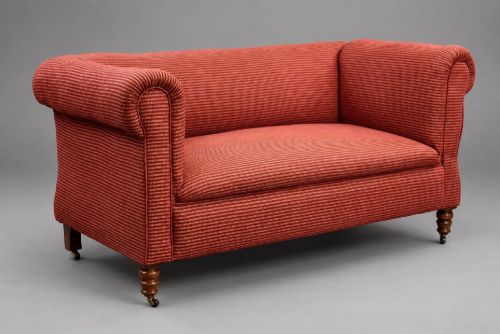
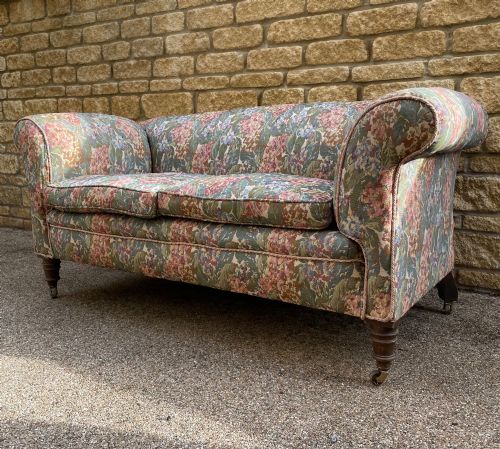
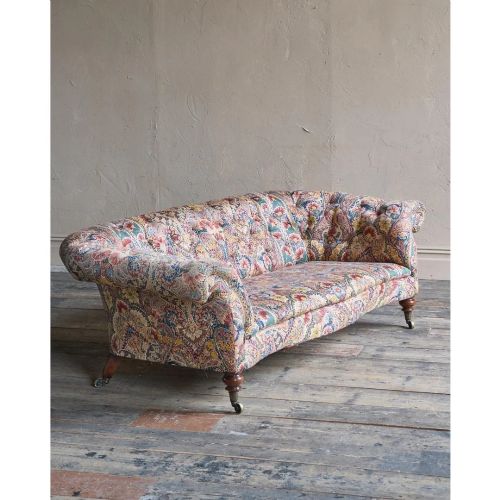
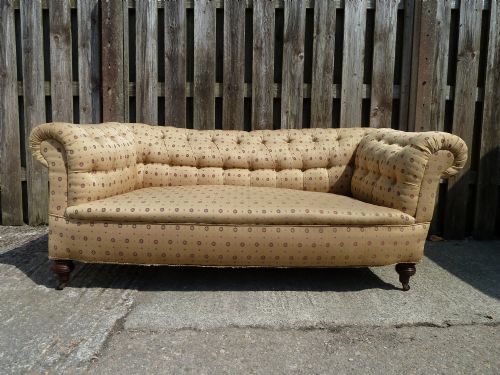
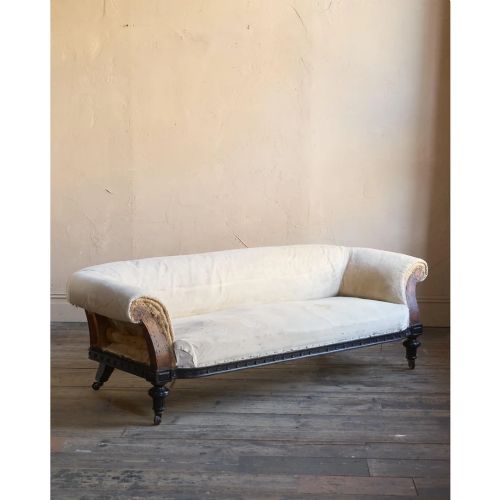
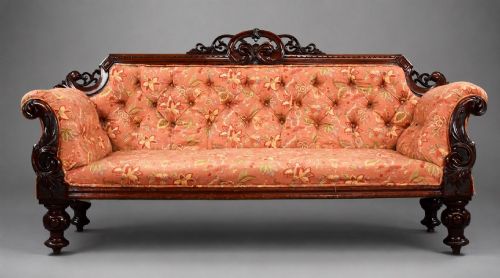

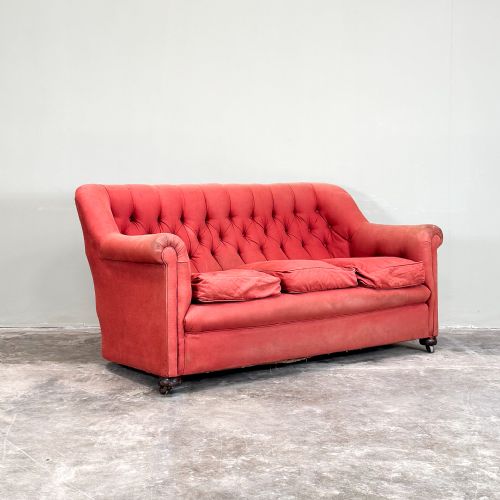
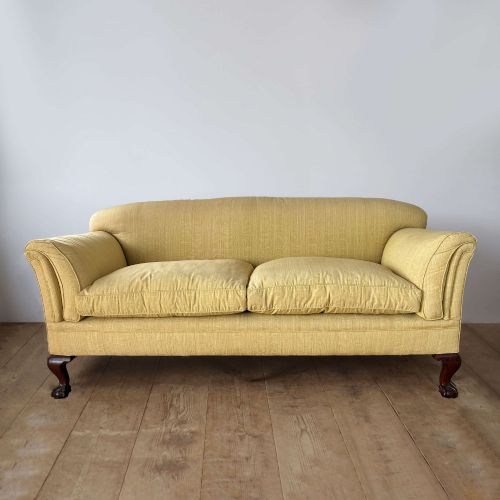
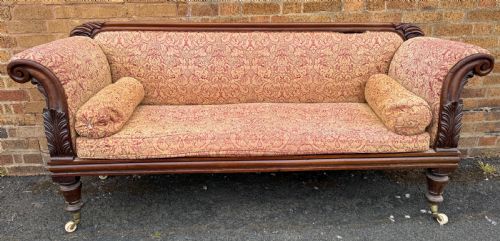
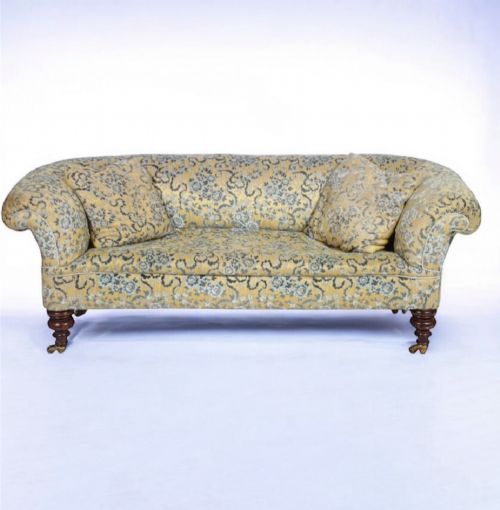

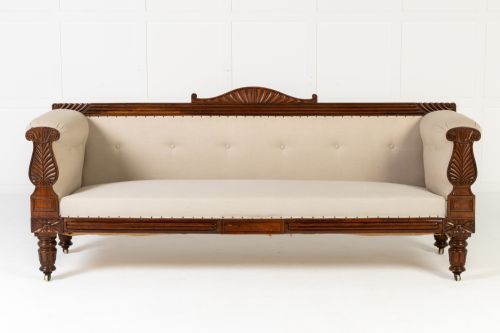
Traditional Scroll Arm Settee
These traditional scroll arm settee examples span the Regency and Victorian periods, offering deep seating and distinct scrolled ends that anchor a room.
Traditional Scroll Arm Settee
A traditional scroll arm settee brings together classic upholstery and generous proportions across the nineteenth century. Buyers searching for a traditional scroll arm settee encounter forms ranging from library sofas to country house Chesterfields.
The most common examples on this page date from the Victorian and Regency eras, often featuring double-ended frames or drop arms. These seating pieces served formal drawing rooms and expansive country houses alike.
Makers utilised various woods for the exposed frames, pairing structural timber with soft fabric, hessian, or leather. Such settees provide substantial seating capacity, frequently accommodating two to four people.
How they were made
Frames rely on solid timbers such as mahogany, walnut, rosewood, and ebony, carved or ebonised to suit the prevailing style. Cabinet makers shaped these woods into show frames, scroll ends, and turned legs.
Upholstery techniques combined traditional stuffing with hessian foundations and outer layers of fabric or leather. Decorative elements like brass fittings and lions mask carvings completed the construction.
Traditional Scroll Arm Settee Retail Price Guide 2026
Typical asking prices for traditional scroll arm settee among the pieces listed under this phrase on Sellingantiques today, from the lower quarter to the upper quarter. They describe what is for sale here now, not the wider market.
Listings span the nineteenth and twentieth centuries, featuring Regency, Victorian, William IV, Aesthetic Movement, and 1930s British styles.
What varies in quality
The distinction between standard output and finer workshop production rests in the crispness of the timber carving and the sophistication of the frame silhouette. Pieces attributed to notable makers display superior joinery and balanced proportions.
Materials also dictate the tier of a settee, with dense hardwoods, rosewood veneers, and high-grade leather elevating the piece. The choice of upholstery, from plain fabric to quilted William Morris designs, reflects the original commissioning intent.
Miles and Edwards·Howard and Sons
The Traditional Scroll Arm Settee Glossary
- Chesterfield
- A deep-buttoned upholstered sofa featuring arms and back of the same height. This form appears frequently in nineteenth-century country house settings.
- Scroll-end
- A furniture terminal shaped in a continuous curve resembling a rolled scroll. It defines the profile of many Regency and William IV settees.
- Show frame
- A wooden structural framework left visible around the upholstered sections. Makers utilised this technique to display fine mahogany or walnut grain.
- Drop-end
- A moveable arm mechanism that lowers to convert the settee into a daybed or lounging surface. Victorian iterations often incorporated this practical adjustment.
- Simulated rosewood
- A painted or stained finish applied to a secondary timber to imitate exotic grain patterns. It provided the decorative look of rosewood at a lesser expense.
Traditional Scroll Arm Settee: Frequently Asked Questions
What is a scroll arm settee?
A traditional scroll arm settee is a large upholstered seating piece defined by outward-curving wooden or padded armrests. These designs gained popularity during the Regency and Victorian eras.
Craftsmen built them with internal wooden frames, supporting substantial padding designed for comfort in drawing rooms and libraries.
How do I date these settees?
Dating relies on observing the timber species, frame carving, and upholstery style. Regency examples often feature bold mahogany or rosewood, while Victorian pieces lean toward walnut and deep buttoning.
Makers' stamps or specific aesthetic traits like lions mask details also help place a settee within the nineteenth century.
Are these settees comfortable for daily use?
Most nineteenth-century settees offer deep seating and sturdy sprung or stuffed construction. Their generous proportions make them suitable for modern living spaces.
Different models provide varying degrees of firm support, depending on whether they were built for formal salons or relaxed country houses.
What fabrics were originally used?
Original coverings ranged from heavy leather and patterned upholstery fabrics to specialist designs by makers like William Morris. Hessian served as an internal foundation material.
Many surviving pieces retain later reupholstery that respects the historic character of the frame.