
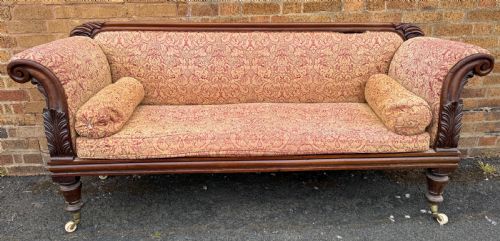


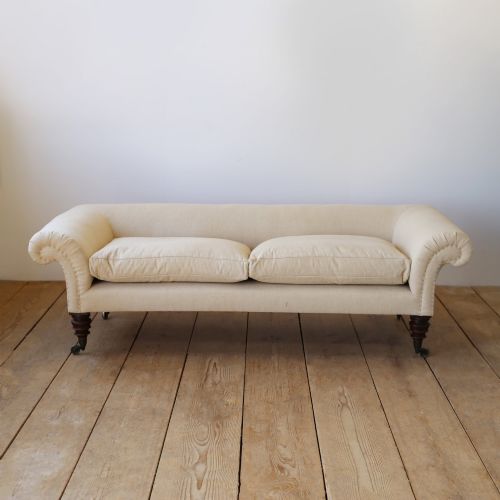
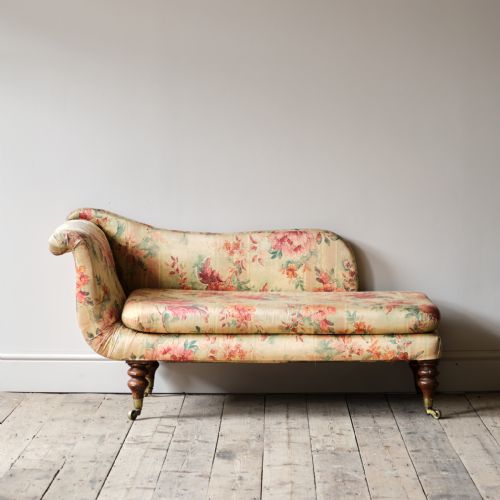


Traditional Scroll Arm Daybed
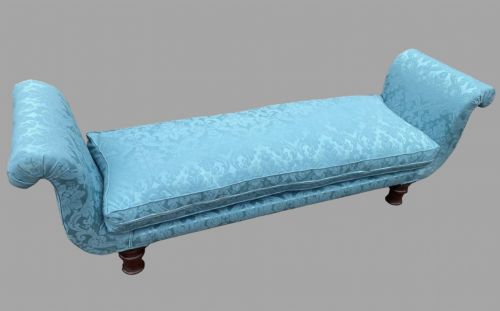
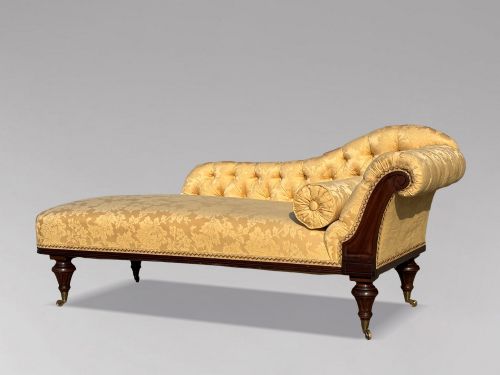
These traditional scroll arm daybed pieces bring nineteenth-century elegance to a room, offering generous lounging spaces shaped by mahogany and ebonised timber frames.
Traditional Scroll Arm Daybed
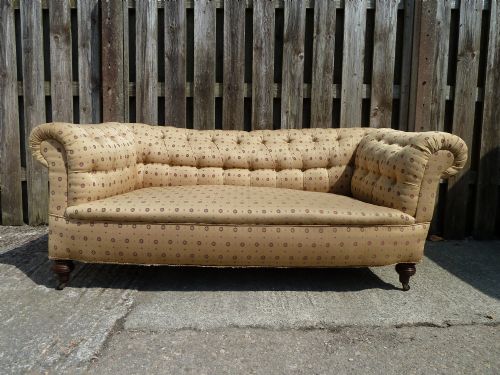
A traditional scroll arm daybed combines the reclining comfort of a chaise longue with the structural presence of a nineteenth-century sofa. These furnishings take several related forms across the listings, appearing as daybeds, chaise longues, and scroll-end settees designed for extended lounging.
Most examples originate from the nineteenth century, spanning Regency, William IV, and Victorian periods. Makers during these eras favoured sculptural scroll ends and generous proportions suited to formal parlours and country house drawing rooms.
Buyers encounter variations in timber and upholstery, ranging from rich mahogany frames to ebonised wood finishes. Silk velvet, damask, and plain fabric coverings dress the frames, reflecting the changing tastes of nineteenth-century design.
How they were made
Cabinet makers constructed the foundational frames from solid timbers such as mahogany, rosewood, and ebonised wood. Carved details appeared along the scroll ends and rails, often executed with crisp thumb-moulding and foliage motifs.
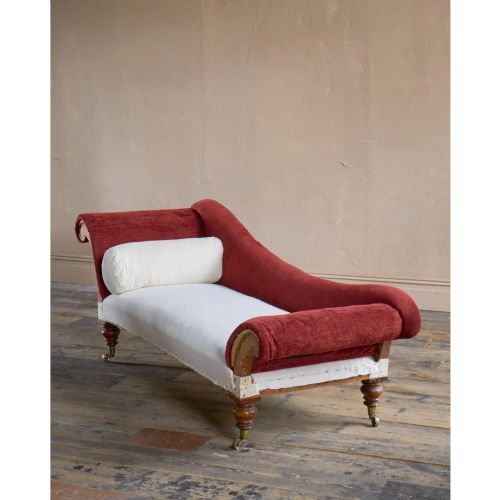
Upholstery techniques involved traditional stuffing applied over sprung or webbed bases, enclosed in fabrics like damask and velvet. The characteristic scroll arms required precise timber bending or shaped solid core construction to achieve their sweeping profile.
Design styles span Regency, William IV, Victorian, and French Empire periods.
What varies in quality
The sophistication of the timber framing and the crispness of the carving distinguish finer examples from standard production. Superior pieces display carefully selected mahogany grain patterns and deeply defined scroll ends that balance visual weight with proportion.
Attribution to notable workshops or makers elevates an example, as seen in pieces attributed to firms like Holland and Sons or executed in the manner of Gillows. The integrity of the foundational frame and the quality of the period upholstery materials also dictate the standing of a piece.
Holland and Sons·Gillows
The Traditional Scroll Arm Daybed Glossary
- Scroll end
- A sweeping, curved wooden terminal forming the arm of a sofa or daybed. This characteristic nineteenth-century feature echoes classical furniture forms.
- Chaise longue
- An upholstered couch for reclining, featuring a backrest that extends along part or all of the length. It combines seating and resting functions in a single piece.
- Mahogany
- A durable, reddish-brown tropical timber favoured by nineteenth-century cabinet makers for its rich grain and stability. It accepts fine carving and polishing exceptionally well.
- Ebonised wood
- Timber treated with a dark stain or finish to imitate ebony. This technique was popular in nineteenth-century furniture to create sharp contrast and formal elegance.
- William IV
- A British design period spanning the 1830s characterised by robust classical proportions and heavy scrolled woodwork. Furniture from this era often utilises dense mahogany with bold architectural details.
Traditional Scroll Arm Daybed: Frequently Asked Questions
What is a traditional scroll arm daybed used for?
These pieces served historically as daytime lounging furniture in drawing rooms and country house parlours. Today, they function as statement sofas or daybeds in living spaces and studies.
Their elongated form allows for reclining while providing a structured backrest and distinctive scroll arms for support.
How do I tell Regency from Victorian pieces?
Regency pieces date from the early nineteenth century and typically display refined classical lines, elegant mahogany frames, and restrained ornamentation. Victorian examples often feature heavier proportions, darker woods like rosewood, and more robust carving.
Examining the timber choice and the curvature of the scroll arms helps determine the specific nineteenth-century period.
Are these daybeds comfortable for daily use?
Most pieces rely on nineteenth-century upholstery construction with traditional sprung or webbed bases. Modern comfort depends on whether the historical padding has been sympathetically restored.
Buyers often use them as primary seating or reading daybeds in well-lit rooms.
What woods were used in these frames?
Makers predominantly used solid mahogany, rosewood, and ebonised timber for the exposed framework. These hardwoods provided the structural strength required to support sweeping scroll arms and heavy carving.
Secondary woods like pine or beech sometimes form the internal unexposed frame components.