

Traditional Scroll Arm Couch
A traditional scroll arm couch brings nineteenth-century drawing room comfort and architectural line to a modern interior.
Traditional Scroll Arm Couch
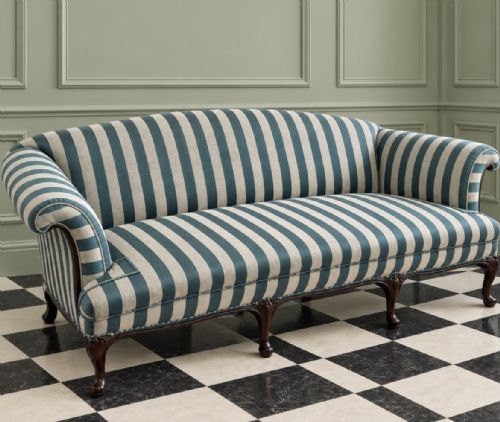
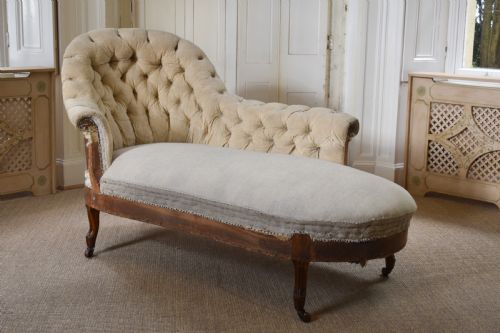
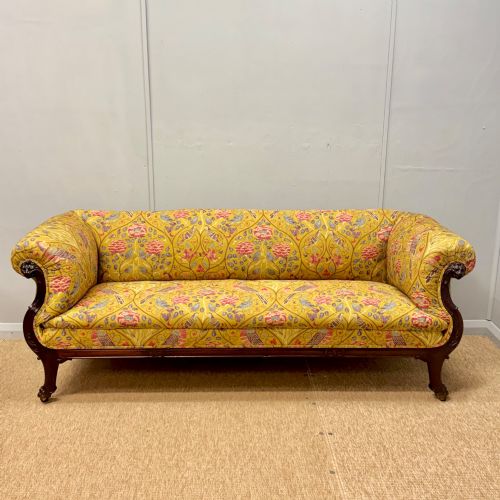
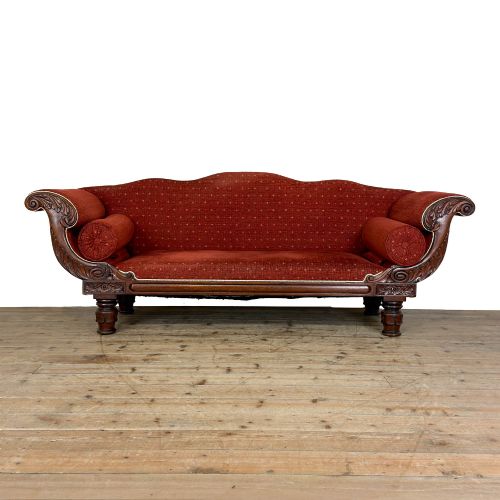
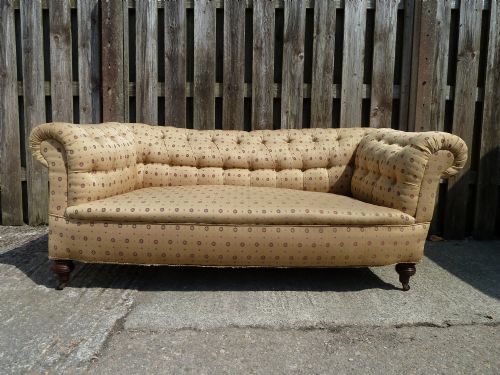
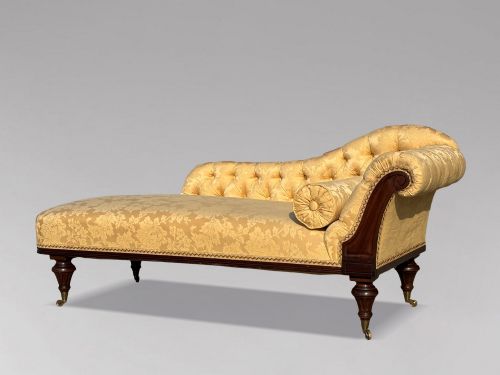
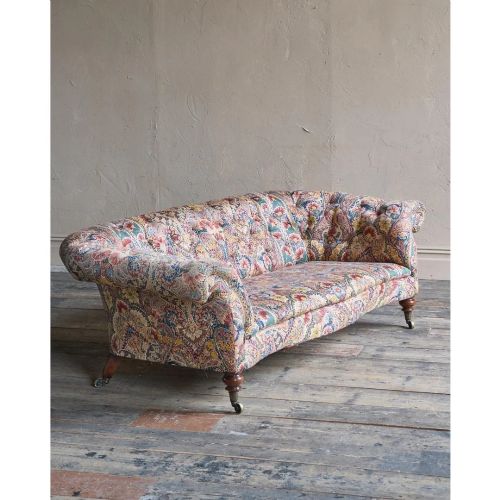
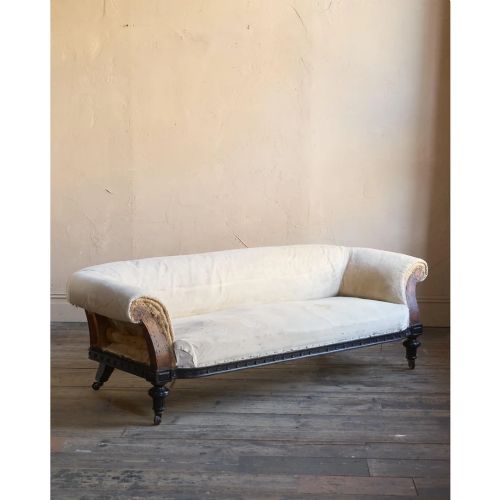
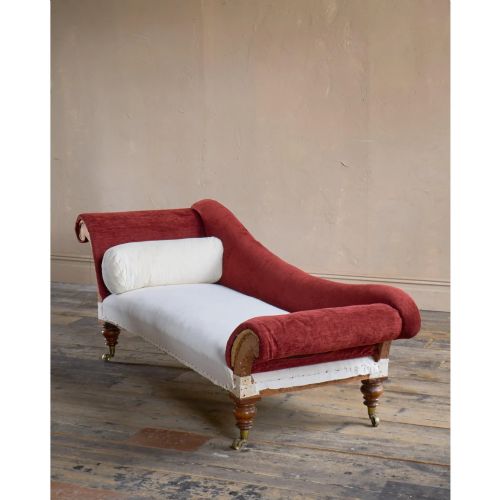
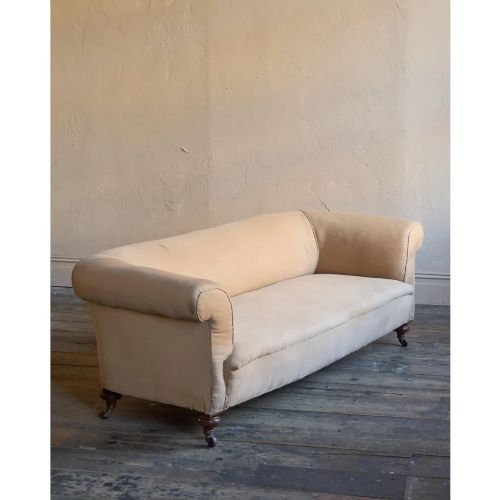
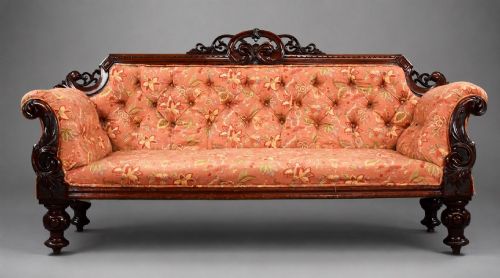
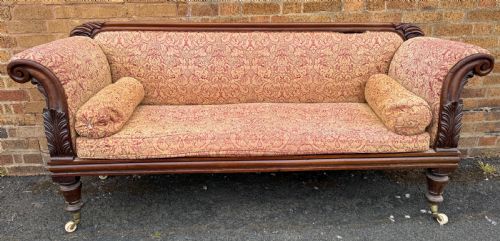
A traditional scroll arm couch spans several distinct forms from the nineteenth century, most notably the deep-buttoned Chesterfield, the elegant chaise longue, and the show-wood framed scroll-end settee. These pieces emerge primarily from the Regency, Victorian, and William IV periods, carrying the proportions and seating styles of English country houses and formal drawing rooms.
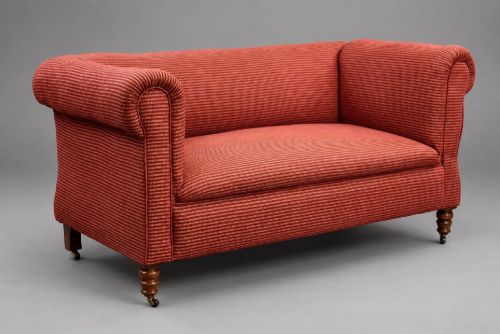
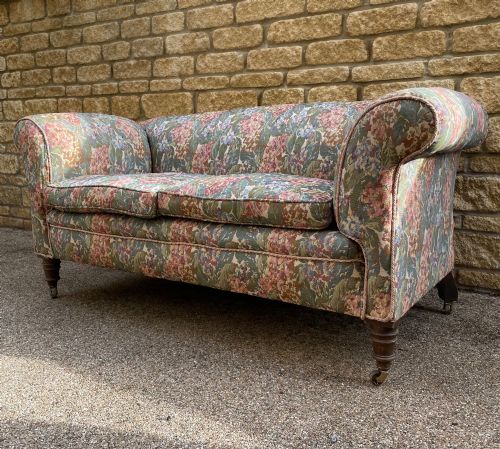
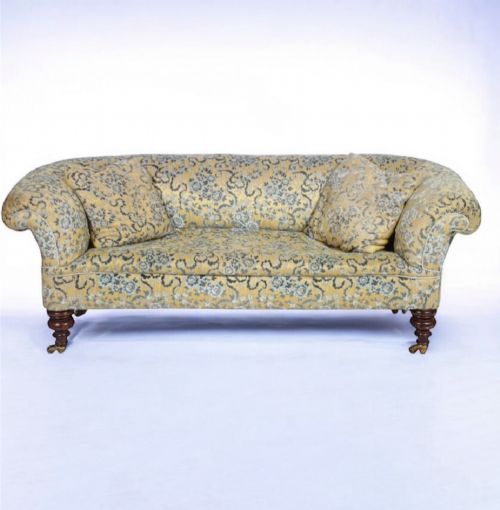
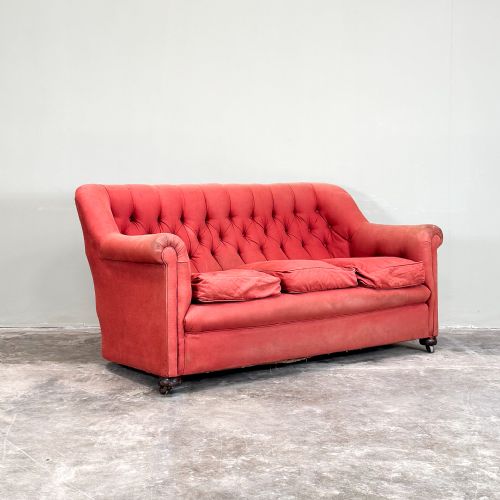
The version most commonly met on this page is the nineteenth-century Chesterfield or country house sofa, frequently upholstered in leather, velvet, or heavy fabric. Alongside these deep-seated designs, buyers encounter mahogany, rosewood, and walnut frames featuring characteristic curved arms, drop mechanisms, or lyre shapes.
How they were made
Makers constructed these frames from dense timbers such as mahogany, walnut, rosewood, and ebony, often utilising simulated rosewood or ebonised finishes to achieve a uniform dark surface. Carved wooden show-frames support complex internal upholstery systems that use fabric, leather, and velvet stretched over heavy horsehair and webbing.
Brass castors appear frequently on the feet of nineteenth-century frames, allowing heavy timber and upholstered structures to move across carpets without damaging floorboards. Turned wooden legs and intricately carved scroll ends demonstrate the hand-joinery and turning techniques typical of Victorian and Regency workshops.
Traditional Scroll Arm Couch Retail Price Guide 2026
Typical asking prices for traditional scroll arm couch among the pieces listed under this phrase on Sellingantiques today, from the lower quarter to the upper quarter. They describe what is for sale here now, not the wider market.
Some nineteenth-century arms drop down on hinges, turning a polite drawing room settee into an impromptu afternoon bed.
What varies in quality
The distinction between ordinary and exceptional examples rests in the sculptural integrity of the timber frame and the precision of the upholstery work. A superior piece displays crisp hand-carving along the scroll arms and show-wood rails, whereas lesser examples rely on simpler turned supports and flatter mouldings.
Proportion and scale dictate the visual weight of the couch within a room, with finer pieces maintaining balanced curves and supportive springing that resists sagging over decades of use. The choice of primary material also signals grade, as solid rosewood or finely figured mahogany denotes a higher workshop standard than ordinary mixed timbers.
Howard and Sons·Holland and Sons·Gillows
The Traditional Scroll Arm Couch Glossary
- Chesterfield
- A deeply buttoned upholstered sofa featuring arms and back of the same height. This form became a staple of nineteenth-century gentlemen's clubs and country houses.
- Chaise Longue
- An upholstered long chair designed for reclining, combining elements of a sofa and a single chair. Examples often feature a single raised scroll end.
- Scroll-End
- A sofa arm or terminal curved outward in a tight or sweeping scroll. This characteristic silhouette defines Regency and William IV seating design.
- Drop Arm
- A sofa arm mechanism that lowers on one side to form a daybed or sleeping surface. It provides adjustable comfort through hinged internal brackets.
- Show Frame
- A wooden structural skeleton left visible around the upholstered sections of a settee. This technique highlights the carved mahogany or walnut timberwork.
Traditional Scroll Arm Couch: Frequently Asked Questions
What is a scroll arm couch?
A scroll arm couch is a nineteenth-century seating form defined by arms that curve outward in a distinct circular sweep. These pieces range from library sofas to deep-seated Chesterfields.
They reflect the formal and domestic upholstery styles of the Regency and Victorian eras, utilising timber frames covered in leather, velvet, or heavy woven fabric.
How do I identify a Regency sofa?
Regency sofas typically display classical architectural lines, often incorporating lyre-shaped frames, rosewood or mahogany veneers, and brass castors. The carving tends to reference ancient Greek or Roman motifs.
Makers of this period focused on clean structural geometry combined with rich timber grains and scroll ends that terminate in tight wooden volutes.
Are these couches comfortable for daily use?
Many nineteenth-century scroll arm couches offer deep seating and robust internal springing designed for extended relaxation. Country house sofas and Chesterheads provide particularly substantial back support.
Buyers should examine the depth of the seat and the height of the scroll arms to ensure the proportions suit modern lounging habits as well as formal placement.
What timber was used for these frames?
Cabinet makers predominantly utilised mahogany, walnut, and rosewood for the exposed wooden elements of nineteenth-century settees. Ebonised finishes and simulated rosewood also appear frequently.
Underneath the upholstery, secondary hardwoods provide the structural skeleton needed to support heavy springing and dense horsehair stuffing.