



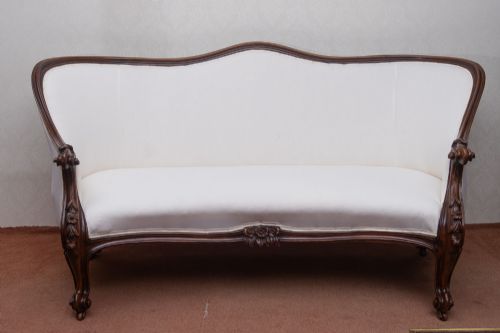


Traditional Salon Settee
These traditional salon settees offer refined seating from the Victorian and Edwardian periods, bringing period elegance and craftsmanship directly into a modern drawing room.
Traditional Salon Settee
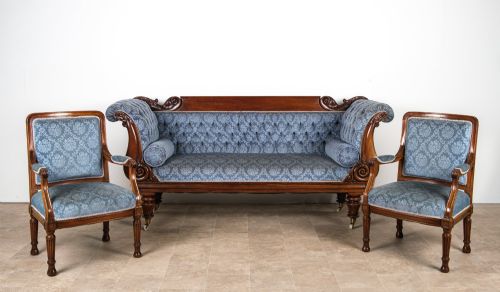
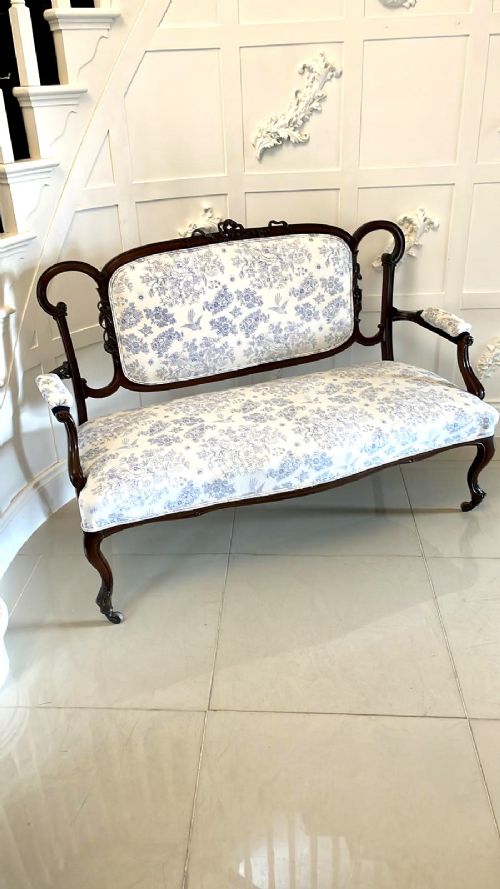
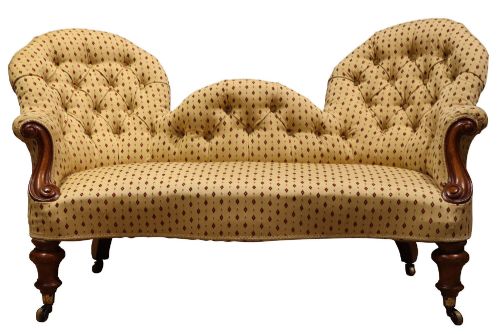
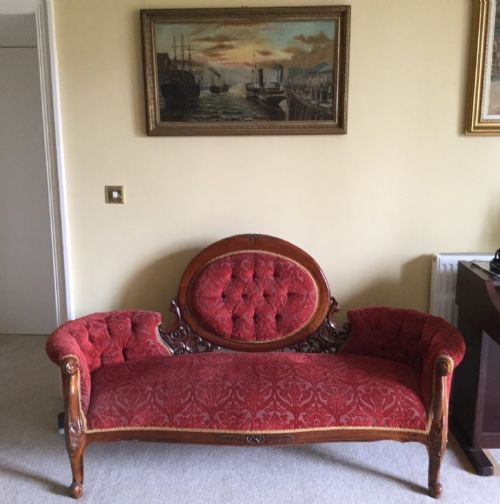
A traditional salon settee provides formal, comfortable seating rooted in the nineteenth and early twentieth centuries. These pieces appear in forms such as double-ended sofas, reception chaises, and matching parlour suites.
The materials recorded in the evidence demonstrate a clear preference for timber frames paired with rich textiles. Mahogany and walnut form the structural basis, while velvet, damask, and brocade provide the upholstered finish.
Most examples originate from the Victorian and Edwardian eras, spanning the mid-nineteenth century up to nineteen hundred. Makers during these periods drew upon established Chippendale and Sheraton Revival styles to shape their output.
How they were made
Frames rely on dense hardwoods like mahogany and walnut, frequently shaped through carved details such as lion paw feet. Timber preparation demanded skilled carpentry to support sprung settee bases and upholstered frames.
Upholstery techniques combined sturdy internal webbing with deep pile brocade, velvet, or damask fabrics. Brass fittings sometimes added structural or decorative accents to the timber and fabric assemblies.
Traditional Salon Settee Retail Price Guide 2026
Typical asking prices for traditional salon settee among the pieces listed under this phrase on Sellingantiques today, from the lower quarter to the upper quarter. They describe what is for sale here now, not the wider market.
Some Victorian settees feature carved lion paw feet, letting carved wooden beasts quietly anchor your drawing room seating.
What varies in quality
The standard of timber carving defines the upper tier of these pieces, distinguishing robustly sculpted mahogany and walnut frames from simpler constructions. Crisp execution in ornamental details reflects the skill of the original workshop.
The choice and execution of upholstery materials also create distinction across the range. High-grade velvet, damask, and deep pile brocade applied over properly sprung bases elevate both the visual presence and the physical comfort.
Morison & Co Edinburgh
The Traditional Salon Settee Glossary
- Double-ended settee
- A sofa style featuring symmetrically curved or scrolled ends at both sides, allowing a person to recline facing either direction. This form is characteristic of mid-nineteenth-century seating design.
- Salon suite
- A coordinated grouping of upholstered seating, typically comprising a settee and matching chairs designed for a formal reception room. These suites share identical timber frames and textile upholstery.
- Chippendale style
- A decorative aesthetic drawing upon eighteenth-century furniture designs, marked by carved wooden details and substantial proportions. Makers revived these classic motifs during the Victorian period.
- Sheraton Revival
- A late nineteenth-century design movement inspired by the neoclassical work of Thomas Sheraton, prioritising elegant proportions and refined timber choices like satinwood.
- Brocade
- A heavy, jacquard-woven fabric featuring raised patterns, often utilised for upholstery on formal period seating. This textile provides a textured, decorative surface.
Traditional Salon Settee: Frequently Asked Questions
What is a traditional salon settee?
A traditional salon settee is an upholstered wooden seat designed for formal reception rooms during the nineteenth and early twentieth centuries. These pieces typically feature carved mahogany or walnut frames paired with decorative textiles.
They serve as both practical seating and decorative focal points, reflecting the prevailing aesthetic movements of the Victorian and Edwardian eras.
Where were these settees placed originally?
These pieces sat within the formal reception spaces, parlours, and drawing rooms of grand houses and domestic residences. They provided comfortable, refined seating for receiving guests and social gatherings.
Their decorative frames and rich upholstery meant they were positioned prominently to display taste and status.
How do I style a salon settee today?
Integrating a period settee into a modern interior involves placing it against a neutral wall to highlight the timber frame and fabric texture. It works well as a statement piece in a living room or a reading corner.
Pairing the settee with complementary lighting lets the carved mahogany or walnut details stand out without cluttering the room.
How do I distinguish Victorian from Edwardian pieces?
Victorian settees tend to feature darker, heavier timbers like mahogany and walnut, accompanied by deep-buttoned velvet or damask upholstery. The carving is often robust and ornate, reflecting mid-nineteenth-century tastes.
Edwardian examples often display lighter woods such as satinwood and cleaner lines inspired by Sheraton Revival styles, creating a brighter visual presence.