






Traditional Rural Oil Canvas
Traditional rural oil canvas works capture historic country life, farming scenes and pastoral landscapes through oil paint applied directly to woven fabric.
Traditional Rural Oil Canvas
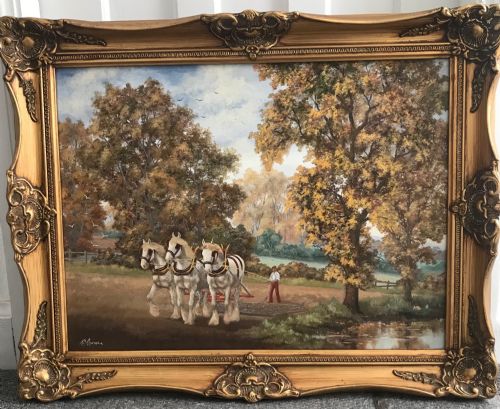
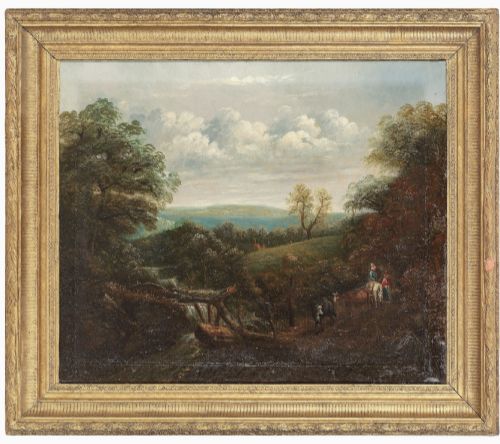
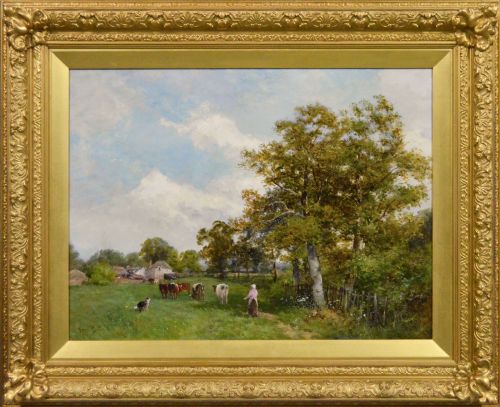
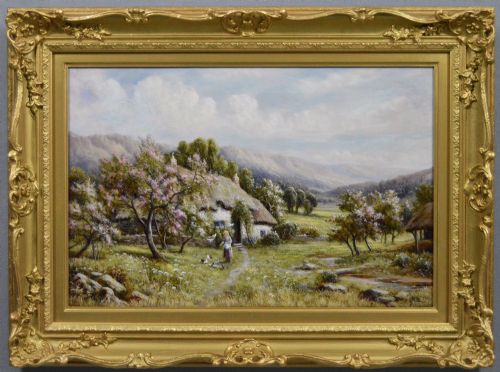
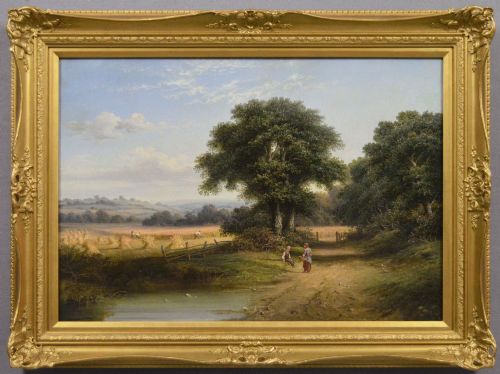
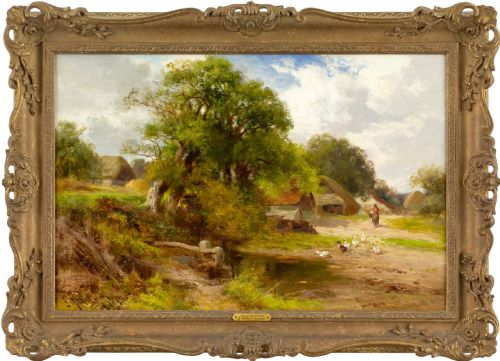
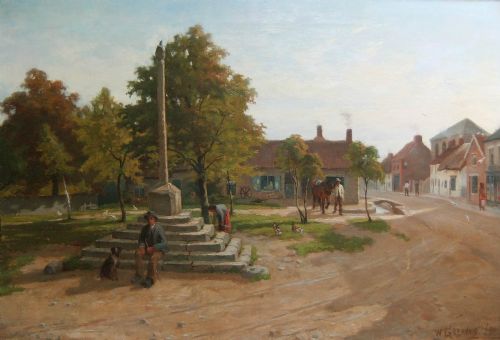
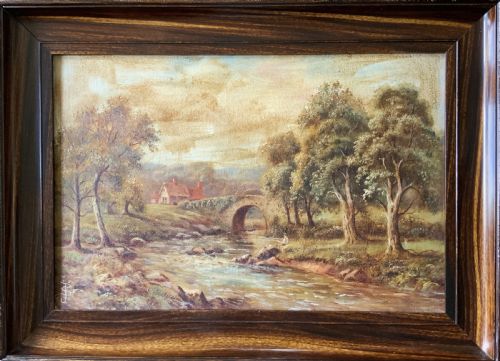
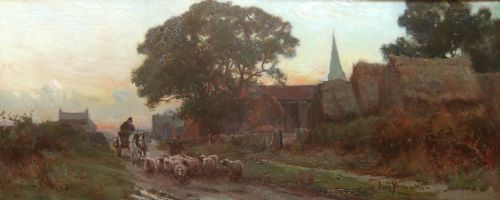
Traditional rural oil canvas pieces portray the nineteenth and early twentieth-century countryside, centring on farm workers, shire horses, cottages, harvest fields and grazing livestock. These works bridge documentary recording of agrarian life and romantic landscape painting, reflecting the British and European rural environment during periods of industrial change.
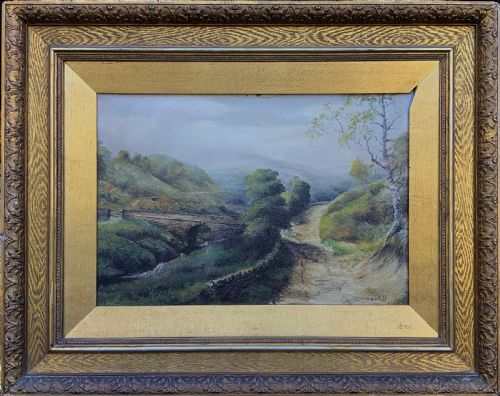
The selections span Victorian pastoral scenes, British Impressionism, and Norwich School compositions alongside mid-century and vintage interpretations. Buyers encounter framed portrayals of Yorkshire, Sussex, Kent and remote river valleys executed by named artists and regional schools of painters.
Most examples utilise canvas supports framed in wood or giltwood, ranging from small cabinet pictures to expansive landscape views. The subjects focus closely on agricultural routines, working animals, river paths and blacksmiths, creating a direct visual record of traditional country existence.
What varies in quality
The strength of composition and handling of light distinguish superior pastoral scenes from routine topographical records. Accomplished painters orchestrate figures, animals and landscape elements to guide the eye naturally through the depth of the field.
Subtlety in handling atmospheric conditions, water reflections and textures of thatch or wool separates skilled observation from formulaic studio production. Original framing matching the period of the painting likewise contributes to the integrity of the surviving piece.
Listings feature oil on canvas works spanning the nineteenth century through the mid-twentieth century, created by British and European painters.
George Graham·David Bates·Robert John Hammond·Walter Heath Williams·John Horace Hooper·William Greaves·Sydney Yates Johnson·Owen Bowen·William Henry Mander·Thomas Sidney Cooper·Herbert Royle·Reginald Grange Brundrit·James Kyd·Henry John Yeend King·William Sydney Cooper·Samuel Joseph Clark·Henry John Boddington·Willem Anton Alexander Knip·Johannes Philippus Galjaard·Heinrich Harder·Charles Vickers·William Grant Murray·Robert Finley McIntyre·Arthur Longley Vernon·Edward Brice Stanley Montefiore
The Traditional Rural Oil Canvas Glossary
- Canvas
- A heavy woven fabric, usually linen or cotton, used as the primary support surface for oil paintings. It is stretched tightly over a wooden frame before painting begins.
- Gesso
- A white paint mixture consisting of a binder mixed with chalk, gypsum or pigment, applied to the canvas to prepare a smooth absorbent surface for oil paint. Traditional recipes utilise animal glue size.
- Giltwood
- Wood that has been decorated with a thin layer of gold leaf or gilt powder. It is commonly found on traditional picture frames from the Victorian and Edwardian periods.
- Norwich School
- The first provincial art movement in Britain, founded in the early nineteenth century. Its members painted local landscapes and rural scenes inspired by East Anglian scenery.
- Impasto
- Paint applied thickly to a canvas, standing out from the surface so that the marks of the brush or palette knife remain visible. This technique adds tactile depth and texture to highlights.
Traditional Rural Oil Canvas: Frequently Asked Questions
How do I date an old canvas?
Dating relies on stylistic evidence, artist signatures, framing materials and the physical construction of the wooden stretchers behind the canvas. Clues emerge from costume details, agricultural equipment depicted and historical records of the painter's working life.
Examination of the canvas weave and the type of gesso primer can also offer confirmation of the era in which the work was produced.
Where should I hang a landscape?
These rural scenes suit rooms with stable humidity and subdued natural light away from direct heat sources. Stable environmental conditions prevent the canvas from slackening and protect the oil paint and gilt frame.
Secure wall fixings matching the weight of the heavy wooden frame ensure safe display at eye level in living spaces or studies.
What is British Impressionism?
British Impressionism emerged in the late nineteenth and early twentieth centuries as artists adopted plein air painting methods. Painters focused on capturing fleeting effects of natural light, weather and rural atmosphere.
Brushstrokes became looser and palettes brighter while maintaining a strong connection to traditional British countryside subjects.