



Traditional Riverbank Painting
Traditional riverbank painting captures water and countryside scenes in oil and watercolour, offering a peaceful window into rural pastimes.
Traditional Riverbank Painting
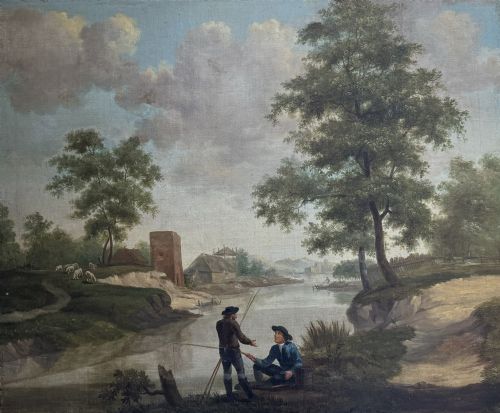
A traditional riverbank painting depicts rural waterways, featuring figures fishing, cattle grazing, or quiet woodland scenes alongside water. These works span from the 18th century through to the mid 20th century, capturing changing British landscapes across different artistic movements.
You will frequently encounter Victorian oils and watercolours on this page, often showing anglers, ducks, or livestock near rivers. The selection includes works by named artists from the English, Scottish, and British schools alongside unsigned pieces from the same periods.
How they were made
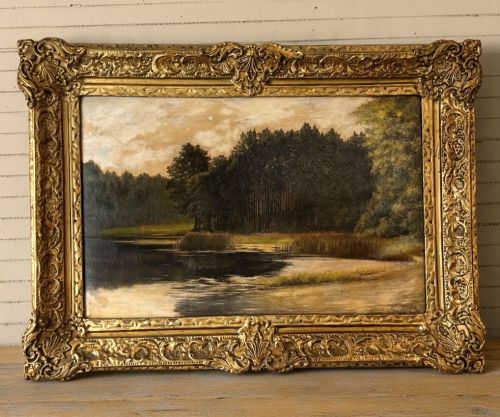
Artists painted primarily using oil paint or watercolour, applying medium to canvas, wood panels, paper, or glass. Many works utilise traditional stretched canvas housed within original giltwood frames.
Techniques range from detailed Victorian realism to impressionist brushwork, capturing natural light on water and autumn foliage. Painters worked both plein air and in studios, recording specific locations such as Cumberland, the River Kennet, and the Teme.
Traditional Riverbank Painting Retail Price Guide 2026
Typical asking prices for traditional riverbank painting among the pieces listed under this phrase on Sellingantiques today, from the lower quarter to the upper quarter. They describe what is for sale here now, not the wider market.
Listings feature works spanning the 18th, 19th, and 20th centuries, executed in oil paint, watercolour, pastel, and gouache on canvas, wood, paper, and glass.
What varies in quality
Quality rests in the artist's command of light, shadow, and atmospheric depth, particularly in the rendering of water and reflections. Stronger examples display confident brushwork and a balanced composition that draws the eye naturally along the river course.
The integration of figures or animals into the landscape also dictates the merit of a piece. Finer paintings show careful proportion and natural posture in cattle, anglers, or children, whereas lesser works feel static or heavy-handed.
Archibald Kay·Frank Hyde·Walter Follen Bishop·William Manners·Harry Davis·Harry Pennell·Constant Ludovic Artz·Henry Cheadle·T.B. Garvie·Augustus William Ennes·Thomas E Francis
The Traditional Riverbank Painting Glossary
- Oil painting
- A work created using pigments bound in a drying oil, typically applied to canvas or wood panel. This medium allows for rich colour depth and layered texture.
- Watercolour painting
- A delicate medium consisting of water-soluble pigments applied to paper, valued for its luminous transparency and fluid washes.
- Giltwood
- Wood carved and covered with a thin layer of gold leaf, commonly used for traditional picture frames during the 19th century.
- English School
- A classification for artists trained or working within England, often sharing regional styles without forming a formal artistic movement.
- Genre painting
- Artwork depicting scenes from everyday life, such as figures fishing or children playing by the water.
Traditional Riverbank Painting: Frequently Asked Questions
What subjects appear in these paintings?
These artworks predominantly show rural British waterways populated by fishermen, grazing cattle, ducks, and figures resting among autumn trees.
Scenes frequently capture specific locations like Cumberland riversides or wooded banks, reflecting peaceful countryside pastimes.
How are these artworks framed?
Many pieces retain their period frames, particularly ornate giltwood surrounds that complement the traditional style of the 19th and early 20th century canvases.
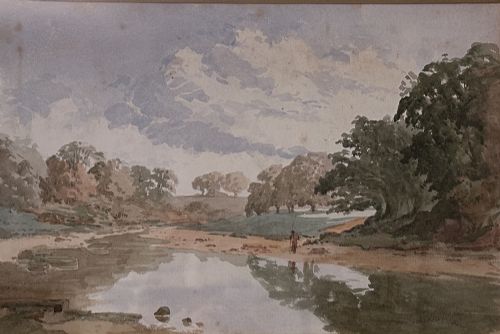
Watercolours on paper are typically mounted behind glass with protective wooden or gilt framing suited to works on paper.
How do I date a riverbank painting?
Stylistic clues such as Victorian realism, impressionist brushwork, or post-impressionism help establish the period alongside artist signatures and biographical dates.
Materials also provide evidence, with wood panels and specific canvas types pointing towards 18th, 19th, or mid 20th century origins.
Where were these scenes painted?
Artists painted across various British waterways, capturing identified locations like the River Kennet, Leigh Woods, and the Teme.
Many compositions also reflect the wider English and Scottish countryside, painted by artists recording local rural topography.