



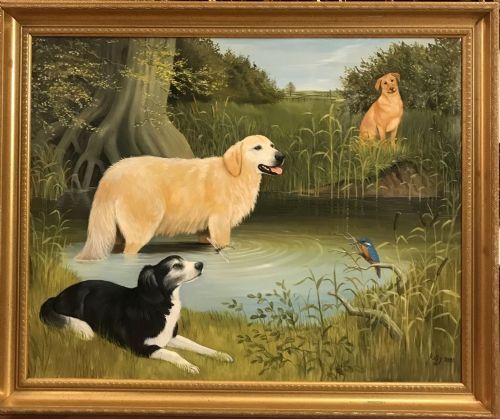
Traditional River Scene Painting
A traditional river scene painting captures flowing water, pastoral banks and quiet reaches through the eyes of artists spanning multiple centuries.
Traditional River Scene Painting
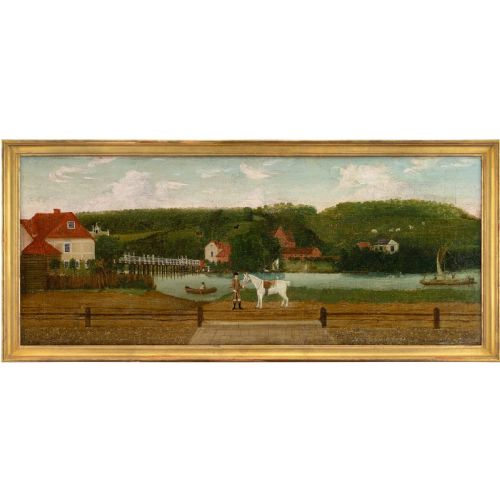
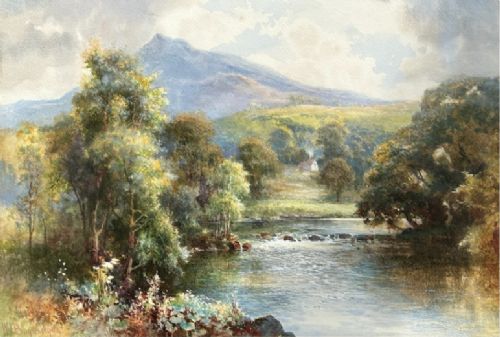
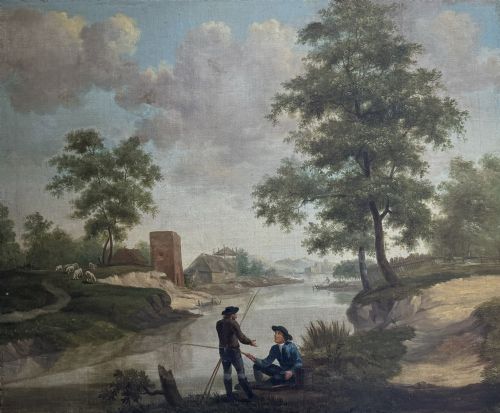
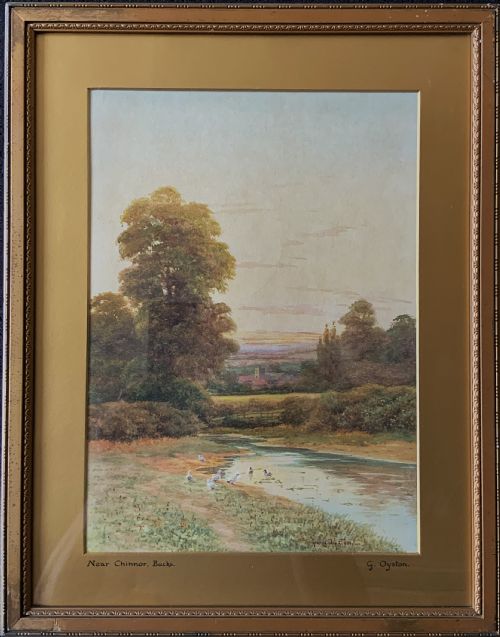
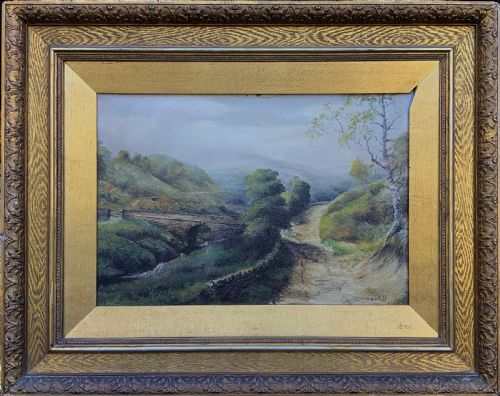
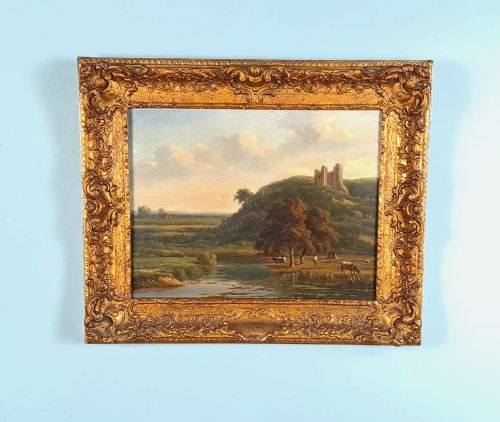
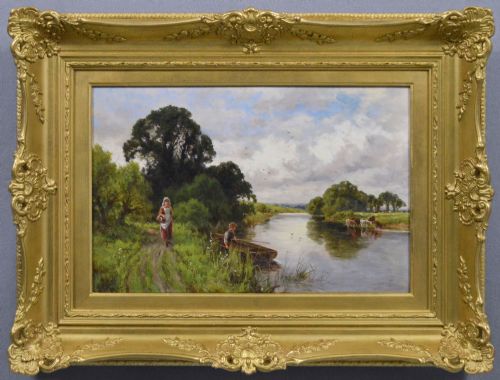
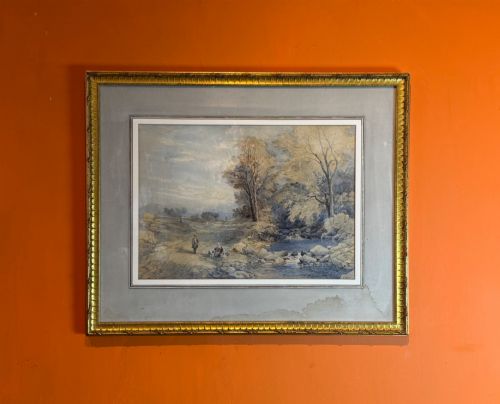
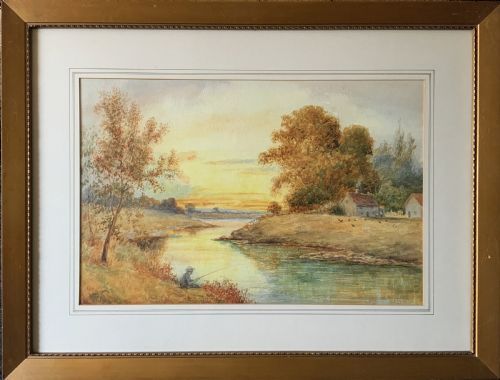
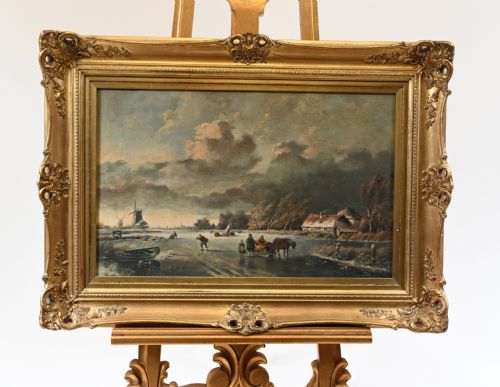
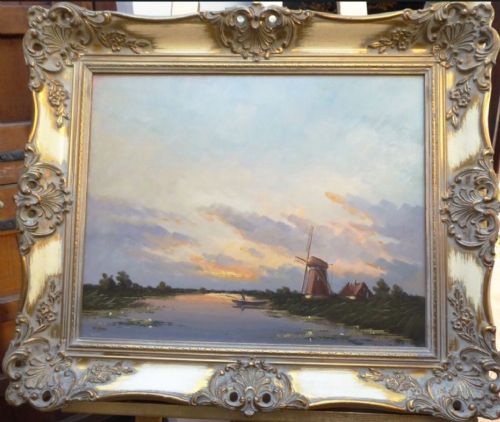
A traditional river scene painting presents a landscape centred on waterways, bridges, mills and riverside figures, originating mostly from the eighteenth, nineteenth and early twentieth centuries. The selection relies heavily on British and European schools, spanning oils on canvas or wood panel and delicate watercolours on paper.
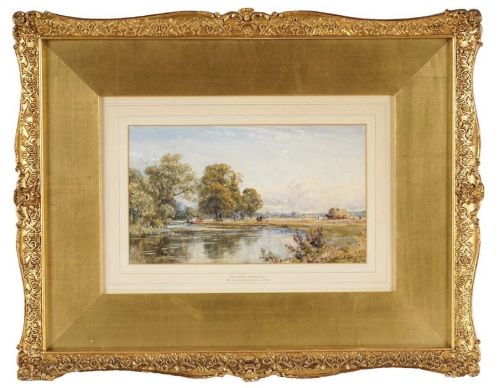
Buyers encounter framed works attributed to named regional artists alongside pieces bearing nineteenth-century and Edwardian signatures. These artworks depict specific stretches of water such as the Thames, the Severn and Welsh rivers, often framed in period giltwood.
The assortment ranges from large exhibition oils to intimate watercolours created on location. Such pieces reflect shifting artistic approaches from the Georgian era through to British impressionism and Dutch school influences.
Materials and Technique
Artists painted primarily with oil paint on stretched canvas or wooden panels, or applied watercolours onto heavyweight paper. These mediums allowed painters to capture the translucent quality of water and the changing light of sunset or mist over riverbanks.
Canvases were mounted within ornate frames constructed of giltwood and gesso, adding structural depth and decorative weight to the finished artworks.
Listings feature works created using oil paint, watercolour and acrylic across canvas, wood panels and paper supports dating from the eighteenth to the twentieth century.
Judging Quality
Quality rests upon the artist's handling of light, atmospheric depth and the natural movement of water across the canvas or paper. Stronger examples display confident brushwork and accurate perspective, whereas weaker pieces rely on formulaic foliage and static compositions.
The preservation of the original paint surface and the integrity of the period frame contribute significantly to the standing of a piece. Works retaining their untouched nineteenth-century varnish and contemporaneous giltwood presentation hold greater visual coherence.
George Graham·Alfred Young Nutt·George Oyston·Henry H Parker·Sydney Yates Johnson·Archibald Kay·Thomas Baker·Thomas Bush Hardy·Thomas Spinks·Walter J Watson·Robert Winchester Fraser·Benjamin Williams Leader·William Pitt·Frederick Waters Watts
The Traditional River Scene Painting Glossary
- Gesso
- A plaster-like preparation applied to wood or canvas as a base for painting or applied to carved wood to receive gilding. This mixture creates a smooth surface for intricate frame mouldings.
- Giltwood
- Timber that has been coated with a thin layer of gold leaf. Frames made from this material surround many nineteenth-century paintings.
- Wood Panel
- A solid flat piece of timber utilised as a rigid support for oil painting before stretched canvas became universal. Panel works often survive from the nineteenth-century Dutch and Flemish schools.
- Watercolour
- A paint consisting of pigment suspended in a water-based solution, applied to paper to achieve translucent washes of colour. Artists used this medium extensively for portable landscape sketches.
- Oil on Canvas
- Pigment bound in an oil medium spread across a woven fabric stretched tightly over a wooden frame. This combination allows for rich colour blending and textured brushwork.
Traditional River Scene Painting: Frequently Asked Questions
What periods do these paintings cover?
The available artworks span from the eighteenth century through the Victorian and Edwardian eras into the mid-twentieth century.
Most pieces originate from the nineteenth century, reflecting various British and continental painting traditions.
How were these watercolours and oils displayed?
Historic paintings were traditionally framed in ornate giltwood or gesso mouldings designed to complement the domestic interiors of country estates and town houses.
These frames protect the edges of the canvas or paper while enhancing the depth of the landscape scene.
How do I identify the artist?
Signatures, monograms or inscriptions on the front or reverse of the canvas often identify the painter.
Historical records and stylistic traits associated with British and European schools help attribute unsigned works to particular periods.
Where were these river views painted?
Artists recorded recognizable waterways including the River Thames, the River Severn, Welsh valleys and continental rivers in Holland.
These locations captured local industries, rural bridges and everyday figures engaged in fishing or boating.