


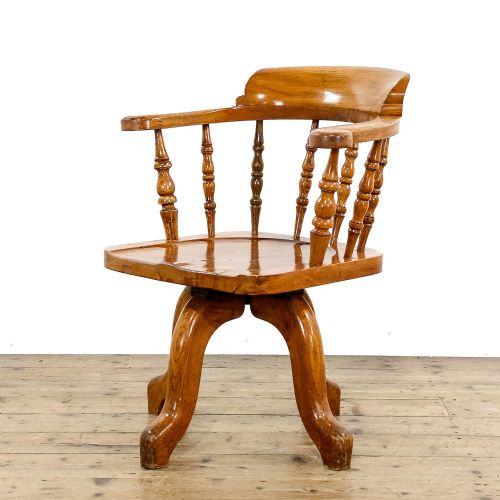


Traditional Revolving Armchair
A traditional revolving armchair offers functional movement and sturdy seating, making it an essential addition to any study.
Traditional Revolving Armchair
A traditional revolving armchair is primarily sought for workspace utility, combining mobility with period character. These pieces typically function as desk chairs, office chairs, or captain's chairs designed for administrative and study tasks.
Styles range from straightforward Late Victorian forms to distinct movements such as Edwardian Arts and Crafts and the Aesthetic Movement. Most pieces retain their utilitarian roots, providing robust seating intended for regular daily use in a study or office.
Materials and construction methods
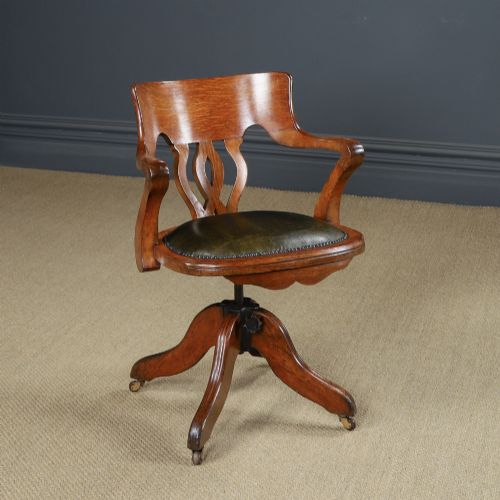
Construction relies primarily on hardwoods such as mahogany, oak, walnut, and beech to ensure structural integrity during constant movement. Metal components, including iron, cast iron, and brass, form the internal swivel and tilt mechanisms that allow the seat to rotate.
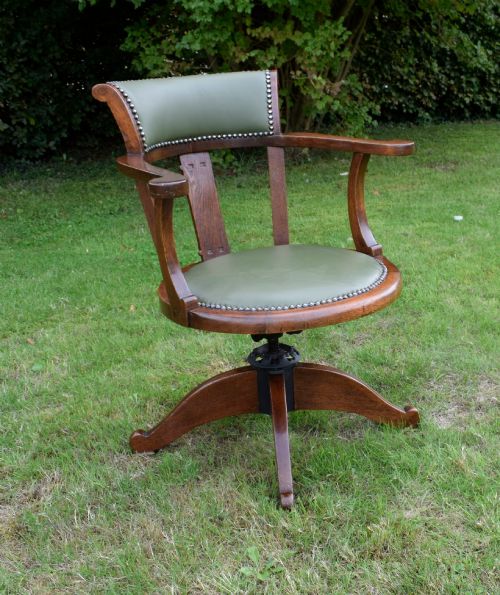
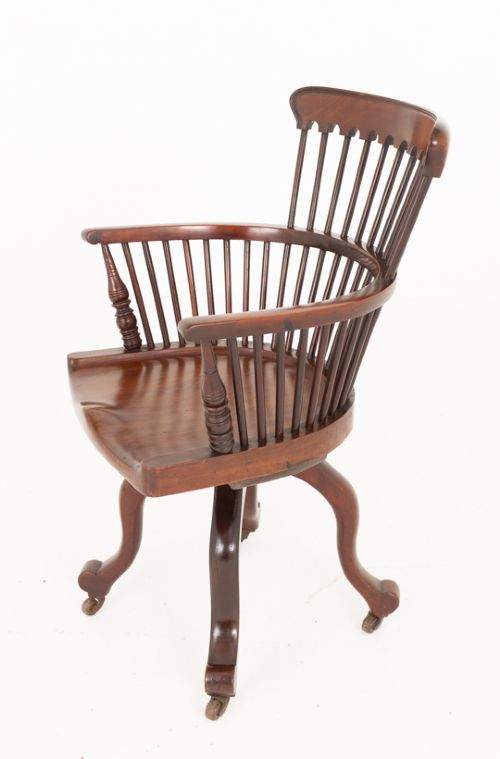
Upholstery materials predominantly feature leather or velvet, often secured to padded seats designed for sustained desk work. Wooden seats without upholstery also appear frequently, particularly within office and captain's chair configurations.
Listings span from the mid-nineteenth century through the Edwardian era, featuring oak, mahogany, walnut, and beech alongside brass and cast iron hardware.
Distinguishing quality in period seating
Quality separates through the integrity of the timber selection and the complexity of the revolving mechanism. Finer examples display superior joinery and cabinet-making execution, particularly evident in pieces associated with documented cabinet makers.
The sophistication of the swivel and tilt apparatus dictates functional superiority, distinguishing basic utility chairs from more ornate library and office armchairs. Additionally, the retention of original upholstery materials and hardware contributes significantly to the integrity of the piece.
George Bartholomew and Co·Edward William Godwin
The Traditional Revolving Armchair Glossary
- Swivel
- A mechanical joint that allows the upper portion of the chair to rotate horizontally around a central axis. This mechanism is essential for movement between different areas of a desk.
- Tilt
- A functional adjustment enabling the backrest and seat to lean backward against tension. It provides ergonomic support during extended periods of sitting.
- Captain's Chair
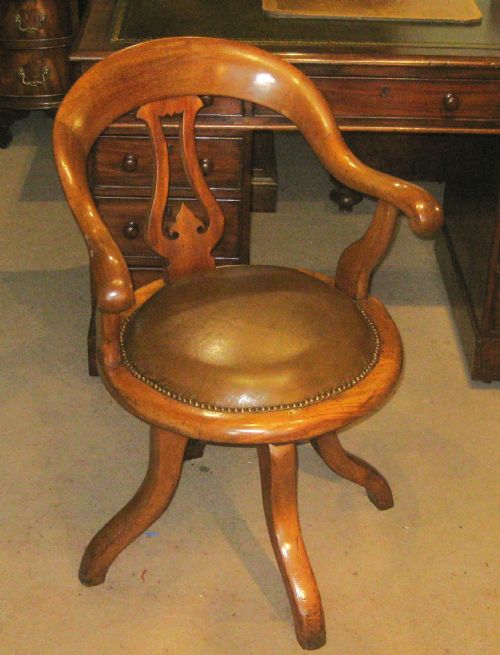
- A sturdy wooden armchair with a low back and rounded arms, traditionally utilised in offices and ships. Many period versions are adapted with revolving bases for desk use.
- Aesthetic Movement
- A late nineteenth-century design style emphasising visual and compositional beauty over narrative content. Pieces from this movement often display refined lines and careful attention to material honesty.
- Arts and Crafts
- A design movement prioritising traditional craftsmanship, visible construction, and simple forms. Chairs from this tradition often highlight the natural grain of oak or walnut.
Traditional Revolving Armchair: Frequently Asked Questions
How do I identify a Victorian revolving armchair?
Victorian examples generally utilise rich timber grains, predominantly mahogany or walnut, combined with heavier turnings and robust proportions.
They often feature traditional leather upholstery and mechanical hardware characteristic of late nineteenth-century office furniture production.
Are these chairs suitable for daily desk use?
These chairs were originally built for administrative and office environments, making them well-suited for modern study spaces.
Their swivelling and tilting capabilities provide the functional mobility required at a contemporary desk.
What is the difference between Edwardian and Victorian models?
Victorian versions tend to feature dense mahogany or walnut construction with darker finishes and traditional buttoned or plain leather upholstery.
Edwardian alternatives frequently incorporate lighter oak or beech, sometimes reflecting Arts and Crafts simplicity in their structural framing.
Do all traditional revolving armchairs have leather seats?
Upholstery varies across the selection, with many examples featuring green leather or velvet pads.
A significant portion of listings also showcase solid wooden seats, particularly within office and captain's chair configurations.