


Slat Back Office Chair
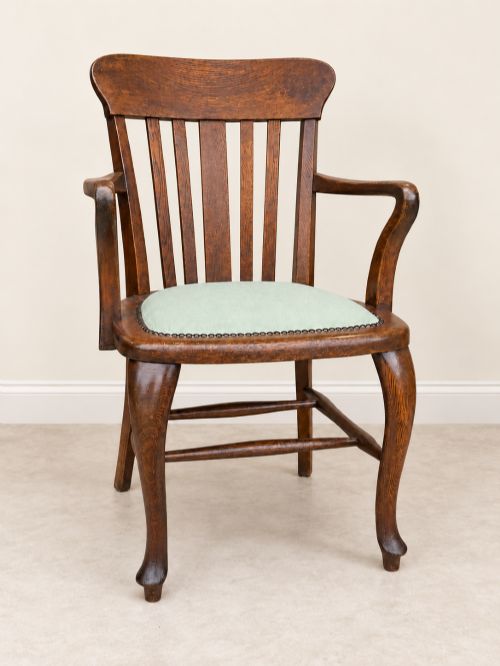
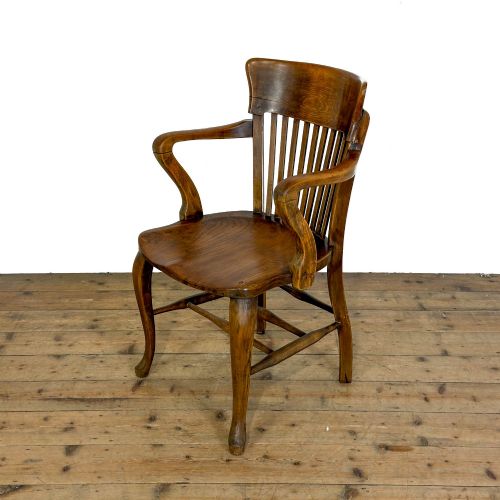
A slat back office chair brings solid timber construction and traditional working forms directly into a modern study or library.
Slat Back Office Chair
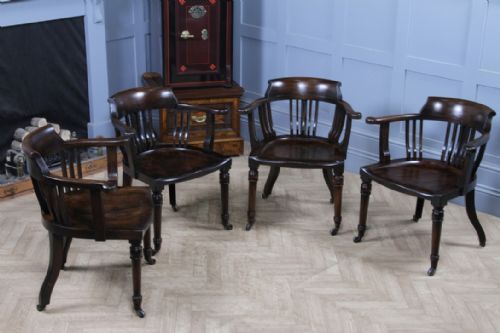
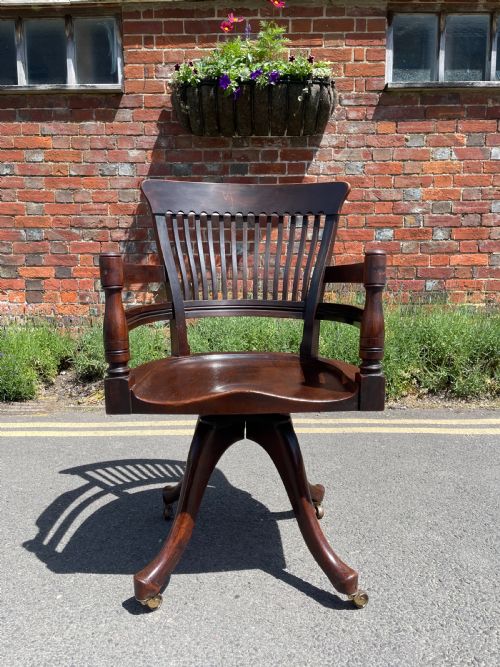
When you search for a slat back office chair, you encounter sturdy seating designed for utilitarian workspaces from the late nineteenth and early twentieth centuries. These pieces combine supportive armrests and open wooden slats with functional desk chair bases, often featuring revolving or swivel mechanisms.
The versions you are most likely to meet on this page span the Victorian, Edwardian, and subsequent decades up to nineteen thirty. They appear primarily in oak and mahogany, taking the form of desk chairs, armchairs, and occasional carvers intended for sustained daily use.
How they were made
Joiners built these frames from durable hardwoods like oak, mahogany, and beech, selecting timber for strength and straight grain. Turners shaped the vertical wooden slats and spindles to support the back while keeping the construction relatively light.
Makers integrated brass and iron components into the underframes and swivel mechanisms to allow rotation and tilt functions. Some examples incorporate leather or velvet inserts on the seats, secured with tacks to the wooden base.
Object forms found across these records include desk chairs, armchairs, swivel designs, and occasional carver chairs.
What varies in quality
The distinction between ordinary utility seating and finer examples rests upon the refinement of the timber turning and the complexity of the revolving mechanism. Heavier casting quality in the iron and brass underparts points to a more robust original commission.
Design attribution also separates pieces, as seen in examples associated with specific stylistic movements or makers like E W Godwin. The integrity of the original wooden seat and the crispness of the slat joints determine the lasting character of the chair.
E W Godwin
The Slat Back Office Chair Glossary
- Captain's chair
- A sturdy wooden armchair with a rounded back rail supported by spindles, designed for office or domestic desk use.
- Smoker's bow
- A low-backed Windsor-style armchair featuring a continuous curved crest rail and wooden armrests.
- Revolving chair
- A desk seat mounted on a central pivot mechanism that allows the upper portion to turn through a full circle.
- Carver chair
- An armchair designed in the style of a matching set of dining or occasional chairs to sit at the head of a table or desk.
- Aesthetic Movement
- A nineteenth-century design phase emphasising artistic craftsmanship and simplicity over ornate Victorian revivalism.
Slat Back Office Chair: Frequently Asked Questions
What is a slat back office chair?
A slat back office chair is a period seating option featuring open vertical wooden slats along the backrest and a sturdy timber frame suitable for a desk.
These pieces typically date from the Victorian and Edwardian eras through the nineteen thirties, combining traditional joinery with early swivel mechanisms.
How do I identify an Edwardian desk chair?
Edwardian desk chairs usually date from around nineteen hundred to nineteen ten, showing lighter mahogany or oak construction influenced by earlier Regency styles.
They often incorporate curved back rails and slender spindles rather than the heavier carvings found on strictly mid-Victorian furniture.
How do I care for antique office chairs?
Keep wooden frames conditioned with appropriate wax polish and protect leather or velvet seat pads from direct sunlight and dry heat.
Avoid overloading antique swivel mechanisms and check the iron and brass underframes periodically to ensure all original screws remain secure.