



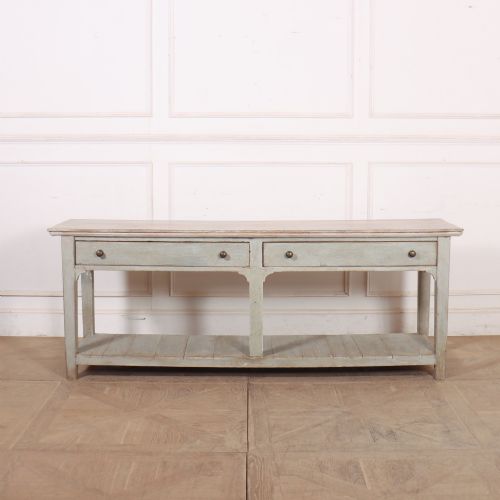
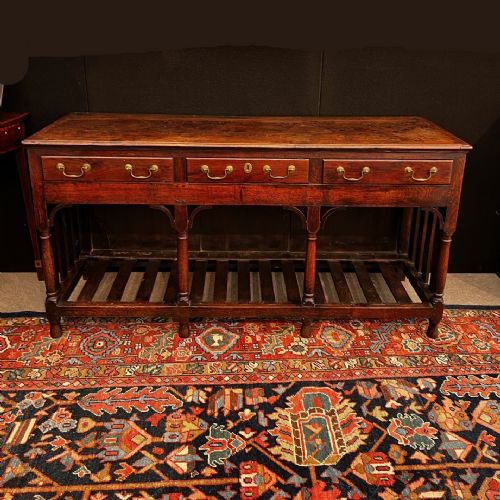
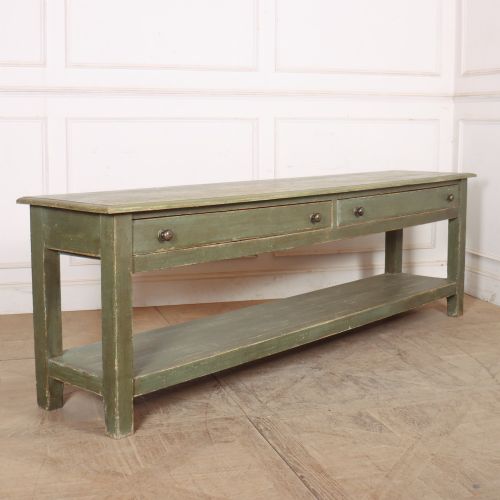


Traditional Potboard Dresser Base
A traditional potboard dresser base is a heavy low sideboard with an open shelf beneath, offering sturdy utility and rustic charm.
Traditional Potboard Dresser Base
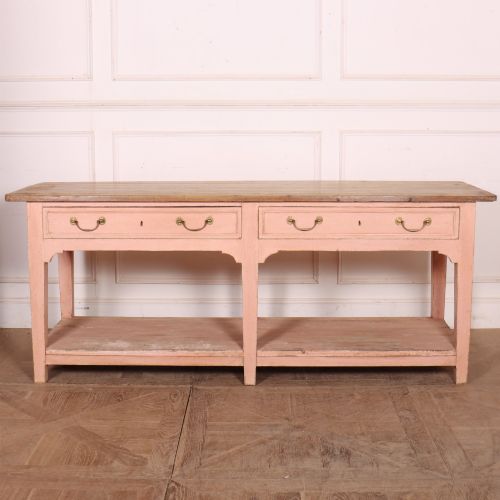
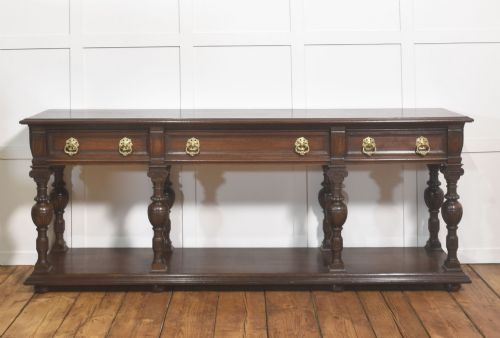
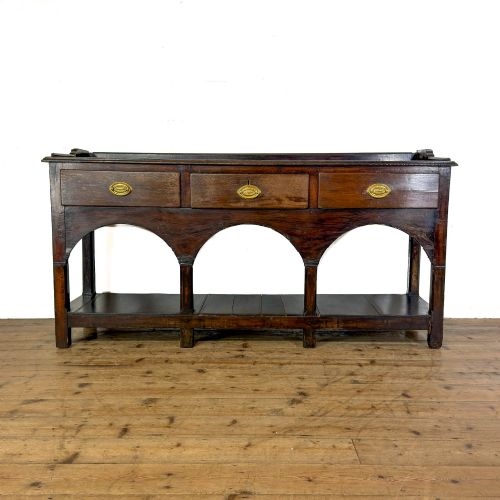
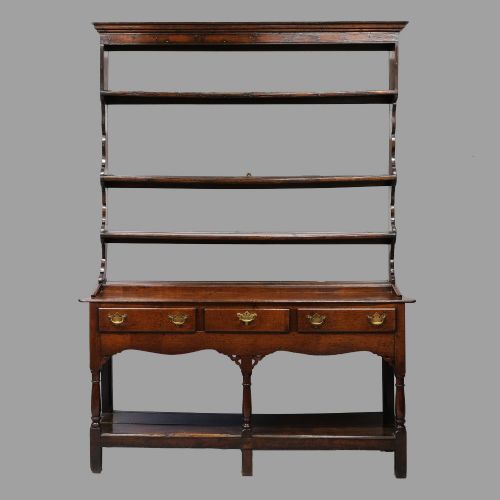
A traditional potboard dresser base provides a low working surface with an open lower tier known as a potboard, designed historically for storing heavy kitchen utensils and earthenware. These sturdy pieces anchor a dining room or kitchen, functioning as sideboards or serving tables while displaying the grain of timber.
The pieces seen here span from the 18th century through the Georgian and Victorian periods into early 20th century revivals, with oak being the primary timber alongside elm, pine, and painted woods. Regional variations appear in English country examples and Welsh vernacular designs, often featuring banks of drawers above the lower shelf.
How They Were Made
Joiners constructed these bases primarily using solid oak and elm, relying on pegged mortise and tenon joints to withstand heavy daily use in domestic kitchens. Pine and painted timber appear in regional variations, whilst brass handles and hardware accent the drawer fronts.
Surfaces show the marks of hand planing and simple carving on period examples, with later Jacobean style revivals utilising similar solid timber construction methods. Some pieces feature bleached finishes or painted surfaces applied over the original wood.
Several pieces include up to six drawers for tucking away loose kitchen clutter.
What Varies in Quality
The integrity of the timber and the depth of its patina dictate the character of each piece, with older George III examples showing rich grain and honest wear on the top boards. Construction details such as hand-cut drawer dovetails and the thickness of the potboard timber distinguish provincial vernacular pieces from later revival items.
Proportions vary from small cottage formats to large serving tables, and the presence of original brass hardware or untouched painted finishes influences how well the piece retains its period identity.
The Traditional Potboard Dresser Base Glossary
- Potboard
- The low open shelf fixed near the floor beneath the main counter of a dresser base. Originally utilised for cooling pots and storing heavy kitchen crockery.
- Dresser Base
- A low freestanding kitchen or dining cabinet featuring drawers or cupboards above legs or a lower shelf. It served as a primary food preparation and serving surface.
- Vernacular
- Furniture built by local country joiners using regional traditions and native timbers rather than following strict metropolitan design books. These pieces reflect local domestic needs.
- George III Period
- The era spanning from 1760 to 1820, characterised in country furniture by robust oak construction and functional drawer arrangements. Pieces from this time display deep natural patination.
- Elm
- A tough native timber frequently used alongside oak in country furniture for drawer linings and structural boards. It resists splitting under heavy pressure.
Traditional Potboard Dresser Base: Frequently Asked Questions
What was a potboard used for?
The lower shelf held heavy pots, pans, and earthenware storage vessels off the damp flagstone floor of the kitchen.
Over time, this practical storage space became a defining stylistic feature of country furniture.
How do I date an oak dresser base?
Examine the construction methods of the drawers, timber shrinkage, and the colour of the wood's patina.
Hand-cut dovetails, pegged joints, and native timbers like oak and elm point towards 18th century or Georgian origins.
Can I use a dresser base as a sideboard?
These pieces function well as sideboards in modern dining rooms or as serving tables during meals.
The top surface provides ample room for serving dishes while the drawers store cutlery and linen.
What is the difference between English and Welsh dressers?
Welsh vernacular pieces often integrate specific regional proportions and native timbers reflecting local rural workshops.
English country examples show similar utilitarian forms but vary in drawer counts and regional moulding details.