




Traditional Pine Writing Table
These traditional pine writing tables are sturdy nineteenth-century domestic pieces built for daily work.
Traditional Pine Writing Table
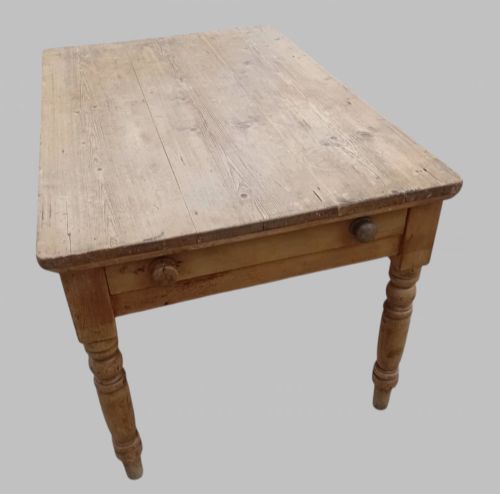
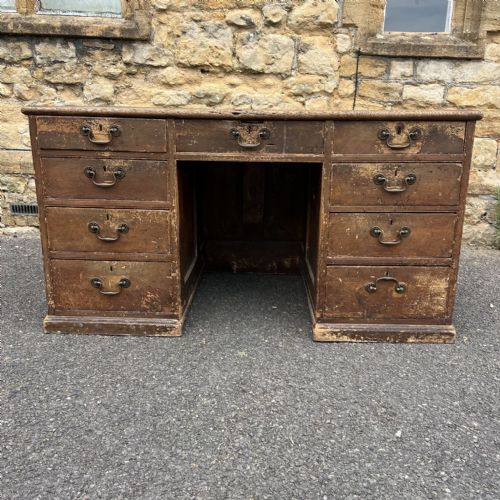
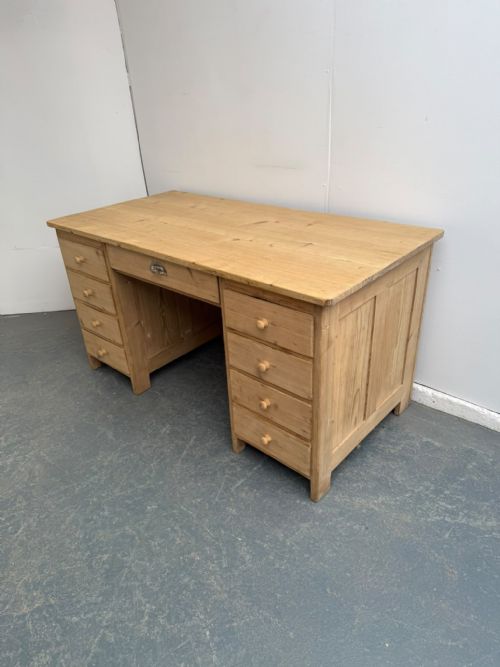
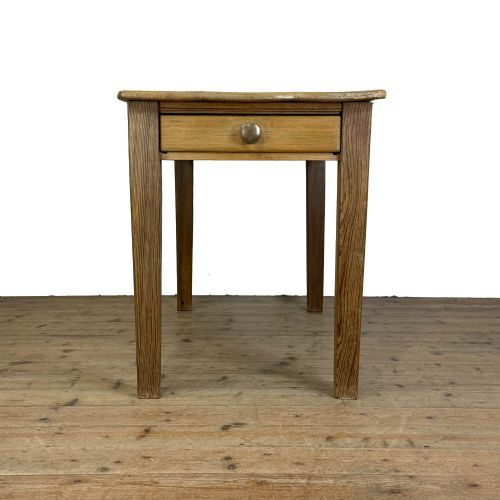
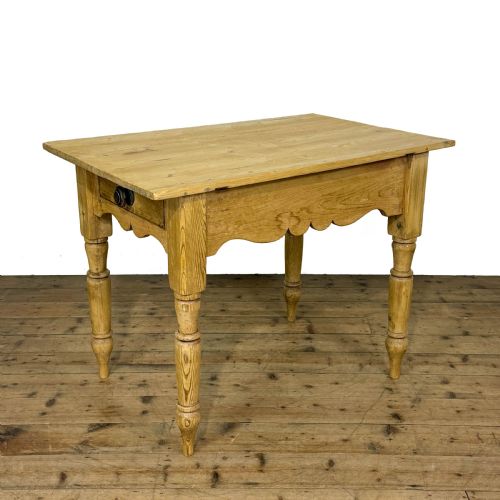
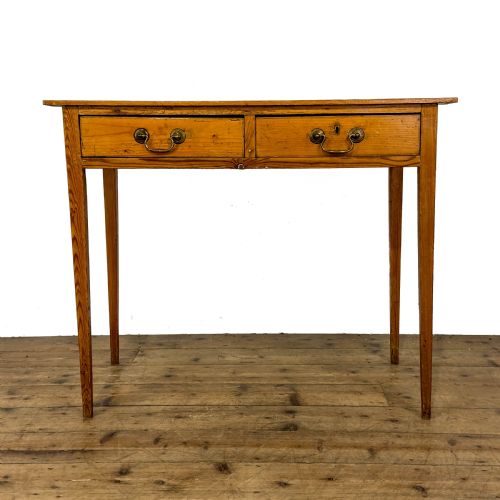
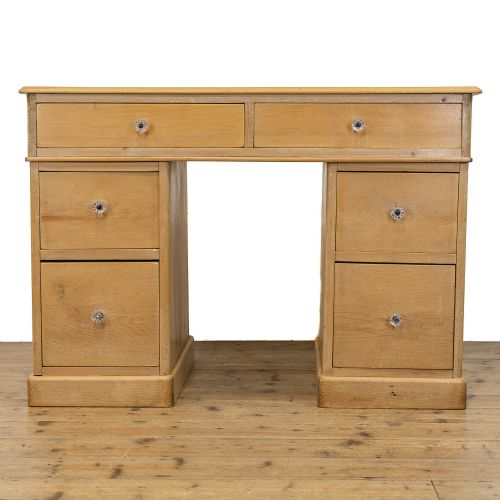
A traditional pine writing table is a nineteenth-century desk or side piece built primarily from softwoods such as pine and pitch pine, often originating from Victorian England or Scandinavia. These pieces serve practical workspace functions, taking the form of kneehole desks, pedestal desks, and simpler side or console tables fitted with drawers.
The versions most commonly met on this page date from the Victorian era, particularly the late nineteenth century around eighteen eighty to nineteen hundred. They display straightforward utilitarian designs associated with rustic farmhouse and country workshops rather than high court cabinetry.
How they were made
Makers constructed these tables using solid pine timbers, occasionally combining them with oak, elm, or pitch pine for structural durability in high-wear areas like table tops and drawer linings. Joinery is straightforward and robust, designed to withstand heavy domestic or office use over decades.
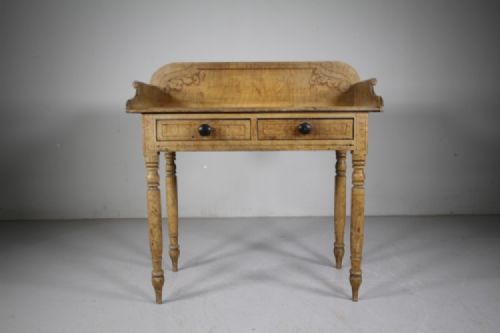
Surfaces frequently show historical treatments of paint, stain, or wax, applied to protect the soft timber. Hardware typically includes brass or iron fittings, drawer pulls, and handles characteristic of nineteenth-century utilitarian furniture.
Several desks arrive ready to paint, inviting you to add your own choice of colour.
What varies in quality
Quality in a traditional pine writing table rests upon the integrity of its timber selection, such as the choice between standard pine and denser pitch pine, and the retention of original structural elements. Desks featuring multiple drawers, panelled construction, or integrated pedestals require more complex carpentry than simple four-legged side tables.
The character of the surface finish also distinguishes individual pieces, with undisturbed original paint or honest period wax patination holding greater visual integrity than later stripping or heavy repainting.
The Traditional Pine Writing Table Glossary
- Pitch pine
- A dense, resinous variety of pine timber often utilised in nineteenth-century heavy furniture for its strength and distinct grain pattern.
- Kneehole desk
- A form of writing table featuring a central recess for the user's legs, flanked by pedestals of drawers.
- Pedestal desk
- A heavy freestanding desk supported by two banks of drawers or columns down to the floor.
- Console table
- A side table designed to stand against a wall, frequently used as a slim workspace surface.
Traditional Pine Writing Table: Frequently Asked Questions
What is a traditional pine writing table?
It is a nineteenth-century utilitarian desk or table constructed from softwoods, designed for household or office administration.
These pieces typically feature built-in drawers and solid timber frames reflecting Victorian country and farmhouse aesthetics.
How do I date a pine desk?
Dating relies on construction methods, timber types, and hardware styles associated with the Victorian era.
Most examples on this page span the mid to late nineteenth century, around eighteen fifty to nineteen hundred.
Are these desks suitable for daily work?
Yes, their original purpose was administrative and domestic writing work, providing sturdy surfaces.
Many examples offer practical drawer storage for modern stationery while maintaining their historical character.
What woods are used besides pine?
Makers occasionally incorporated oak, elm, and pitch pine into the construction of these tables.
These harder timbers were often utilised for table tops, drawer linings, or structural supports to increase durability.