
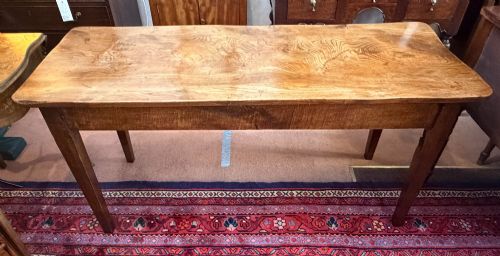
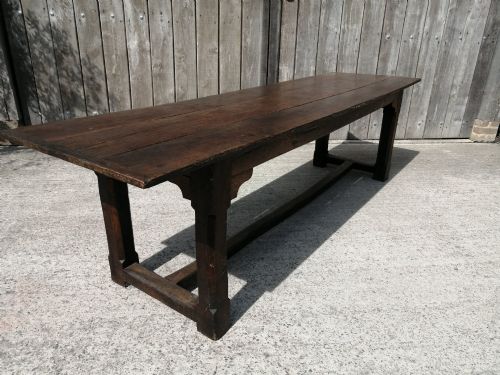
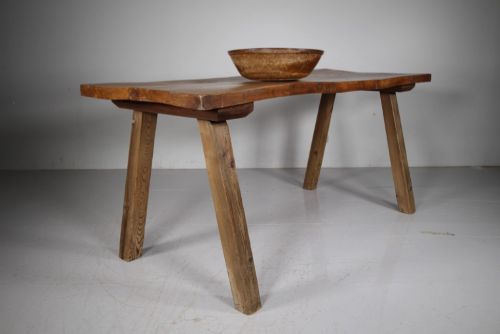
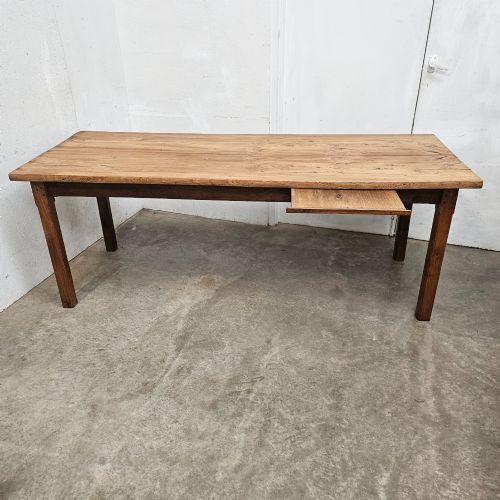


Elm Topped Dining Table
An elm topped dining table brings substantial grain and honest country character to a room, offering a hard-wearing surface built for daily gathering.
Elm Topped Dining Table
An elm topped dining table is a functional domestic surface uniting timber plank tops with supporting frames in oak, pine, sycamore, or iron. When searching for an elm topped dining table, buyers encounter formats spanning farmhouse tables, refectory tables, trestle tables, and breakfast tables.
The evidence shows examples stretching from the seventeenth century through the eighteenth and nineteenth centuries, including Georgian, Regency, and Victorian periods. French provincial and English country styles predominate alongside rustic vernacular and Jacobean influences.
Makers and makers' workshops ranged from country vernacular carpenters to more formal cabinet makers producing eight-seater dining tables and circular breakfast tables. These pieces serve as practical centrepieces that carry the marks of long domestic use.
How they were made
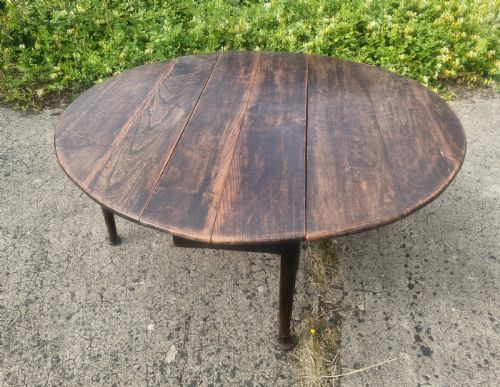
Construction relies upon robust timber combinations, pairing elm boards for the surface with supporting elements in oak, pine, sycamore, and iron. Many examples feature single plank elm tops or two board tops secured to substantial refectory or trestle bases.
Secondary materials such as brass fittings occasionally appear, while surfaces are frequently scrubbed or left in a naturalistic state. Joinery reflects period traditions, from early seventeenth-century framing to later nineteenth-century French bistro construction.
The documented examples span multiple eras, encompassing the 17th Century, 18th Century, Georgian, Regency, and Victorian periods.
What varies in quality
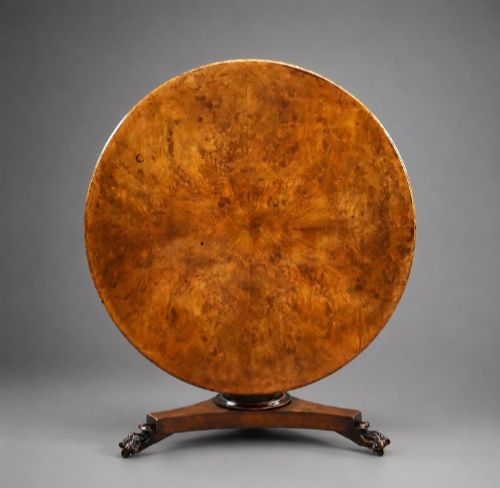
Quality depends upon the selection and figure of the timber, where burr elm or thick single plank surfaces command particular attention. The relationship between the top and the base dictates structural integrity, distinguishing country-made pieces from formal workshop productions.
Proportion and scale influence desirability, as seen in the distinction between large eight-seater dining tables and compact breakfast tables. Original surface treatments and uncompromised timber preservation separate superior survivals from later composite pieces.
The Elm Topped Dining Table Glossary
- Refectory table
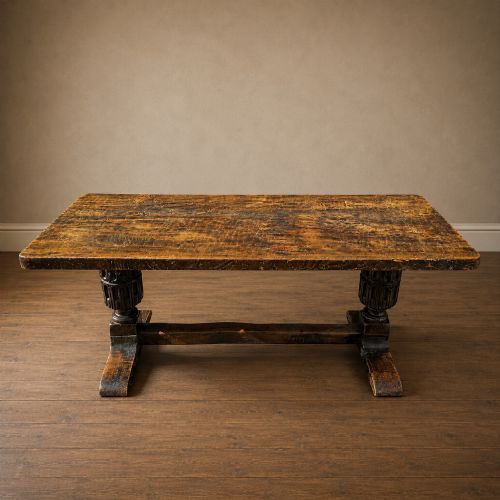
- A long dining table traditionally used for communal dining in monastic or large domestic settings. These forms often feature stretcher bases supporting heavy plank tops.
- Trestle table
- A table comprising two or more supports connected by a horizontal beam or stretcher upon which the top rests. This design allows for maximum legroom along the length.
- Burr elm
- A growth deformity in elm trees that produces highly figured, swirling wood grain patterns. Cabinet makers prize this timber for decorative veneer and circular table tops.
- Plank top
- A table surface constructed from one or more solid boards running the full length of the piece. Single plank tops represent significant timber selection.
- Scrubbed finish
- A surface treatment resulting from repeated washing and scouring of wooden table tops. This process leaves the grain raised and pale in colour.
Elm Topped Dining Table: Frequently Asked Questions
How do I care for an elm surface?
Elm is a tough and fibrous timber that responds well to simple maintenance without heavy chemical polishes. Regular dusting and occasional application of natural wax help protect the grain from moisture.
Avoid placing these tables in direct sunlight or near sudden heat sources to prevent the timber from splitting. Embracing the existing marks and patination ensures the piece retains its historical character over years of use.
Were these tables used in kitchens?
Many examples originated in domestic kitchens, farmhouses, and informal dining spaces where food preparation and family meals took place. Their robust construction was designed to withstand heavy daily domestic tasks.
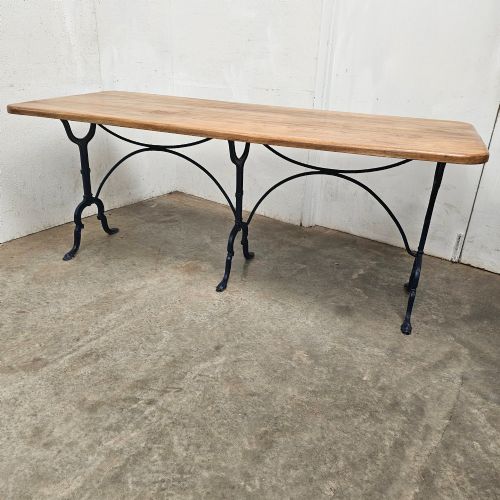
Styles range from French provincial bistro formats to English country refectory tables, reflecting diverse regional domestic traditions. Their adaptability makes them suitable for contemporary dining spaces and kitchen environments alike.
How do I date an elm table?
Dating relies on examining the construction methods, tool marks on the underside of the timber, and the style of the base supports. Seventeenth-century examples often display pegged joinery and oak refectory frames, while nineteenth-century pieces may show different milling techniques.
Comparing the wear patterns on the elm top with the framing helps confirm whether the components are original to one another. Period characteristics such as Georgian proportions or Victorian turning provide further chronological clues.
What is the difference between refectory and trestle bases?
A refectory base typically consists of four legs connected by low stretchers running near the floor, offering rigid support for long plank tops. This configuration is commonly found in earlier oak and elm dining tables.