



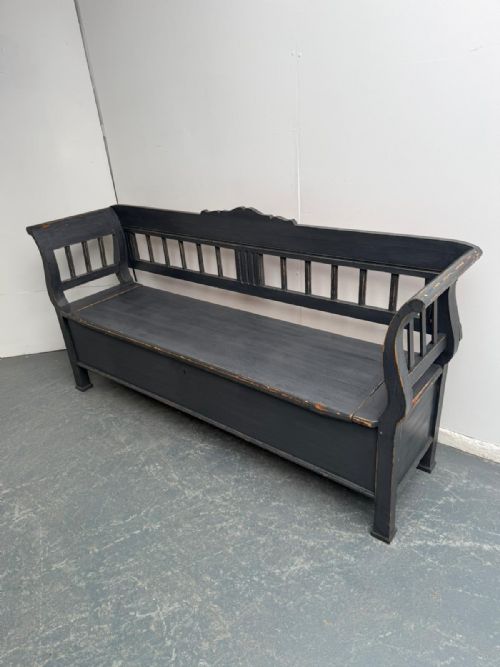


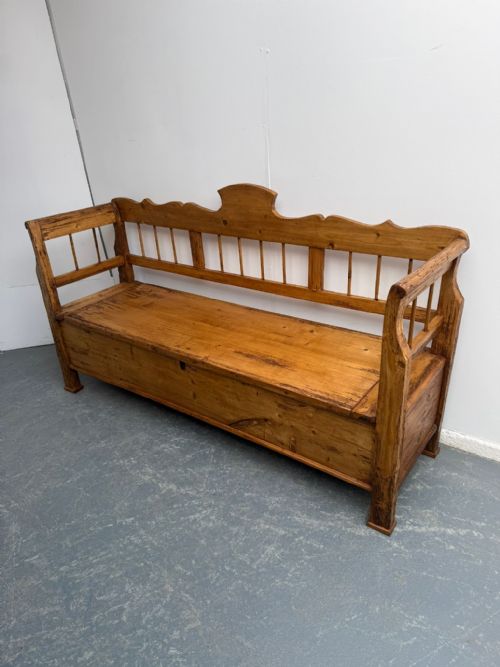
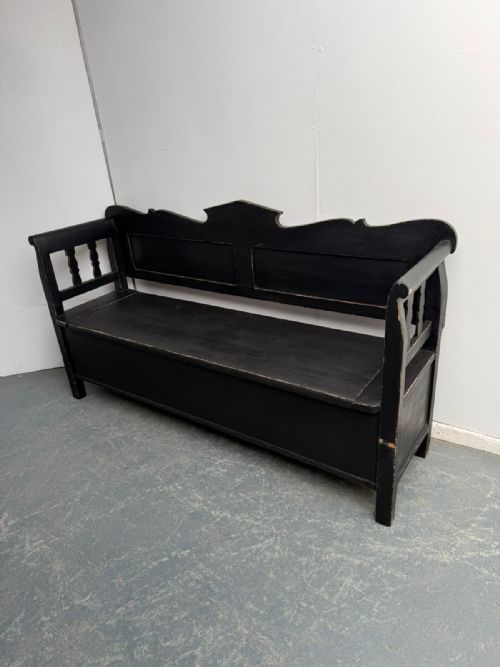


Traditional Pine Storage Bench
A traditional pine storage bench brings honest vernacular utility to an interior, offering robust seating alongside concealed chest capacity.
Traditional Pine Storage Bench
A traditional pine storage bench combines daily seating with practical box or chest capacity beneath the seat. These pieces emerge from various periods including Georgian, Victorian, and the wider nineteenth century.
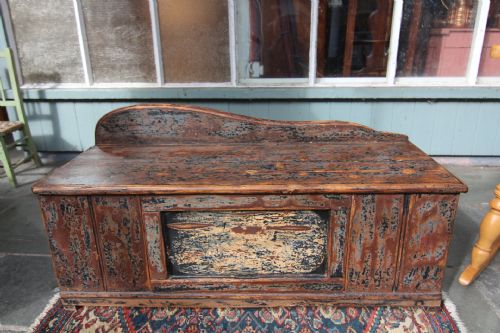
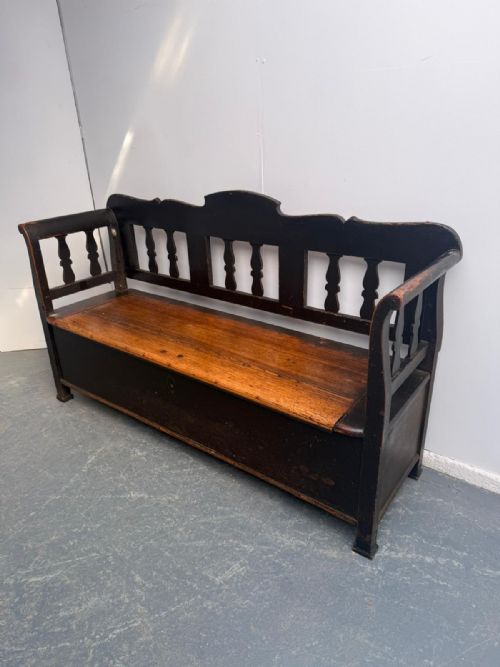
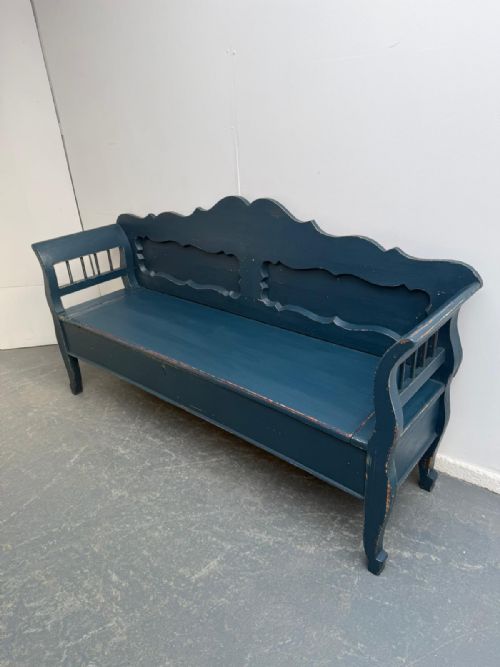
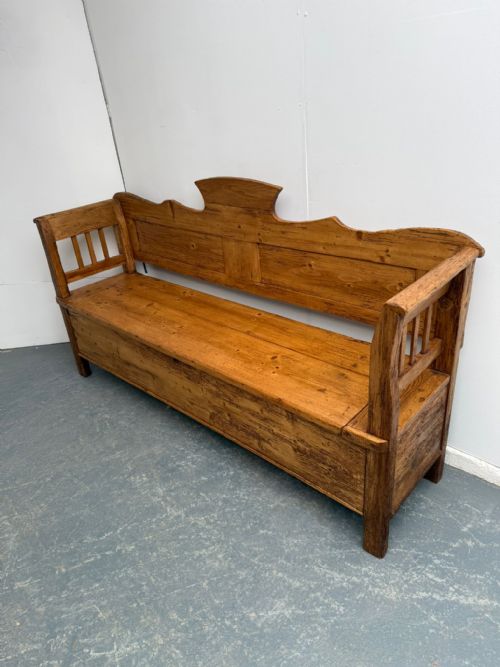
The selections on this page span domestic and tavern origins, encompassing English, Swedish, and Hungarian country traditions. Forms range from high-backed settles and box seats to panelled hall benches and blanket boxes.
Buyers frequently encounter two-to-four seater configurations finished in original paint schemes or waxed timber surfaces. These country forms serve efficiently in hallways, kitchens, and boot rooms.
Materials and construction
Construction relies upon solid pine timber, often shaped by country joiners using simple panelled and planked methods. Iron and wrought iron hardware, such as hinges and brackets, reinforces lids and structural joints.
Surfaces are treated with traditional wax or finished in original paint, including black, grey, blue, and polychrome schemes. Ceramic elements occasionally appear within hardware details while timber forms the primary body.
Several listings include a key for the blanket box, ensuring your secrets remain safely locked inside.
Distinctions in quality
Quality rests upon the originality of the surface finish and the integrity of the timber structure. Pieces retaining their original painted or waxed coats command greater attention than later stripped examples.
Proportional balance and regional vernacular detailing distinguish standard utility items from finer country pieces. Solid construction of the internal storage box and original iron fixings further define the tier of a piece.
The Traditional Pine Storage Bench Glossary
- Settle
- A wooden bench with a high back, solid arms, and a box seat for storage. This form kept draughts away from occupants in older domestic interiors.
- Box settle
- A specific form of seating featuring a hinged seat lifting to reveal a storage chest beneath. It merges trunk utility with a standard bench.
- Polychrome
- Decorated in multiple colours, frequently seen on folk art and painted continental pieces. This surface treatment adds decorative character to the pine.
- Vernacular
- Architecture or furniture built by local craftsmen using regional styles and readily available materials like pine. These pieces reflect local domestic traditions rather than high-style court designs.
- Blanket box
- A large chest designed for storing textiles, sometimes adapted with backrests or integrated into broader storage furniture. They form a core category within country timber storage.
Traditional Pine Storage Bench: Frequently Asked Questions
Where were these benches used?
These benches historically stood in domestic kitchens, hallways, and rural taverns where space and seating were at a premium. High-backed settles were positioned near hearths to block cold draughts.
Today, buyers place them in boot rooms, corridors, and open-plan living spaces for functional seating and discreet clutter containment.
How do I identify a period piece?
Dating relies upon construction methods, timber patination, and distinct stylistic markers associated with Georgian, Victorian, or broader nineteenth-century cabinet making. Hand-cut joints, original forged iron hardware, and authentic wear patterns indicate age.
Surfaces displaying original paint layers or deep wax patination provide further confirmation of period manufacture.
Are painted finishes original?
Many pieces retain their original painted surfaces, which range from simple grey and black coats to decorative Hungarian and Swedish folk art schemes. Close inspection reveals natural wear, layering, and patination consistent with age.
Original paint contrasts with later decorative applications by showing integrated ageing and wear around high-touch areas like arms and seat edges.