

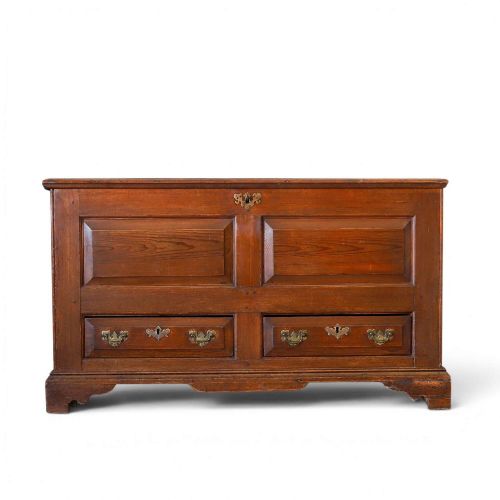


Traditional Pine Mule Chest
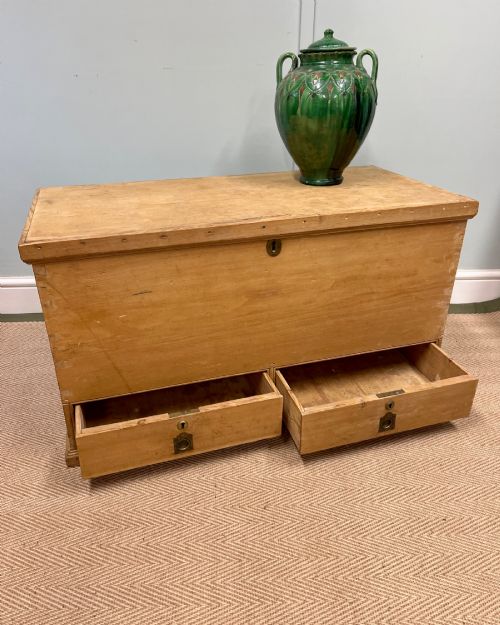
A traditional pine mule chest offers sturdy storage and simple country character, combining a deep lift-top compartment with one or more lower drawers.
Traditional Pine Mule Chest
A traditional pine mule chest is a utilitarian storage piece that bridges the gap between a blanket box and a chest of drawers. The design evolved in country homes to hold textiles and apparel, providing both open volume and partitioned lower access.
Examples on this page span the eighteenth and nineteenth centuries, moving from early Georgian country forms through to Victorian interpretations. Buyers frequently encounter regional variations such as Welsh country pieces or Hungarian folk art variants alongside standard British domestic items.
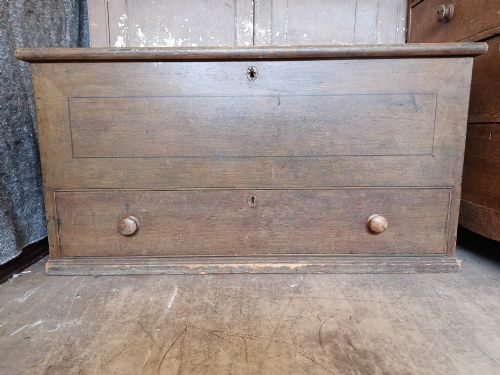
Most specimens feature a hinged lid above a single long drawer or a pair of smaller drawers built into the base. Internal fittings like candle boxes sometimes survive within the main compartment, adding practical division for smaller items.
How they were made
Joiners built these chests primarily from solid pine, utilising heavy planks joined with pegged mortise and tenon construction for stability. Secondary woods sometimes appear in internal partitions or drawer linings, reflecting available workshop timber.
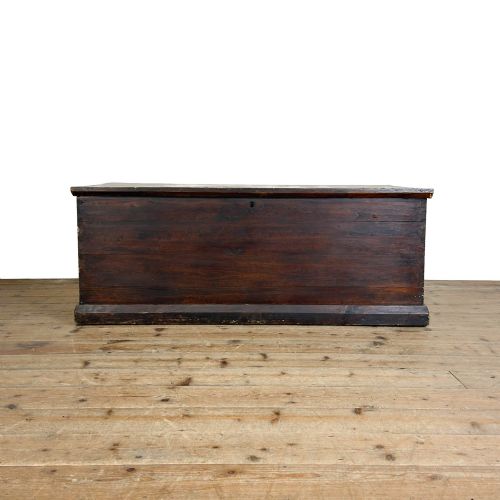
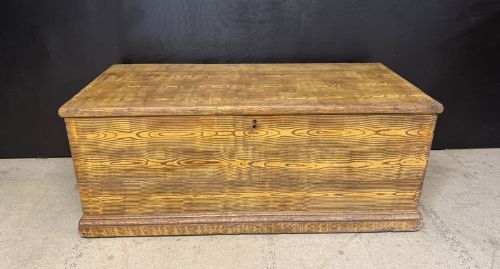
Surface treatments vary between waxed finishes that highlight the natural grain and historic painted schemes including scumbled and teal coatings. Iron and brass hardware, such as carrying drop handles and strap hinges, secures the moving parts and reinforces corners.
Traditional Pine Mule Chest Retail Price Guide 2026
Typical asking prices for traditional pine mule chest among the pieces listed under this phrase on Sellingantiques today, from the lower quarter to the upper quarter. They describe what is for sale here now, not the wider market.
Look closely inside for the tiny internal candle box, a diminutive surviving compartment meant to keep tallow safe from wandering mice.
What varies in quality
The sophistication of the proportions and the joinery distinguish finer regional examples from basic utility boxes. Early Georgian and Welsh country pieces often display more thoughtful timber selection and refined moulding details around the base and lid.
The survival of original surface finishes, whether early wax patination or authentic regional paint, heavily influences the character of a piece. Original iron or brass hardware and intact internal components like candle boxes indicate a higher degree of preservation.
The Traditional Pine Mule Chest Glossary
- Mule chest
- A storage chest featuring one or more drawers beneath a main lift-top compartment. This hybrid form emerged as cabinetmakers sought to combine the capacity of a coffer with the accessibility of a drawer unit.
- Candle box
- A small internal compartment fixed inside the main well of a chest. It kept household candles safe from pests and dust.
- Scumbled
- A decorative paint technique involving translucent layers dragged or brushed over a base coat to imitate finer grained woods. Victorian makers frequently applied this finish to humble pine.
- Coffer
- A heavy wooden chest traditionally used for storing valuables or dry goods. Early examples often lack the lower drawers characteristic of later mule chests.
- Mortise and tenon
- A fundamental woodworking joint where a peg fits snugly into a hole to lock two pieces of timber at a right angle. It provides durable structural integrity for heavy storage furniture.
Traditional Pine Mule Chest: Frequently Asked Questions
What is a mule chest?
A mule chest is a traditional storage box that combines a deep upper compartment accessed via a hinged lid with one or more drawers built into the base. The form developed as an intermediary step between a simple blanket chest and a full chest of drawers.
Cabinetmakers designed them to hold household linens, blankets, and clothing, allowing users to access frequently needed items in the lower drawers without lifting the heavy top lid.
How do I date an old pine chest?
Dating relies on observing construction methods, timber characteristics, and hardware styles across the piece. Earlier eighteenth-century examples often feature hand-cut joinery, pegged framing, and deeper patination from decades of wax application.
Victorian and later nineteenth-century pieces tend to show machine-sawn timber elements, different fastener types, and sometimes factory-produced hinges or handles that distinguish them from earlier country workshop production.
Where should I place a mule chest at home?
These chests suit entrance halls, living spaces, or bedrooms where their generous proportions provide practical storage for bulky items like spare bedding or winter throws. The flat top surface also functions well for displaying decorative objects or textiles.
Keep wooden furniture away from direct heat sources and drastic humidity shifts to prevent the pine planks from warping or splitting over time.
How do I care for a waxed pine surface?
Maintain a waxed pine surface by applying a quality beeswax polish sparingly and buffing it with a soft cloth to preserve the sheen. Avoid modern silicone sprays or harsh chemical cleaners that can strip historic finishes.
Dust the timber regularly with a dry cloth and protect the top from moisture by using coasters or mats under any placed items.