
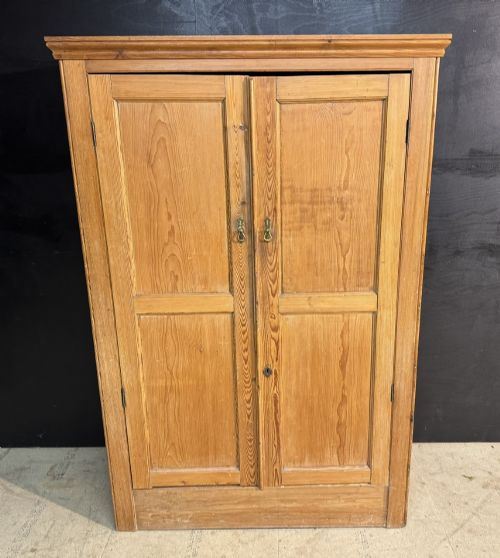
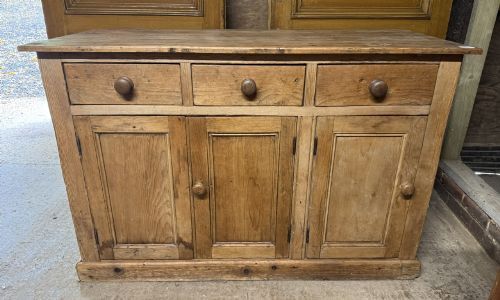
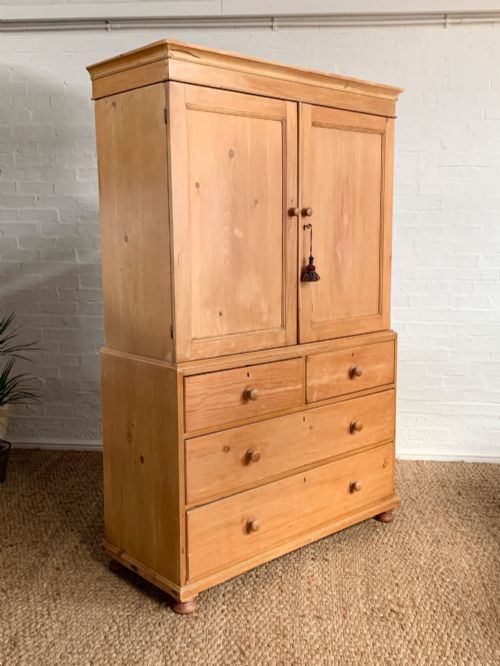
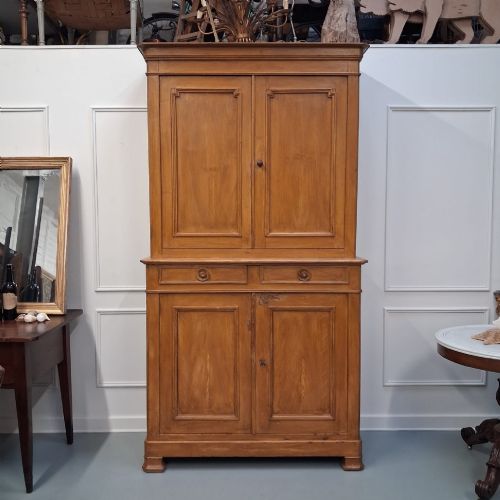


Traditional Pine Housekeepers Cabinet
A traditional pine housekeepers cabinet offers substantial storage and utilitarian charm, built to last through generations of domestic life.
Traditional Pine Housekeepers Cabinet
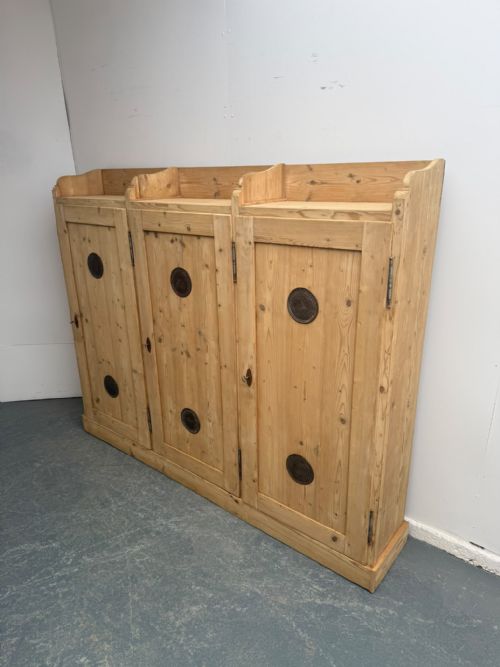
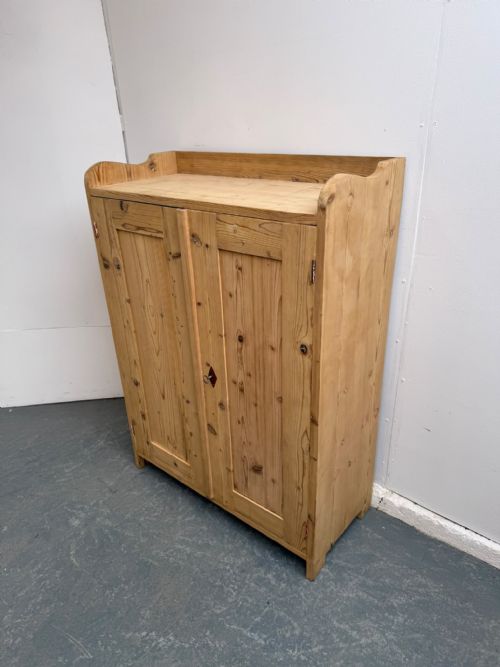
When you search for a traditional pine housekeepers cabinet, you encounter sturdy storage pieces designed for domestic utility across the eighteenth, nineteenth, and early twentieth centuries. These cabinets range from tall larder cupboards and linen presses to school and scullery cupboards.
The most common examples on this page date from the Victorian period, alongside Georgian and Edwardian specimens. They originate from English country workshops as well as Scandinavian, Baltic, and East European sources, showing regional variations in proportion and panel arrangement.
Materials and construction methods
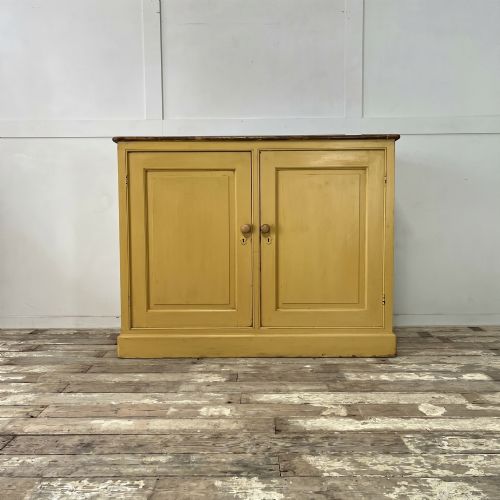
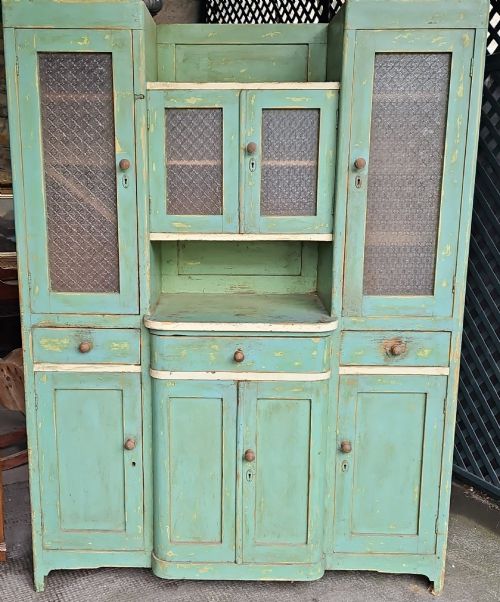
Construction relies heavily on pine wood, often finished with historic paint, scumble glaze, or left in a stripped state ready to wax. Iron and brass hardware such as hinges and latches provide structural reinforcement and closure.
Joinery techniques reflect traditional cabinet-making appropriate for utilitarian furniture intended for heavy daily use. Surfaces occasionally feature textured glass panels or remain solid wood to protect the stored contents from light and dust.
Several cupboards retain their original ventilation vents, once designed to keep cheeses and cured meats fresh before the invention of the domestic fridge.
Factors determining quality in utilitarian pine furniture
Quality rests upon the integrity of the timber, the retention of original painted surfaces, and the survival of internal fittings like shelving or hanging space. Pieces that remain structurally sound without excessive timber replacement hold greater integrity.
Subtleties of proportion, original brass or iron hardware, and the character accumulated through layers of historic paint distinguish standard utility cupboards from more considered country furniture.
The Traditional Pine Housekeepers Cabinet Glossary
- Scumble paint
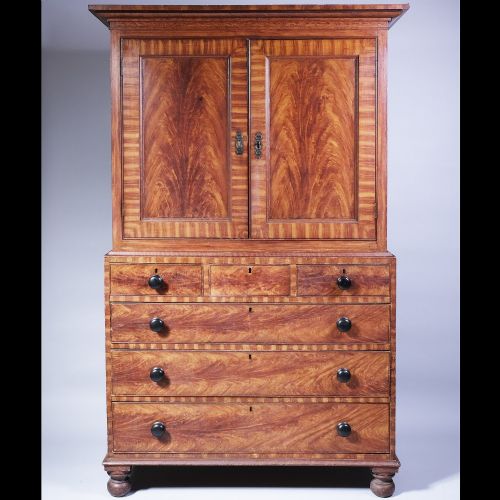
- A decorative surface treatment applied to imitate the grain of more expensive hardwoods or to create patterned effects on pine furniture. This technique was popular in the nineteenth century for country pieces.
- Linen cupboard
- A tall storage piece traditionally utilised for bedding, table linens, and garments. These interiors typically feature fixed or adjustable wooden shelving.
- Larder cupboard
- A large ventilated or enclosed cabinet designed for food storage in domestic kitchens before mechanical refrigeration. They often incorporate internal shelving and deep compartments.
- Stripped pine
- Wood that has had its historic paint or varnish removed down to the bare timber. Many Victorian and Edwardian pieces are found in this state.
Traditional Pine Housekeepers Cabinet: Frequently Asked Questions
How were housekeepers cupboards used originally?
These cabinets served as central storage units in large domestic households for linens, provisions, and dry goods. Their robust construction and generous proportions accommodated bulk household items.
Positioned in sculleries, kitchens, or linen rooms, they kept domestic supplies organised and protected from dust and damp before modern fitted kitchens existed.
How do I care for a painted pine cabinet?
Maintain painted surfaces by dusting gently with a dry cloth and avoiding harsh chemical cleaners that might lift historic paint layers. Wax unpainted pine periodically to nourish the wood.
Keep wooden cabinets away from direct heat sources and severe humidity fluctuations to prevent timber movement and cracking in the panels.
Can I use a housekeepers cabinet in a modern kitchen?
These cabinets provide exceptional capacity for storing tableware, dry goods, or kitchen equipment in contemporary spaces. Their architectural presence anchors a room with historic character.
Check internal shelf depths and overall height dimensions carefully to ensure the piece fits your specific architectural layout before placement.
How do I distinguish Georgian pine from Victorian pine?
Georgian pine furniture generally exhibits simpler, flatter panel construction and hand-cut joinery details that reflect eighteenth-century workshop practices. Proportions often feel restrained and classical.
Victorian pieces frequently introduce heavier mouldings, four-door configurations, or more elaborate cornice work alongside machine-sawn timber components as industrial production methods advanced.