

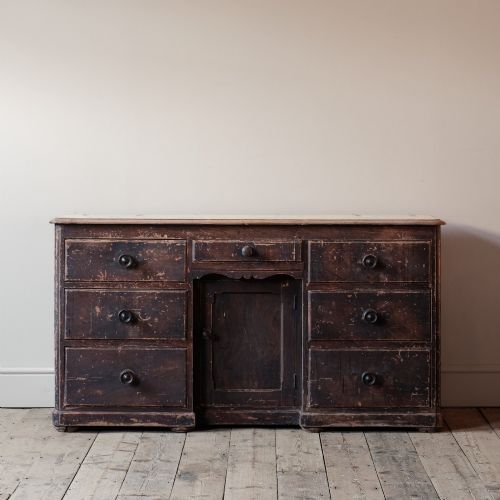
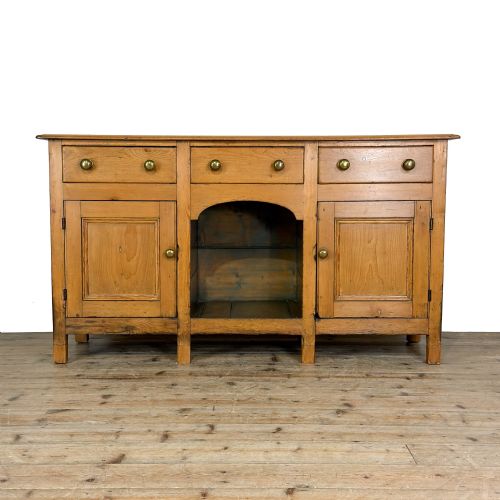
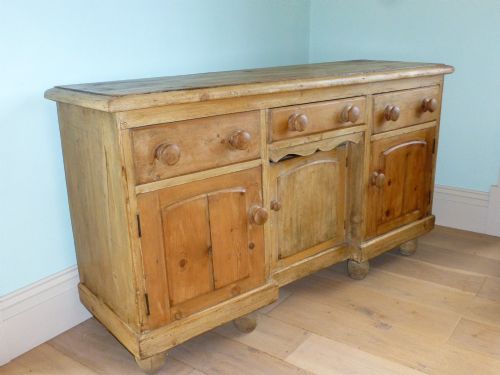
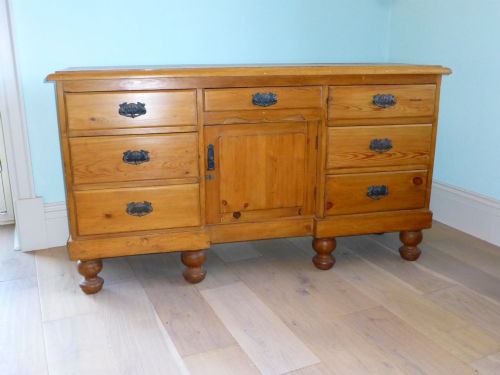
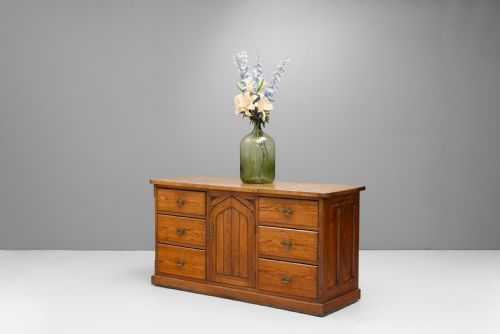
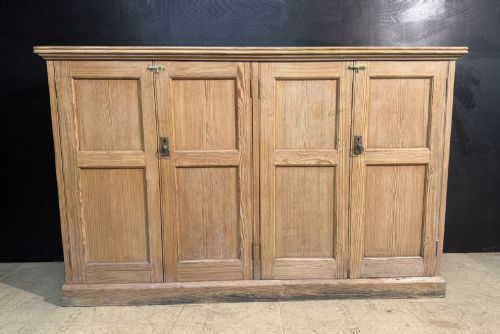
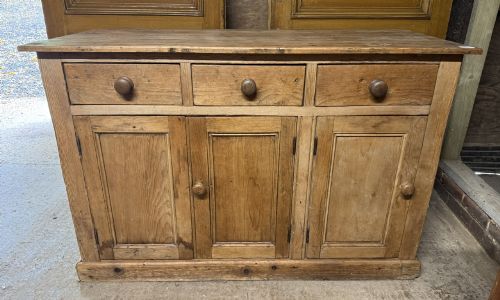
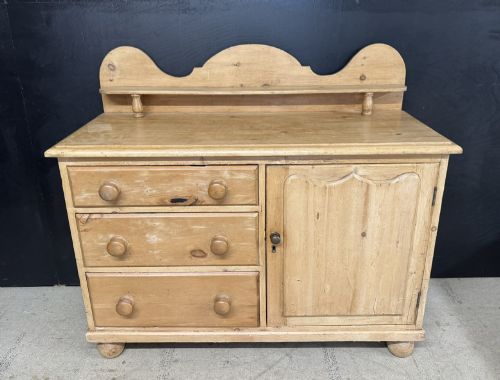
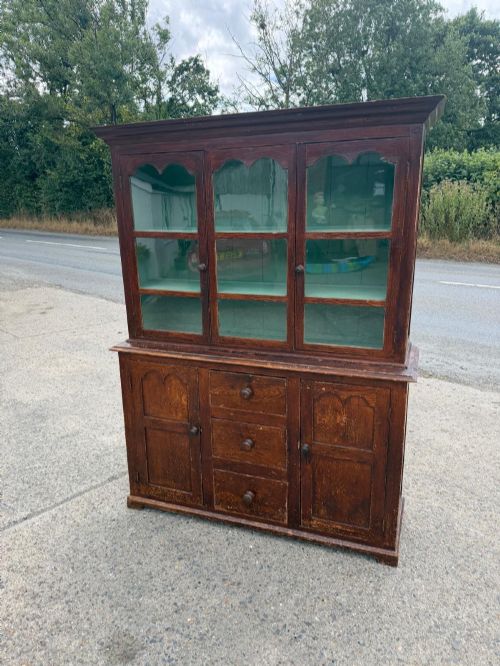
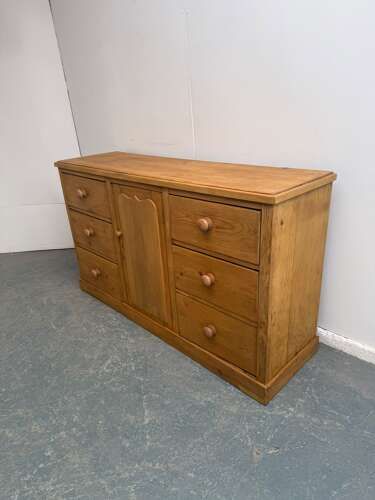
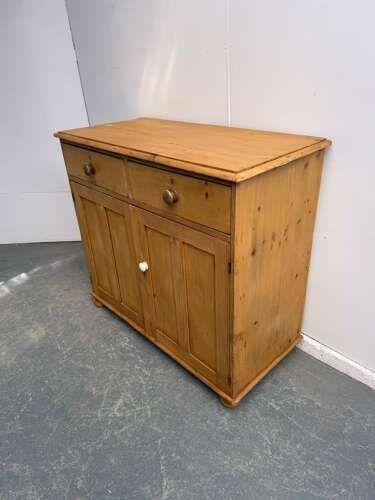
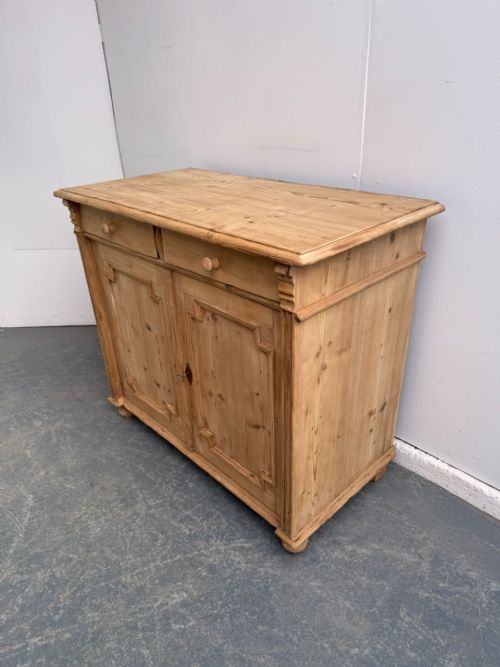
Rustic Pine Buffet Sideboard
These rustic pine buffet sideboard pieces bring honest utility and country character into modern rooms.
Rustic Pine Buffet Sideboard
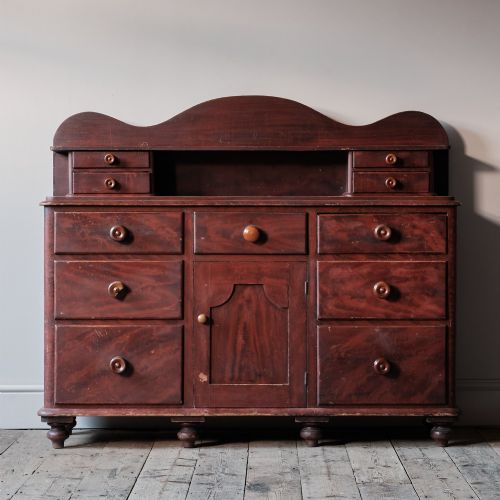
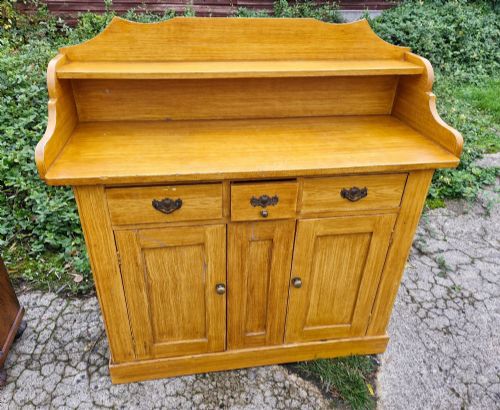
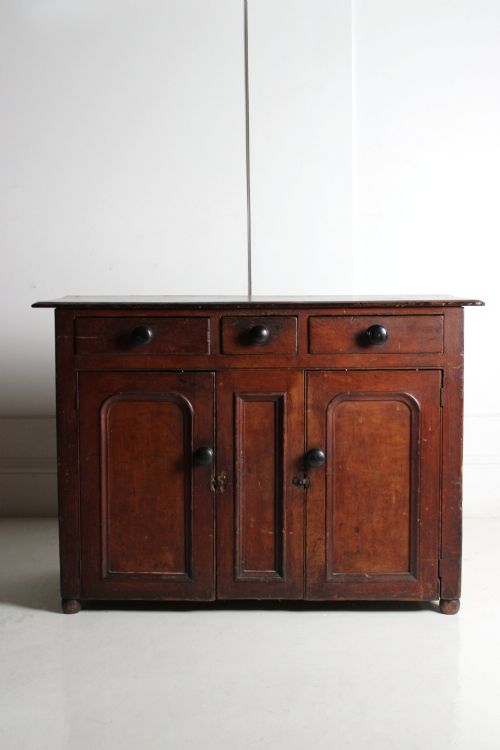
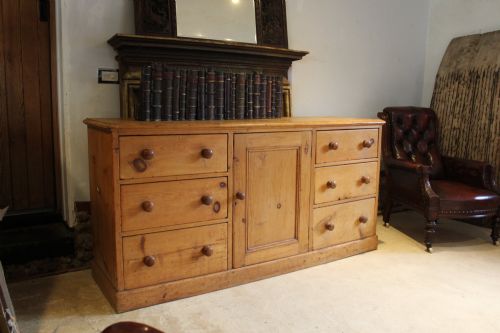
When you search for a rustic pine buffet sideboard, you encounter sturdy storage furniture built for domestic life across the centuries. The pieces on this page span several eras, reaching from the eighteenth century through the Victorian period and into the nineteen-thirties.
The most common forms you meet are dresser bases, kitchen cupboards, and sideboards shaped by English, Scottish, Welsh, and Scandinavian country traditions. They range from compact two-door cabinets with drawers to monumental country house dresser bases fitted with potboards and bread slides.
Makers constructed these utilitarian items primarily from pine, sometimes combining them with oak or applying coats of paint. They served practical roles in kitchens, halls, and dairies before finding appreciation as standalone statement storage in contemporary interiors.
Materials and construction methods
Carpenters built these pieces using solid pine timbers, occasionally incorporating iron and brass for hinges, handles, and drawer pulls. Surfaces frequently display decades of wax finishes or retain original layers of scraped paint.
Construction relies on traditional joinery techniques suited to heavy daily use in farmhouses and country houses. Cupboards and dresser bases often feature panelled doors, sturdy drawers, and lower potboards designed to hold kitchen heavy ware.
Rustic Pine Buffet Sideboard Retail Price Guide 2026
Typical asking prices for rustic pine buffet sideboard among the pieces listed under this phrase on Sellingantiques today, from the lower quarter to the upper quarter. They describe what is for sale here now, not the wider market.
Materials recorded across the selection include pine, oak, brass, iron, ceramic, and painted wood surfaces.
Judging quality and character
Quality in these country pieces rests upon the integrity of the original timber and the survival of early or untouched surfaces. Items retaining their original scraped paintwork or deep waxed patination hold greater visual depth than stripped examples.
The Rustic Pine Buffet Sideboard Glossary
- Dresser base
- A low wooden sideboard or cabinet featuring drawers above cupboards, originally used for food preparation and storage in country kitchens.
- Potboard
- An open lower shelf fitted beneath a dresser base, traditionally designed to store heavy pots and pans.
- Bread slide
- A pull-out wooden board integrated into the cabinetry, used historically for cooling or slicing bread.
- Breakfront
- A piece of furniture where the central section projects forward from the flanking outer cupboards or drawers.
- Patina
- The surface sheen and colour acquired by wood through age, handling, and repeated waxing.
Rustic Pine Buffet Sideboard: Frequently Asked Questions
What is a rustic pine buffet sideboard?
These are utilitarian storage items originating from country houses and farmhouses, combining drawers and cupboards for practical household use. They are built primarily from pine and reflect regional British and Scandinavian domestic traditions.
Today, they function as substantial sideboards or media consoles in living spaces, offering generous surface area and enclosed storage. Their appeal lies in their honest construction and weathered wooden surfaces.
How do I date an antique pine sideboard?
Dating relies on observing construction methods, timber characteristics, and hardware styles. Pieces from the eighteenth and early nineteenth centuries often exhibit hand-cut joints and denser heart pine.
Victorian examples frequently display heavier proportions and standardised joinery, while twentieth-century pieces show lighter framing. Paint layers and surface wear also provide clues to a piece's age and history of use.
Where were these cupboards used?
Historically, these items stood in farmhouse kitchens, sculleries, halls, and dairies where families prepared food and stored heavy crockery. They were workhorses of domestic life designed to withstand daily knocks and constant use.
In modern homes, they transition easily into dining rooms, kitchens, or hallways. Their top surfaces hold lamps or decorative objects, while the interior cupboards swallow tableware and household clutter.