

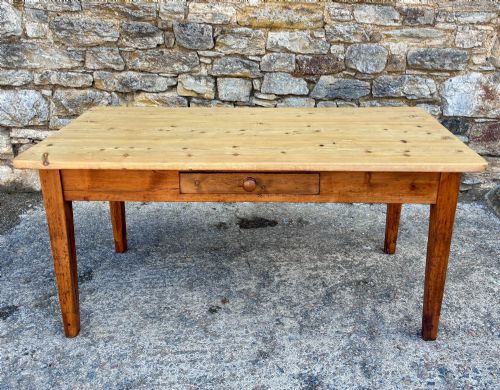
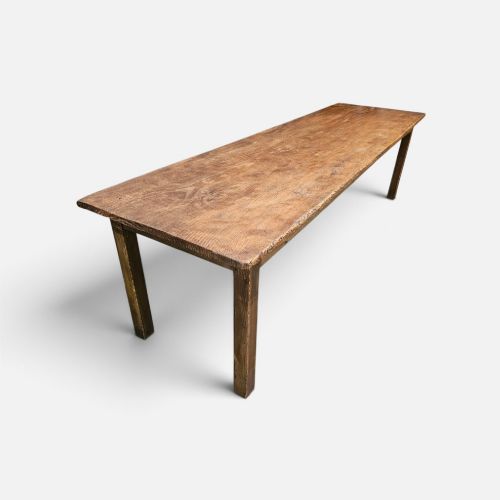
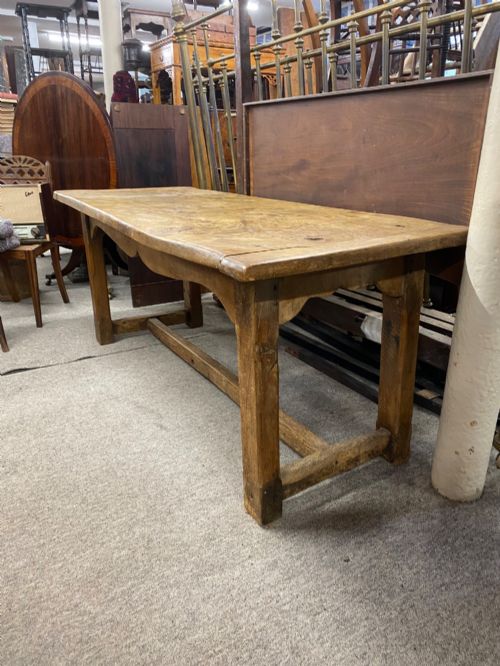
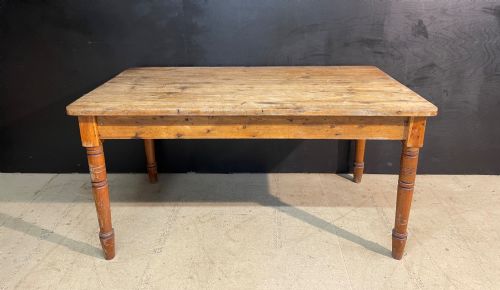


Traditional Pine Harvest Table
A traditional pine harvest table brings genuine utility and warmth to a room, offering generous proportions built for daily use and family gatherings.
Traditional Pine Harvest Table
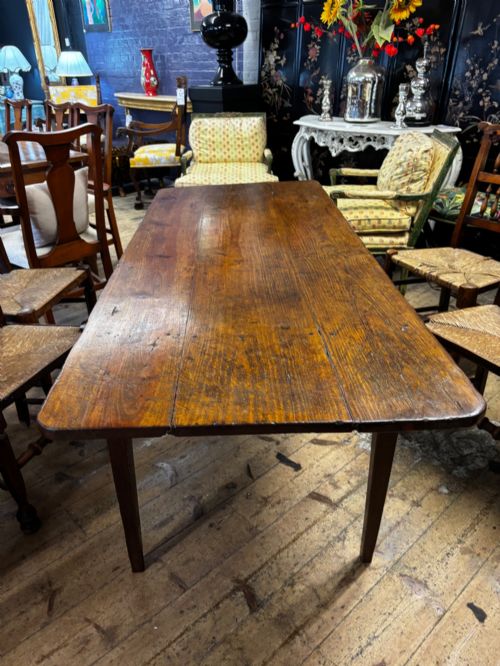
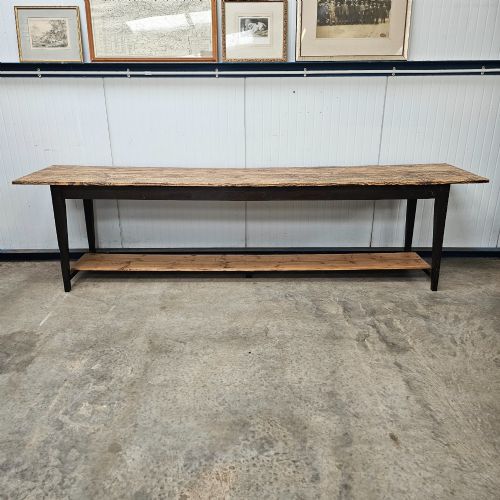
When you search for a traditional pine harvest table, you are looking at substantial dining furniture designed to seat large groups comfortably for meals and work. These pieces span the nineteenth and early twentieth centuries, drawing on rustic farmhouse, French country, English country, and Victorian country traditions.
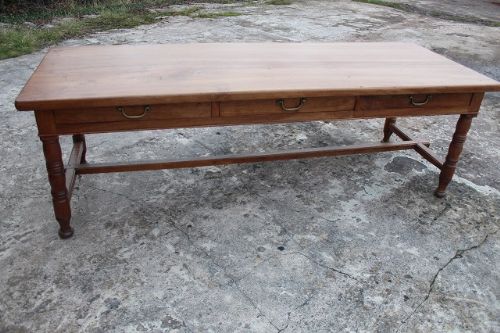
The examples available here take the form of long dining tables and refectory styles, often featuring expansive tops made from single boards or sturdy timbers. Origins stretch across regional workshops, including nineteenth-century West Country and Welsh pieces alongside continental examples.
How they were made
Construction relies primarily on solid pine, timber, oak, and fruitwood, selected for structural strength and durability over decades of heavy kitchen use. Joinery techniques prioritize utilitarian stability, connecting thick tops to robust underframes capable of supporting daily labour and dining.
Surfaces often show the honest marks of hand-planing and timber selection, occasionally enhanced with minor brass fittings where functional hardware was required. The choice of materials dictates the weight and grain pattern, ensuring each board ages with a distinct character.
Traditional Pine Harvest Table Retail Price Guide 2026
Typical asking prices for traditional pine harvest table among the pieces listed under this phrase on Sellingantiques today, from the lower quarter to the upper quarter. They describe what is for sale here now, not the wider market.
The listings span from the early nineteenth century through to 1930, featuring pine, oak, fruitwood, and timber construction in regional styles.
What varies in quality
Quality rests on the integrity of the timber and the proportion of the top, particularly whether the surface consists of a single wide board rather than multiple joined planks. Superior examples maintain balanced proportions over substantial lengths, such as nine-and-a-half-foot spans, without sagging.
The distinction between ordinary and exceptional tables also lies in the restraint of the design and the preservation of the original wood surface. Tables that retain their honest working patina without excessive intervention hold greater integrity than heavily refinished pieces.
The Traditional Pine Harvest Table Glossary
- Harvest table
- A long, narrow dining table traditionally used for feeding large groups of farm workers during seasonal gathering periods. These tables are characterised by their generous length and sturdy wooden construction.
- Refectory table
- A long dining table originally built for monastic dining halls and later adapted for domestic country use. They typically feature heavy legs connected by stretchers for added stability.
- Single board top
- A table top fashioned from one wide piece of timber rather than several narrow planks joined together. This feature is sought after for its smooth expanse and timber quality.
- Fruitwood
- Dense timber harvested from fruit-bearing trees such as pear, apple, or cherry, used in cabinet making for its fine grain and rich colour. It offers a harder alternative to standard pine.
Traditional Pine Harvest Table: Frequently Asked Questions
What is a traditional pine harvest table?
A traditional pine harvest table is a large, utilitarian dining table built during the nineteenth or early twentieth centuries for country homes and farmhouses.
These pieces are defined by their substantial length, solid wood construction, and simple lines designed to accommodate large gatherings for meals and daily tasks.
How were harvest tables originally used?
These tables served as the central workspace and dining hub for agricultural households, hosting large groups of farm workers during seasonal harvests.
Beyond dining, they were used for food preparation, kneading bread, and general domestic labour in the farmhouse kitchen.
How do I live with a pine harvest table?
Living with an antique pine table involves embracing the natural marks, dents, and stains that accumulate from daily use over generations.
Using simple wax maintenance and sensible heat protection keeps the timber nourished while allowing the honest patina of the wood to continue developing.
How can I tell the period of a table?
Dating relies on observing construction methods, timber characteristics, and regional design traits typical of the nineteenth and early twentieth centuries.
Hand-planed surfaces, specific joint types, and the use of native woods like fruitwood or local pine help distinguish nineteenth-century country pieces from later reproductions.