
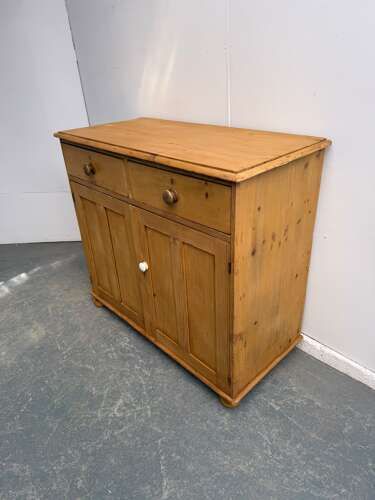
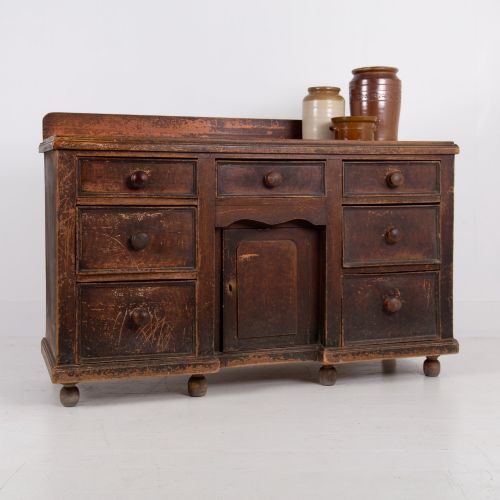

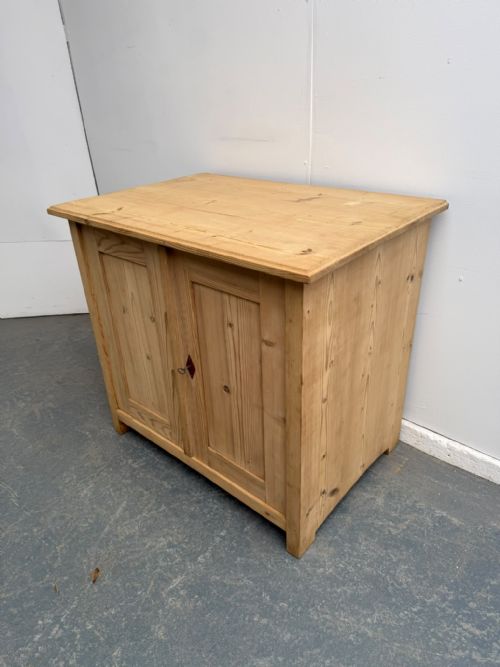
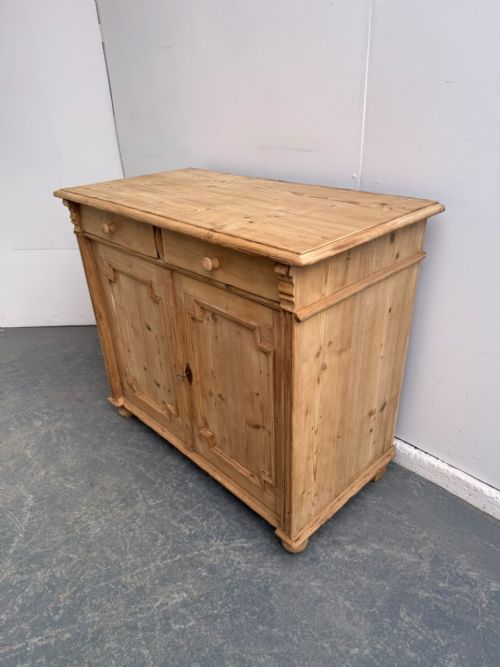
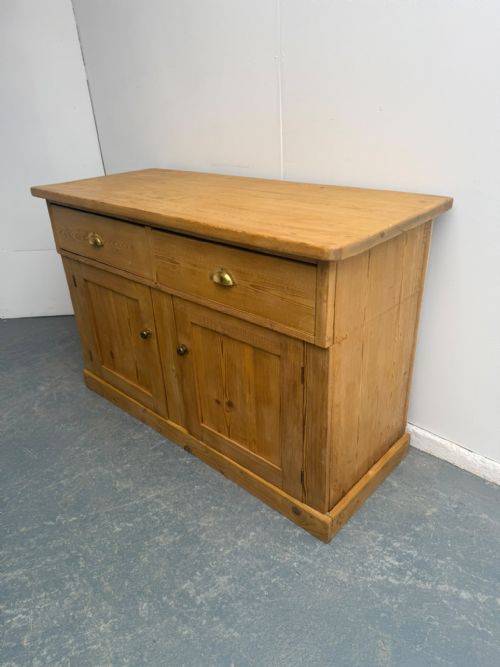
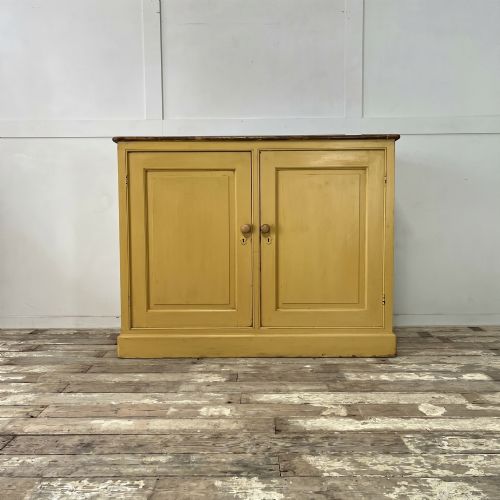


Traditional Pine Buffet Dresser
A traditional pine buffet dresser brings honest utility and warmth to a room, offering generous storage through deep drawers and sturdy cupboards.
Traditional Pine Buffet Dresser
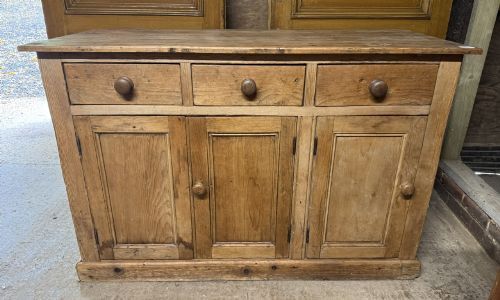
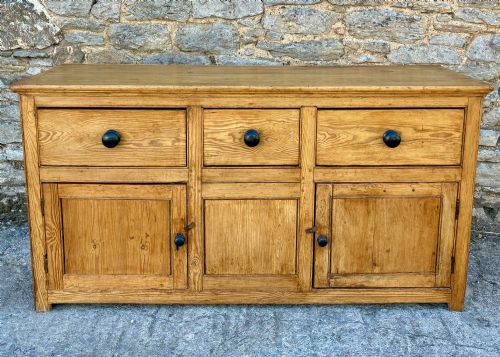
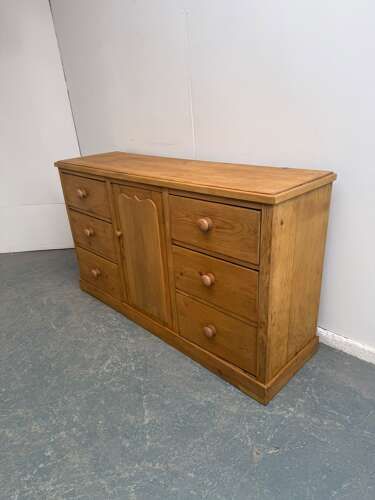
A traditional pine buffet dresser combines storage and display functions, appearing frequently in configurations featuring lower cupboards alongside drawer banks or open plate racks.
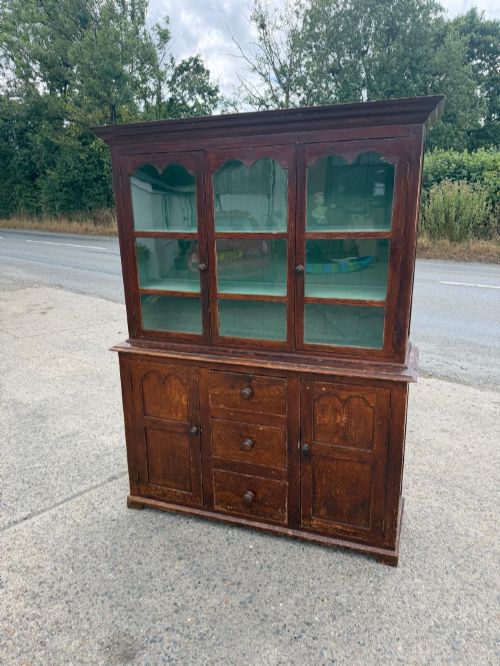
Buyers encounter numerous examples originating from the nineteenth century, including vernacular kitchen dresser bases, glazed top cabinets, and robust potboard designs.
Origins span English country houses, Welsh workshops, and continental European examples, utilising native timbers like pine and oak.
How they were made
Construction relies primarily on solid pine and oak timber, joined with traditional methods to withstand heavy daily use in kitchens and pantries.
Hardware typically consists of brass or iron pulls and hinges, complementing surfaces finished in wax, original paint, or stripped wood.
Glazed glass panels appear in upper display sections of specific cabinets, while potboards provide lower open shelving for heavy kitchenware.
Regional styles represented include English country, Welsh vernacular, West Country, and rustic continental farmhouse traditions.
What varies in quality
Proportion and scale dictate much of the character, ranging from compact cottage chiffoniers to monumental country house proportions.
The survival of original surface treatments - such as early paint layers or time-worn waxed patination - shapes the visual integrity of each piece.
Timber selection and structural joinery robustness differentiate simple utility furniture from finer regional cabinet-making.
The Traditional Pine Buffet Dresser Glossary
- Dresser base
- The lower portion of a kitchen dresser, typically functioning as a standalone sideboard with cupboards and drawers.
- Potboard
- An open lower shelf fitted beneath a dresser base, traditionally used for storing heavy pots and pans.
- Chiffonier
- A compact sideboard or low cupboard featuring a combination of drawers and doors, popular during the nineteenth century.
- Breakfront
- A cabinet design where the central section projects forward from the flanking outer sections.
- Patina
- The surface sheen and colour acquired by wood and paint through decades of handling, polishing, and natural ageing.
Traditional Pine Buffet Dresser: Frequently Asked Questions
Where were traditional pine dressers used?
These pieces served primarily in domestic kitchens, sculleries, and pantries for storing provisions, crockery, and culinary utensils.
Over time, their practical storage capacity and rustic appearance led to their adoption in dining rooms and living spaces.
How do I care for a waxed pine finish?
Maintain waxed surfaces by dusting regularly with a soft cloth and applying a quality beeswax furniture polish periodically to nourish the timber.
Avoid placing pine furniture in direct sunlight or near heat sources to prevent the wood from drying out or splitting.
What is the difference between a dresser base and a full dresser?
A dresser base consists solely of the lower sideboard cabinet portion, featuring cupboards and drawers without upper shelving.
A full dresser includes both the lower base and an upper structure containing shelves, a glazed cabinet, or a plate rack.
How can I tell if the paint is original?
Original paint finishes exhibit natural wear patterns, consistent ageing around handles, and multiple underlying layers visible in areas of friction.
Modern repainting often presents a uniform texture and lacks the deep patination found on surfaces exposed to decades of household use.