


Traditional Pantry Cupboard
A traditional pantry cupboard is a practical domestic storage piece that organises provisions with period character.
Traditional Pantry Cupboard
When searching for a traditional pantry cupboard, buyers examine robust storage furniture designed to hold food, linen, and household provisions. These utilitarian items originate primarily from the eighteenth and nineteenth centuries, spanning Georgian, Victorian, and Edwardian eras.
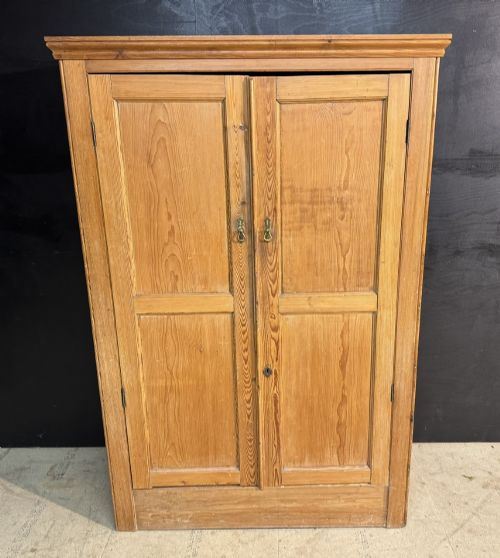
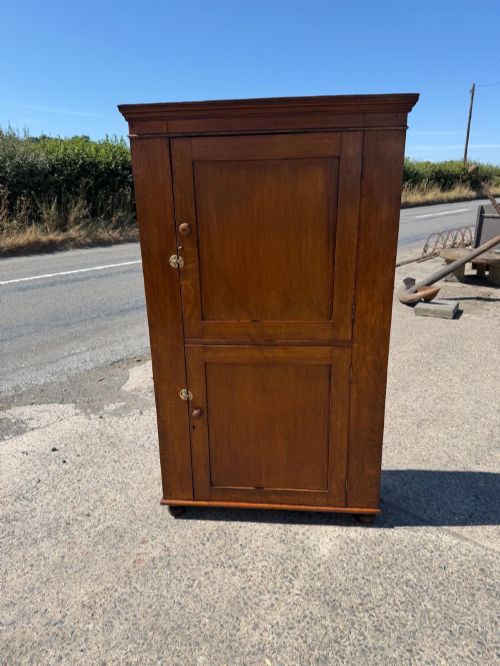
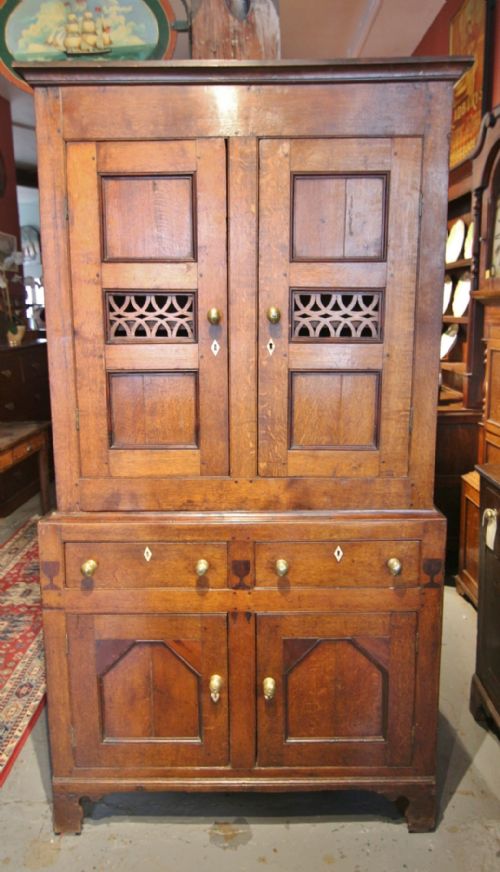
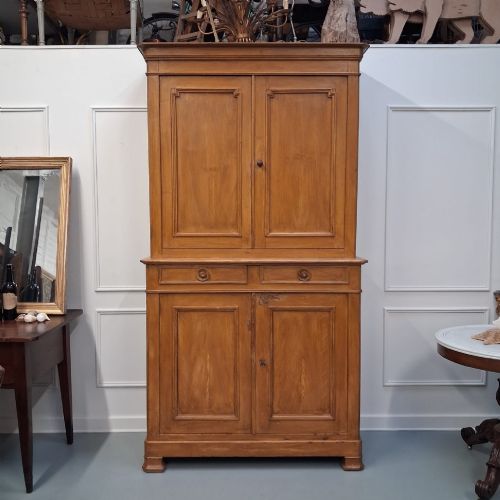
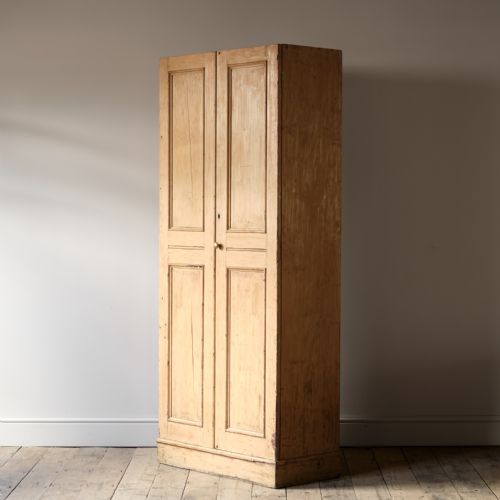
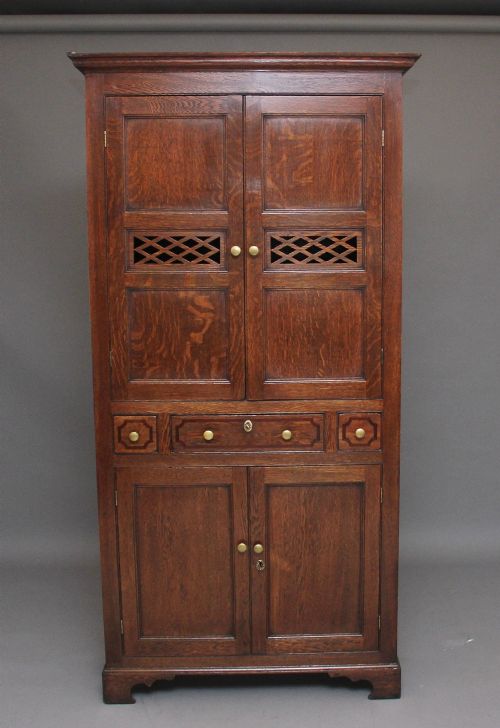
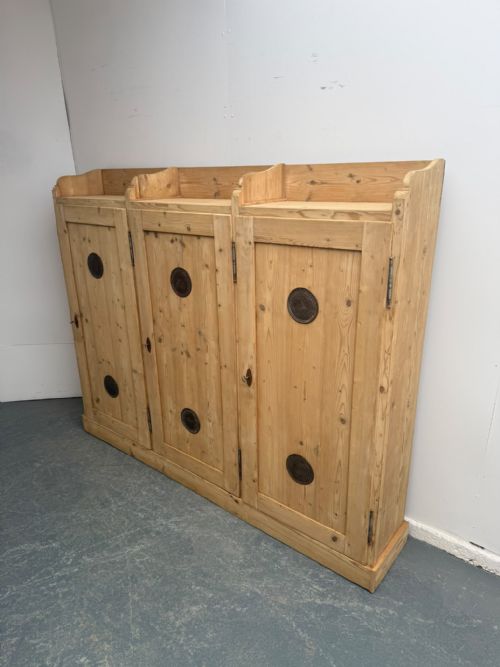
The most common examples on this page are pine and oak housekeepers cupboards, larder cupboards, and food cupboards. Pieces range from straightforward country pine designs to substantial painted and inlaid regional examples.
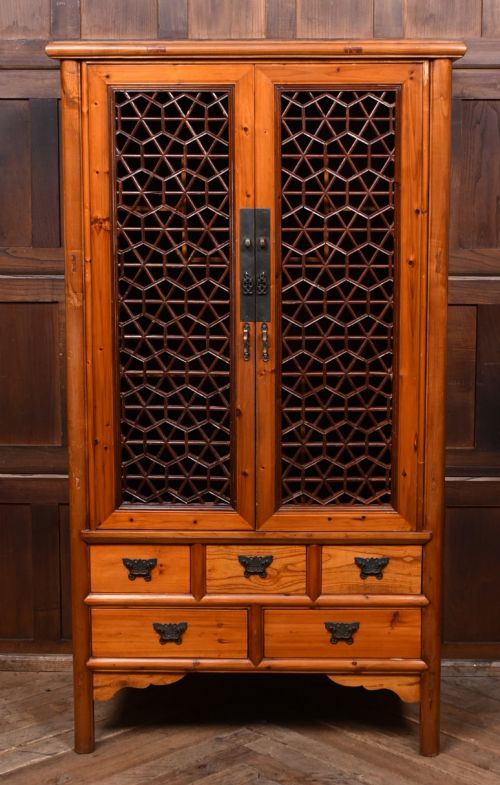
Origins vary from English workshops to Welsh, French, Baltic, and East European makers, reflecting diverse domestic storage traditions. Formats include two-door cabinets, four-door storage units, and breakfront configurations equipped for functional use.
How they were made
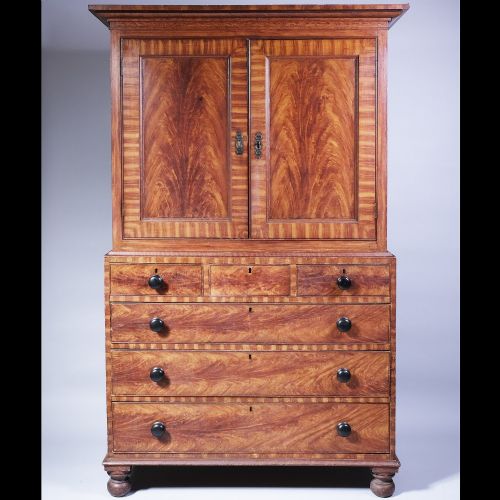
Cabinet makers constructed traditional pantry cupboards predominantly using solid pine and oak, complemented by brass and iron hardware such as hinges and handles. Surfaces frequently display original paint finishes, scumble painting, wax, or exposed timber grain.
What varies in quality
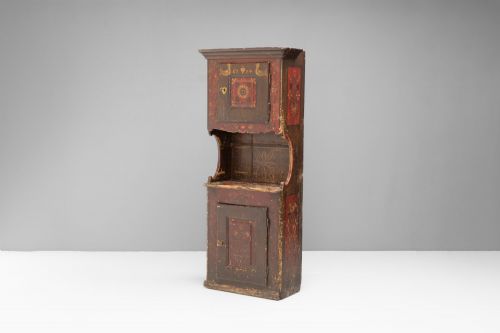
The distinction between standard utility pieces and finer examples rests on timber selection, surface finish preservation, and regional construction detail. Pieces featuring original paintwork, scumble effects, or sophisticated inlaid woodwork demonstrate higher craftsmanship.
Proportion and scale also define the hierarchy, with larger breakfront cabinets and early eighteenth-century oak pieces representing more ambitious workshop production than standard nineteenth-century pine storage cabinets.
The Traditional Pantry Cupboard Glossary
- Housekeepers cupboard
- A large storage cabinet traditionally used by a housekeeper to store linen, dry goods, and household provisions. These pieces typically feature multiple doors and internal shelving.
- Larder cupboard
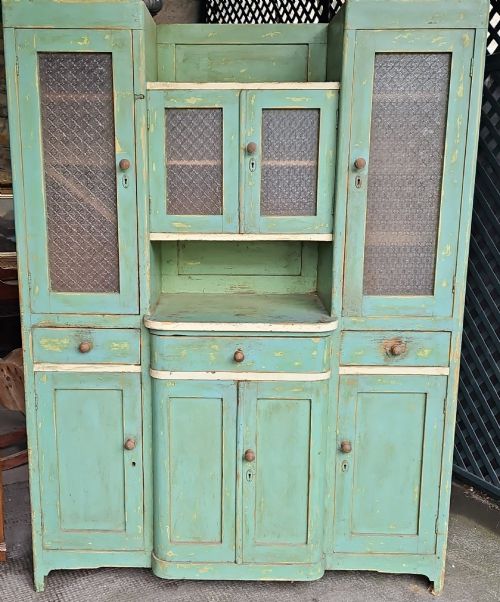
- A tall cabinet designed specifically for food storage, often incorporating ventilation or mesh panels to keep provisions fresh. They frequently appear in pine and oak.
- Scumble paint
- A decorative surface finish applied to timber to imitate a more expensive grain or create mottled texture. Artisans use glazes over a base coat to achieve this effect.
- Bread and cheese cupboard
- A regional vernacular food cupboard, often Welsh, featuring perforated panels or slats for air circulation. These units safely stored perishable rations before refrigeration.
- Breakfront
- A cabinet design where the central section projects forward from the flanking outer sections. This architectural form adds depth and presence to large kitchen dressers and storage units.
Traditional Pantry Cupboard: Frequently Asked Questions
What is a traditional pantry cupboard used for?
These cupboards serve as practical storage furniture for kitchen provisions, dry goods, and household linens. Their internal shelving and cabinet doors keep items organised while adding period character to domestic spaces.
Historically, they functioned as the central storage hub in a kitchen or pantry before fitted units became common. Today, owners utilise them in modern kitchens and dining areas for tableware and pantry stores.
How do I identify the period of a cupboard?
Dating relies on observing timber choices, construction methods, and hardware styles across eighteenth, nineteenth, and early twentieth-century examples. Eighteenth-century pieces frequently feature solid oak and hand-planed panels.
Victorian and Edwardian items often utilise pine, sometimes with factory-produced brass fittings or specific painted finishes. Comparing the door configuration and overall joinery helps place the piece within its historical era.
Are these cupboards made of solid wood?
The listings consist primarily of solid timbers such as pine and oak, reflecting traditional workshop manufacturing methods. Carpenters built these robust storage units to withstand heavy daily domestic use.
Surfaces are then finished with natural wax, historical paint layers, or scumble glazes. This solid construction ensures the furniture remains durable and stable through centuries of use.