



Traditional Oak Wainscot Armchair
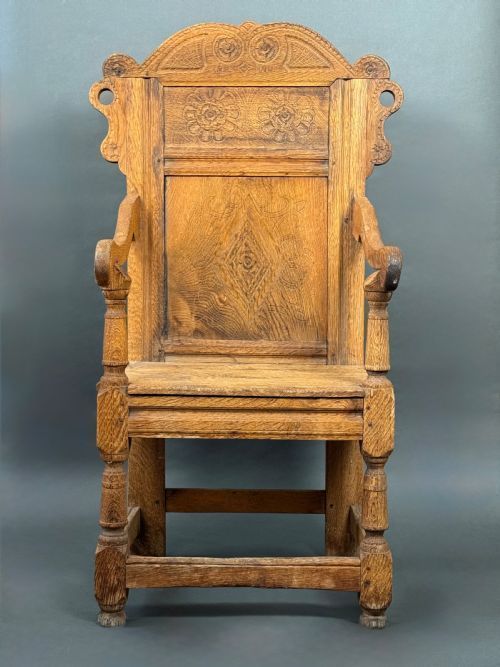
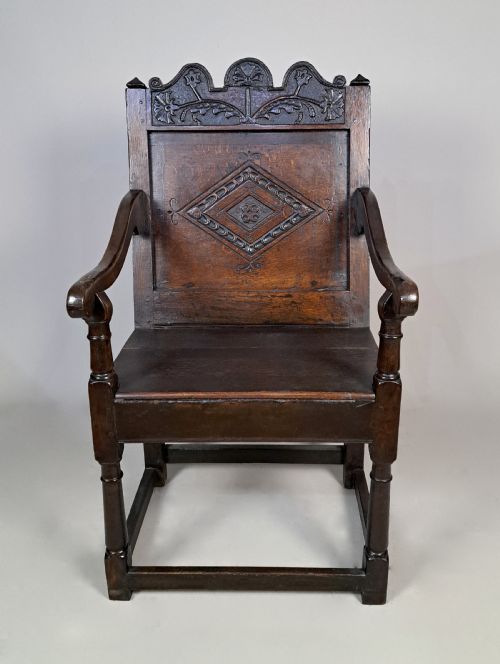
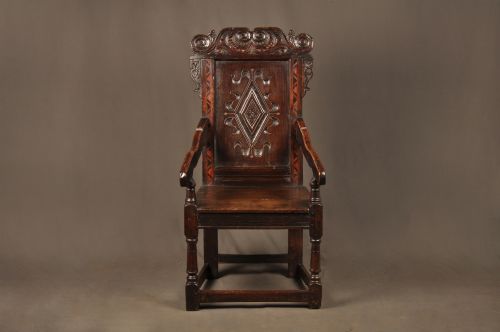
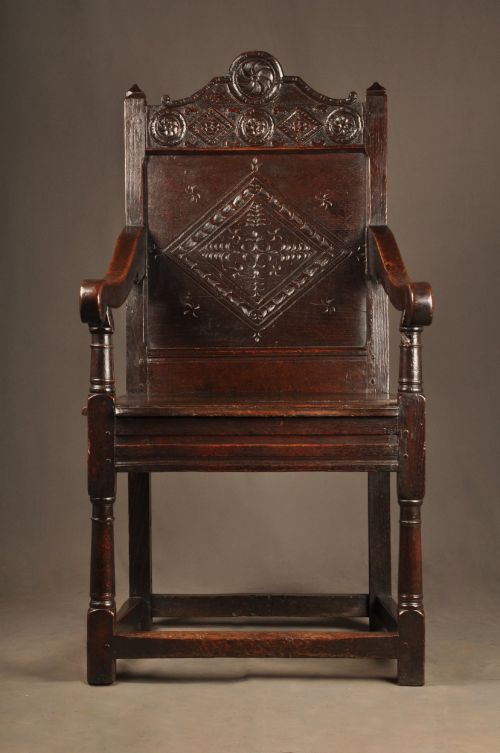
A traditional oak wainscot armchair is a heavy wooden seat built to anchor a room, prized for its panelled back and sturdy presence.
Traditional Oak Wainscot Armchair
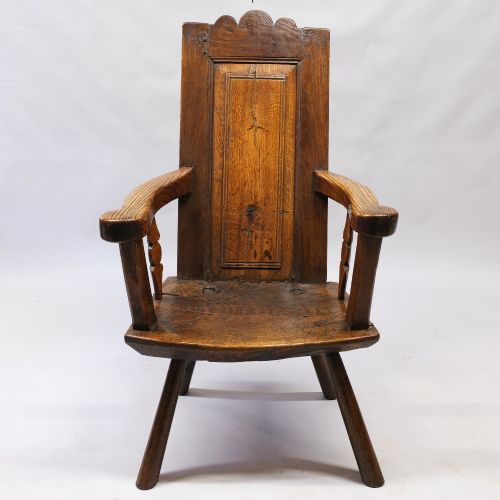
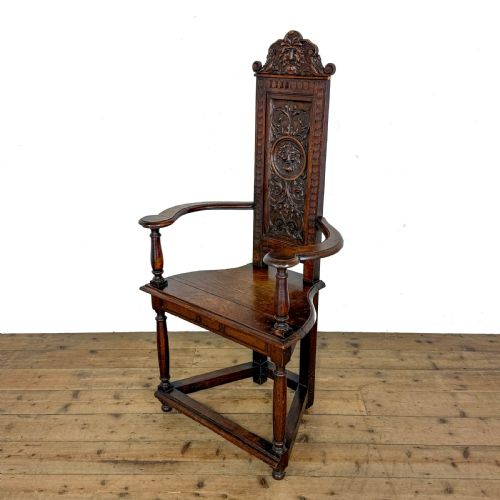
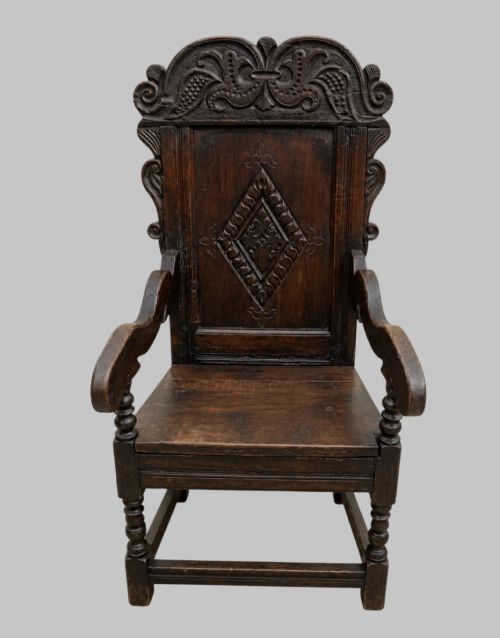
A traditional oak wainscot armchair is built with solid timber panels and arms, originating in domestic interiors from the seventeenth and eighteenth centuries. These pieces carry deep historical weight, often featuring carved wooden backs and heavy stiles that speak to early carpentry.
The versions most commonly met on this page date from the seventeenth and eighteenth centuries, alongside later nineteenth century revival pieces. Regional variations emerge across listings, including examples from Yorkshire, Lancashire, Wales, and Scotland.
Makers shaped these armchairs to serve as principal seats of authority within a household, utilising robust joinery to withstand centuries of daily use. The form remains a cornerstone of early English vernacular furniture.
Distinctions in Quality
Quality in a traditional oak wainscot armchair rests upon the integrity of the original timber and the crispness of the hand-carved detailing. Pieces that retain their original seat boards and unthinned stiles stand at the top of the range.
Proportion and stance separate masterwork vernacular pieces from later revival or heavily altered examples. A well-balanced frame with deep relief carving commands greater attention than a flat, mechanically reproduced surface.
Traditional Oak Wainscot Armchair Retail Price Guide 2026
Typical asking prices for traditional oak wainscot armchair among the pieces listed under this phrase on Sellingantiques today, from the lower quarter to the upper quarter. They describe what is for sale here now, not the wider market.
Listings span the seventeenth, eighteenth, and nineteenth centuries, alongside revival pieces from the nineteen-thirties, constructed primarily in solid oak and elm.
The Traditional Oak Wainscot Armchair Glossary
- Wainscot
- A heavy wooden armchair constructed with panelled backs and solid wooden arms. This term originally referred to high-grade oak imported from the continent for panelling walls.
- Stile
- The upright vertical post that forms the outer edge of a chair back or panel frame. These members bear the primary structural load of the seat.
- Vernacular
- Furniture made by local craftsmen for everyday use rather than high-style metropolitan workshops. These pieces often incorporate regional building traditions.
- Cresting
- The decorative carved wooden top rail fixed above the main back panel of an armchair. It frequently displays geometric or floral motifs.
- Peg
- A wooden pin driven through a mortise and tenon joint to lock the structural timbers together. Original wooden pegs indicate traditional assembly methods.
Traditional Oak Wainscot Armchair: Frequently Asked Questions
How were these chairs used?
These armchairs served as principal seats for the head of the household or honoured guests. Their sturdy construction allowed them to sit near hearths or in great halls.
Over time, their role shifted from functional everyday seating to status pieces that anchored the main rooms of traditional homes.
How do I live with oak furniture?
Living with a traditional oak wainscot armchair requires stable room temperatures and protection from direct heat sources. Solid timber reacts to sudden changes in humidity by expanding or contracting.
Keep the wood nourished with traditional wax rather than modern silicon polishes to maintain the natural patina built up over centuries.
How do I tell periods apart?
Distinguishing seventeenth-century pieces from nineteenth-century revivals depends on tool marks, timber shrinkage, and joinery methods. Earlier examples show irregular hand-adzed surfaces and genuine peg wear.
Revival pieces from the Victorian era or later often feature more uniform machine-sawning and tighter, cleaner joints that lack age-related movement.