
Traditional Oak Pedestal
A traditional oak pedestal brings centuries of solid craftsmanship and enduring utility directly into your study or library.
Traditional Oak Pedestal
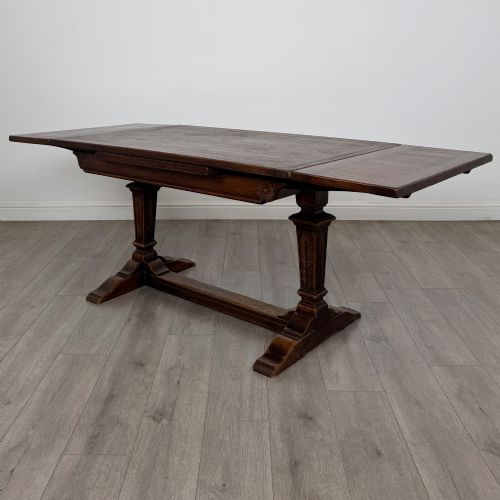
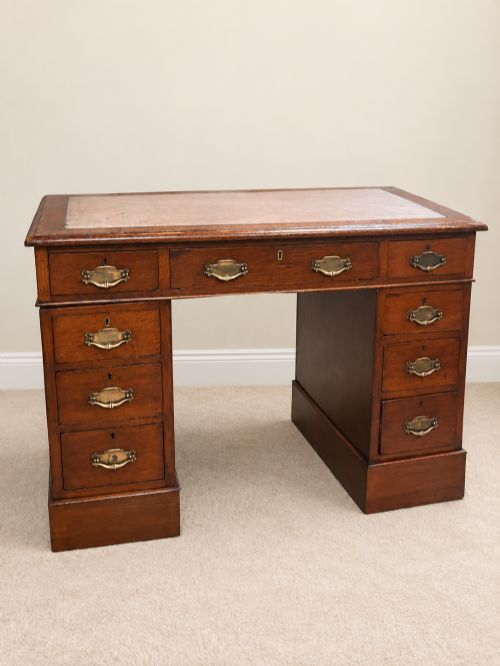
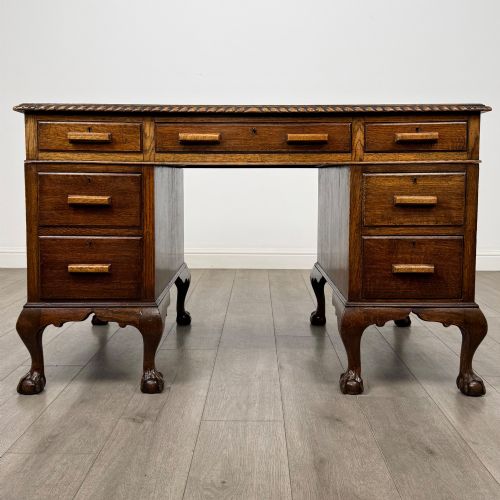
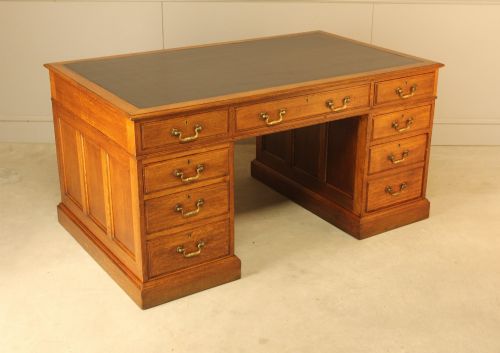
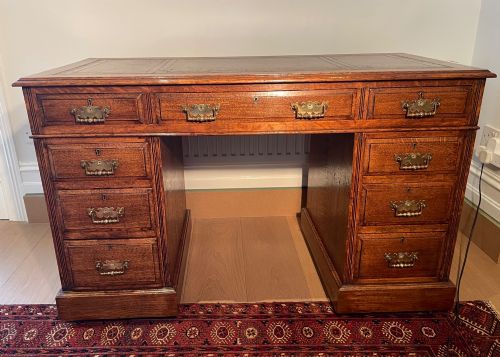
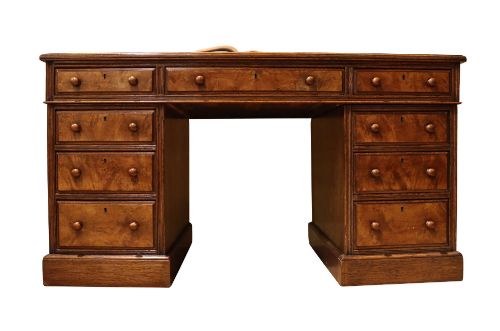
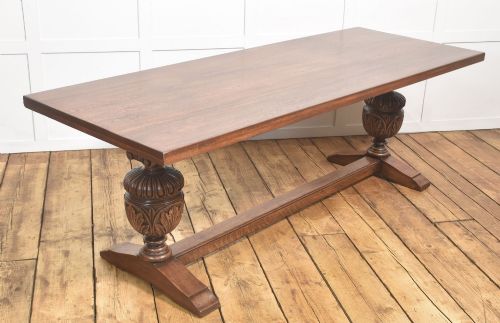
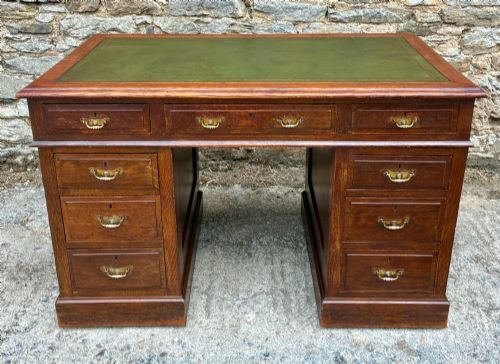
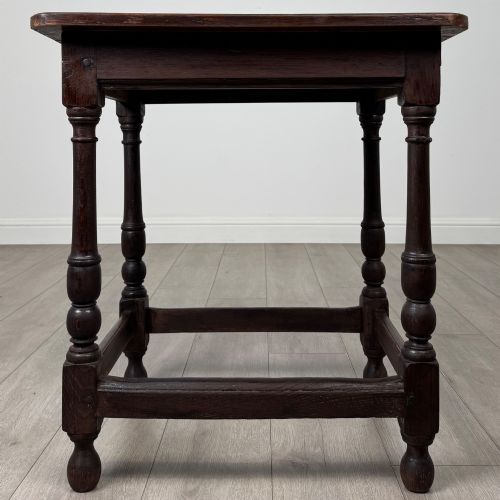
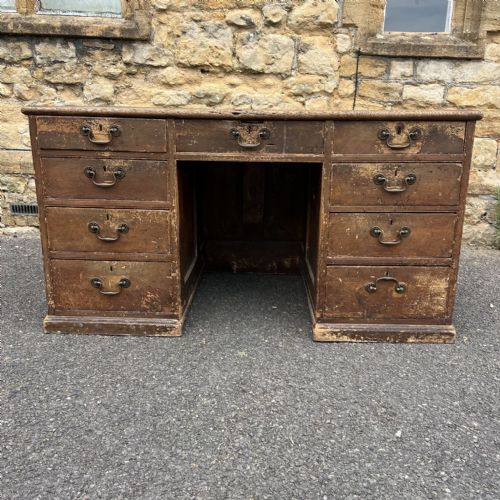
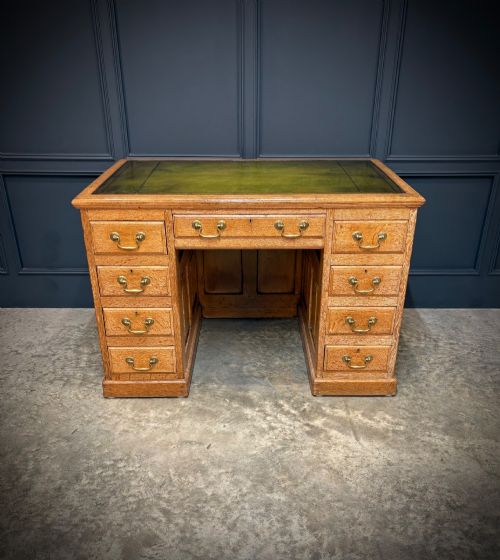
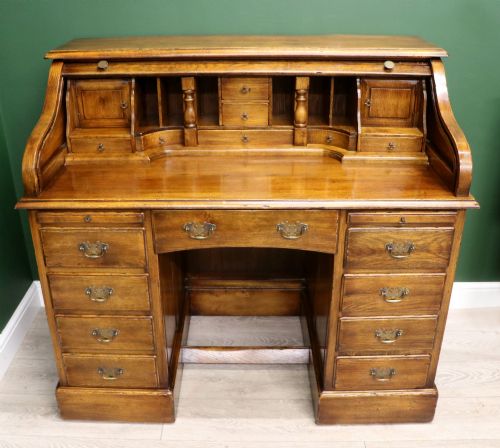
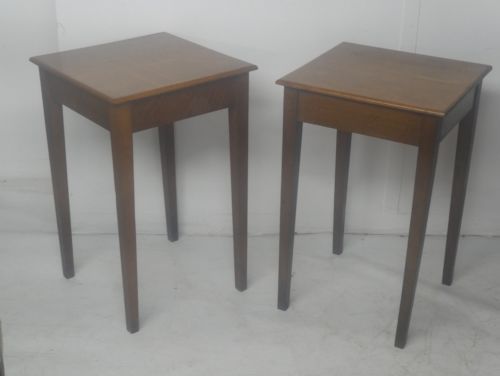
When you search for a traditional oak pedestal, you are looking at substantial pieces of furniture primarily constructed as partner desks, kneehole desks, and occasional tables. These items span periods from the Victorian and Edwardian eras into the early twentieth century, reflecting solid construction and functional design.
You are most likely to meet pedestal desks and writing tables on this page, often featuring banks of drawers flanking a central opening. These forms originate from British workshops and regional cabinetmakers, utilising timber selected for its strength and grain.
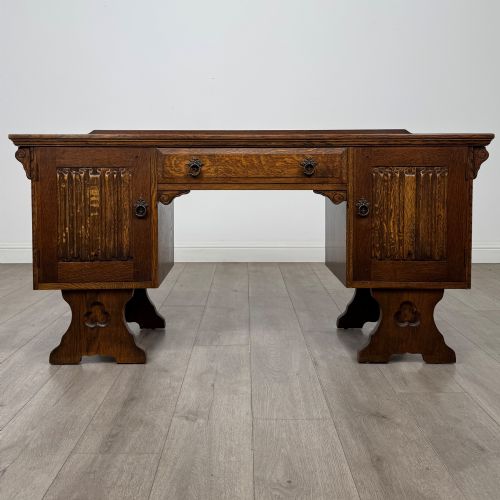
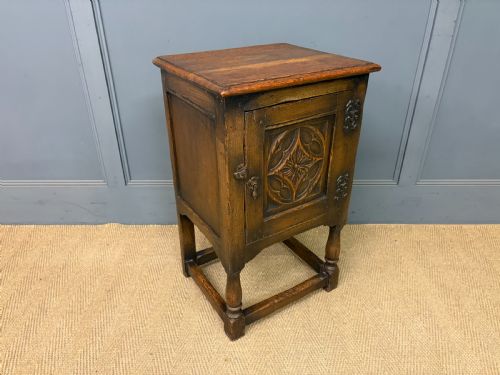
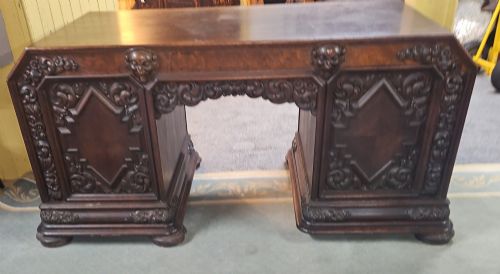
The aesthetic ranges from plain, utilitarian surfaces to carved interpretations of Jacobean and Gothic styles. Understanding these forms helps you match the physical presence of the piece to the proportions of your room.
Distinctions in construction and design
The calibre of a traditional oak pedestal rests on the selection of timber and the precision of its joinery. Superior examples display carefully matched grain across drawer fronts and heavy, solid timber panels that resist warping over generations.
Design complexity also separates standard utility pieces from high-end commissions, with carved details, secondary woods like burr walnut, and fully finished panelled backs for free-standing placement distinguishing the upper tier.
Several desks include secret compartments designed to hide private correspondence from prying eyes.
Gillow and Co
The Traditional Oak Pedestal Glossary
- Partners desk
- A large double-sided writing desk designed for two people to work opposite one another, featuring banks of drawers on both sides.
- Linenfold
- A style of carved wooden panelling that resembles folded fabric, frequently seen on Edwardian and revival furniture.
- Tambour
- A flexible sliding shutter made of narrow wooden strips glued to canvas, used to enclose the upper section of a roll-top desk.
- Kneehole
- The central recessed space beneath a desk designed to accommodate the user's legs while seated.
- Refectory table
- A long dining table traditionally used in monastic refectories, characterised by sturdy legs connected by a central stretcher.
Traditional Oak Pedestal: Frequently Asked Questions
What is a pedestal desk?
A pedestal desk is a heavy writing table supported by two vertical columns of drawers, known as pedestals, with a central space for seating.
These pieces offer substantial workspace and extensive drawer storage, making them well suited for studies and home libraries.
How do I care for oak furniture?
Keep oak furniture away from direct heat sources and dramatic humidity changes to prevent the timber from splitting or warping.
Apply natural beeswax periodically to nourish the wood and maintain a soft, protective lustre on the surface.
What is a partners desk?
A partners desk is a large-scale writing table configured with drawers and cupboards on both sides so two individuals can sit opposite each other.
These desks were traditionally built for offices, banks, and large estate libraries where professional associates shared a workspace.
How can I date an oak desk?
Dating relies on observing construction methods, handle styles, locking mechanisms, and stylistic revival influences visible across the piece.
Victorian and Edwardian examples often feature machine-sawn internal components alongside hand-cut dovetails, while specific hardware styles narrow down the manufacturing decade.