
Brown Oak Furniture
Brown oak furniture brings distinctive grain and deep natural tones into domestic spaces through items shaped across multiple historic periods.
Brown Oak Furniture
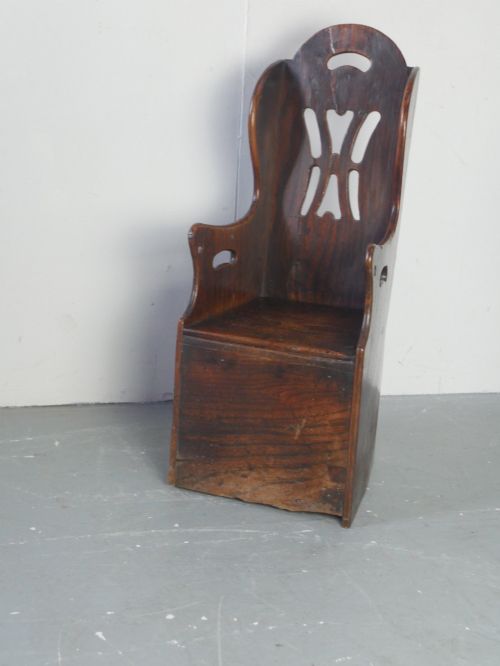
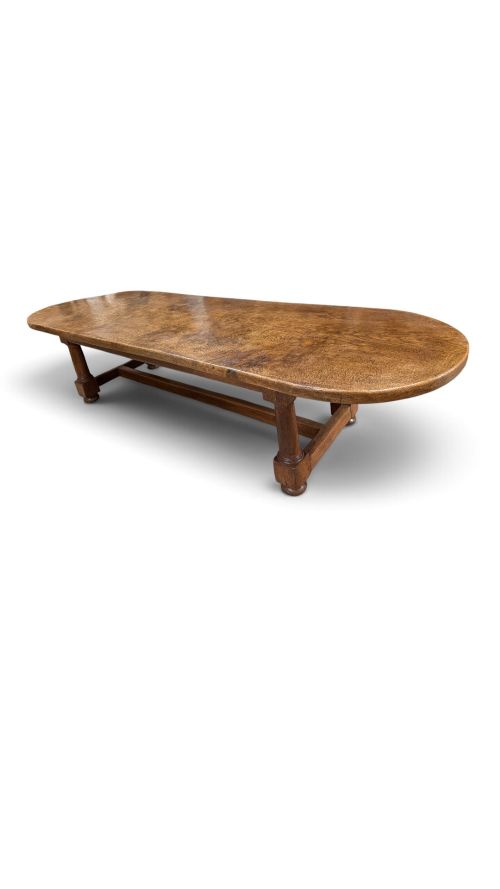
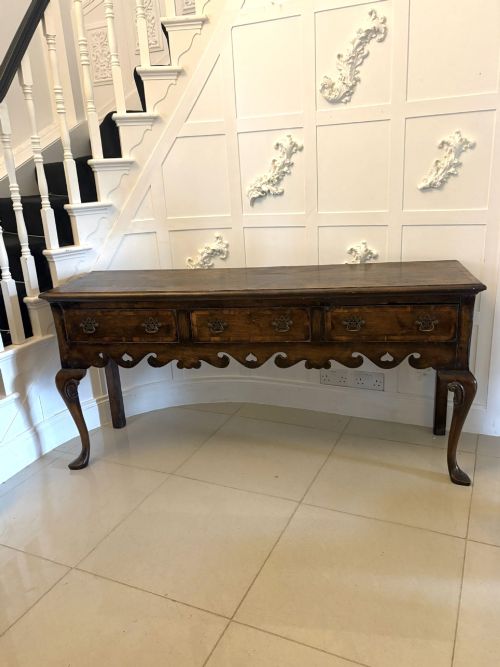
When seeking brown oak furniture, buyers encounter a diverse selection of utilitarian and decorative objects spanning the eighteenth century through the Edwardian era. Pieces range from robust dressers and sideboards to refined desks, occasional tables, and seating.
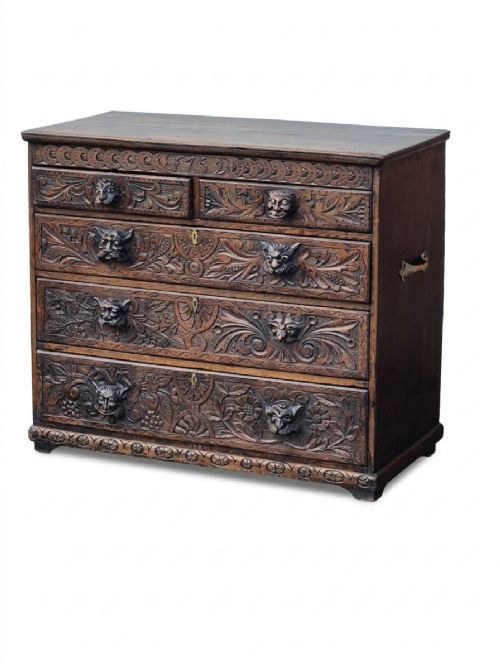
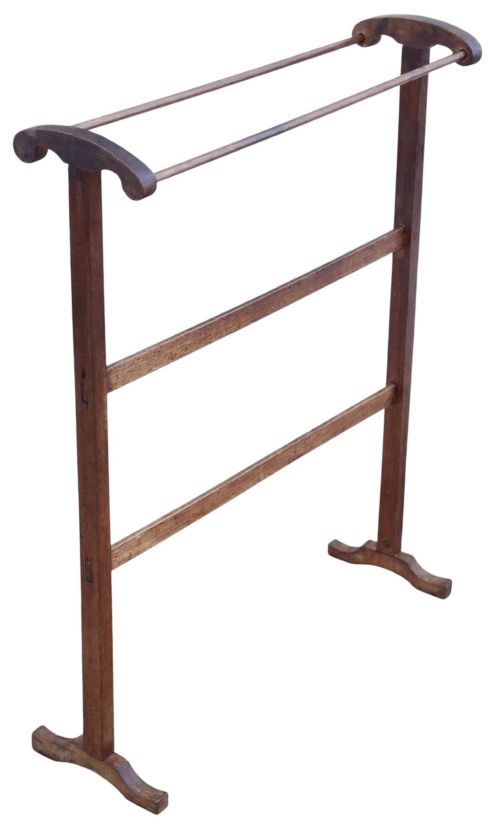
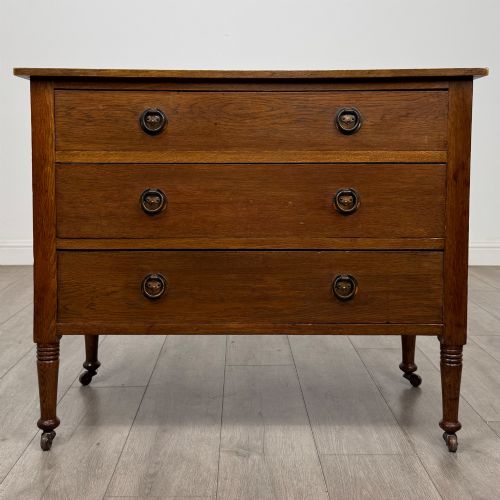
The material appears frequently in practical household forms, including chests of drawers, bookcases, and umbrella stands. Domestic interiors benefit from the sturdy construction typical of these items, which originate from English, French, and broader European workshops.
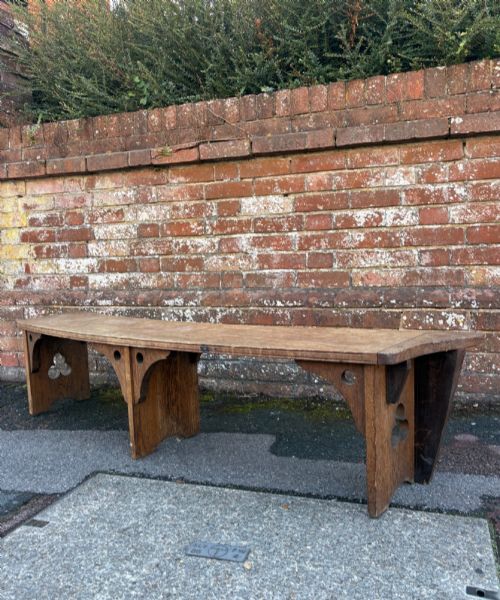
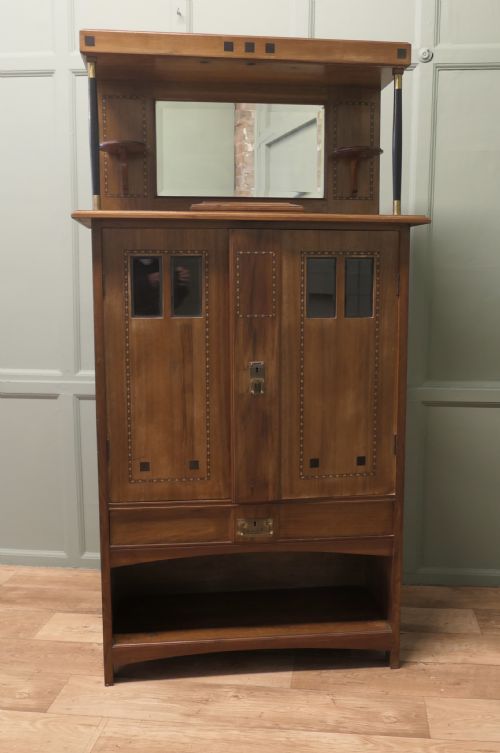
Examples on this page draw heavily from Georgian, Victorian, and Arts and Crafts traditions. These stylistic roots dictate the proportion and surface detail of each piece, linking domestic history directly to current living spaces.
Materials and Construction
Makers utilised solid timber alongside specialised veneers like pollard oak to highlight rich natural figuring and varied grain patterns. Structural integrity often relied on secondary woods such as mahogany, elm, and sycamore.
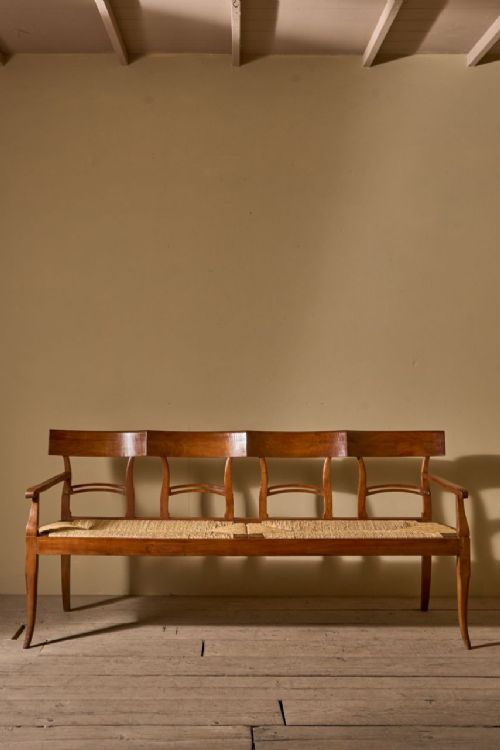
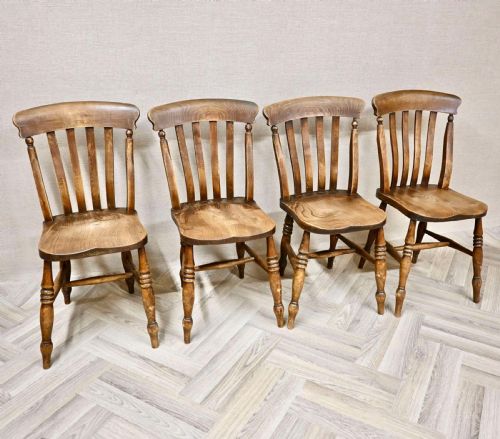
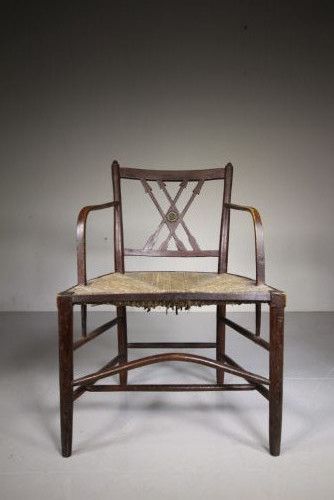
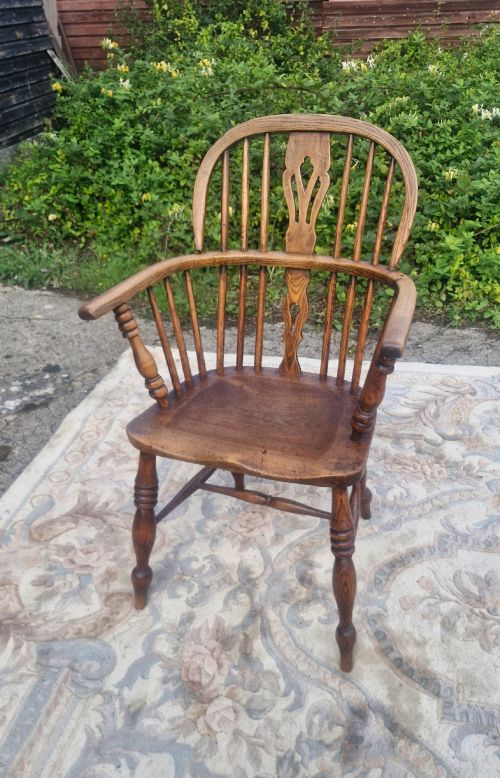
Metal components including brass and iron feature as handles, hinges, and structural bracing, whilst glass panels appear in bookcases and display cabinets. Rush seating provides tactile contrast on chairs, and occasional painted finishes alter the raw timber surface.
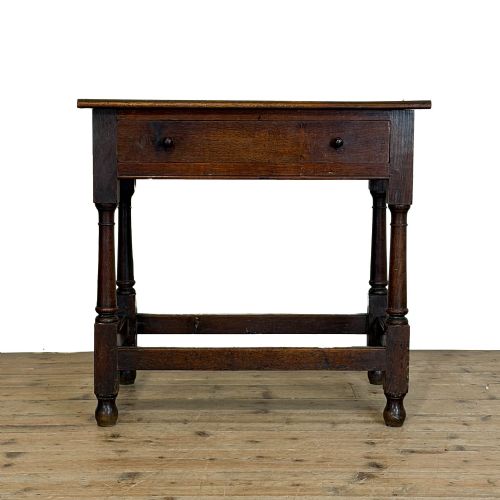
Listings feature solid oak construction alongside brass hardware, iron accents, and rush seating across Edwardian and Victorian periods.
Craftsmanship and Proportion
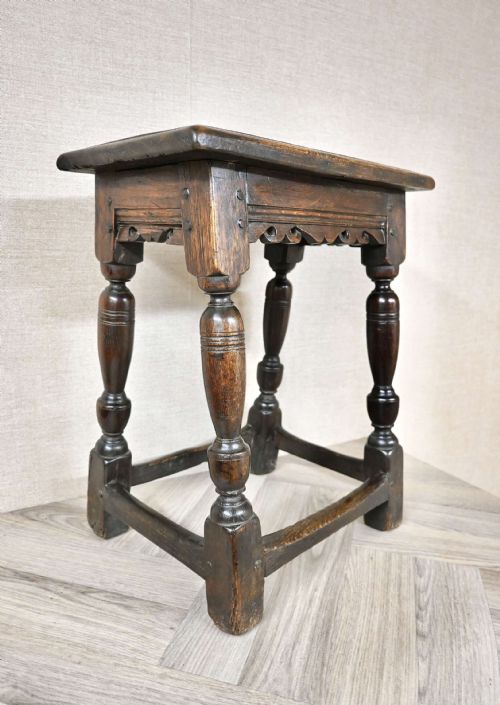
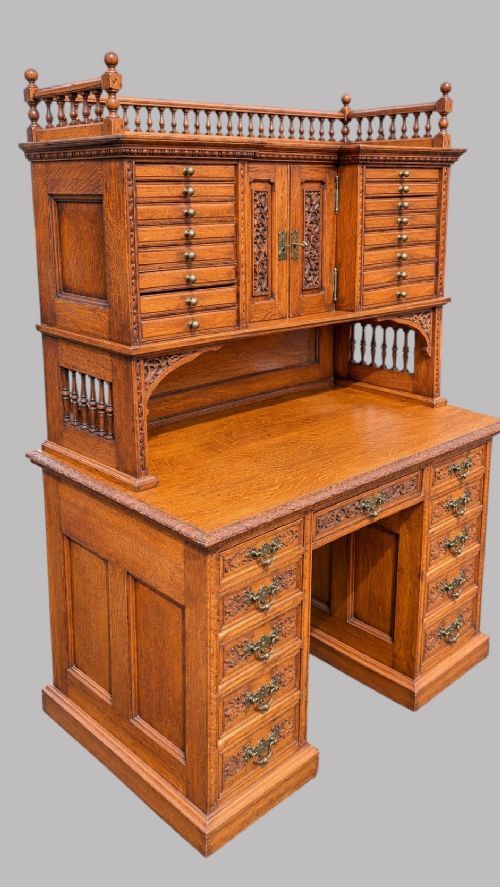
Superior examples demonstrate meticulous timber selection, pairing planks with balanced grain movement and deep colour across large surfaces like sideboard tops and cabinet doors. Carved ornamentation, seen in Gothic revival panels or grotesque motifs, remains crisp and deeply defined rather than soft or shallow.
Construction methods determine durability, visible in tight joinery, original brass hardware, and unaltered structural proportions. Pieces retaining uncompromised patination and sound foundational framing stand apart from later alterations or compromised builds.
Liberty Morris And Co
The Brown Oak Furniture Glossary
- Pollard oak
- Timber taken from trees that were pollarded, producing a dense, knotty cluster of growth rings with intricate figuring. This decorative wood surface often covers prominent sections of mid-nineteenth century sideboards.
- Dresser base
- A long, low cabinet featuring drawers and cupboards beneath a flat surface, traditionally used for food preparation and storage. These pieces form a central category within vernacular English storage furniture.
- Lowboy
- A small dressing table or side table standing on tall legs, typically equipped with a row of drawers beneath the top. Eighteenth-century examples display restrained cabriole or straight supports.
- Cofer
- A large wooden chest used for storing valuables, textiles, or documents, constructed with heavy panelled sides. Early examples demonstrate pegged joinery and fundamental box construction.
- Secessionist
- A stylistic movement of the early twentieth century rejecting historicism in favour of clean geometric lines and stylised ornamentation. Items from this group integrate functional simplicity with artistic reform.
Brown Oak Furniture: Frequently Asked Questions
How do I clean brown oak furniture?
Dust surfaces regularly with a soft, dry cloth to prevent particulate accumulation in the textured grain. Avoid modern silicone polishes that build up residue and dull the natural timber.
Apply a traditional beeswax periodically to nourish the wood and maintain a soft lustre. Buff the surface gently after application to protect the antique finish from moisture.
Where should I place these pieces?
Position items away from direct heat sources such as radiators and fireplaces to prevent timber shrinkage and splitting. Consistent room temperatures protect the structural stability of old joints.
Keep pieces out of direct sunlight to prevent the deep brown tones and natural grain from fading unevenly over time.
How do I identify a Georgian piece?
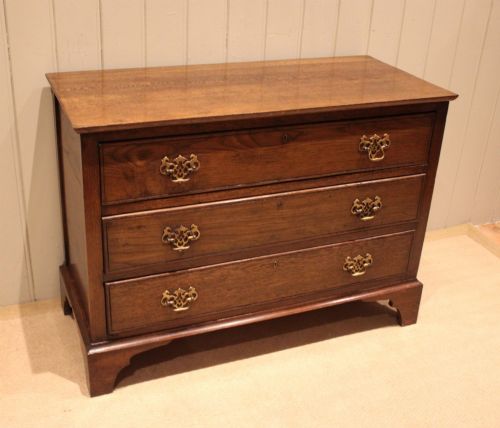
Examine the proportions for classical restraint, structural symmetry, and straightforward utility typical of the eighteenth century. Details often include bracket feet, cockbeaded drawer edges, and understated brass pull handles.
Look for hand-cut dovetails and pegged joinery inside drawers and carcases, which indicate period construction methods before industrial standardisation.
What defines Arts and Crafts items?
These pieces prioritise visible craftsmanship, honest construction, and simple forms over superfluous surface decoration. Exposed tenon joints and hand-carved vegetal motifs frequently appear.
Materials are left in natural states to celebrate the inherent character of the timber rather than masking it beneath heavy lacquers.