
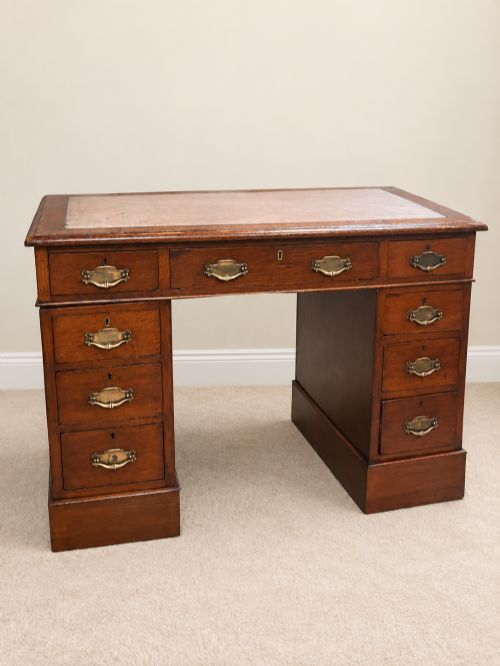
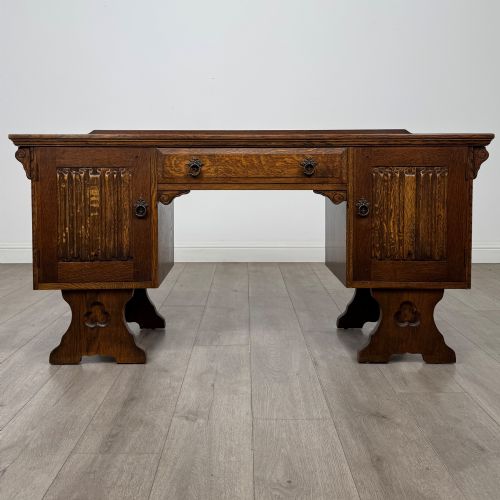
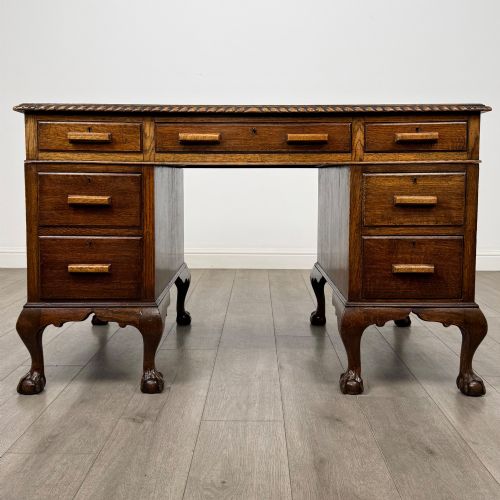
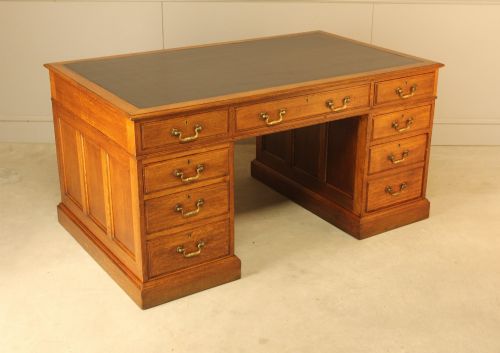
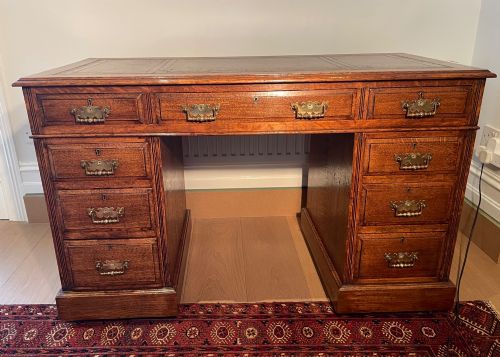
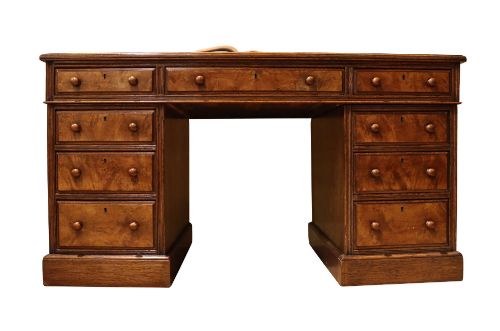
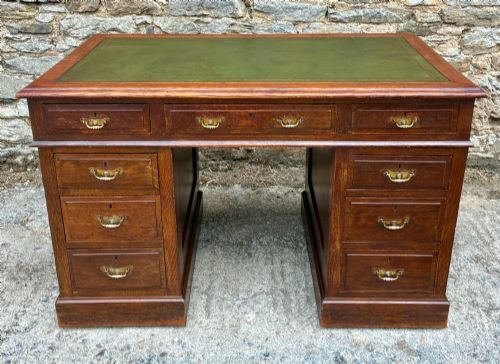
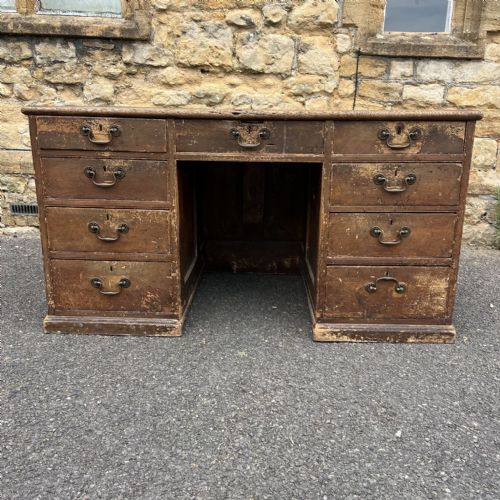
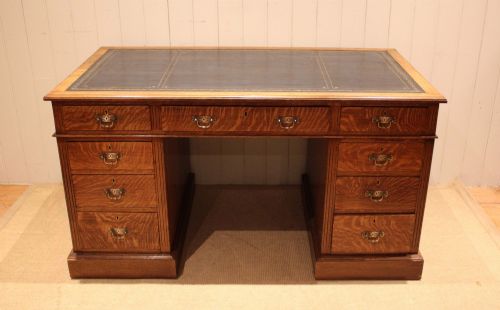


Traditional Oak Pedestal Desk
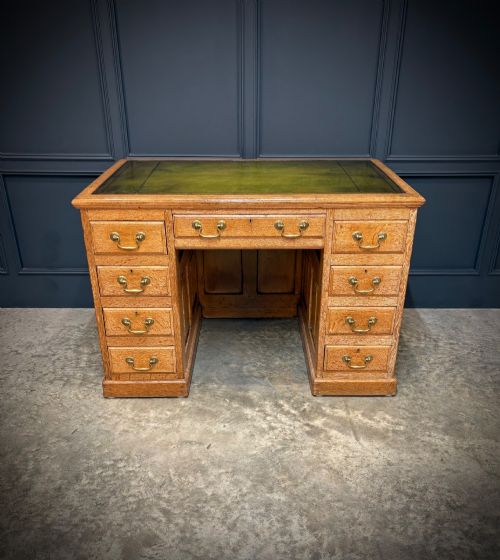
A traditional oak pedestal desk offers sturdy construction and classic proportions, anchoring a study with substantial storage and a working surface.
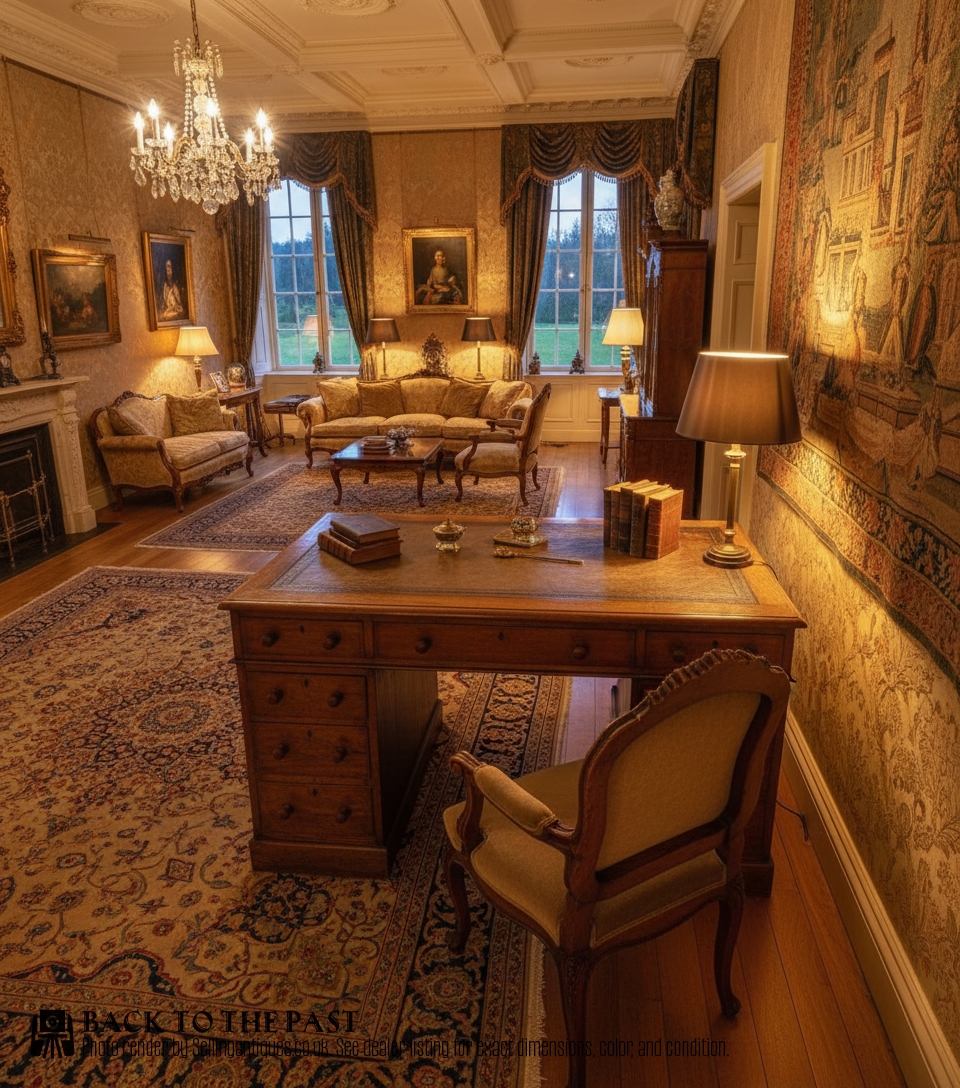
Traditional Oak Pedestal Desk
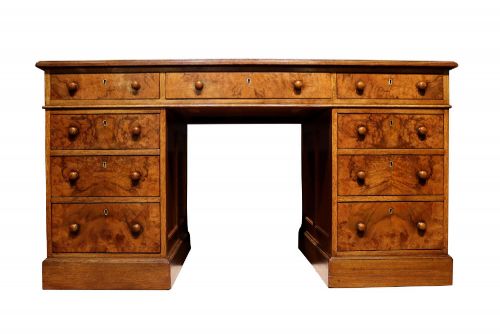
A traditional oak pedestal desk comprises two stacks of drawers supporting a central writing surface, forming a stable and enduring workspace. Buyers seeking a traditional oak pedestal desk encounter numerous examples dating from the Victorian and Edwardian eras through to the early twentieth century.
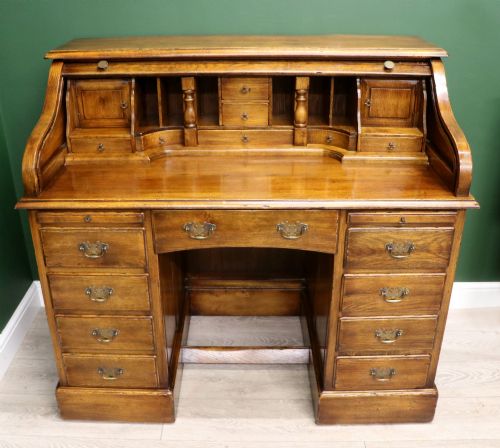
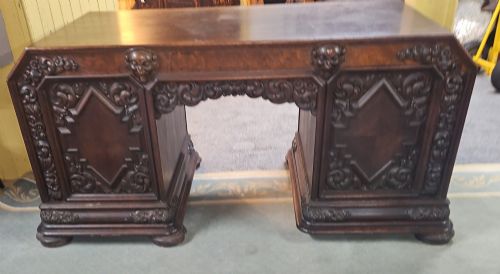
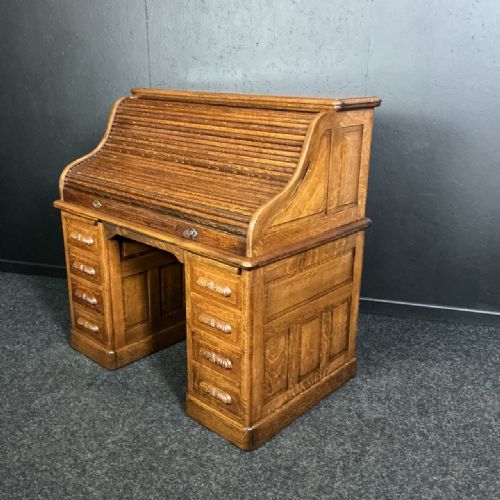
The layout typically takes the form of either single-sided writing desks or double-sided partners desks designed for two users facing each other. Variations include kneehole formats, tambour or roll top mechanisms, and configurations incorporating burr walnut panels or carved detailing.
Most pieces hail from English workshops spanning the late nineteenth and early twentieth centuries, reflecting regional cabinet-making traditions. Sideboard conversions and estate desks occasionally appear alongside standard pedestal formats in the listings.
Materials and construction methods
Makers utilised solid oak and figured oak timbers, frequently pairing them with secondary woods such as pine and ash for internal drawer construction. Burr walnut veneers and carved linenfold motifs were applied to enhance the visual depth of select panels.
Writing surfaces were traditionally inset with tooled leather skivers, while drawers and cabinets incorporated brass handles, iron hardware, and occasionally maker stamps. Panel construction techniques allowed the heavy timbers to expand and contract naturally without splitting.
Traditional Oak Pedestal Desk Retail Price Guide 2026
Typical asking prices for traditional oak pedestal desk among the pieces listed under this phrase on Sellingantiques today, from the lower quarter to the upper quarter. They describe what is for sale here now, not the wider market.
Several desks retain hidden security drawers tucked away behind the main pedestals, built to keep nineteenth-century petty cash safe from curious clerks.
Distinguishing factors of quality
Superior examples distinguish themselves through the thickness of the solid timber, the symmetry of figured grain matching, and the precision of drawer dovetailing. Finer desks display crisp hand-carved mouldings rather than shallow machine-pressed ornamentation.
The integrity of the original leather writing surface, the operating smoothness of roll top tambour slats, and the presence of authentic brass hardware significantly influence the standing of a piece within its period.
Gillow & Co·Merryweather & Son
The Traditional Oak Pedestal Desk Glossary
- Pedestal desk
- A heavy writing table supported by two banks of drawers or cupboards flanking a central kneehole. This form provides substantial storage beneath the primary writing plane.
- Partners desk
- A large pedestal desk designed with matching drawers or cupboards on both sides so two individuals can work opposite one another. These were traditionally utilised in banks and large estate offices.
- Tambour top
- A flexible desk cover constructed from narrow vertical strips of wood glued to a canvas backing that slides in a recessed track. It conceals the pigeonholes and writing surface when closed.
- Kneehole
- The recessed space in the centre of a desk designed to accommodate the user's legs while seated. It is often flanked by single or double drawer stacks.
- Skiver
- A piece of split sheepskin or leather inset into the top of a desk to provide a smooth writing surface. These are frequently embellished with gilt tooling around the perimeter.
Traditional Oak Pedestal Desk: Frequently Asked Questions
What is a partners desk?
A partners desk is a large pedestal desk built with drawers and cupboards on both the front and the back. This dual-sided design allowed two clerks or business partners to sit and work opposite each other at the same piece of furniture.
These desks are generally deeper and wider than standard single-sided writing desks to accommodate users on both faces.
How do I care for a leather desk top?
Leather desk inserts require gentle cleaning with a damp cloth and occasional treatment with specialist leather balms to prevent cracking. Avoid using harsh chemical solvents that can strip the original dye and gilt tooling.
Keeping the leather conditioned maintains its suppleness and preserves the traditional appearance of the writing surface.
Are roll top desks difficult to operate?
Roll top desks use a tambour mechanism made of wooden slats running in side tracks, which should slide smoothly when properly aligned. Humidity changes can sometimes cause the wooden slats to swell, leading to minor sticking in the runners.
Regular cleaning of the tracks and proper ambient humidity in the room generally keep the mechanism functioning correctly.
How can I tell a Victorian desk from an Edwardian one?
Victorian desks tend to feature heavier proportions, darker finishes, and deeper, more robust carving styles such as Gothic or Jacobean revivals. Edwardian examples often display lighter golden oak tones, simpler lines, and slightly more restrained ornamentation.
Examining the construction methods inside the drawers and the style of the hardware helps confirm the specific manufacturing period.