
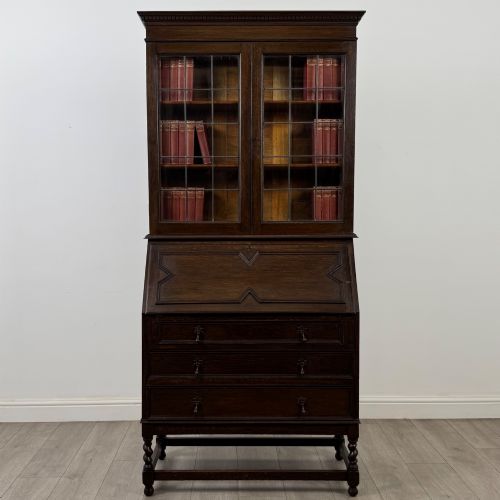


Traditional Oak Glazed Bookcase
A traditional oak glazed bookcase brings warmth and structure to a room, housing volumes behind clear glass panels.
Traditional Oak Glazed Bookcase
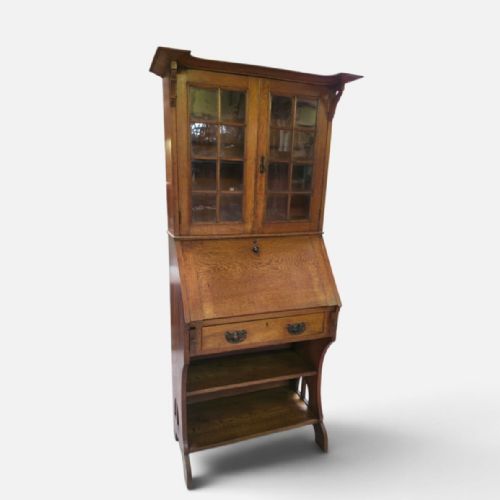
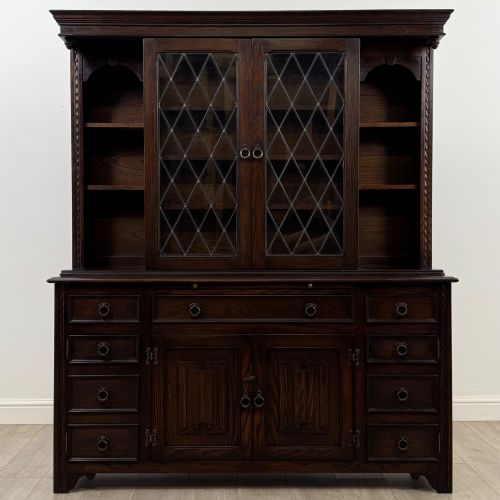
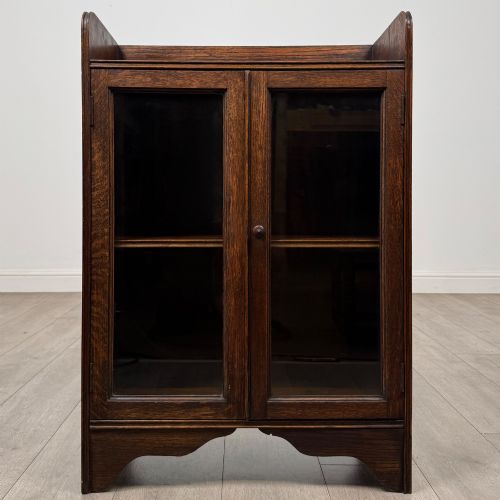
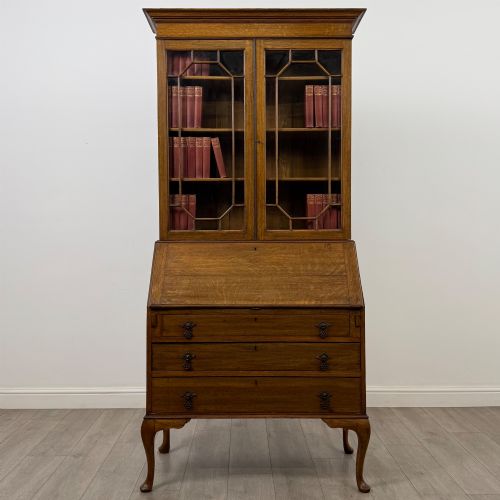
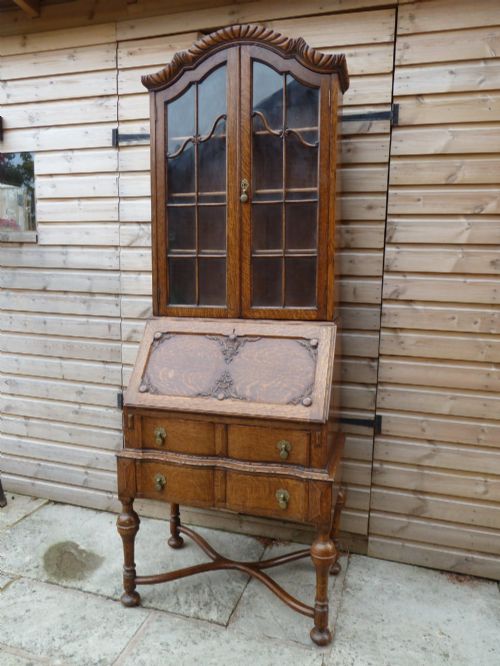
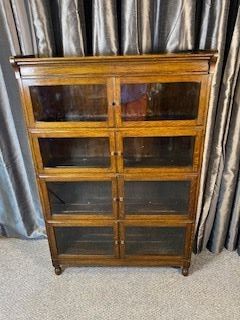
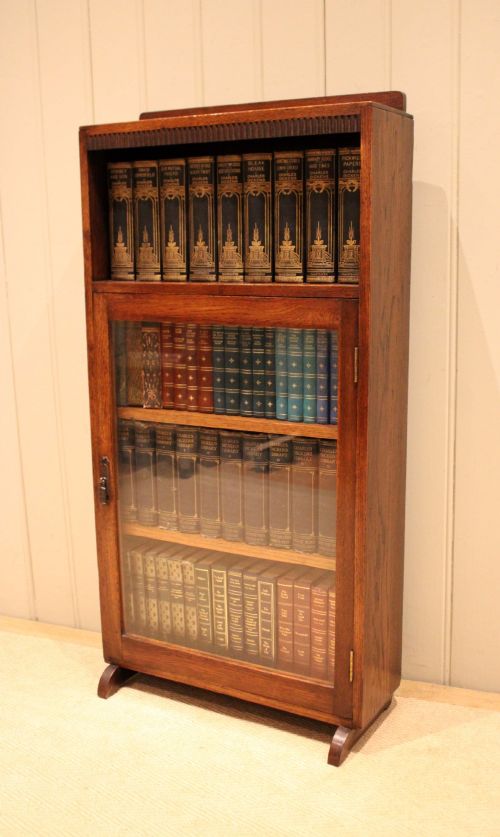
A traditional oak glazed bookcase spans periods from the Georgian era through the Victorian and Edwardian decades into the 1930s. The selection includes bureau bookcases, upright cabinets, library bookcases, and glazed kitchen dressers.
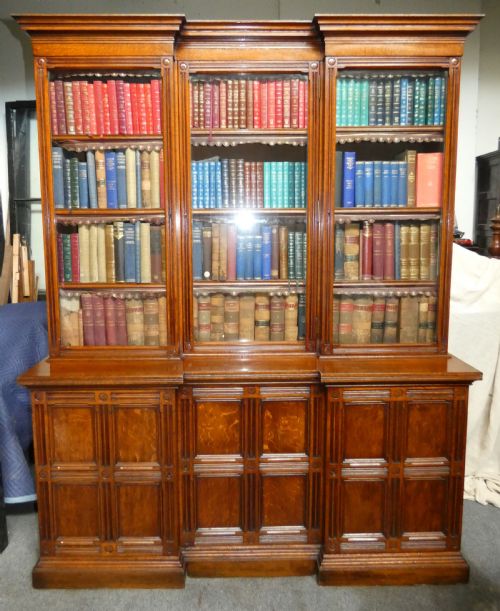
The Edwardian era and the 1920s provide many of the examples seen on this page, often built in solid oak or oak veneer with lead or brass fittings. Buyers will also encounter substantial 19th-century library pieces and vernacular Welsh cupboards.
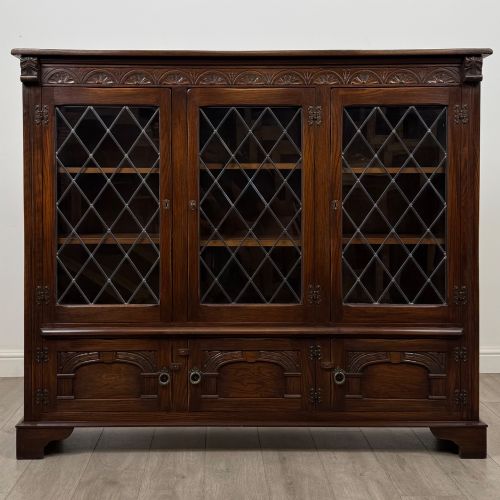
Forms range from compact single-door cupboards to large breakfront and triple-door library suites. Jacobean Revival and Tudor Revival styles frequently appear alongside plain classical proportions.
Materials and construction methods
Solid oak and oak veneer form the structural basis of these pieces, joined with brass and iron hardware. Glass panels protect the contents, sometimes held in place with lead cames.
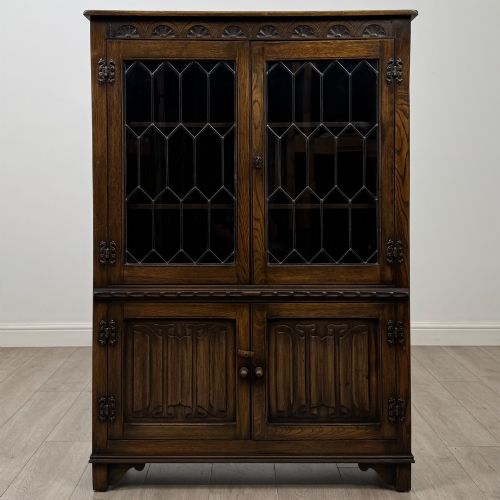
Carving and linenfold panelling appear on revival pieces, while vernacular examples utilise simpler boarded construction. Interior shelving is typically timber, adjustable in the finer library cabinets.
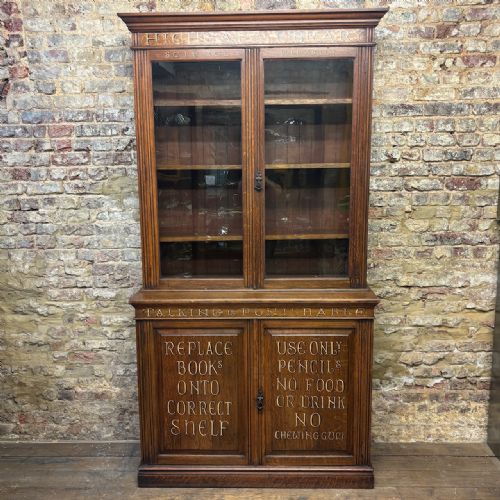
One listed 1930s bookcase carries hand sign-written BBC detail from its past working life.
Distinctions in construction and finish
The choice between solid timber and oak veneer distinguishes workshop standards, alongside the weight and clarity of the glass. Superior examples show careful timber selection in the grain and matching panels across doors.
Joinery detail, such as hand-cut dovetails in drawers and substantial brass or iron hinges, separates standard utility furniture from fine library pieces. Carved ornamentation ranges from crisp, deep relief to mechanical stamping.
The Traditional Oak Glazed Bookcase Glossary
- Bureau bookcase
- A writing desk with a sloping flap, surmounted by a glazed bookcase cabinet. This form combines storage for books with a folding workspace.
- Breakfront
- A piece of furniture where the central section projects forward from the flanking wings. This layout creates visual depth in large library bookcases.
- Linenfold
- A style of wood carving that imitates folded parchment or linen. It is frequently found on panels of Tudor Revival and Jacobean style cabinets.
- Library bookcase
- A large, often multi-door bookcase designed to hold extensive collections of heavy volumes. These pieces typically date from the 19th and early 20th centuries.
Traditional Oak Glazed Bookcase: Frequently Asked Questions
How do I date an oak bookcase?
Dating relies on timber preparation, hardware, and stylistic revival cues. Edwardian and 1920s pieces often show machine-sawn backing boards and standardised brass locks.
Earlier 18th and 19th-century examples display hand-planed surfaces, irregular dovetailing, and iron fittings appropriate to their period.
Are the glass panels original?
Original glass frequently exhibits minor surface bubbles, waviness, and slight thickness variations. Modern replacement glass tends to be perfectly flat and uniform.
Examining the putty or wooden glazing bars can also indicate whether the panes have been reset.
How do I care for oak furniture?
Oak benefits from consistent indoor humidity and placement away from direct heat sources. Excessive dryness can cause timber panels to split.
Applying a traditional beeswax polish helps maintain the lustre of the wood without building up heavy synthetic layers.
What is a bureau bookcase used for?
The drop-front flap opens to reveal a writing surface fitted with small pigeonholes and drawers for correspondence. The upper glazed section serves to display books while keeping them free from dust.
This dual function made them popular in studies and sitting rooms.