
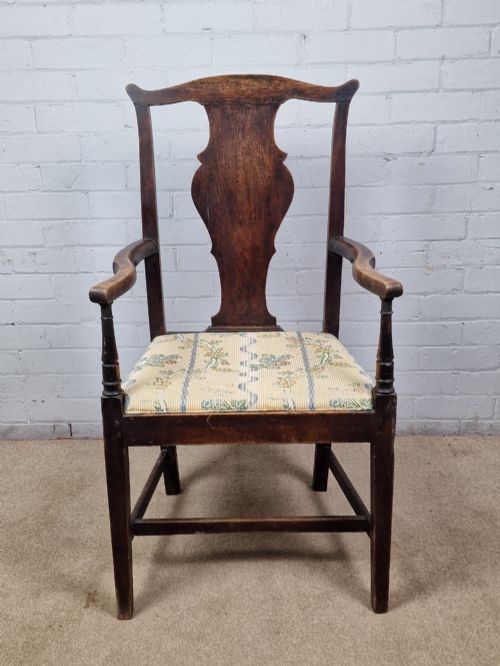

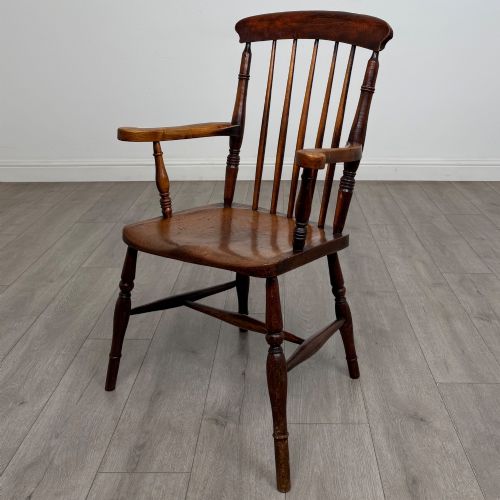
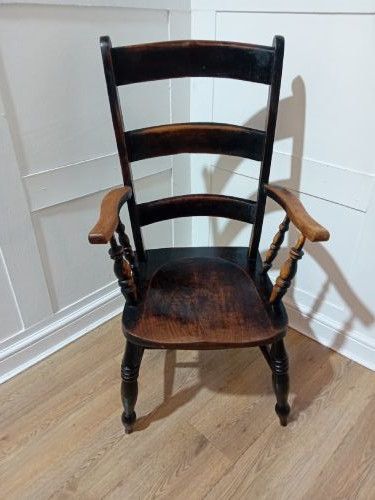
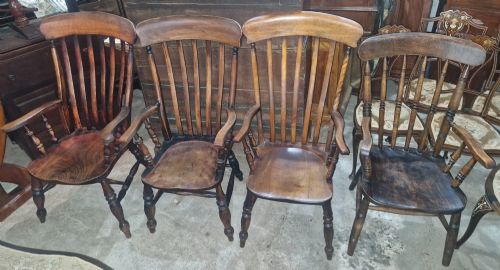
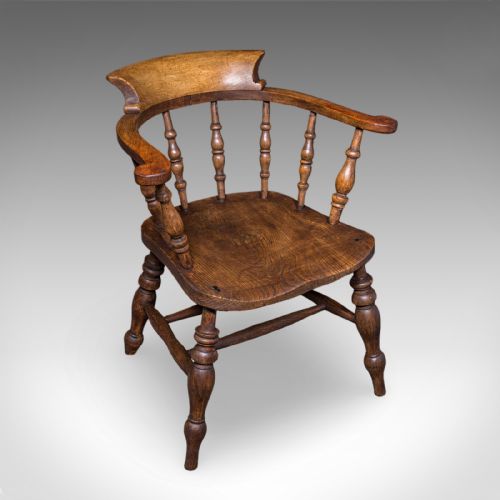
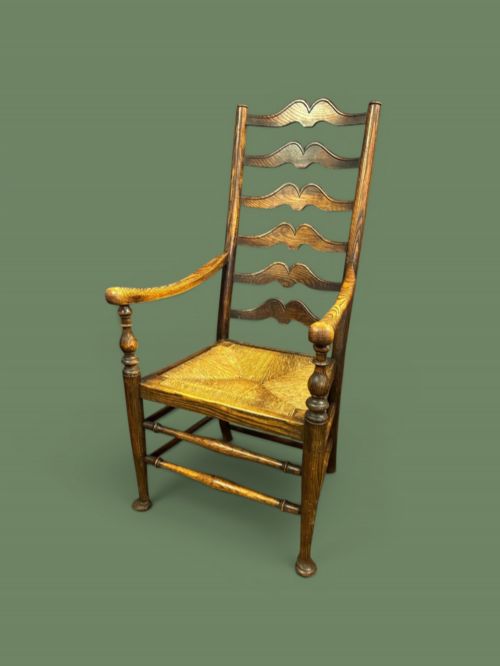

Traditional Oak Elbow Chair
These traditional oak elbow chair selections offer solid timber construction and comfortable arm support rooted in centuries of vernacular British cabinet-making.
Traditional Oak Elbow Chair
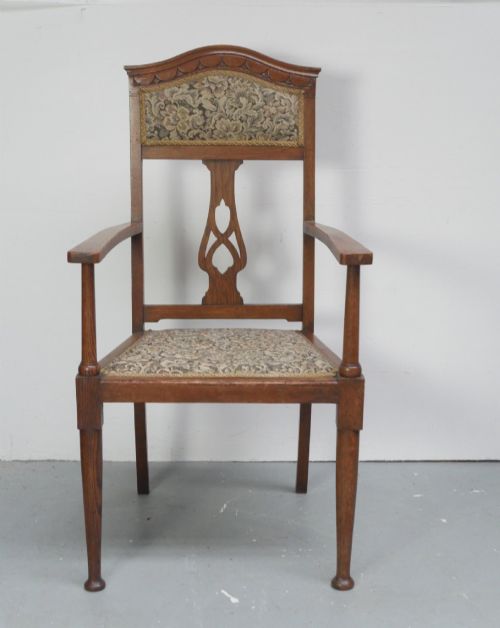
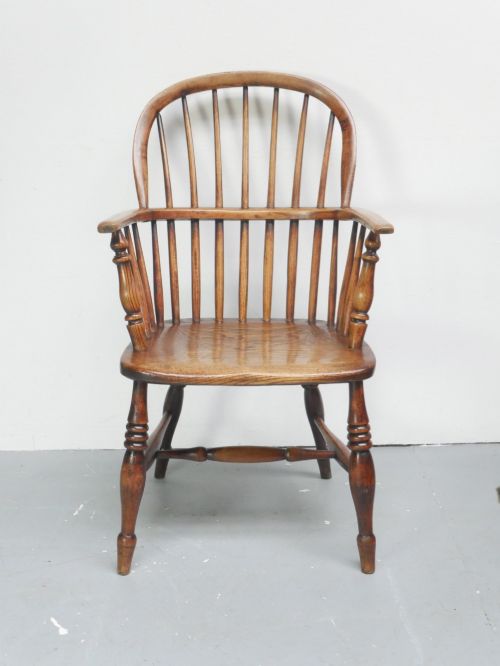
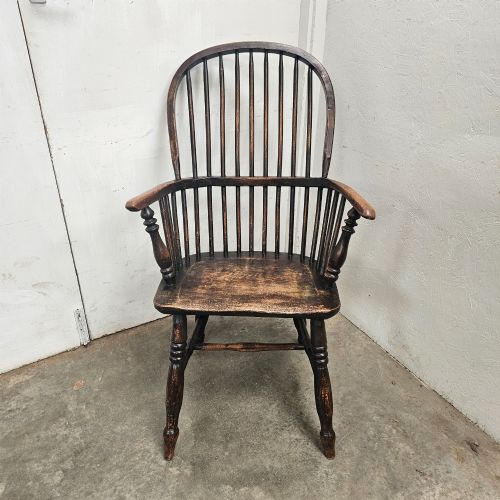
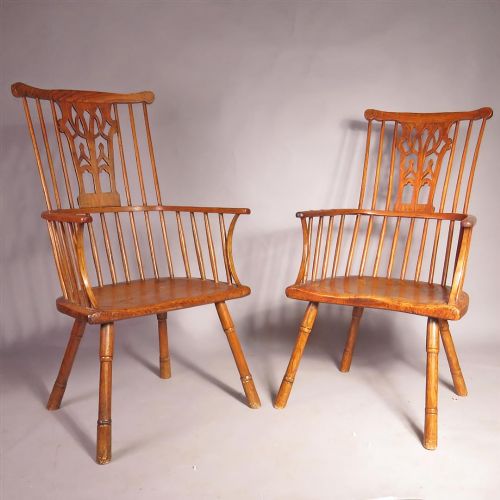
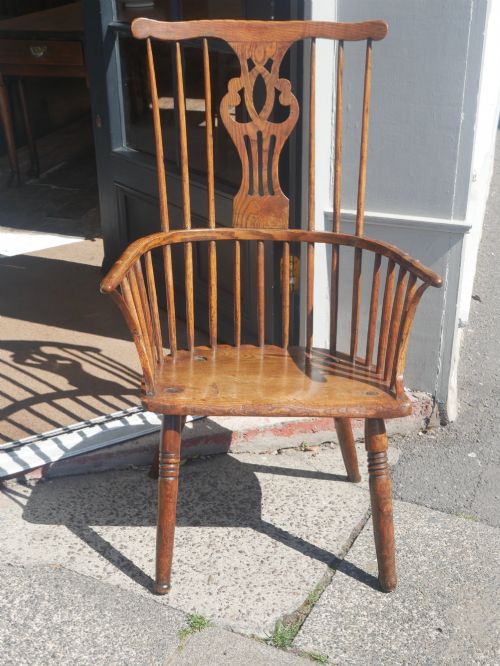
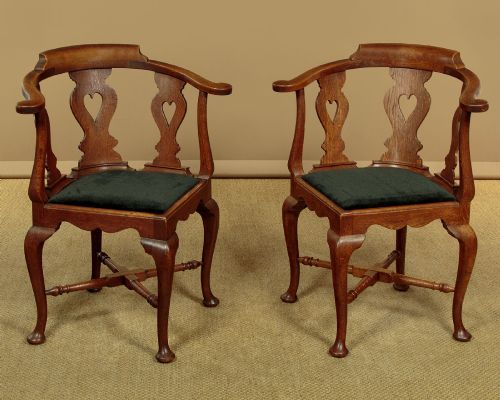
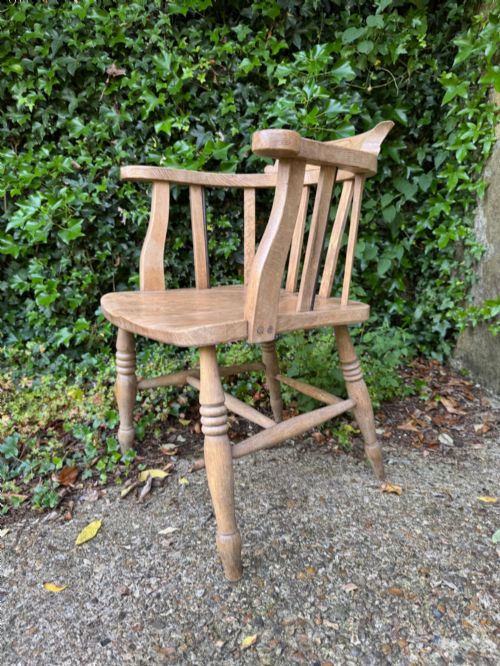
A traditional oak elbow chair brings sturdy seating into a room, drawing on centuries of vernacular British furniture making. You will find forms ranging from high-backed Windsor designs to stick backs, smokers bows, and carved revival armchairs.
The most common examples on this page date from the Victorian period through to the early twentieth century, alongside earlier Georgian and eighteenth-century country pieces. These chairs served utility in farmhouses, cottages, and country houses alike.
Makers utilised local woods to build practical elbow seats, shaping armchairs with comb backs, lathe backs, and rush or timber seats. Each piece reflects the regional traditions of English, Scottish, and Welsh workshops.
How they were made
Carpenters built these elbow chairs using solid timbers, pairing oak frames with elm seats and ash or beech spindles. Traditional joinery methods relied on pegged mortise and tenon joints, steam-bent bows, and turned components.
Seat options varied from solid carved elm dishes to woven rush and leather upholstery, depending on the regional style and period. Finishes typically involved natural wax or polish applied directly to the bare wood.
Listings feature oak, elm, ash, and beech across Victorian, Georgian, and Arts and Crafts styles.
What varies in quality
The distinction between standard utility seating and finer examples lies in the integrity of the timber selection and the sharpness of the turning. Heavy oak framing combined with well-figured elm seats commands higher regard among collectors.
Proportion and structural balance dictate the visual success of vernacular chairs, where simple lines rely entirely on precise geometry. Original surface patination and minimal timber replacement preserve the historical integrity of older country pieces.
Liberty & Co
The Traditional Oak Elbow Chair Glossary
- Windsor chair
- A chair built with a heavy wooden seat into which the legs and back spindles are directly dowelled. These seating forms often feature bentwood arm bows and carved saddles.
- Smokers bow
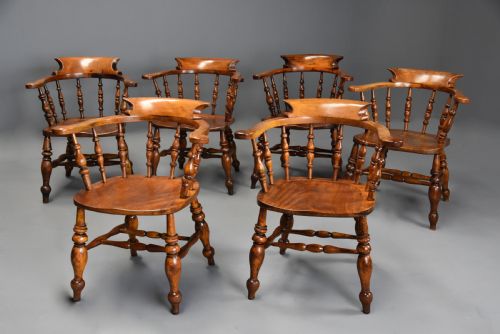
- A low-backed Windsor derivative featuring a rounded continuous arm rail supported by turned spindles. These robust armchairs were common in nineteenth-century smoking rooms and public houses.
- Comb back
- A Windsor chair design where the vertical back spindles extend upward through a horizontal top rail, resembling the teeth of a comb. This regional variation appeared frequently in eighteenth-century workshops.
- Rush seat
- A seating surface woven from dried marsh rushes around a wooden frame. This technique provided flexible support in country vernacular chairs.
- Stick back
- A chair construction method utilising plain turned cylindrical wooden spindles inserted into the seat and back rail. This minimalist approach defined many nineteenth-century farmhouse designs.
Traditional Oak Elbow Chair: Frequently Asked Questions
What is a traditional oak elbow chair?
A traditional oak elbow chair is a wooden armchair designed for domestic or country use, featuring integrated armrests and sturdy timber framing.
These pieces encompass regional English farmhouse designs, Windsor armchairs, and revival seating dating from the eighteenth century onward.
How do I identify a Georgian Windsor chair?
Georgian Windsor chairs typically display substantial elm seats, deep saddle carvings, and characteristic comb or wheel back formations.
Earlier examples often incorporate multiple wood species, such as ash spindles paired with yew or oak framework, reflecting local rural production.
Where were smokers bow chairs used?
Smokers bow chairs served as robust seating in nineteenth-century country houses, taverns, and office desks. Their low profile and curved arm rests offered practical comfort for daily use.
They frequently appeared alongside captain's chairs in libraries and commercial settings during the Victorian era.
How do I care for an antique oak elbow chair?
Maintain antique oak timber by applying microcrystalline wax sparingly to nourish the dry wood and protect the original surface finish.
Keep wooden furniture away from direct heat sources and sudden temperature shifts to prevent timber splitting and joint movement.