

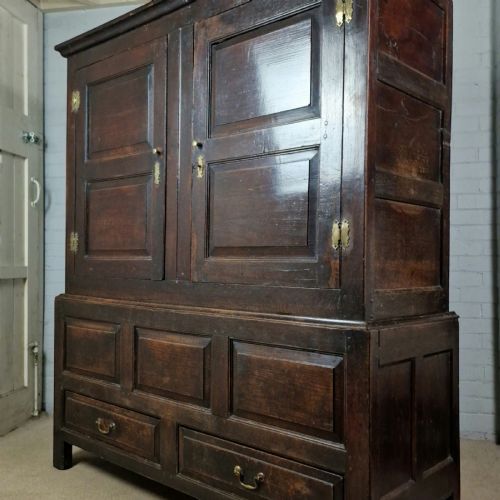
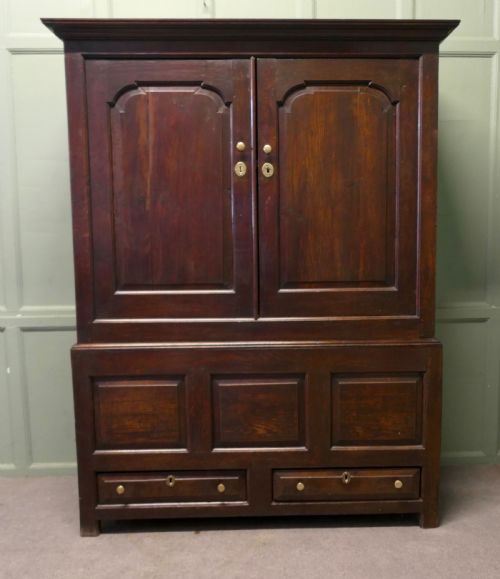


Traditional Oak Clothing Storage
Traditional oak clothing storage pieces bring solid construction and deep timber character into a room.
Traditional Oak Clothing Storage
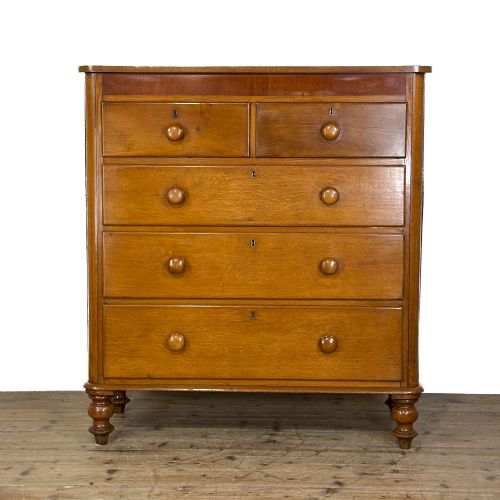
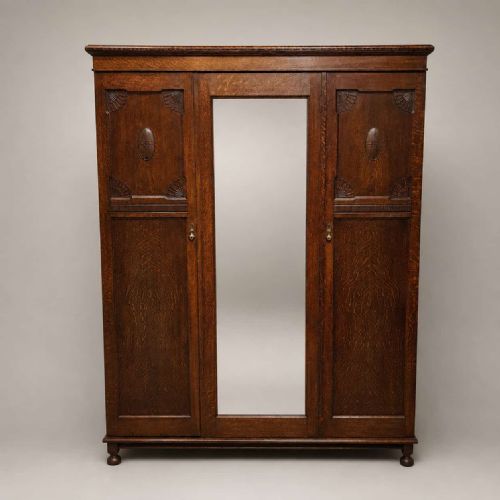
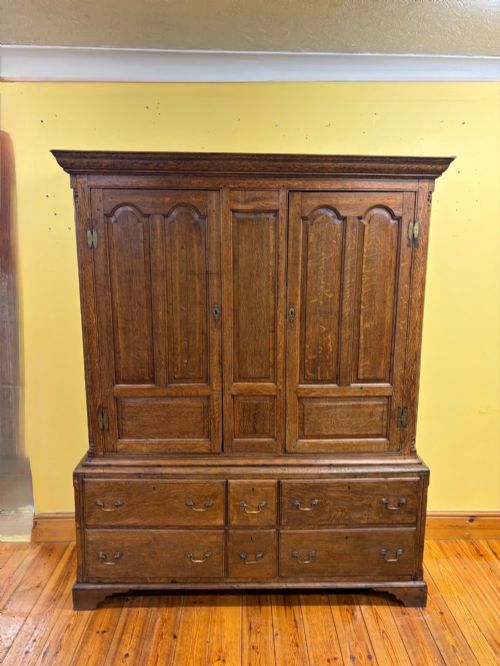
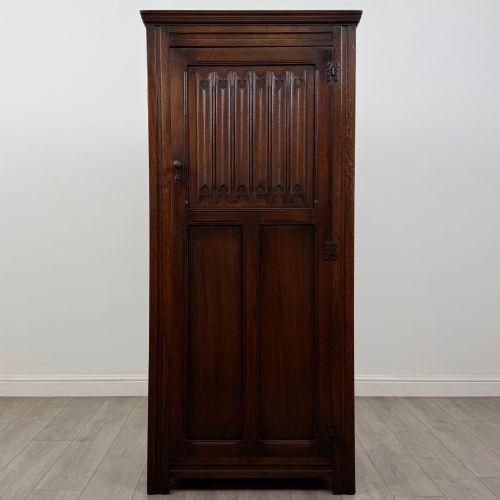
Traditional oak clothing storage encompasses robust cupboards, presses, and wardrobes built to house garments and household linens. Buyers searching for traditional oak clothing storage typically encounter substantial pieces spanning the eighteenth and nineteenth centuries.
Regional variants like Welsh oak press cupboards appear among English country pieces. These utilitarian items served domestic needs for centuries before becoming focal points in period interiors.
Construction and materials
Makers utilised solid oak to build frames, panels, and drawer structures designed to endure heavy daily use. The timber grain provides natural resilience and a dense surface that develops a rich patina over decades.
Metal hardware such as brass and iron appears on hinges, handles, and key escutcheons. Glass and porcelain elements occasionally accent handles or interior fittings on later pieces.
Traditional Oak Clothing Storage Retail Price Guide 2026
Typical asking prices for traditional oak clothing storage among the pieces listed under this phrase on Sellingantiques today, from the lower quarter to the upper quarter. They describe what is for sale here now, not the wider market.
Object types on this site range from compact linen chests to large Welsh press cupboards and triple wardrobes.
Judging quality in oak furniture
Quality depends upon the selection of timber and the integrity of the cabinetmaking. Early pieces display hand-planed surfaces and traditional joinery that distinguish them from later mass-produced examples.
Proportion and architectural detailing set finer items apart. A well-proportioned cornice, panelled doors, and original hardware indicate superior craftsmanship within any period.
The Traditional Oak Clothing Storage Glossary
- Linen press
- A tall piece of furniture featuring upper cupboard doors enclosing sliding trays, above a base of lower drawers for folded garments. This form evolved to protect household linens from dust.
- Livery cupboard
- An early storage cabinet traditionally used for food or clothing, characterised by panelled doors and sturdy frame construction. These pieces date back centuries and offer deep interior space.
- Housekeeper's cupboard
- A large storage unit traditionally kept in domestic service areas for linens, provisions, and clothing. They provide extensive capacity through combined cupboard and drawer sections.
- Press cupboard
- A heavy storage item combining an upper enclosed shelving area with lower drawer storage. The design allows for organised sorting of garments and textiles.
- Georgian
- A design period spanning the eighteenth and early nineteenth centuries, known for balanced proportions and classical restraint. Furniture from this era often employs substantial oak timbers.
- Edwardian
- A stylistic period covering the early twentieth century up to the First World War, which produced wardrobes and cabinets reflecting revival interests alongside simpler utility.
Traditional Oak Clothing Storage: Frequently Asked Questions
What is a linen press?
A linen press is a tall storage unit featuring upper doors that open to sliding shelves or trays, combined with lower drawers. It was designed to keep household textiles and folded garments organised and protected.
Today, these pieces serve well in bedrooms or dressing rooms for storing bulky clothing items that do not hang easily.
How do I date an oak cupboard?
Dating relies on examining construction methods, timber characteristics, and stylistic details such as mouldings and hardware. Earlier pieces from the eighteenth century often feature hand-carved elements and pegged joints.
Later Victorian and Edwardian examples utilise machine-sawn timber and standardised hardware fittings. Comparing panel construction offers further clues to the period of origin.
Where should I place a large press cupboard?
Large press cupboards require substantial wall space and clearance for doors to open fully. Placing them in bedrooms, hallways, or dressing areas maximises their storage utility.
Ensure the room maintains stable humidity levels to protect solid oak timbers from excessive drying or moisture.
Are these pieces suitable for modern homes?
Solid oak storage items bring practical hanging space and deep shelving to contemporary living environments. Their neutral timber tones blend well with various interior styles.
Interior configurations may require minor adjustments, such as adding a clothes rail, to suit modern garment storage needs.