
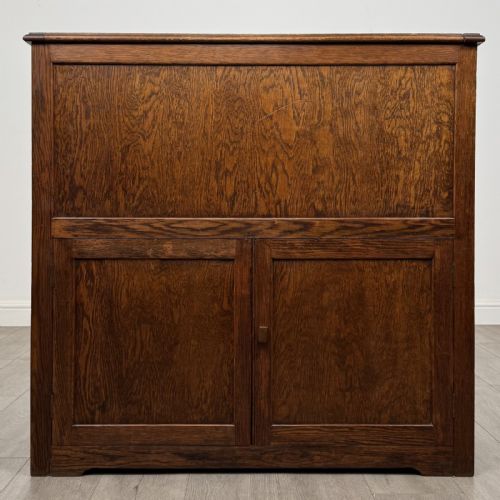
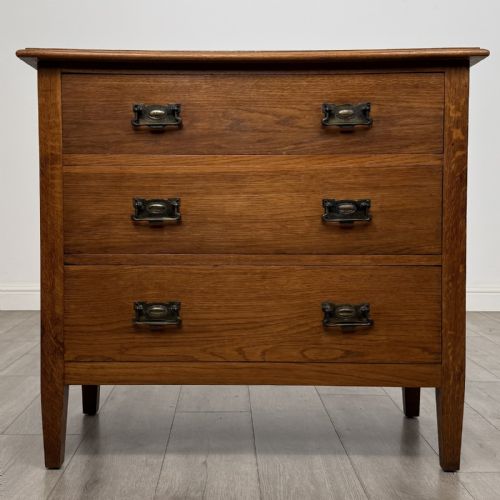
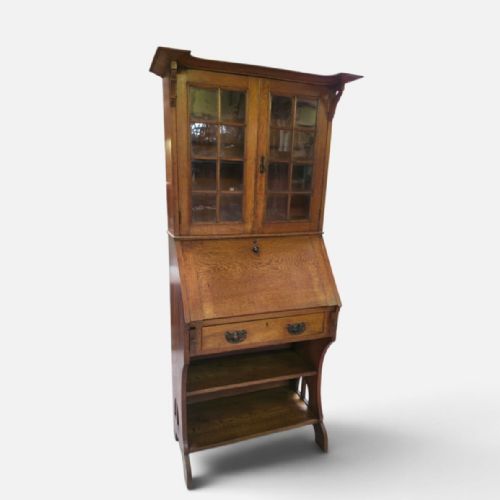
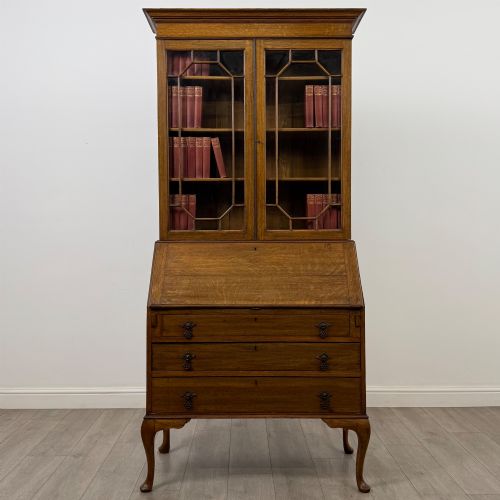



Traditional Oak Bureau Cabinet
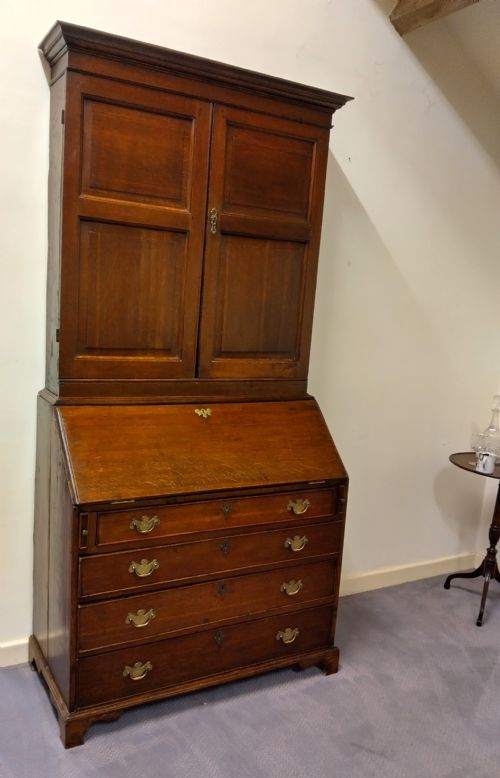
A traditional oak bureau cabinet is a working writing desk topped by a bookcase, built to organise correspondence and store volumes.
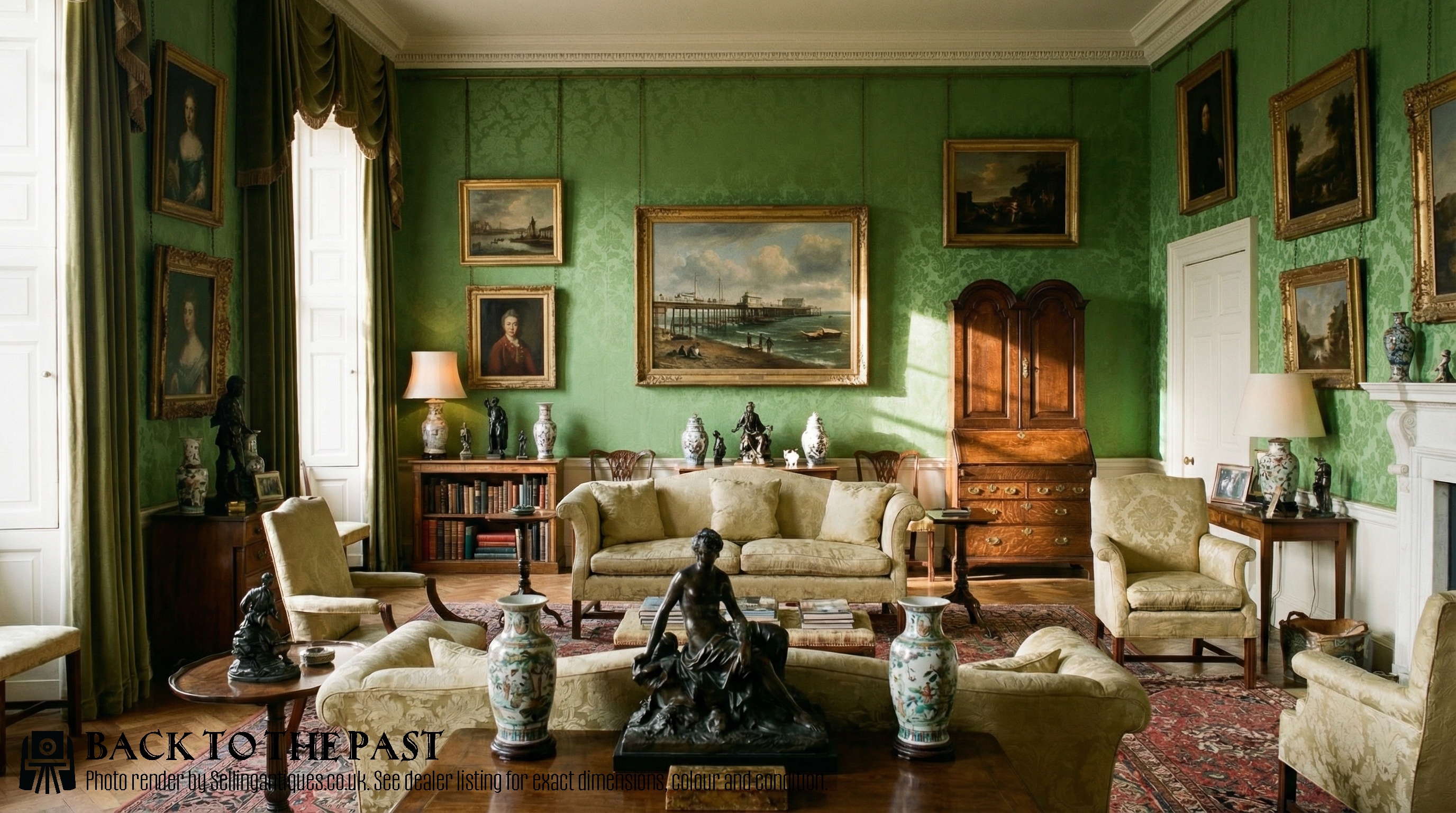
Traditional Oak Bureau Cabinet
A traditional oak bureau cabinet combines a fall-front writing desk with a fitted interior and an upper bookcase section enclosed by doors. These pieces span centuries of cabinetmaking, from vernacular seventeenth-century examples to refined George III pieces and twentieth-century revival interpretations.
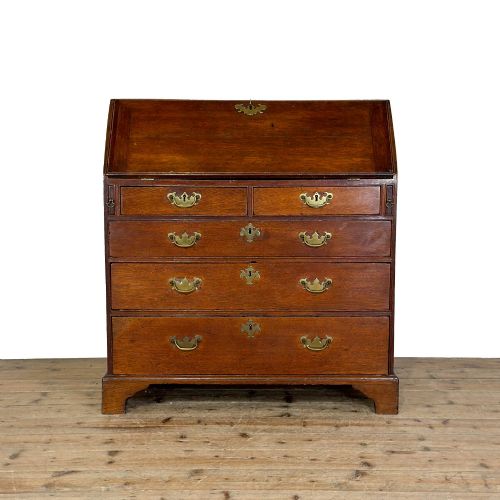
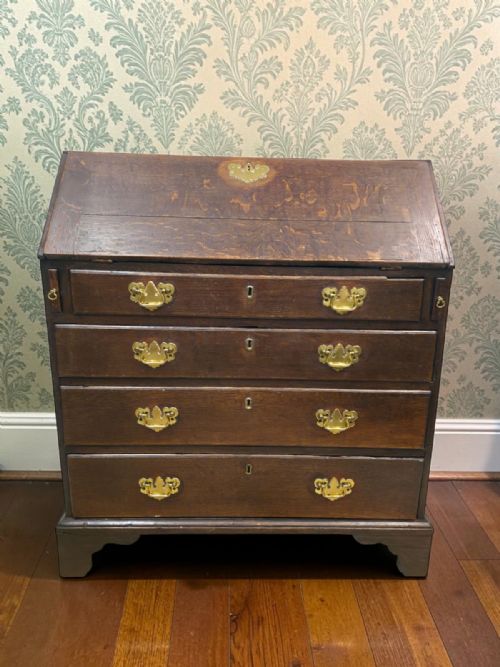
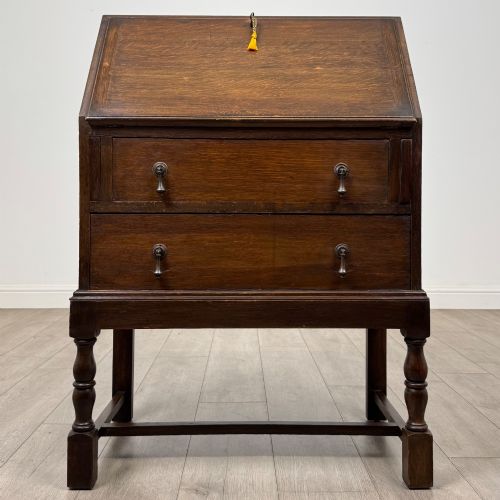
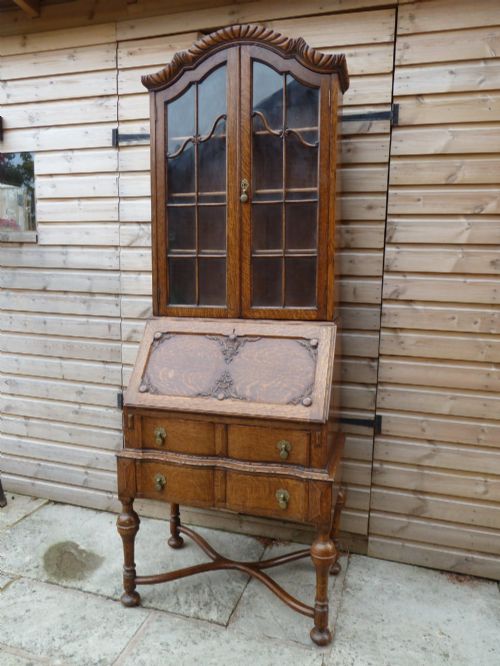
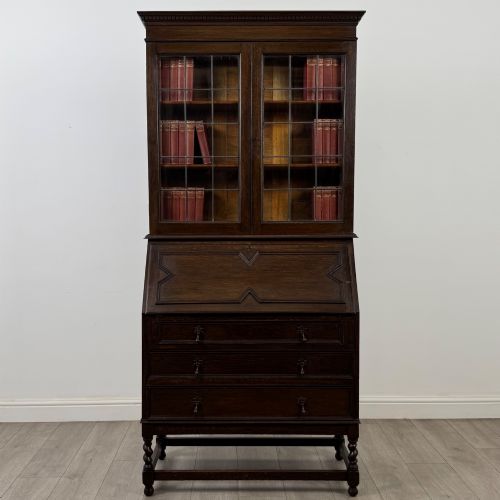
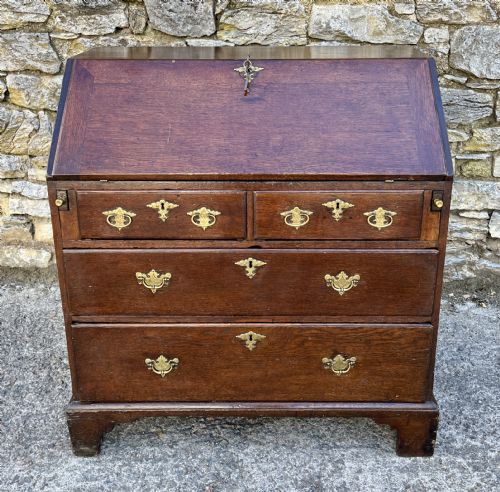
The most common formats on this page range from compact Edwardian and 1920s Jacobean style variants to substantial Georgian fall-front writing bureaux and large dome top bureau cabinets. Collectors also encounter specialised forms such as chests of drawers and writing desks featuring moving interiors.
Makers utilised timber framed construction, panelled doors, and bracket feet to support the heavy upper shelves and desk lids. Interiors typically feature pigeonholes, small drawers, and secret compartments designed to hold letters and ledgers securely.
What varies in quality
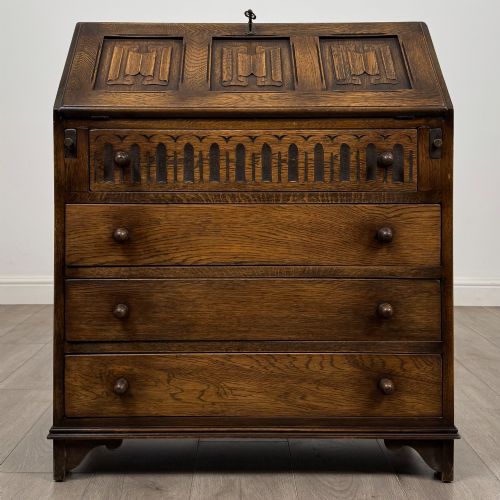
The caliber of a traditional oak bureau cabinet rests on the selection of timber grain, the crispness of hand-carved details like linenfold panels, and the structural integrity of the fall-front writing slope. Early vernacular examples demonstrate heavier hand-HEWN framing, whereas later Georgian editions prioritise refined proportion and subtle wood inlay.
Interior complexity significantly elevates a piece, distinguished by tightly fitted pigeonholes, small secret drawers, and smoothly operating moving components. Alterations, such as adaptations for modern equipment like televisions, alter the original integrity of the carcass.
Some writing desks conceal moving interiors designed to outwit wandering eyes.
The Traditional Oak Bureau Cabinet Glossary
- Bureau bookcase
- A writing desk with a hinged sloping front that folds down for a writing surface, combined with an upper shelving unit enclosed by doors. This form maximises vertical storage in domestic spaces.
- Fall-front
- A hinged writing flap that drops forward into a horizontal position supported by side arms or pulls. When closed, it conceals the inner compartments and drawers.
- Linenfold
- A style of wood carving used on panels to imitate folded fabric or linen. It appears frequently on twentieth-century revival pieces.
- Vernacular
- Objects made by local craftsmen following regional traditions rather than high-style metropolitan fashions. These pieces often display robust construction and simpler decorative vocabulary.
- Pigeonhole
- A small, open compartment within a desk interior designed for sorting letters and documents. They form the architectural core of the fitted bureau interior.
Traditional Oak Bureau Cabinet: Frequently Asked Questions
What is a bureau bookcase?
A bureau bookcase is a dual-purpose piece of furniture featuring a lower writing desk with a sloping fall-front lid beneath an upper shelving cabinet. The upper section is typically enclosed by glazed or solid panelled doors to protect books.
These combination items became essential household furnishings for storing private correspondence and library volumes in a single footprint.
How do I identify a Georgian bureau?
Georgian examples are distinguished by proportion, understated brasses, and fine cabinet timbers such as solid oak with careful dovetailing on the internal drawers. They often feature bracket feet and simple cross-banding rather than heavy revival carving.
Examining the secondary woods and the construction of the interior pigeonholes helps confirm the period of manufacture.
Were these cabinets used for writing?
Yes, the hinged fall-front drops down to create a flat writing surface above a series of small internal drawers and pigeonholes designed for stationery and ledgers. This arrangement provided a private space for managing household accounts and correspondence.
Many retain traces of green baize or leather writing surfaces inserted into the fall-front flap.
What does Jacobean style mean on these?
Jacobean style describes twentieth-century revival pieces that imitate seventeenth-century English joinery, often featuring dark oak finishes, geometric mouldings, and carved panels. Manufacturers produced these during the 1920s and 1930s to satisfy demand for historic vernacular aesthetics.
They emulate the heavy proportions and dark patination of much older furniture while utilising twentieth-century production methods.
How do I care for an oak cabinet?
Maintain oak furniture by keeping it away from direct heat sources and drastic humidity shifts that can cause timber to split or warp. Regular dusting with a soft, dry cloth preserves the natural grain and historic patination.
Avoid silicone-based polishes, opting instead for traditional beeswax applied sparingly to nourish the wood surface.