



Traditional Nature Wall Painting
These traditional nature wall painting works capture rivers, woodlands, and country lanes to bring historical British scenery straight into your home.
Traditional Nature Wall Painting
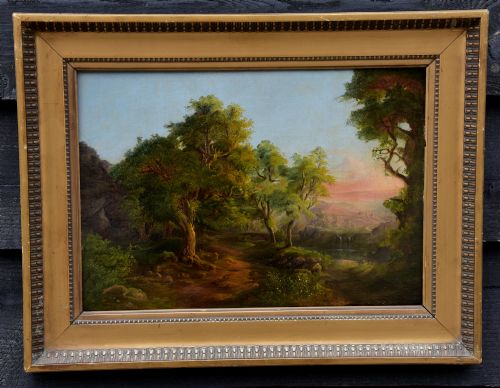
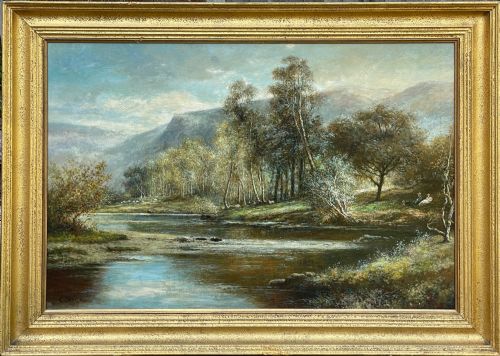
A traditional nature wall painting brings the outdoors inside through depictions of rural scenes, country lanes, and wooded river landscapes. When exploring traditional nature wall painting options, you encounter framed artwork spanning the nineteenth century through the mid-twentieth century.
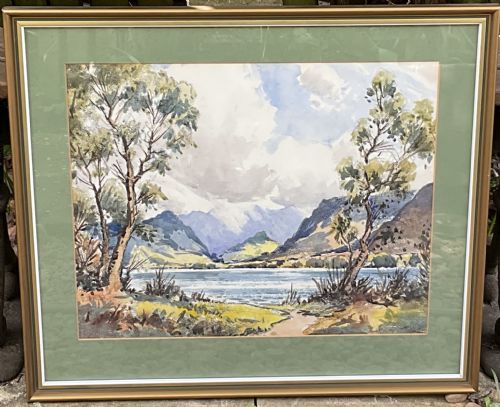
The selections on this page showcase oil paintings, watercolours, and gouache on canvas, board, and paper. Victorian naturalism and nineteenth-century romanticism dominate the visual language of these pastoral vistas.
British countryside views from Scotland, Wales, and England appear frequently across the current inventory. These works range from small intimate river scenes to large lake landscapes.
How they were made
Artists painted primarily with oil paint on canvas or wooden board, building up rich textures to depict woodland and water. Watercolour and gouache on paper also appear, offering lighter, more fluid representations of trees and skies.
Makers housed these pieces behind glass or within traditional wood frames, sometimes accented with gold leaf to highlight the composition. Canvas supports stretched across wooden frames provided stability for larger landscape oils.
Traditional Nature Wall Painting Retail Price Guide 2026
Typical asking prices for traditional nature wall painting among the pieces listed under this phrase on Sellingantiques today, from the lower quarter to the upper quarter. They describe what is for sale here now, not the wider market.
Geese frequently paddle across nineteenth-century lakes, adding a quiet touch of livestock theatre to otherwise solemn pastoral waters.
What varies in quality
Skill in handling light, shadow, and perspective dictates the artistic standing of each piece. Works by named painters often demonstrate superior brushwork and composition compared to anonymous studio output.
The preservation of the original paint layer and the condition of the supporting canvas or board influence the visual integrity. Frame craftsmanship and materials like gold leaf also contribute to the overall presence of the artwork.
Thomas W Lascelles·William Langley·William Mellor·John Hobson Nicholson·George F Wetherbee·James Kinnear·James Poole·Fred Merriman
The Traditional Nature Wall Painting Glossary
- Canvas
- A heavy woven fabric used as a surface for oil painting. It is typically stretched tightly over a wooden frame before application of the pigment.
- Gouache
- An opaque water-based paint that dries to a matte finish. It produces solid areas of colour and sharp detail on paper supports.
- Board
- A rigid wooden or pasteboard panel used as a painting support instead of fabric. Artists often utilised board for smaller landscape studies.
- Watercolour
- A paint consisting of pigment suspended in a water-based solution. It creates translucent washes on paper to capture atmospheric light and skies.
Traditional Nature Wall Painting: Frequently Asked Questions
How do I hang a heavy oil painting safely?
Secure your hanging hardware directly into wall studs or use appropriate wall anchors designed for heavy frames. Ensure the wire and hooks match the weight capacity of the artwork.
Position the painting at eye level so the centre of the canvas rests roughly sixty inches from the floor. Keep the piece away from direct sunlight and damp environments to protect the canvas and paint.
What is the difference between oil and watercolour?
Oil paint utilises pigments bound in drying oils, allowing for thick textures, blended brushstrokes, and deep colour saturation over canvas or board. Watercolour uses water-soluble binders on paper to produce translucent, luminous washes.
Oils require rigid supports like wood or stretched canvas, while watercolours need protection behind glass due to the delicate nature of paper.
How can I tell the period of a landscape?
Examine the materials, framing style, and stretcher construction on the reverse of the piece. Nineteenth-century works often feature hand-carved wooden frames and specific canvas stamps.
Subject matter and brushwork also offer clues, as Victorian naturalism differs markedly from mid-century British abstraction or impressionist techniques.