






Traditional Nature Oil Artwork
Traditional nature oil artwork brings the quiet of woodlands, rivers and hills indoors through oil paint on canvas or board.
Traditional Nature Oil Artwork
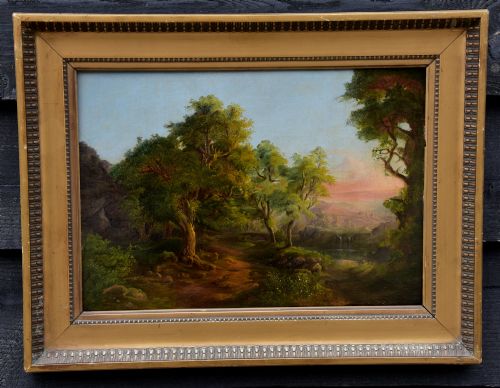
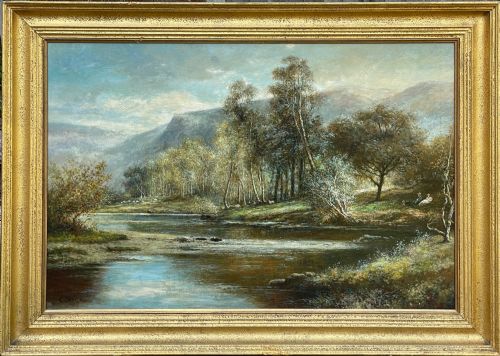
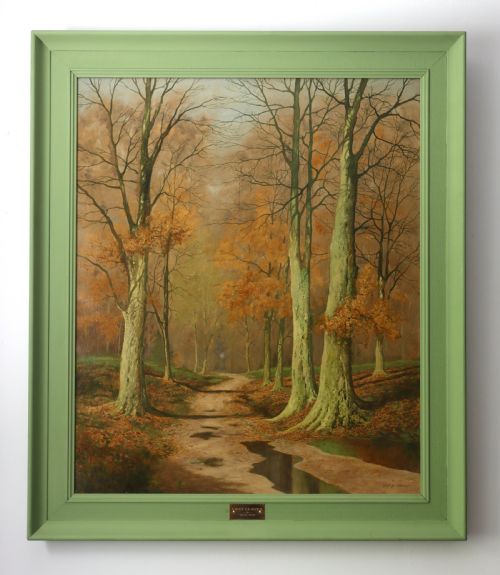
Traditional nature oil artwork captures landscapes, woodland scenes and river views through oil paint on canvas or wood board. These pieces record British countryside settings from the nineteenth and early twentieth centuries, portraying rural valleys, lakes and country lanes.
The most common examples on this page are nineteenth-century and Victorian landscape paintings depicting rivers, trees and highland vistas. Makers and artists applied oil paint to stretched canvas or wooden panels, often finishing the works with giltwood and gold leaf frames.
Materials and techniques
Painters used oil paint applied to canvas or wood board to build up depth and texture in these pastoral scenes. Pigments were brushed onto primed surfaces to capture natural light across woodland floors and river banks.
Many surviving works retain their original giltwood or gold leaf frames, which frequently incorporate moulded plaster ornamentation. These frames provide structural support and complete the presentation of the oil paintings.
Traditional Nature Oil Artwork Retail Price Guide 2026
Typical asking prices for traditional nature oil artwork among the pieces listed under this phrase on Sellingantiques today, from the lower quarter to the upper quarter. They describe what is for sale here now, not the wider market.
Geese frequently inhabit the painted rivers and lakes, adding a quiet touch of wildlife movement to Victorian pastoral scenes.
Markers of quality
Quality in these landscape paintings rests upon the handling of light, brushwork confidence and the subtlety of the colour palette. Stronger works demonstrate a clear command of perspective and naturalism in depicting foliage and water.
The preservation of the original oil surface and the condition of the accompanying giltwood frame also influence the overall standing of a piece. Finer examples retain their structural integrity on canvas or board without extensive repainting.
Thomas W Lascelles·William Mellor·William Langley·George F Wetherbee·Owen Bowen
The Traditional Nature Oil Artwork Glossary
- Oil on canvas
- A painting technique where oil paint is applied to a woven fabric stretched across a wooden frame. This method allows for subtle blending and varied brush textures.
- Giltwood
- Wood that has been coated with a thin layer of gold leaf or gold paint. It is commonly found on traditional picture frames.
- Board
- A rigid wooden panel used as a support for painting instead of stretched fabric. Painters often utilised boards for smaller landscape studies.
- Victorian Naturalism
- An art style focused on the detailed and realistic depiction of the natural world. It emerged during the nineteenth century.
- Impressionism
- A style emphasising the accurate depiction of light and its shifting qualities. Artists achieved this through small, visible brush strokes.
Traditional Nature Oil Artwork: Frequently Asked Questions
How do I date an old oil painting?
Dating typically relies on the style of the brushwork, the subject matter, and the framing materials used by the artist. Examining the stretcher bars and the type of canvas or board can also reveal clues about the period.
The inscriptions on the reverse of the canvas or board often provide names, dates or locations that help establish when the artwork was created.
Where should I hang a landscape oil painting?
These works suit rooms with controlled natural light away from direct sunlight, which can fade oil pigments over time. Placing them on neutral walls allows the rich tones of the landscape to stand out.
Ensure the room maintains stable humidity levels to protect both the oil paint and the wooden or giltwood frame from warping.
What is the difference between canvas and board?
Canvas consists of woven fabric stretched over a wooden frame, offering slight flexibility and a textured surface. Board provides a completely rigid wooden or composition support for the oil paint.
Board was frequently chosen by artists for smaller, plein-air landscape studies painted directly outdoors.