
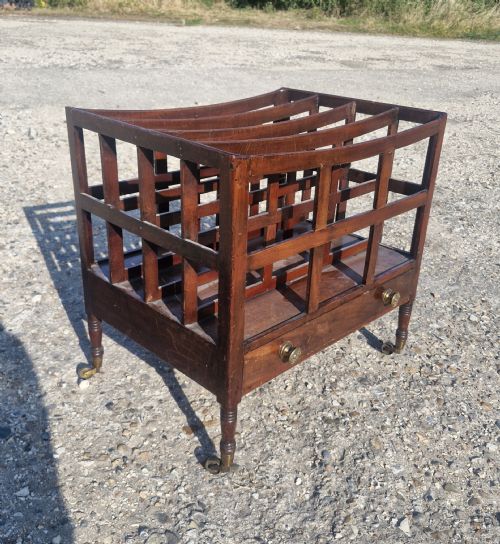
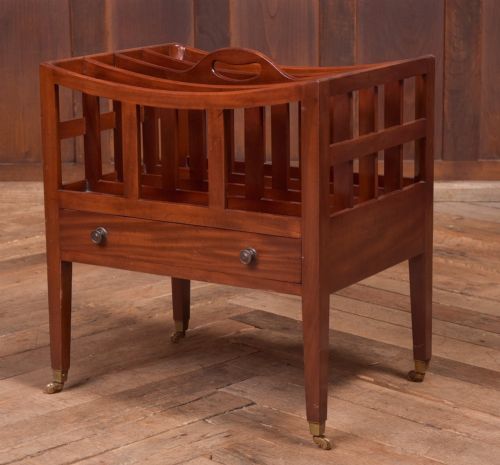


Traditional Mahogany Magazine Stand
These traditional mahogany magazine stand pieces are classic wooden holders designed to keep periodicals tidy, offering timeless utility and rich timber character for your home.
Traditional Mahogany Magazine Stand
A traditional mahogany magazine stand encompasses refined wooden items designed for holding periodicals, newspapers, and books within domestic spaces. When you search for this phrase, you encounter forms that span multiple historic eras, including the nineteenth century and the Edwardian period.
The selections on this page most frequently include canterburys, revolving book stands, and dedicated magazine racks. These items originate from diverse stylistic backgrounds such as Victorian, Regency, and George III designs, showcasing the enduring appeal of traditional mahogany magazine stand furnishings.
Many examples incorporate multiple tiers or divided sections intended to keep reading material organised. Whether searching for a compact revolving bookcase or a larger George III canterbury, buyers find pieces built for practical everyday use.
How they were made
Construction relies heavily on rich mahogany timber, often enhanced by flame mahogany veneer, satinwood inlay, and contrasting rosewood details. Artisans shaped these materials into functional racks and stands using traditional cabinet-making techniques suited to each specific period.
Metal components such as brass frequently appear as structural mounts, handles, or supporting stands, particularly on revolving bookcase and canterbury designs. These metal additions provide both mechanical function and visual contrast against the dark timber.
What varies in quality
Quality differences stem from the selection of timber veneers, such as flame mahogany, and the precision of decorative elements like satinwood inlay. Superior examples display careful grain matching and refined proportions that elevate standard utility items into accomplished cabinet work.
The integration of functional hardware, including brass stands and smooth revolving mechanisms, distinguishes finer pieces from simpler utilitarian racks. Craftsmanship in the joinery and the retention of rich, warm patination across the mahogany surfaces define the upper tier of these items.
The Traditional Mahogany Magazine Stand Glossary
- Canterbury
- A low stand with partitioned sections for holding sheet music, books, or magazines, often featuring low legs and carrying handles. This form dates back to the eighteenth century and remains a staple category.
- Mahogany
- A durable, reddish-brown tropical hardwood prized for furniture making due to its stability and fine grain. It takes a high polish and serves as the primary material for these stands.
- Satinwood Inlay
- Decorative woodwork where contrasting light satinwood is inserted into recesses within the darker mahogany surface. This technique creates geometric or floral patterns.
- Flame Mahogany Veneer
- A thin slice of wood cut from the point where a branch joins the main tree, showing a distinctive flickering flame pattern. Cabinet makers applied this to prominent exterior surfaces for visual impact.
- Revolving Book Stand
- A small bookcase designed to turn on a central pivot or brass stand for easy access to volumes from any seating position.
Traditional Mahogany Magazine Stand: Frequently Asked Questions
What is a canterbury?
A canterbury is a low, partitioned stand originally designed for holding sheet music or books. Over time, the form adapted to serve equally well as a traditional mahogany magazine stand.
These pieces typically feature slatted or solid vertical dividers and often include carrying handles or low legs with castors.
Are revolving book stands stable?
Revolving book stands utilise sturdy central pivots and supportive bases, often made of brass or heavy timber, to maintain balance. They are engineered to hold multiple volumes securely while turning smoothly.
Placing them on an even floor ensures proper function of the rotating mechanism during daily use.
Where should I place a magazine stand?
These stands suit sitting rooms, studies, or libraries where periodicals and books are frequently read. Their compact footprints allow them to sit neatly beside armchairs or sofas.
Keeping them away from direct heat sources helps preserve the mahogany timber and any applied veneers over time.