


Traditional Mahogany Headboard
Traditional mahogany headboard options bring solid timber presence and classic joinery to a bedroom, anchoring the room with rich grain and time-tested design.
Traditional Mahogany Headboard
A traditional mahogany headboard search brings up sturdy timber bedframes, single or double bedsteads, and dedicated headheads spanning the Victorian and Edwardian eras. Buyers most commonly meet double and single bedsteads alongside panelled bedheads dating from around 1900.
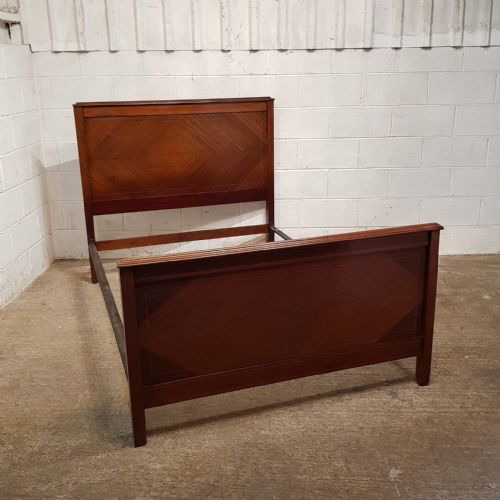
The pieces encompass styles from plain Edwardian rail and panel designs to Chippendale style and Grand Regency influences. Makers and makers of the period utilised rich timber veneers and marquetry alongside simple structural frames.
Originating predominantly from late nineteenth and early twentieth century British workshops, these items offer solid construction in rich timbers. Many examples incorporate brass details or inlay work to break up large expanses of wood.
Materials and construction methods
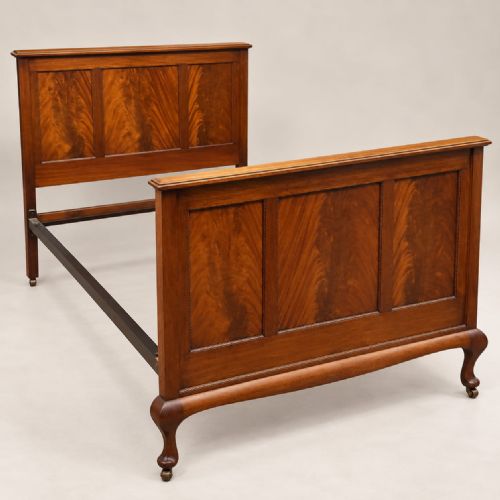
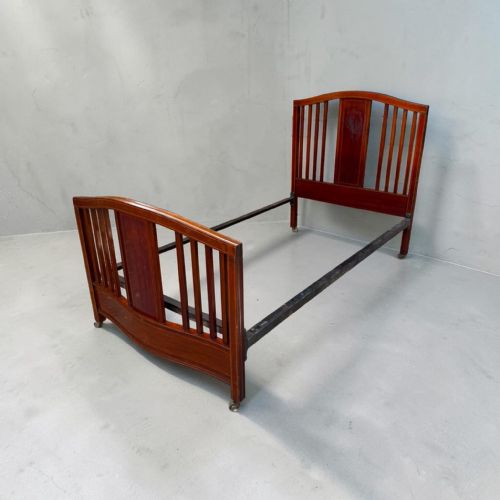
Construction relies heavily on solid mahogany and flame mahogany veneer applied to supportive hardwood carcases. Workshops combined traditional joinery with decorative inlays of satinwood and fruitwood to create visual contrast.
Structural elements frequently integrated iron and brass fittings alongside timber rails and carved panels. Upholstered sections appear in high back variants, fixed to internal frames behind the main wooden structure.
Listings span Victorian and Edwardian periods, utilising mahogany, satinwood, and brass.
Distinctions in craftsmanship and materials
Higher quality examples display superior figure in the flame mahogany veneer and crisper hand carving on structural components. Finer pieces also incorporate precise stringing, marquetry, and marquetry details executed in contrasting timbers.
Simpler pieces rely on plain timber panels and straightforward rail construction without decorative inlay. The depth of the timber selection and the retention of original brass hardware mark the division between standard and superior workshops.
The Traditional Mahogany Headboard Glossary
- Mahogany
- A durable tropical hardwood prized for its deep reddish-brown colour and stable grain. It forms the primary structural and visual material for these beds.
- Flame mahogany veneer
- A thin slice of wood cut from the fork of a mahogany tree to create a distinctive flame-like pattern. It decorates the prominent panels of larger bedsteads.
- Marquetry
- The art of applying pieces of veneer to a structure to form decorative patterns. It adds geometric or floral detail to Edwardian panels.
- Inlay
- The technique of inserting contrasting woods into depressions made in the base material. Satinwood and fruitwood serve this purpose on Edwardian frames.
- Bedstead
- A framework supporting a mattress and bed base, incorporating headboards and footboards. These form the complete wooden structures seen in the listings.
Traditional Mahogany Headboard: Frequently Asked Questions
How do I date a mahogany bedstead?
Dating relies on stylistic markers and construction methods typical of the Victorian and Edwardian periods. Edwardian pieces often feature simpler lines and light inlay, while Victorian examples lean towards heavier carved forms.
Hardware and internal fixings also provide clues. Original brass bolts and iron brackets help confirm the manufacturing era.
Can I attach an old headboard to a modern bed?
Fitting an antique headboard to a contemporary base generally requires bespoke brackets or minor adaptation. The fixing points on nineteenth and early twentieth century frames seldom match standard modern fixings.
A local carpenter can usually secure the wooden panel safely to a modern metal or wooden divan base without altering the antique timber.
How do I clean mahogany wood?
Maintenance involves dusting with a soft, dry cloth to prevent dirt accumulation on the polished surface. Avoid silicone sprays and abrasive cleaners that can damage the antique finish.
Applying a traditional beeswax polish periodically helps nourish the timber and maintain its natural lustre. Buff gently after application for the best result.
What is the difference between a bedhead and a bedstead?
A bedhead is the single vertical panel designed to stand at the head of a bed. It fastens either to the wall or directly to a bed base.
A bedstead comprises the complete wooden frame, including headboards, footboards, and side rails that hold the mattress together.