
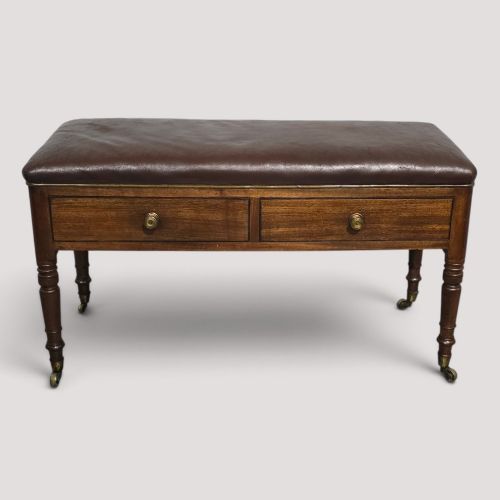
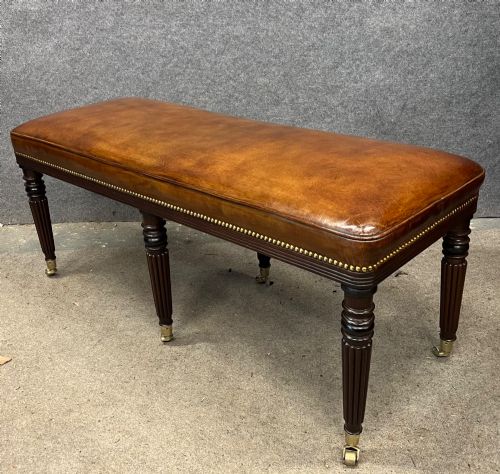
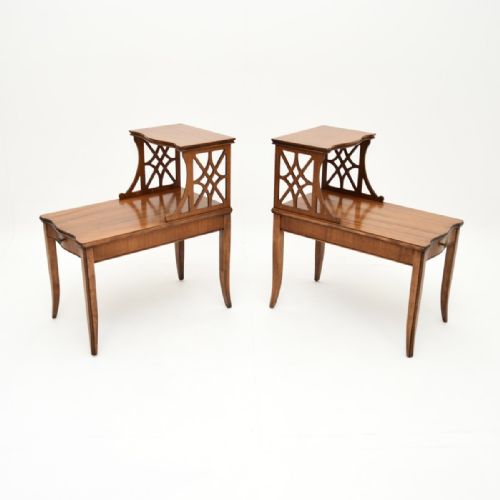
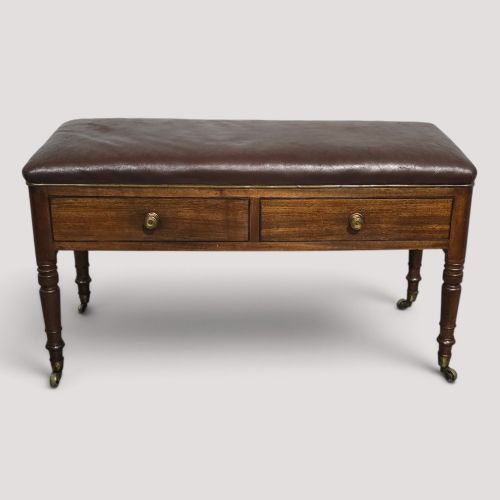


Mahogany Bed End
A mahogany bed end is a piece designed to sit at the foot of a bed or function as an independent seat, bringing rich timber tones to a room.
Mahogany Bed End
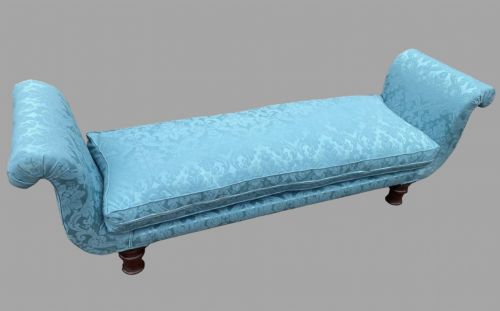
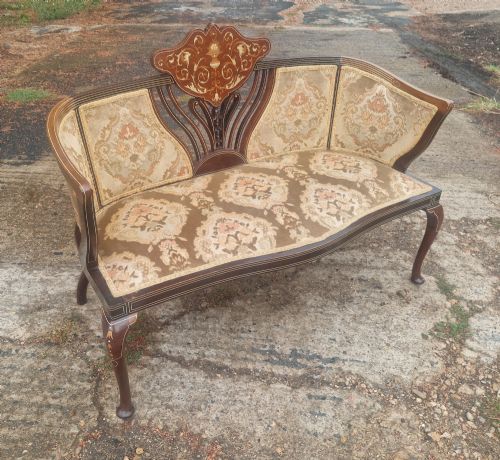
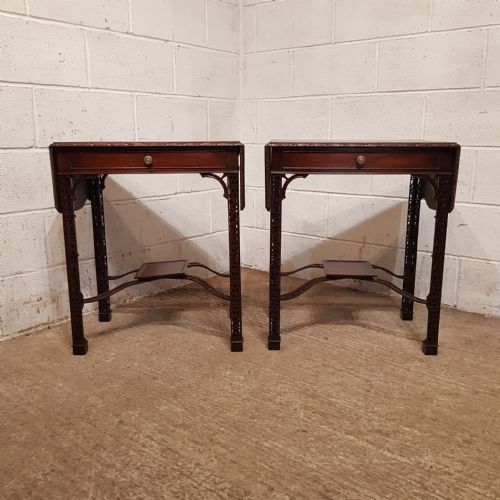
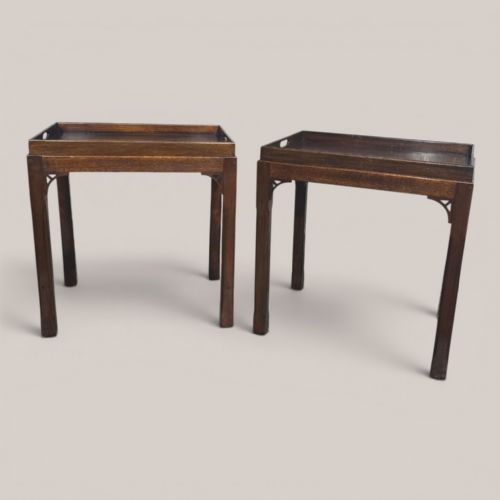
A mahogany bed end covers a variety of forms designed to sit at the foot of a sleeping berth or function as a standalone seat, drawing from several centuries of cabinetmaking. When exploring a mahogany bed end on this page, the most frequent items encountered are Edwardian window seats, long foot-of-bed sofas, and Georgian or Chippendale revival stools.
The materials recorded in these listings rely heavily on solid mahogany, frequently accented with satinwood inlay, brass fittings, and cane panels, alongside period upholstery fabrics such as velvet, damask, and Liberty print textiles. Craftsmanship spans from late eighteenth-century George III pieces to Edwardian reproductions and early twentieth-century interpretations.
Makers and workshops range from documented cabinetmakers like Gillows of Lancaster to retailers such as Heal & Son and Morris & Co., reflecting diverse production scales. These forms serve practical seating roles while anchoring bedroom layouts through distinct period styling.
How they were made
Makers constructed these frames using solid mahogany and mahogany veneers over secondary timbers, often shaping structural supports by hand. Joinery techniques relied on traditional mortise and tenon joints to secure legs and rails, ensuring stability for daily seating use.
Decorative surface work incorporated fine satinwood stringing, bone inlay, and carved details such as ball and claw feet or cabriole profiles. Upholstered variants utilised webbing and springs covered in textiles like velvet, damask, and patterned cotton.
Listings span from the 18th century through the Edwardian era, incorporating mahogany, satinwood, cane, and various upholstered textiles.
What varies in quality
The standard of timber selection defines the upper tier of these pieces, showing dense grain patterns and deep natural figuring without excessive staining. Superior examples display crisp hand-carving on cabriole legs and precise inlay work rather than printed surface decoration.
Structural integrity separates functional antiques from decorative reproductions, particularly in the tightness of frame joints and the quality of internal webbing. Original upholstery systems and undamaged secondary woods further distinguish finer pieces from heavily restored alternatives.
I.M. Gillows of Lancaster·Heal & Son·Morris & Co.
The Mahogany Bed End Glossary
- Cabriole leg
- A furniture leg that curves out and then tapers inward, resembling an animal's curving leg. This form appears frequently on eighteenth-century and revival seating.
- Satinwood
- A durable, yellowish wood used for contrasting inlay and decorative banding. Makers employed it to create geometric stringing on Edwardian and Georgian frames.
- Daybed
- An elongated seating form designed for reclining, combining the functions of a chair and a bed. Historical examples often incorporate scroll ends and upholstered frames.
- Caning
- A woven lattice material made from rattan plant peel, utilised for decorative panel inserts. It provides lightweight ventilation on footboards and headboards.
Mahogany Bed End: Frequently Asked Questions
What is a mahogany bed end used for?
These pieces serve primarily as seating at the foot of a bed, providing a place to sit while dressing or reading.
They also function independently as window seats, long stools, or low settees in hallways and reception rooms.
How do I identify a George III mahogany foot stand?
George III pieces typically display dense, heavy solid mahogany timbers with hand-cut joinery and restrained carving styles.
Look for structural characteristics native to the eighteenth century, such as traditional peg construction and patination acquired through age.
Are Edwardian bed end sofas comfortable?
Edwardian examples often feature sprung bases and upholstered padding designed for supportive everyday seating.
The inclusion of fabric covers like velvet or liberty cotton provides a soft surface suitable for extended lounging.
What is the difference between a window seat and a bed end sofa?
Window seats generally feature open sides or chair-style backs designed to fit within architectural window recesses.
Bed end sofas often incorporate padded scroll ends or low backs specifically proportioned to match the width of a mattress.