

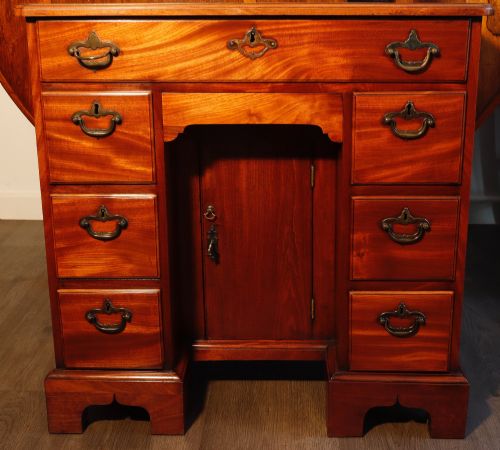


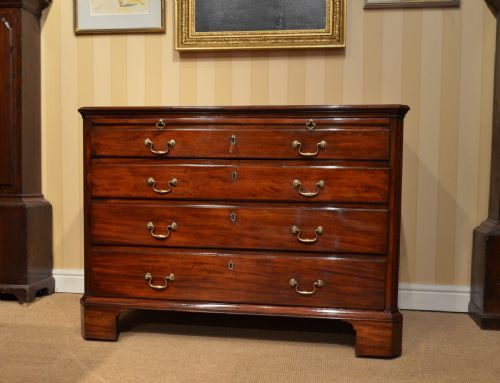


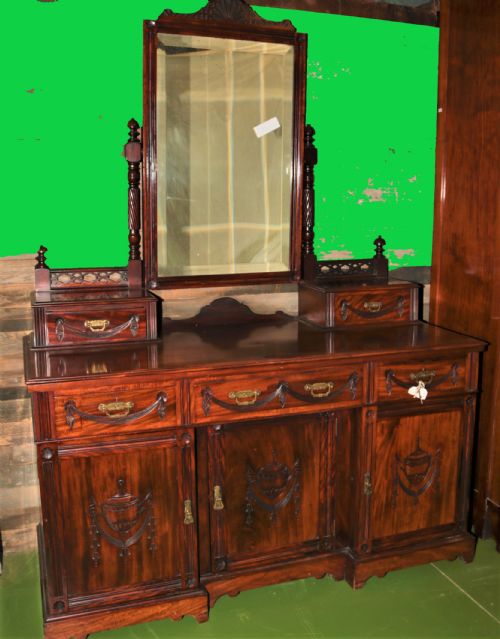

Traditional Mahogany Dressing Chest
A traditional mahogany dressing chest brings together rich timber and practical storage, offering a commanding presence in a bedroom.
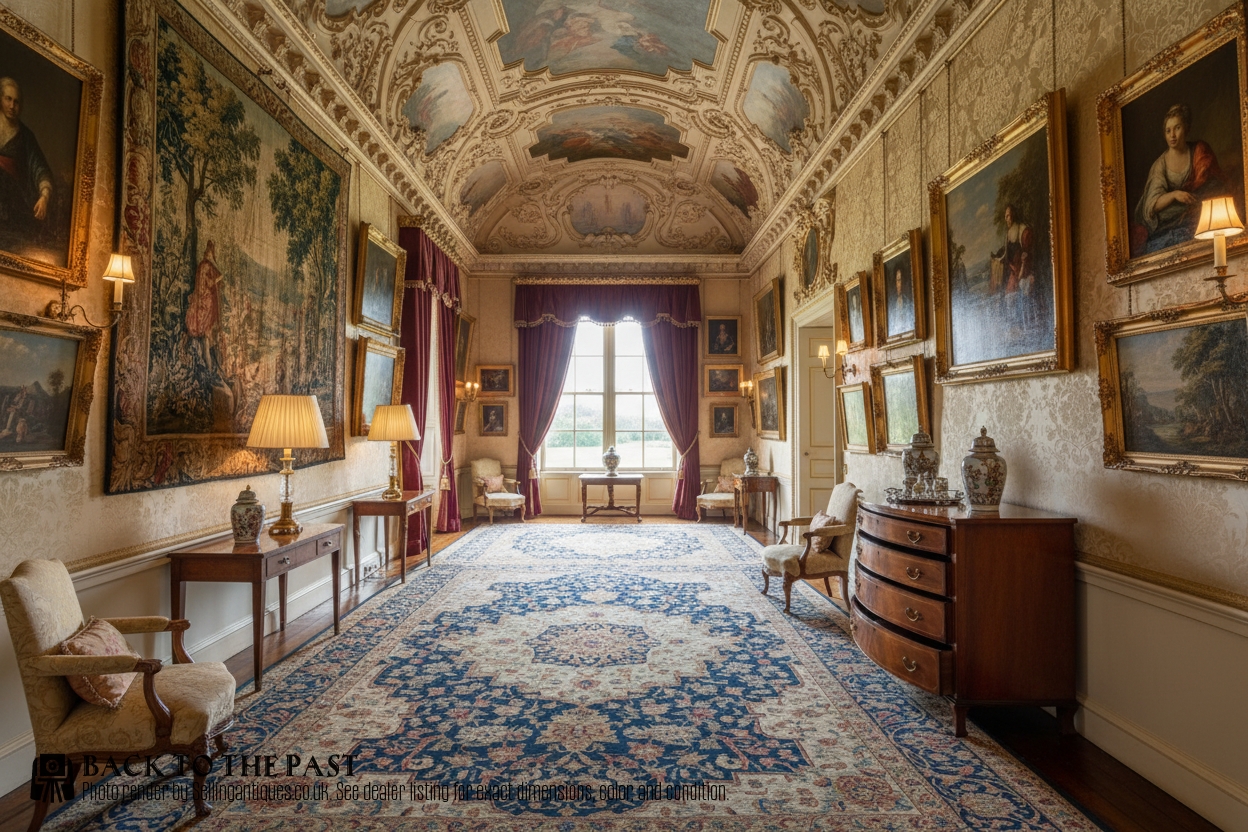
Traditional Mahogany Dressing Chest
A traditional mahogany dressing chest combines the utility of a drawer unit with a surface for grooming, often appearing across Georgian and Victorian periods. Buyers search for this phrase to find classic forms that serve as both desks and storage units.
The selections here span the eighteenth and nineteenth centuries, including kneehole desks, lowboys, and pedestal dressing tables. Mahogany remains the central timber connecting these diverse domestic forms.
How they were made
Cabinet makers utilised solid mahogany alongside selected veneers, occasionally incorporating boxwood inlay for decorative contrast on drawer fronts and surfaces. Brass hardware such as drop handles and escutcheons completed the construction.
The structural joinery relies on period techniques suited to heavy hardwoods, shaping forms from the Georgian era through to the late Victorian years.
Traditional Mahogany Dressing Chest Retail Price Guide 2026
Typical asking prices for traditional mahogany dressing chest among the pieces listed under this phrase on Sellingantiques today, from the lower quarter to the upper quarter. They describe what is for sale here now, not the wider market.
What varies in quality
Quality rests upon the selection of timber grain and the crispness of any boxwood inlay or brass fittings applied to the mahogany carcase. Pieces described as exceptional display superior balance in their proportions and more refined handling of the timber.
The sophistication of the internal drawer construction and the architectural restraint of the overall design distinguish standard domestic examples from finer workshop productions.
William Gomm
The Traditional Mahogany Dressing Chest Glossary
- Kneehole desk
- A compact desk or dressing chest featuring a central recessed space for the legs, flanked by pedestals of small drawers. This form became popular during the Georgian period.
- Lowboy
- A small table with drawers, typically standing on four legs, used as a dressing table or side table in the eighteenth century. Examples date back to mid-eighteenth-century American and British workshops.
- Boxwood inlay
- Contrasting pale wood inserted into the darker mahogany surface to create geometric or linear patterns. It defines the decorative borders of finer case furniture.
- Pedestal dressing table
- A dressing table constructed with separate drawer columns supporting the main writing or grooming surface. This form frequently appears in Victorian variants.
Traditional Mahogany Dressing Chest: Frequently Asked Questions
What is a traditional mahogany dressing chest?
It is a historical piece of furniture designed for grooming and storage, typically constructed from mahogany during the eighteenth or nineteenth century.
These items often feature multiple drawers and specialised surfaces, spanning styles from Georgian to Victorian eras.
How do I date a mahogany dressing chest?
Dating relies on examining the construction methods, handle styles, timber choice, and overall aesthetic characteristics such as Georgian or Victorian proportions.
Makers utilised distinct brass hardware and inlay techniques that evolved between the 1750s and the late Victorian period.
Were these chests used as desks?
Many variants, particularly kneehole desks and dressing chests with fitted top drawers, served multiple domestic functions in period homes.
They provided a stable surface for writing alongside compartmentalized storage for personal items.
What materials are used besides mahogany?
Makers frequently incorporated brass for handles and key escutcheons, alongside boxwood inlay for surface decoration.
Glass mirrors and secondary softwoods for internal framing also appear in nineteenth-century examples.