


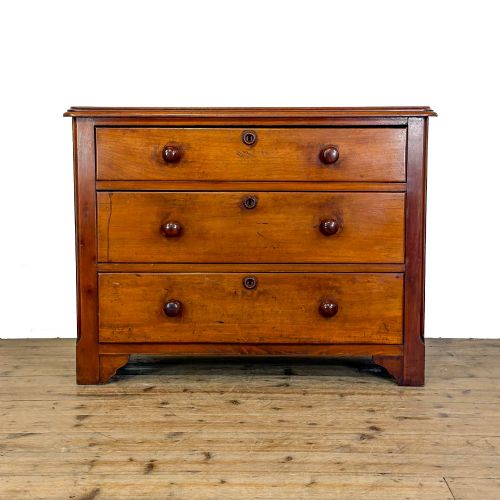
Traditional Mahogany Chest Drawers
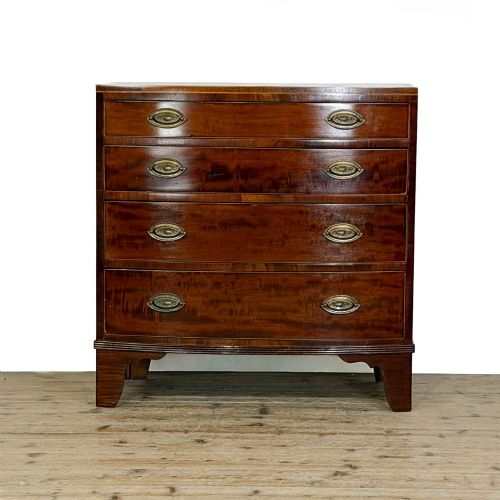
These traditional mahogany chest drawers are handsome storage pieces built in Georgian, Victorian, and Edwardian workshops to anchor a bedroom or study with rich timber.

What traditional mahogany chest drawers are
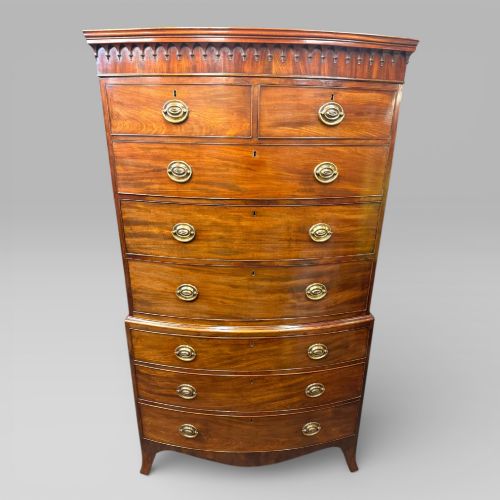
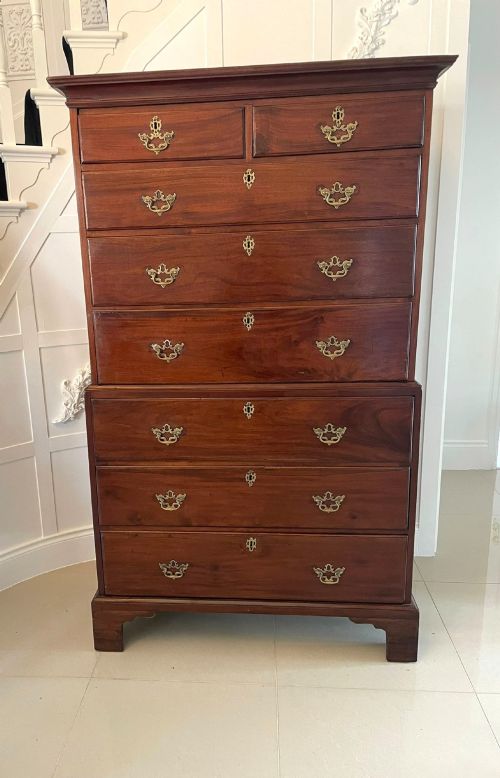
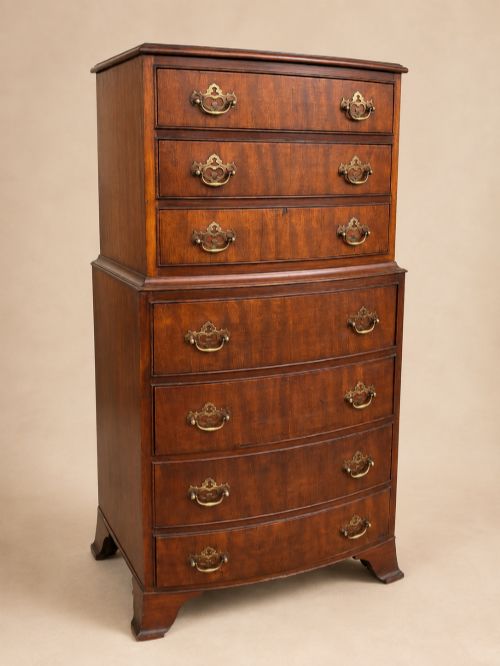
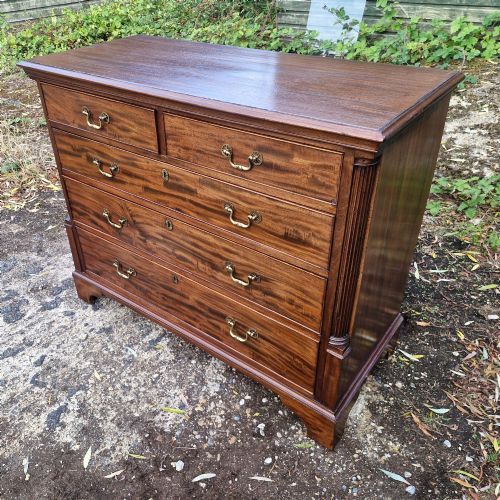
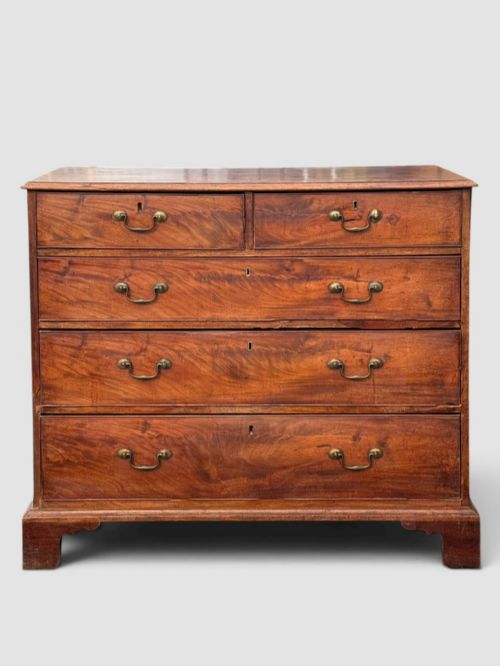
Traditional mahogany chest drawers comprise case furniture designed for domestic storage, appearing in forms ranging from simple rectangular carcasses to taller chests on chests. Buyers examining this page will frequently encounter pieces styled after Georgian and George III designs, as well as robust Victorian and Edwardian interpretations.
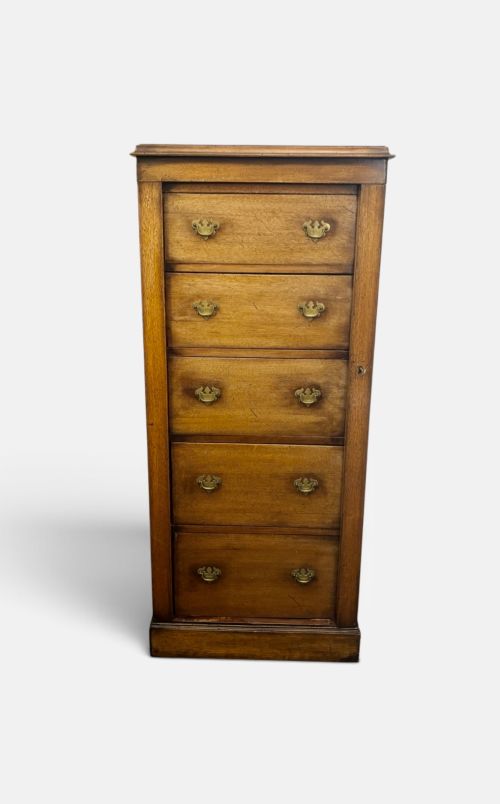
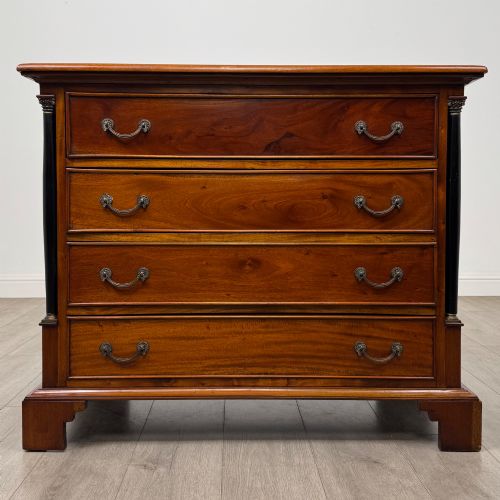
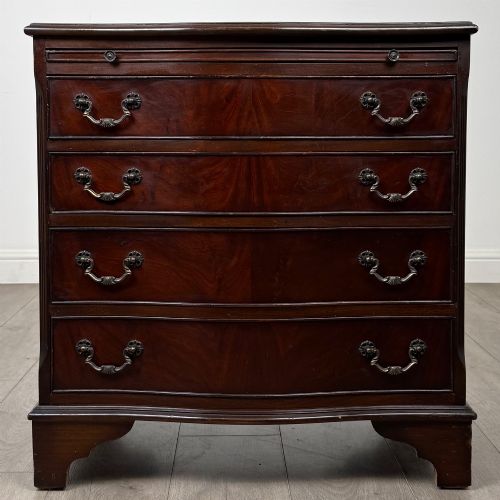
The architectural layout spans standard four-drawer formats and five-drawer configurations, alongside sophisticated serpentine fronts and commode variations. Origins stretch from the mid-eighteenth century through to the late nineteenth and early twentieth centuries, capturing shifts in domestic utility.
Makers utilised mahogany as the primary timber, occasionally pairing it with walnut or oak secondary woods. The structural forms reflect both formal period proportion and the practical storage demands of domestic life.
How they were made
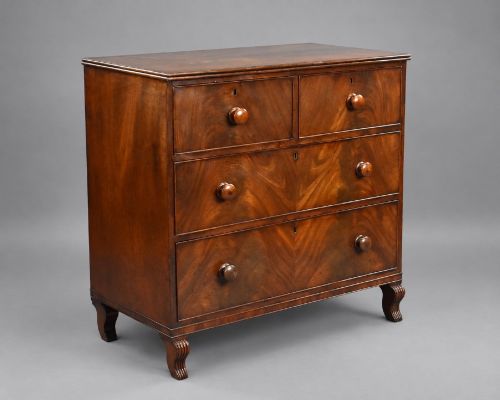
Cabinet makers constructed the primary carcasses and drawer fronts using solid mahogany and flame mahogany veneer, supported internally by secondary timbers like oak. The polished timber surfaces reveal rich grain patterns that result from careful selection and application of veneers.
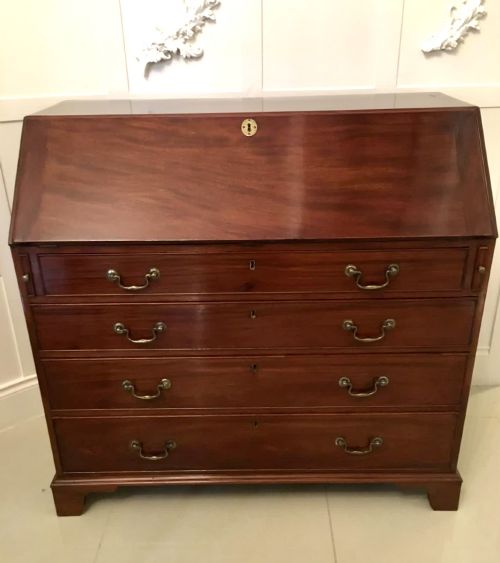
Hardware details incorporate cast brass handles and escutcheons secured to the drawer faces. Construction techniques rely on traditional joinery methods suited to heavy timber carcasses designed to withstand daily domestic handling.
Retail Price Guide 2026
Typical UK retail prices for traditional mahogany chest drawers, calculated from the Sellingantiques database of over a million retail prices indexed since 2003. This retail price guide relies exclusively on Sellingantiques data; no external sources or auction records are used, so the figures do not describe the wider market.
Listings span Georgian, George III, Victorian, and Edwardian periods, utilising mahogany, flame mahogany veneer, walnut, oak, and brass.
What varies in quality
Quality separates standard utilitarian storage from sophisticated cabinet work through the selection of timber figures, such as highly figured flame mahogany veneer. Superior examples display refined proportions, particularly in serpentine profiles and chest on chest configurations.
The refinement of brass hardware and the precision of the drawer construction distinguish the upper tier of pieces. Earlier Georgian and George III examples demonstrate distinct joinery approaches compared to later Victorian iterations.
The Traditional Mahogany Chest Drawers Glossary
- Serpentine chest
- A chest of drawers featuring a gently undulating front profile that curves outward at the centre and inward at the ends. This sophisticated shape requires skilled woodworking.
- Flame mahogany veneer
- A thin slice of mahogany timber cut from the point where a branch joins the main trunk, displaying a distinctive flamelike grain pattern. It adorns prominent surfaces like drawer fronts.
- Chest on chest
- A tall storage unit comprising a smaller chest stacked directly upon a larger base chest, sometimes called a tallboy. This form maximises vertical storage capacity.
- Commode
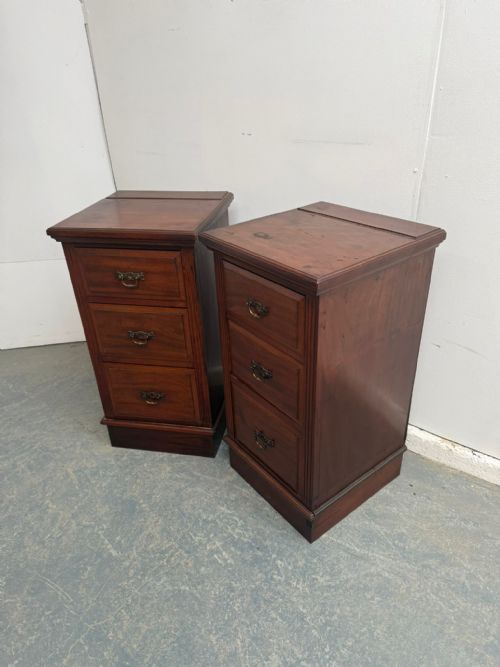
- A low cabinet or chest of drawers designed for domestic storage use, appearing in nineteenth-century interpretations. The term denotes a functional bedside or bedroom piece.
- Secondary wood
- Timber used in concealed structural parts of a piece, such as drawer linings and backboards, where oak often provides robust support behind the mahogany exterior.
Frequently Asked Questions
How do I date a mahogany chest?
Dating relies on examining the timber selection, hardware styles, and overall structural proportions across periods ranging from the mid-eighteenth century to the Edwardian era. Details like flame mahogany veneer and brass handles offer clues to the workshop origins.
Changes in cabinet construction methods between Georgian and Victorian workshops further help establish the period of manufacture.
How were these chests used?
These pieces served as primary domestic storage for clothing and personal items within bedrooms and private chambers. The multiple drawer configuration allowed for organised household management.
Variations like commodes and chests on chests provided specialised storage solutions for different domestic rooms.
What woods are used besides mahogany?
While mahogany and flame mahogany veneer form the primary visible surfaces, secondary timbers such as oak appear in structural elements and drawer linings. Walnut also occurs in combination with mahogany on specific Victorian pieces.
These mixed timber uses reflect traditional workshop practices across different manufacturing periods.