
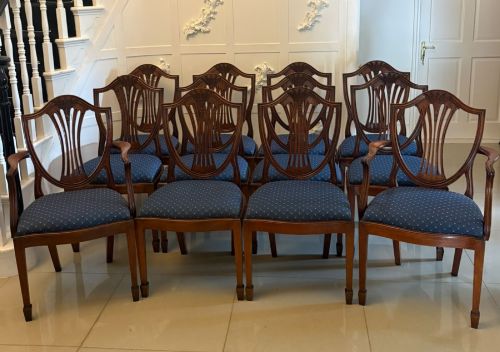
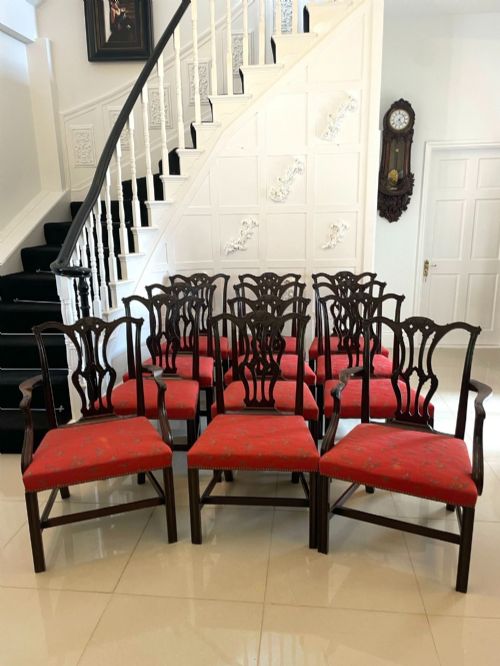
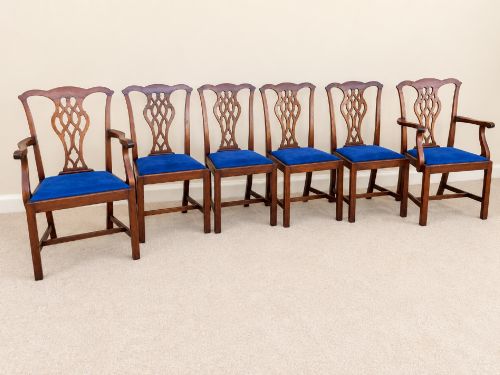
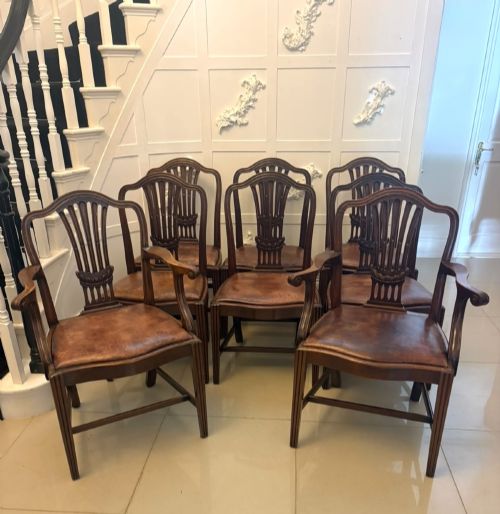
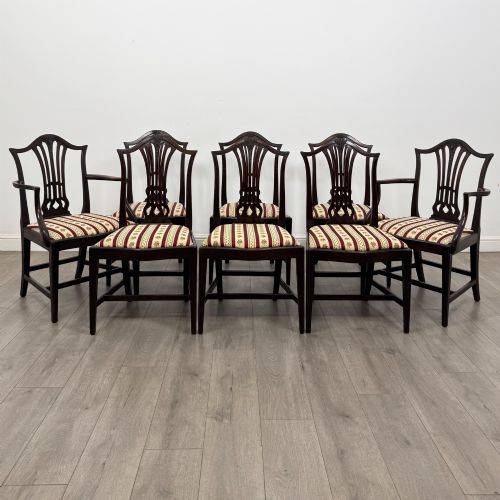
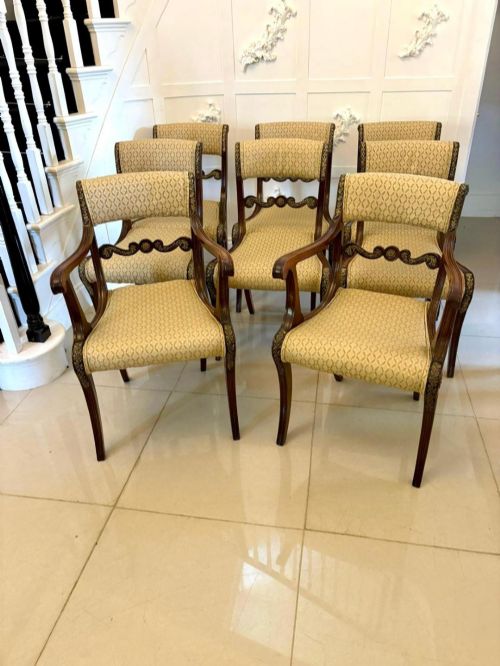
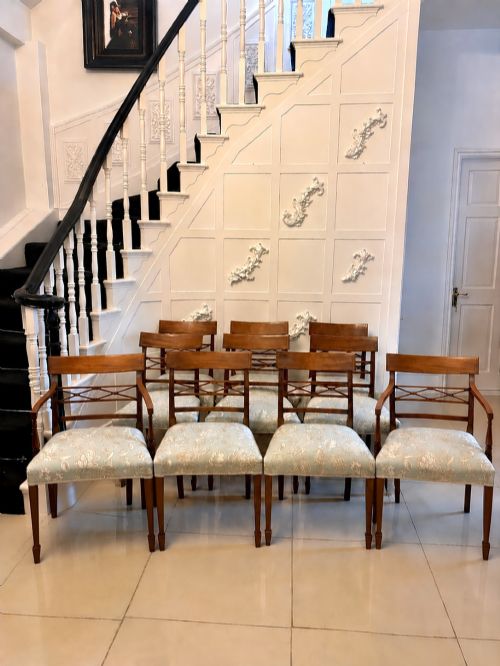
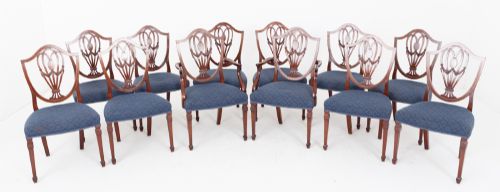
Traditional Mahogany Carver Seats
Traditional mahogany carver seats are solid wood armchairs built for dining rooms, offering sturdy armrests and rich timber grain for daily use.
Traditional Mahogany Carver Seats
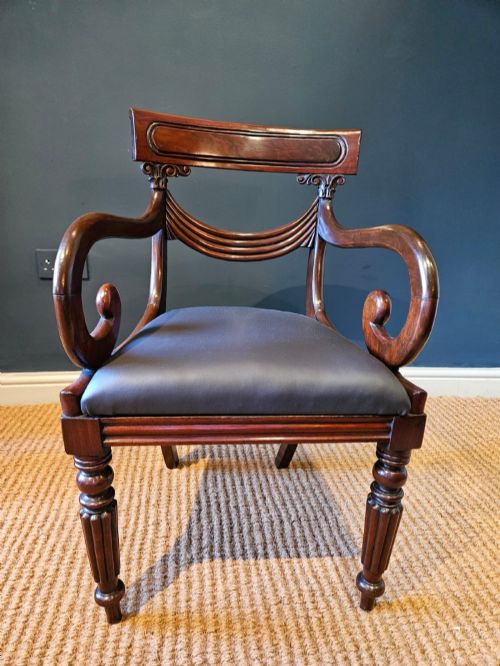
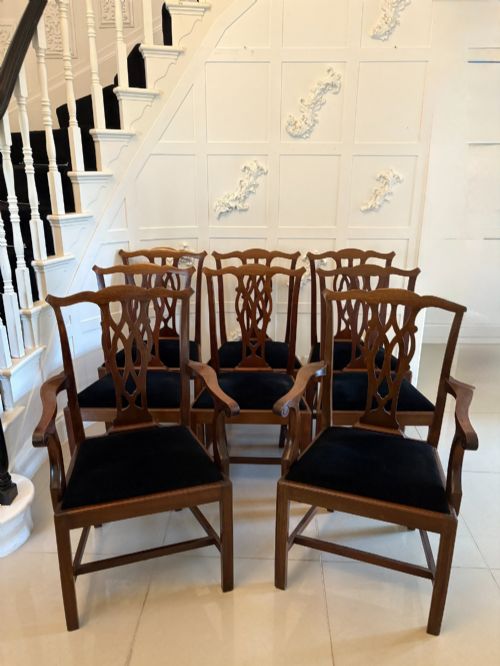
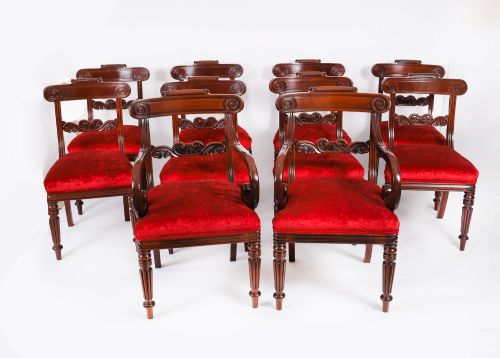
Traditional mahogany carver seats form part of larger dining sets or appear as individual elbow chairs for the morning room or library. These armchairs typically accompany matching sets of single dining chairs, functioning as the primary seats at the head of the table.
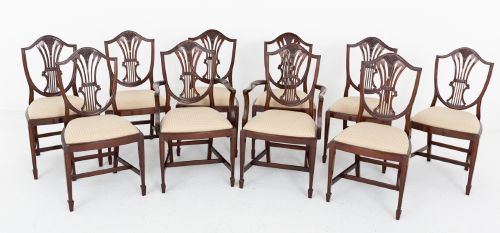
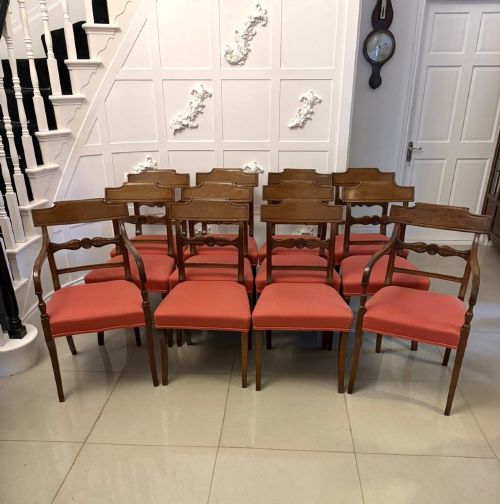
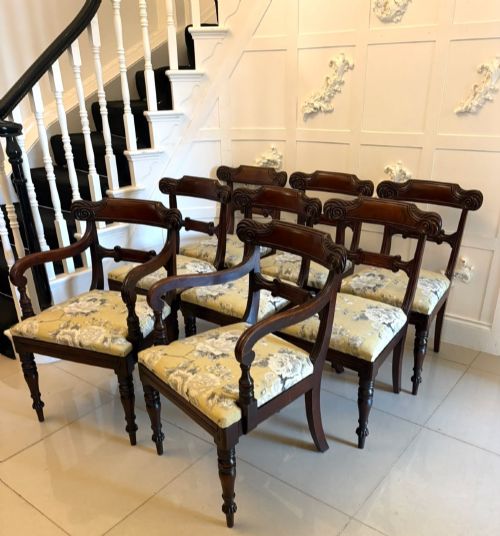
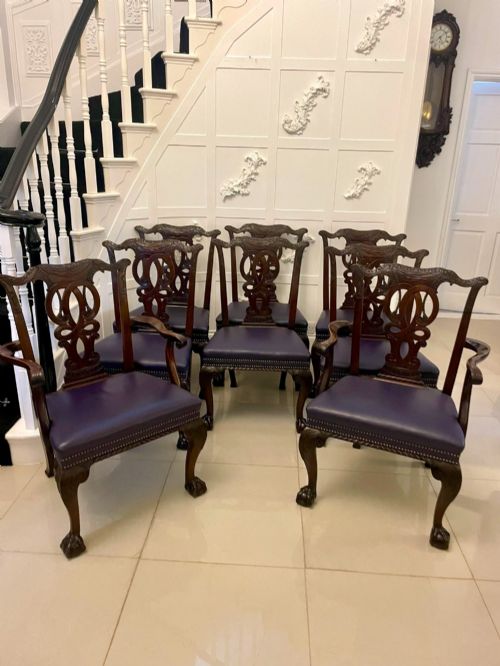
The pieces on this page span the Georgian, Victorian and Edwardian eras, alongside later revival styles such as Hepplewhite and Chippendale. Buyers encounter everything from early nineteenth-century Regency frames to twentieth-century reproductions.
Most examples originate from English, Scottish or Irish workshops, utilising standard timber framing combined with upholstered or cane seat pads.
Materials and construction methods
Makers relied on mahogany as the primary structural timber, chosen for its strength, deep reddish-brown colour and ability to hold intricate carved details on the back splats and arm supports.
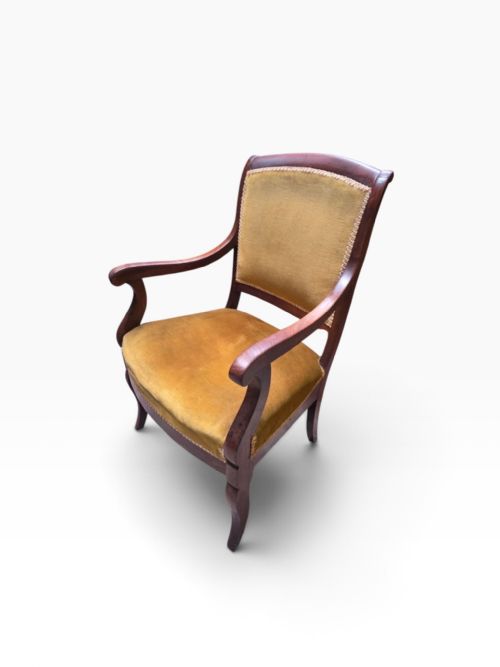
Seat bases incorporate various materials depending on the period, ranging from woven cane panels to solid wood frames covered in leather, velvet, fabric, or tapestry upholstery.
Secondary materials such as brass fittings appear on specific designs, while specialised joinery secures the armrests to the main uprights of the carver frame.
Morning rooms once demanded elbow chairs specifically for reading the post before breakfast.
Factors influencing overall standard
The crispness and depth of the hand-carving on the back splats and legs distinguish standard production items from exhibition-grade pieces. Superior examples display sharply defined motifs without softness in the timber.
Structural integrity of the arm joints determines the durability of a carver seat, as the arms endure frequent pressure when sitters rise from the table. Solid timber construction without excessive reinforcement separates better pieces from weaker ones.
The choice of covering materials, whether original tan leather, needlework tapestry, or fresh upholstery fabric, impacts the presentation and historical preservation of the chair.
Warings·Maple and Co·Wheelers of Arncroach
The Traditional Mahogany Carver Seats Glossary
- Carver chair
- An armchair designed to match a set of dining chairs, traditionally placed at the ends of a dining table. The arms provide extra support for the person seated.
- Shield back
- A chair back shaped like a heraldic shield, popularised by designers like Hepplewhite during the Georgian period. This silhouette appears frequently on mahogany dining sets.
- Splat
- The vertical central strip of wood within a chair back, connecting the seat to the top rail. Carvers often feature pierced or intricately carved splats.
- Cane
- Woven rattan material used to form light, flexible seat panels within a wooden frame. Cane seats require careful maintenance to prevent drying and breakage.
- Elbow chair
- An alternative term for an armchair used in reception rooms, libraries, or morning rooms. These seats feature low armrests designed to fit beneath a table or desk.
Traditional Mahogany Carver Seats: Frequently Asked Questions
What is a carver chair?
A carver chair is an armchair built with integrated armrests, designed to match a surrounding set of dining chairs. Historically, hosts sat in these armchairs at the head and foot of the dining table.
Today, buyers use them in dining rooms or as standalone reception seats in studies and hallways.
How do I date these mahogany chairs?
Dating relies on stylistic clues, construction techniques, and timber characteristics recorded across Georgian, Victorian, and Edwardian periods. Earlier pieces often display hand-carved details and specific back shapes like shields or ladders.
Revival pieces from the early twentieth century replicate these historical forms while using twentieth-century framing methods and secondary woods.
Can I mix carvers with single chairs?
Traditional dining sets often combine six or ten single chairs with a pair of carver armchairs for the heads of the table. Mixing periods requires careful attention to timber tone, leg style, and back height to maintain visual balance.
Many listings on this site offer complete matched sets containing both single chairs and carvers together.
How should I care for mahogany and leather?
Mahogany timber benefits from occasional polishing with suitable wax to nourish the grain and protect the surface from direct sunlight. Leather seat pads require gentle cleaning and conditioning to prevent the hide from drying out over time.
Keeping upholstered and cane seats away from excessive moisture ensures the structural longevity of the chair frame.