
Traditional Mahogany Bureau Desk
A traditional mahogany bureau desk offers a dedicated writing surface combined with enclosed storage, appealing to anyone who values period cabinetry.
Traditional Mahogany Bureau Desk
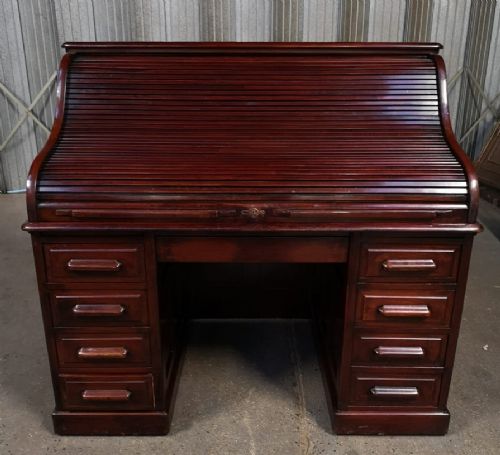
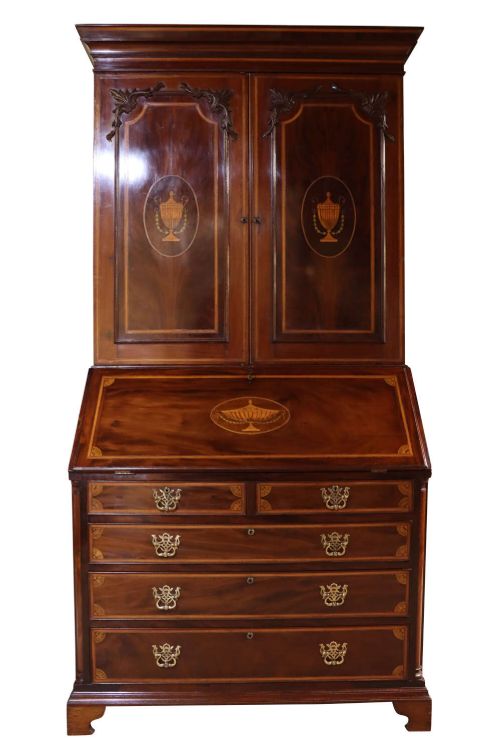
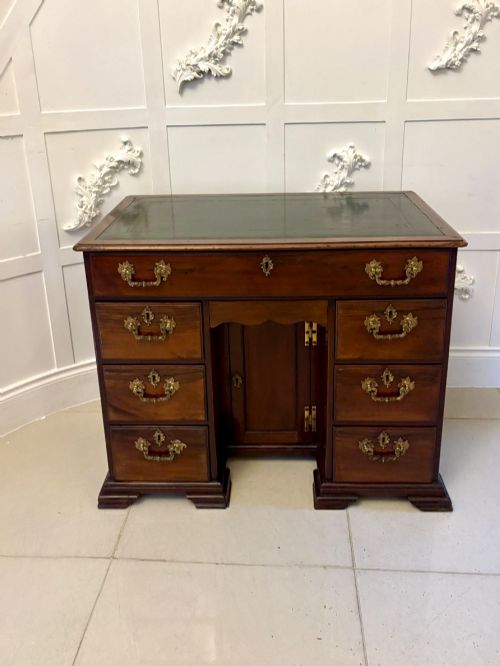
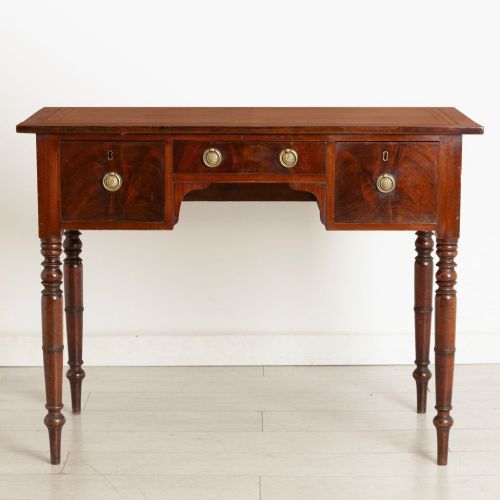
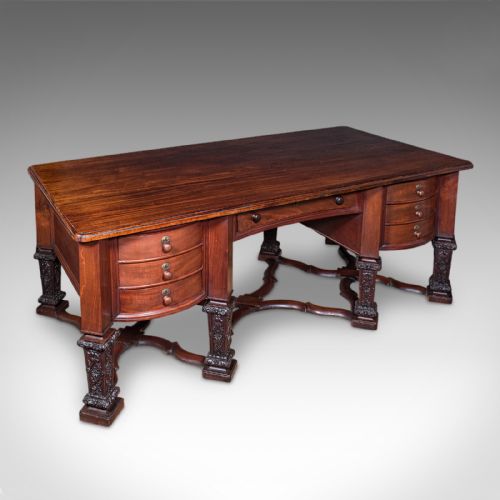
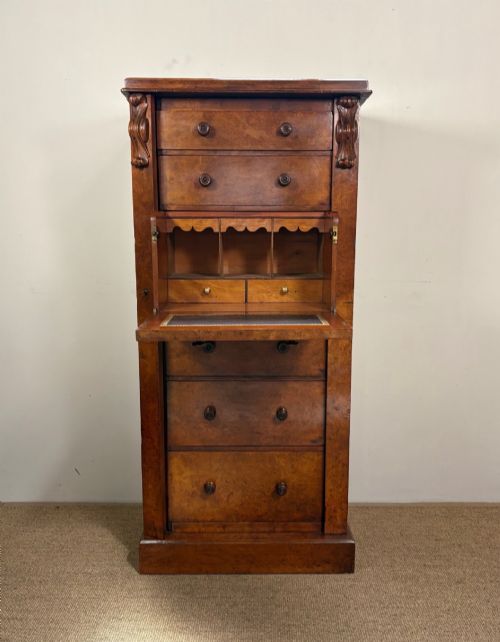
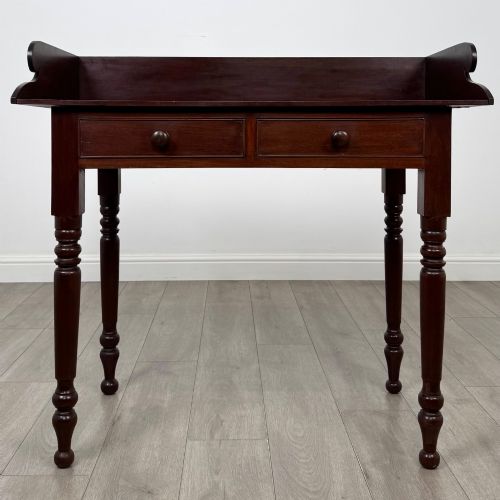
A traditional mahogany bureau desk brings together centuries of writing furniture, spanning Georgian, Victorian, and Edwardian periods. Buyers searching this phrase most frequently encounter standard drop-front bureaux alongside pedestal desks, kneehole desks, and bureau bookcases.
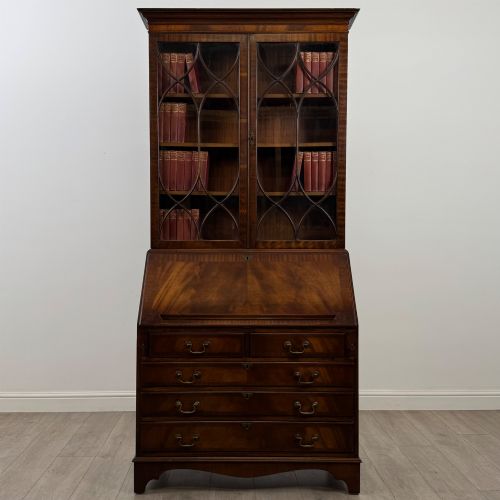
The forms range from compact freestanding items to substantial bureau bookcases fitted with glazed upper sections. Materials typically feature mahogany timber complemented by brass hardware and leather inserts.
Materials and construction
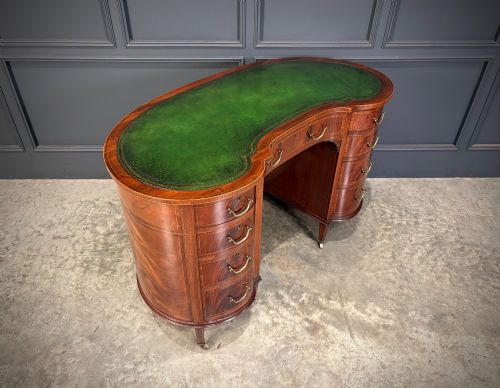
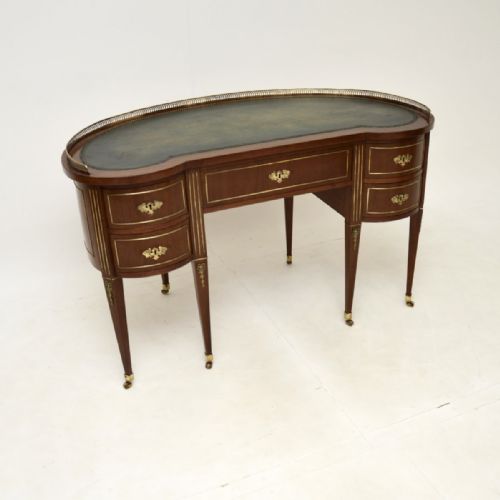
Cabinet makers utilised solid mahogany and mahogany veneers over secondary timbers, often incorporating satinwood and wood inlay for decorative contrast. Structural joints relied on traditional cabinet-making techniques to ensure stability across pedestals and fall-front writing compartments.
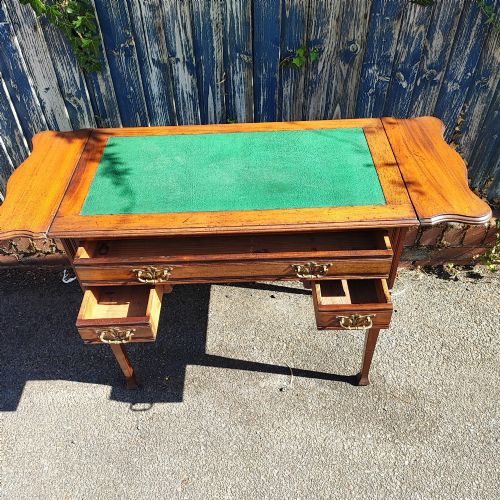
Fittings include cast brass handles, escutcheons, and leather writing surfaces inset into the fall-front or desktop. Glass doors feature in taller bureau bookcase variants to display internal shelving.
Listings feature mahogany desks spanning the Georgian, Victorian, and Edwardian periods, alongside revival styles.
Quality differences
Quality rests upon the selection of timber figures, the crispness of any wood inlay, and the retention of original brass hardware. Pieces originating from Georgian and Victorian workshops demonstrate finer dovetailing and proportion.
The integrity of internal pigeonholes, drawers, and writing slides distinguishes standard production from superior examples. Secondary woods and the condition of the leather top also contribute to the overall standard of the piece.
Maple & Co·Gillows
The Traditional Mahogany Bureau Desk Glossary
- Bureau
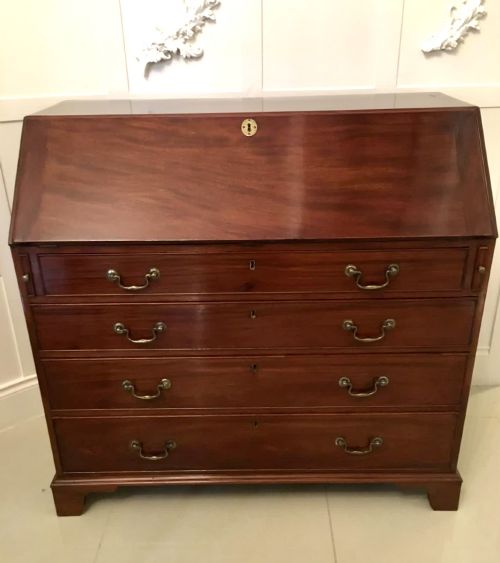
- A sloping fall-front desk that opens to reveal internal compartments and small drawers. This form provides a concealed writing space when closed.
- Pedestal desk
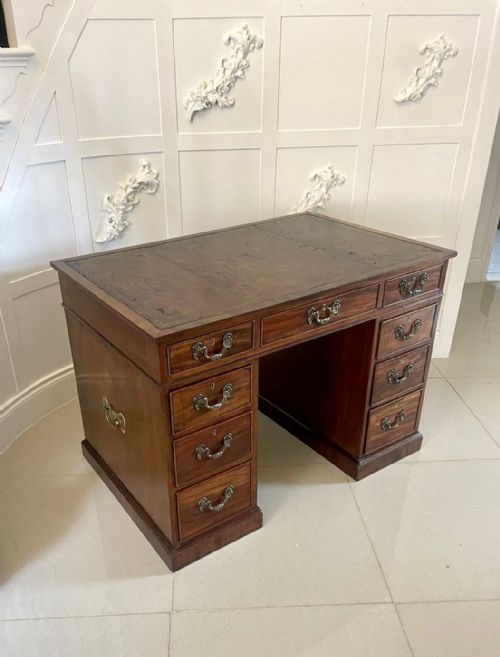
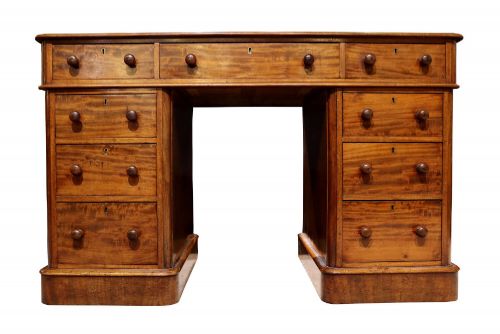
- A flat-topped writing table supported by two banks of drawers. It offers substantial workspace and storage.
- Tambour
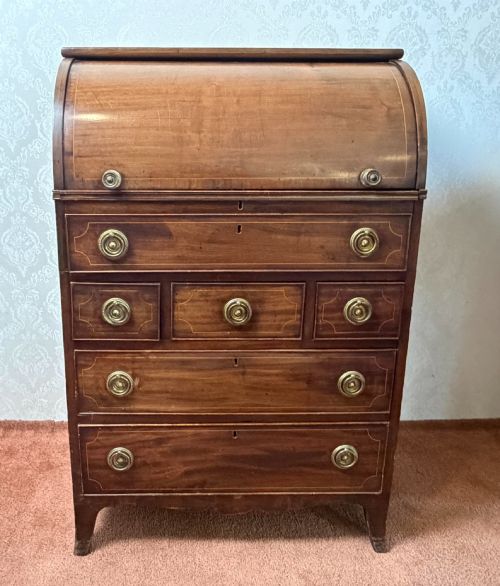
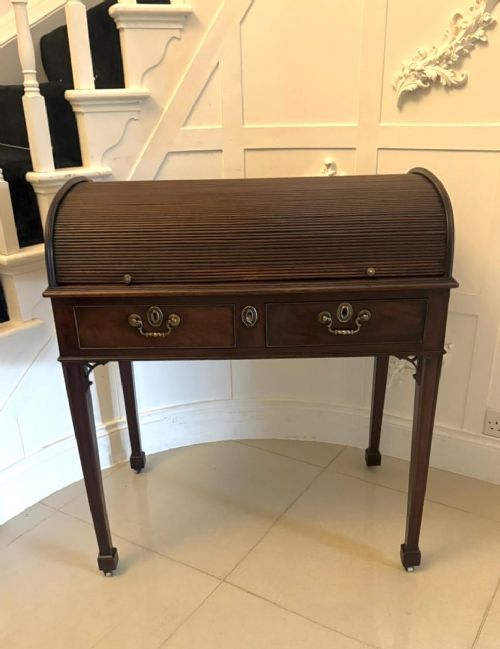
- A sliding door constructed from narrow vertical strips of wood glued to a canvas backing. It conceals pigeonholes on cylinder or roll-top desks.
- Secretaire bookcase
- A tall cabinet combining a fitted writing drawer or drop-front desk with upper shelving enclosed by doors. It serves both library and writing functions.
- Inlay
- A decorative technique where contrasting woods such as satinwood are inserted into recesses within the primary mahogany surface.
Traditional Mahogany Bureau Desk: Frequently Asked Questions
How do I use a bureau desk?
Lower the sloping front flap to create a flat writing surface supported by internal arms. This reveals small drawers and pigeonholes designed for correspondence.
Close the flap when finished to conceal papers and maintain a tidy room.
How do I date a mahogany desk?
Examine the construction methods, handles, and secondary woods used inside the drawers. Georgian pieces often display hand-cut dovetails and distinct proportions compared to later Victorian or Edwardian examples.
Styles such as Chippendale or Sheraton Revival provide further clues to the period of manufacture.
What is a bureau bookcase?
A bureau bookcase combines a lower writing desk with an upper shelving unit enclosed by glass doors. These tall items served as both a workspace and a library cabinet.
They appear in Georgian and 19th-century styles.
Where should I place a pedestal desk?
Place a pedestal desk where it receives adequate natural light across the writing surface. Free-standing models feature finished backs suitable for positioning away from walls.
Ensure sufficient clearance around the pedestals for seating.